|
Getting your Trinity Audio player ready...
|
By Arasha Soila
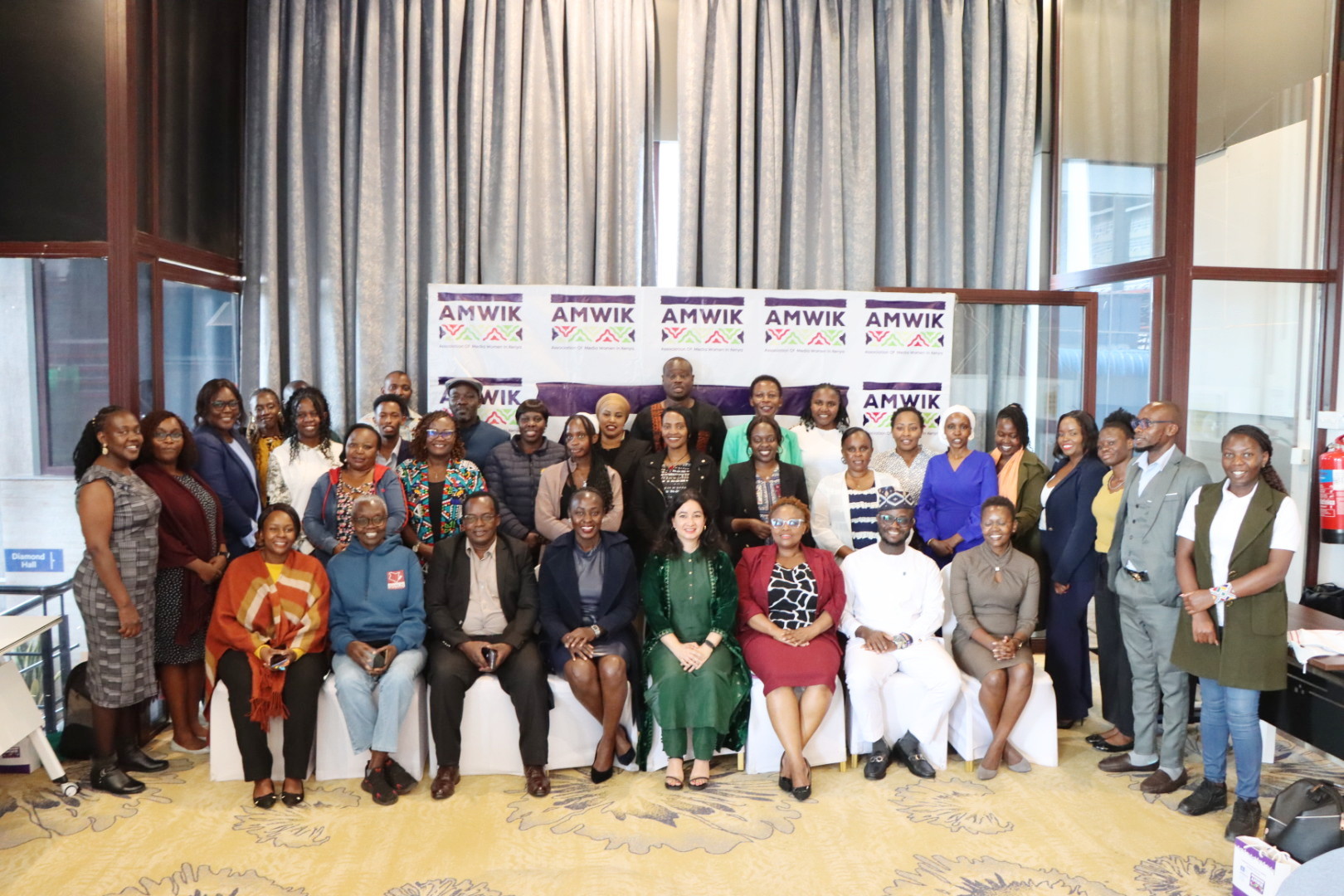
Nairobi, Kenya: As Kenya’s media industry faces rising attacks on journalists and persistent newsroom inequalities, the Association of Media Women in Kenya (AMWIK), in partnership with UNESCO, has launched the “Empowering Journalists for Safety and Equity in Media” project, an initiative aimed at strengthening journalist safety, promoting gender equity and improving accountability for attacks against media practitioners through legal protection, psychosocial support, capacity building and stronger institutional responses.
Speaking during the launch in Nairobi, media stakeholders described journalist safety as a fundamental pillar of democratic governance, warning that continued attacks on reporters threaten not only individual journalists but also the public’s right to information.
Media Council of Kenya Manager for Press Freedom & Advocacy, Rebecca Mutiso stated that protecting journalists is central to safeguarding democracy because a free press enables citizens to make informed decisions and hold leaders accountable.
“The safety of journalists is not only about individuals, it’s also about protecting democracy. When journalists are threatened, democracy is also threatened because citizens lose access to credible information. Journalists play a watchdog role in society and when they cannot report freely, transparency and accountability suffer” Mutiso noted.
The launch comes against the backdrop of increasing reports of journalists being assaulted, intimidated and harassed while covering demonstrations and other public events. Media stakeholders observed that the trend has created an increasingly difficult operating environment, making stronger legal protection and institutional support more urgent than ever.
As part of the initiative’s accountability agenda, the Kenya Union of Journalists (KUJ) announced that it is pursuing legal action against individual police officers and their commanders over the shooting of journalist Catherine Wanjeri and other alleged attacks on journalists during recent protests.
KUJ Secretary General Eric Oduor, underscored that the union wants to ensure accountability extends beyond institutions to the individual officers responsible for violating journalists’ rights.
“We are suing the individual police officers together with their bosses so that they do not get blanket protection from the state whenever they are targeting journalists,” Oduor said.
He said the lawsuits are intended to establish personal accountability and send a clear message that officers who violate journalists’ rights should not expect the state to shield them from the consequences of their actions. The union hopes the cases will set a legal precedent that deters future attacks on journalists and reinforces constitutional protections for media freedom.
Beyond physical safety, stakeholders outlined that the project also seeks to address persistent inequalities within media houses, particularly those affecting women and early-career journalists. The concerns raised during the launch echo findings in AMWIK’s “State of Women in Media in Kenya (2026)” report, which found that although more women are joining the profession, many struggle to remain and advance because of insecure employment, workplace harassment, safety concerns and limited opportunities for career progression.
AMWIK’s Executive Director, Quenteer Mbori, said job insecurity remains one of the biggest challenges facing women journalists, with many working on contracts or freelance arrangements that limit workplace protections and career progression.
“Only about 14% of women journalists are in full-time employment. The majority are on short-term contracts or working as freelancers, and that leaves them vulnerable because they often lack job security and institutional support,” Mbori revealed.
She added that nearly 70% of journalists are under the age of 35, with about half set to cover the 2027 General Election for the first time. She said the figures highlight the urgent need for mentorship, safety training and professional support to equip young journalists for the demands and risks of election reporting.
The Media Council of Kenya emphasized that it is also strengthening its technology-driven response to attacks on journalists by upgrading its digital monitoring and reporting platform. According to Mutiso, the enhanced system will improve the council’s ability to document violations, identify emerging trends and coordinate timely interventions whenever journalists face threats in the course of their work.
“We are enhancing our mapping system to track violations against journalists and ensure we have timely and secure interventions,” she noted.
Kharel Aakriti, UNESCO Communication and Information Specialist, highlighted that the program will train young female journalists while providing psychosocial support to help them remain resilient in increasingly challenging reporting environments.
“With this intervention, we expect to train 60 young journalists and provide them with the support they need in terms of safety, mental health and psychosocial support so they can continue doing their work with confidence and resilience,” Kharel said.
Additionally, the launch drew attention to the unique challenges facing journalists working in community media, who often report on sensitive issues within the same communities where they live.
Kenya Community Media Network (KCOMNET) National Coordinator, Tom Mboya, pointed out that community journalists are particularly exposed because they remain easily identifiable long after a story has been published or broadcast.
“Community journalists are among the most vulnerable because they work within the communities they report on. They are easily identifiable and continue living alongside those who may be the perpetrators or subjects of their stories. That makes their work especially risky, which is why we must stand together as one media family and show solidarity whenever one of us comes under attack.”
As Kenya moves closer to the 2027 General Election, stakeholders said the initiative aims to equip journalists with the skills, support and protection needed to report safely while advancing greater gender equity, accountability and resilience across the country’s media industry.