

|
Getting your Trinity Audio player ready...
|
By Mercy Kachenge
Nairobi, Kenya: A transformative era of media collaboration is unfolding between Kenya and China, shifting focus from simple content sharing to advanced fields like artificial intelligence, skills enhancement, digital archiving, and collaborative production.
During the launch of the “Seeing China through Hubei Africa Media Week 2026” in Nairobi, delegates and media leaders from both nations committed to a future that prepares newsrooms for technological advancement while protecting their unique cultural heritage.
Navigating the Digital Transformation
This strategic alliance arrives as Kenyan media entities face significant shifts, including the rapid rise of AI in content creation and declining traditional advertising income. Rather than seeing these as barriers, stakeholders view the partnership as a vital chance to modernize the sector while keeping Kenyan narratives at the forefront.
Agnes Kalekye, Managing Director and CEO of the Kenya Broadcasting Corporation (KBC), emphasized that the bilateral relationship has progressed from trade and infrastructure to a deeper connection rooted in the “power of shared stories.”
Speaking at the event, Kalekye noted: “While decades of cooperation in trade and education have been crucial, the partnership we celebrate today is distinct. It is about building connections between people, hearts, and diverse cultures.”
Nairobi as a Global Storytelling Hub
Highlighting Nairobi’s role as a gateway to the continent and Kenya’s status as the cradle of humankind, Kalekye argued that the nation has a wealth of undiscovered stories ready for a global stage. Enhanced international cooperation, she suggested, will provide the platform needed to prove that “no human is limited” when it comes to talent and cultural expression.
KBC’s CEO Kalekye said the relationship between Kenya and China had evolved beyond infrastructure and trade into something more enduring: the power of shared stories.
“We have spoken about the China-Africa partnership for decades through infrastructure, trade and education. All of these are important. However, the partnership we have gathered here to celebrate today is different. It is about connection not just between countries, but between people, between hearts and between cultures.”
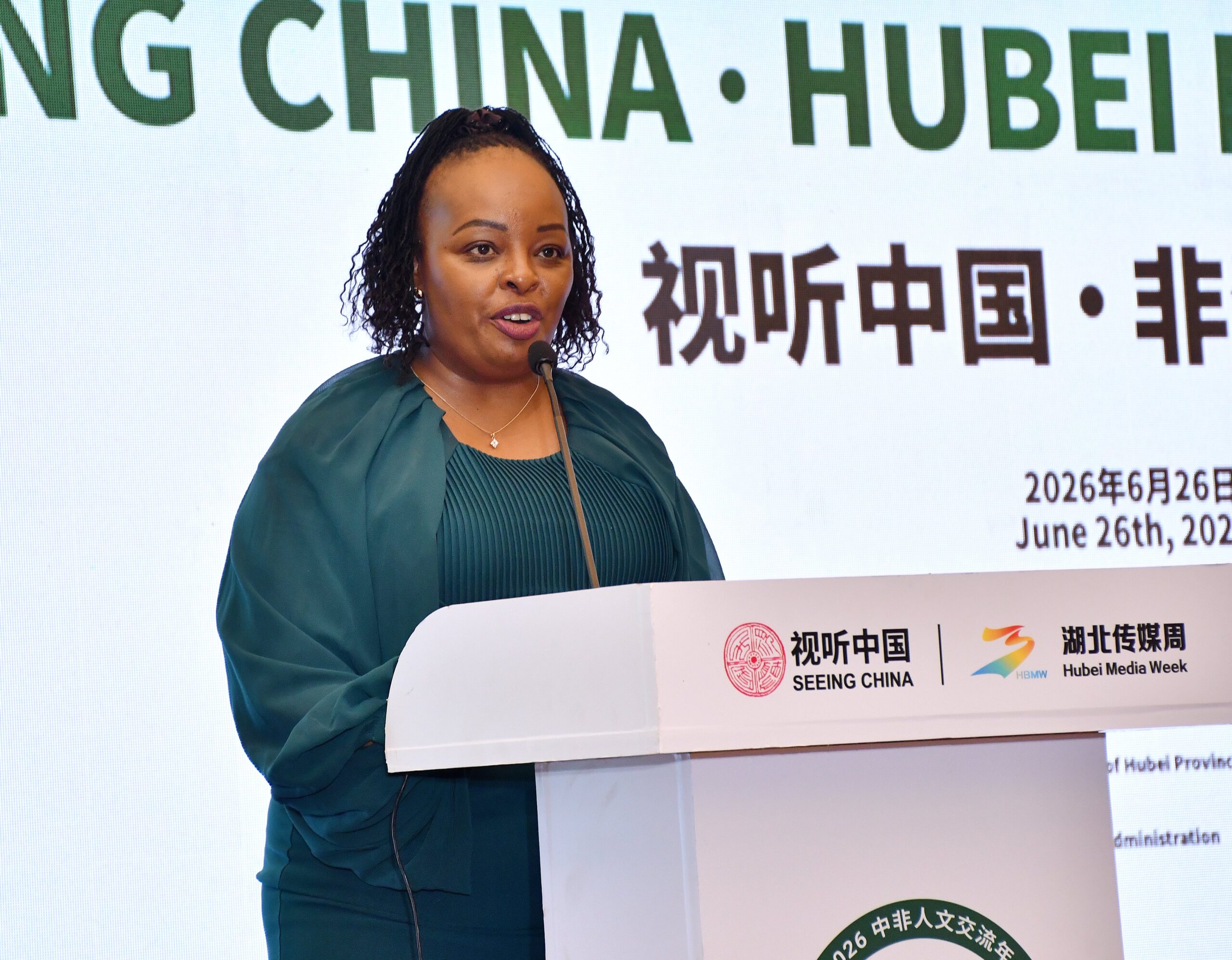 She described Nairobi as a gateway to Africa and Kenya as the cradle of humankind, arguing that the country possesses countless untold stories capable of reaching global audiences through stronger international partnerships.”Our landscapes, our culture and our talent continue to demonstrate that no human is limited.”
Kalekye said KBC’s long-standing collaborations with Xinhua News Agency, China Radio International, CGTN and China Media Group had already created opportunities for content exchange, Mandarin language programming and cultural learning. Just days before the event, she noted, KBC hosted a delegation from Hubei Broadcasting Corporation to explore new areas of collaboration.
But she made it clear that the next chapter should move beyond exchanging programmes to creating them together.”KBC will be a partner, not a spectator. We will move beyond exchange into genuine collaboration and integration.”
Among KBC’s priorities is the digitization of its archives, some of which date back to 1928, ensuring Kenya’s broadcasting history is preserved and made accessible for future generations.
Kalekye acknowledged that public broadcasters are operating in an increasingly competitive environment as global technology companies absorb advertising revenues and artificial intelligence reshapes media production.
Yet, she argued, technology should complement, not to replace human creativity.
“No algorithm can replicate the spark of a young filmmaker seeing their work appear on screen for the very first time. No machine can replace the human connection that is created when a story feels genuine.”
Deputy Director of Communications and Stakeholder Engagement Jane Kinyajui said digital technologies are fundamentally transforming how audiences consume news and entertainment, making international cooperation increasingly important.
“Audiences now engage with stories across television, radio, online platforms and mobile devices. “She identified three priority areas that should shape future Kenya-China media cooperation.
The first, she said, is expanding the exchange of high-quality digital content and encouraging responsible co-productions between Kenyan and Chinese media organizations. “Through shared stories, our audiences can better understand each other’s history, culture, aspirations and daily lives.”
 Secondly, she called for stronger professional and technical cooperation through training, institutional partnerships and knowledge exchange to prepare media professionals for emerging technologies.
Finally, she stressed that innovation must remain anchored in ethical journalism, public trust and respect for cultural diversity. “Innovation should go hand in hand with credible journalism, ethical content practices, protection of audiences and respect for cultural diversity.”
Patrick Githakwa, KBC’s Manager for Strategy, Special Projects and Planning, said meetings held before the opening ceremony focused on four areas: content sharing, infrastructure support, digitization of historical archives and capacity building.
Although no formal agreement has been signed, he described the discussions as laying the groundwork for long-term collaboration.
“We have identified areas where both countries can benefit, especially through technology transfer, training and content development.”
Preservation of Kenya’s Audiovisual heritage
One of the most immediate opportunities, he said, lies in preserving Kenya’s audiovisual heritage. KBC holds archive material dating back nearly a century, much of it still stored in analogue formats that continue to deteriorate.
During a demonstration by the Chinese delegation, Githakwa said he was impressed by technology capable of restoring decades-old footage into high-definition quality. “We saw technology that could restore films produced in the 1960s so that they appear as though they were produced today.”
He said similar technology could help KBC digitize fragile archival material while preserving important moments in Kenya’s history for future generations.
Beyond archive preservation, Githakwa said the partnership could expose Kenyan journalists, producers and engineers to advanced production technologies through exchange programmes, conferences and specialised training in China.
Looking ahead, he believes technology transfer particularly in artificial intelligence—could become the partnership’s most significant contribution to Kenya’s media industry over the next five years.
“We can borrow from China’s technological advancement and develop our own local solutions in areas such as agriculture, housing and other sectors that matter to Kenyans.”
Huang Zhiwei, Host of Hubei Media Group and Deputy General Manager of Digital Media, noted that the event forms part of the China-Africa Year of People-to-People Exchanges, which coincides with the 70th anniversary of diplomatic relations between China and African countries.
He described the initiative as an opportunity to strengthen friendship through media, culture and innovation while bringing together the strengths of both regions.
Huang said Kenya’s youthful population, expanding digital economy and dynamic creative sector complement Hubei’s strengths in digital media, scientific innovation and cultural industries.
He expressed hope that the Media Week would help Kenyan audiences gain a deeper understanding of Hubei and China while enabling Chinese audiences to appreciate Kenya’s culture, creativity and development.
“I hope today’s event will further advance practical cooperation and mutual understanding between our two countries.”