|
Getting your Trinity Audio player ready...
|
By Jasmine Atieno
Mombasa, Kenya: A significant cultural exchange between Kenya and Italy recently took place within the historic ramparts of Fort Jesus, a UNESCO World Heritage Site. This landmark event celebrated the profound historical connections and lasting partnership between the two countries through a blend of respectful remembrance and modern artistic expression.
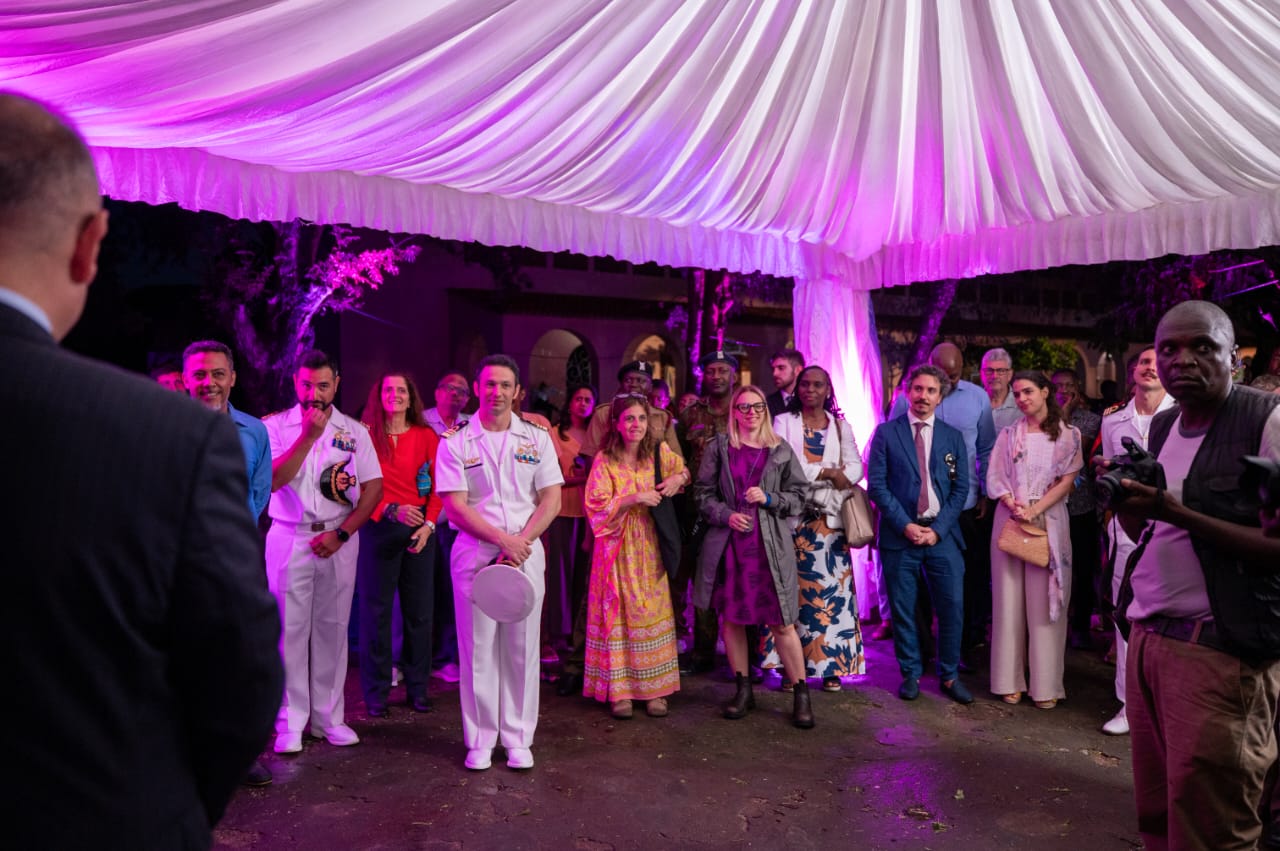
As evening fell and the coastal breeze drifted across the Indian Ocean into the ancient fortress, an assembly of dignitaries, creators, and invited guests came together to pay tribute to the past and look toward the future.
The evening centered on the debut of a memorial plaque honoring Giovanni Battista Cairati, the Italian architect responsible for the late 16th-century design of Fort Jesus. While the Portuguese oversaw the fortress’s construction, Cairati’s historical influence had previously been overlooked.
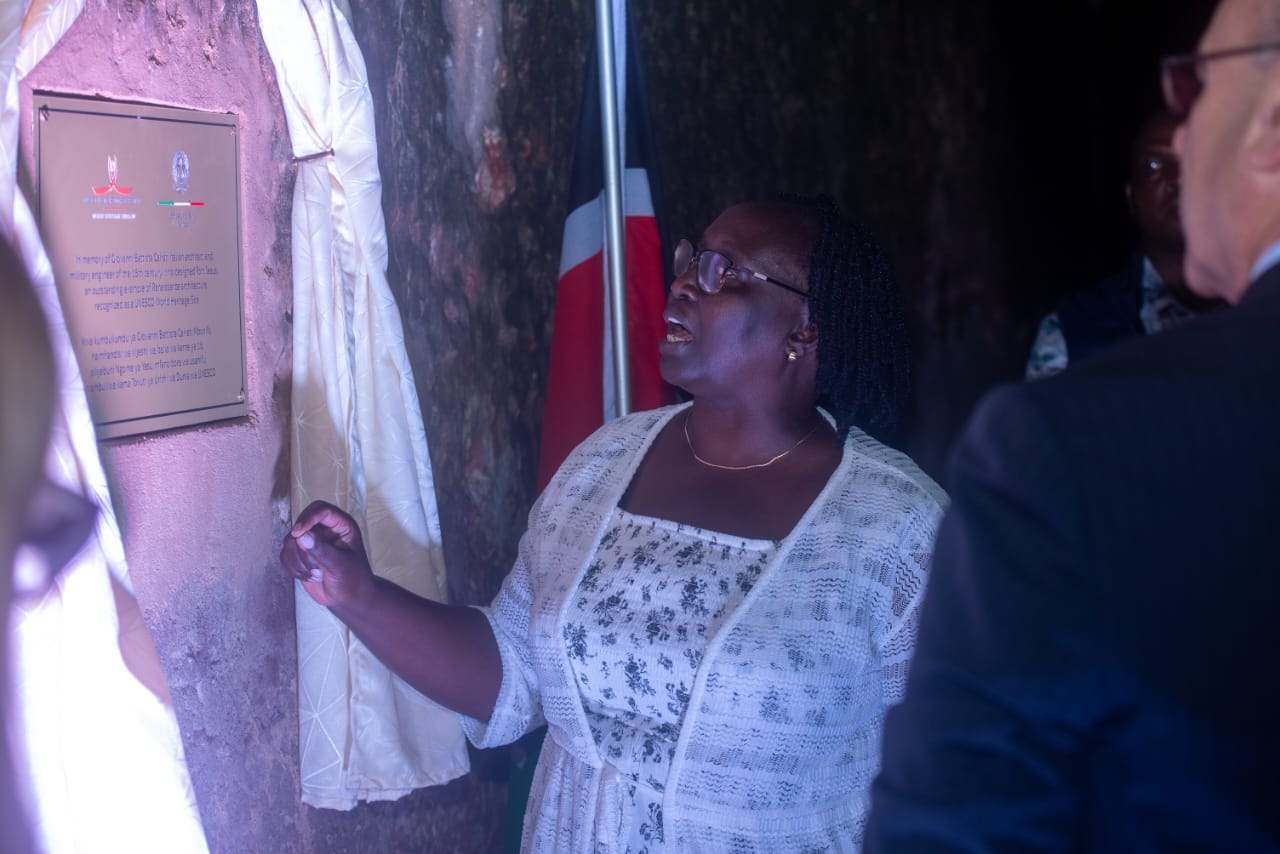 This tribute bridges centuries and continents, ensuring his vital role in creating one of East Africa’s landmark monuments is formally acknowledged by all who visit. More than a mere ceremony, the unveiling served as a meaningful reclamation of Cairati’s legacy within the story of Fort Jesus, celebrating the deep, communal heritage shared by Italy and Kenya.
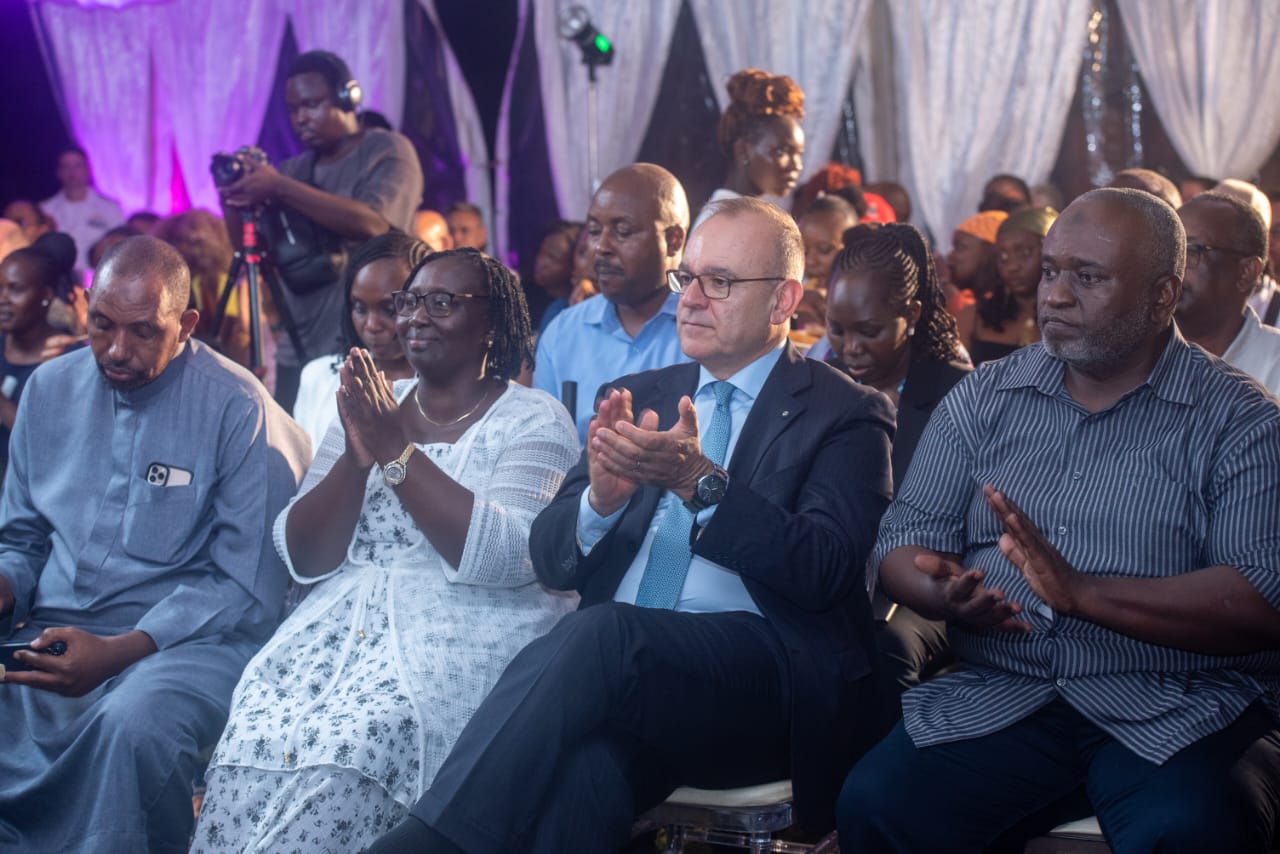
The ceremony drew together leaders from both nations. Representing the County Government of Mombasa, Ibrahim Khamis, CECM, Blue Economy, Agriculture and Livestock, emphasized the importance of acknowledging Cairati’s legacy.
“This building was built by the Portuguese, but the architect who drew the plans is from Italy. The plaque ensures that future generations know this history. On behalf of the County Government of Mombasa, we promise to preserve it and ensure visitors understand its significance.” His words reflected both pride and responsibility, a reminder that heritage is not static but must be actively safeguarded.
Speaking on the same, Mohamed Osman, County Executive Committee Member for Trade and Culture highlighted the link between heritage and tourism, noting that culture, when preserved, sustains the lifeblood of Mombasa’s economy.
“Culture and heritage, if preserved, sustain tourism. This plaque reminds us that we must safeguard our history for generations to come.”
His remarks underscored the practical as well as symbolic value of heritage, pointing to the role of Fort Jesus not only as a historical monument but also as a living resource for education, tourism, and cultural identity.
The unveiling was attended by H.E. Vincenzo Del Monaco, Ambassador of Italy to Kenya, who described the day as a celebration of shared past, present, and future.
“We remember Giovanni Battista Cairati, but we are also here to strengthen our cultural and people-to-people bonds. Culture defines us, and it is a foundation on which we can further strengthen our relations.” Said the Ambassador.
He noted that the event followed the recent state visit of Kenya’s President to Italy, underscoring the momentum in bilateral cooperation. His words carried a sense of continuity, linking the plaque unveiling to broader diplomatic ties and cultural exchange.
Cabinet Secretary Hanna Wendot Cheptumo, Ministry of Gender, Culture, the Arts and Heritage, echoed this sentiment with a powerful reflection on memory and preservation.
“Fort Jesus is one of our treasured heritage sites. History never forgets, and today we have ensured Cairati’s contribution is remembered. This is not the end, but the beginning of deeper cultural exchange between Kenya and Italy.” Her remarks captured the essence of the evening: that heritage is not only about the past but also about shaping the future through dialogue and collaboration.
 When evening descended, the formal atmosphere of the event transitioned into a display of creative brilliance. The ancient fortress became the backdrop for SINCRONIA, an immersive, multidisciplinary show that integrated electroacoustic melodies, video mapping, and regional coastal audio. This production was the result of a partnership between Nova Media Studio comprising Eduard Tampu and Federica Sorba and Juma Tutu, a renowned Kenyan saxophonist.
Together, they offered a fresh interpretation of the cultural and historical narratives embedded within Fort Jesus. The structure’s massive walls served as a dynamic canvas for digital projections that utilized architectural patterns and archival visuals, while the accompanying soundtrack merged contemporary improvisation with taarab and Mijikenda rhythms.
The resulting generative patterns appeared to pulse in harmony with the music, effectively bringing the historic site to life.
The live act culminated in a dialogue between Tampu’s electroacoustic compositions, Tutu’s saxophone, and Sorba’s real-time visual artistry.
It was a performance that transcended boundaries, weaving together tradition and modernity, local and global, history and innovation. Guests experienced Fort Jesus not only as a monument of stone but as a dynamic space where culture could be reimagined and relived.
The performance embodied the very spirit of the evening: a conversation across time and geography, a testament to the power of art to connect people.