|
Getting your Trinity Audio player ready...
|
By Shaban Makokha
Kakamega, Kenya- In a county where cultural boundaries run deep, funerals follow strict tradition, and the boda boda sector is seen as the domain of tough-talking men, one woman is rewriting the rules with unapologetic boldness.
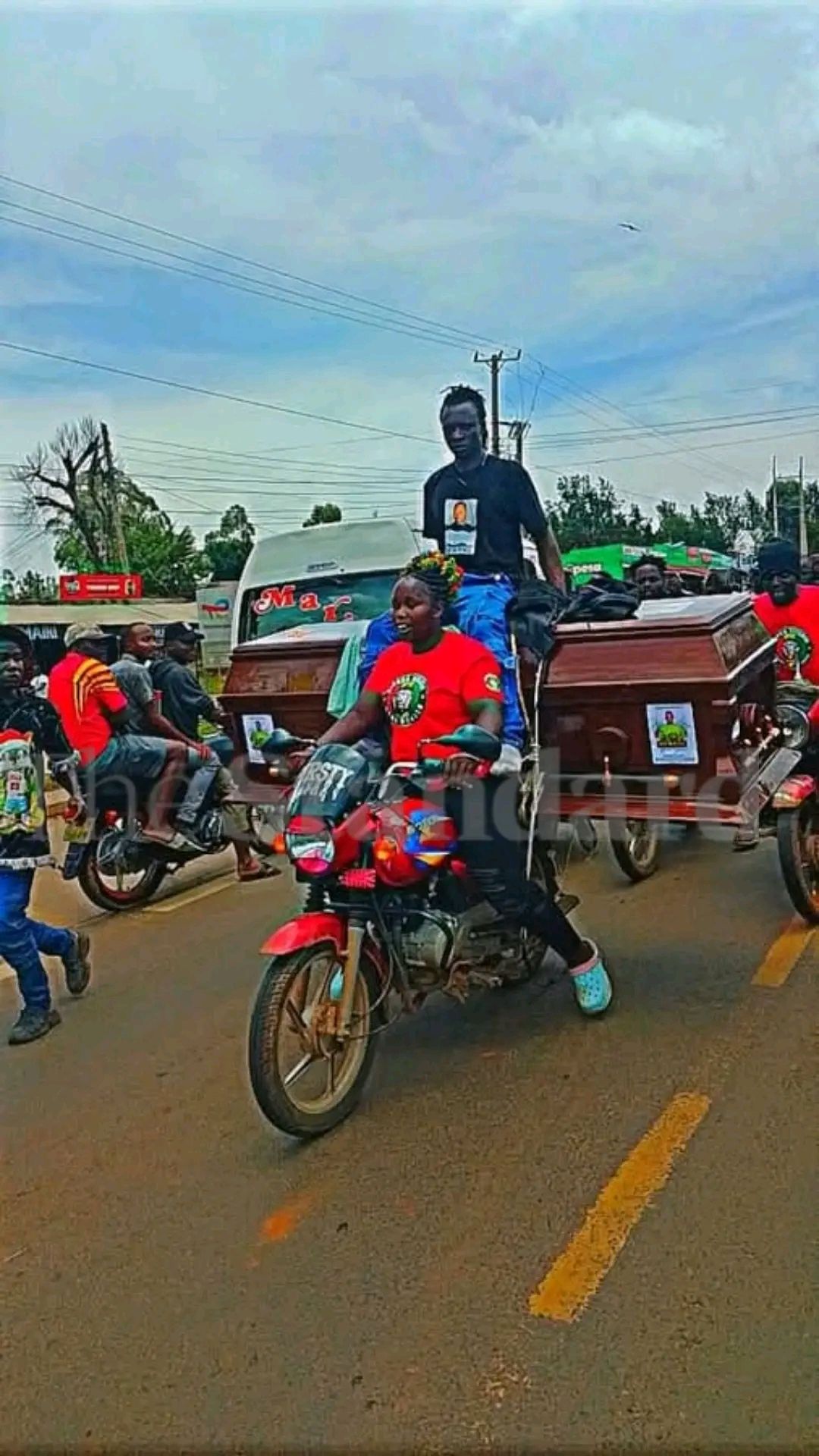
Her real name is Consolata Adhiambo, but the streets have baptized her Dem Mngori — the only female boda boda rider in Kakamega who ferries bodies from mortuaries to burial sites.
What was once an unthinkable image has now become a defining symbol of courage and defiance in the county’s fast-evolving transport culture.
To many in Kakamega, the sight of a woman leading a funeral procession on two wheels is still surreal. It is a task many male riders shy away from due to cultural taboos surrounding death, yet Adhiambo does it with a calm that has earned her respect across the county.
Every week, Dem Mngori cuts through busy roads with a steadiness that silences doubters: her motorcycle modified to secure the body, her face set with intense focus, and an escort of dozens — sometimes hundreds — of riders roaring behind her.
Her courage has turned her into a symbol of strength for young women watching from the sidelines — a reminder that gender boundaries can be crossed, and that opportunity often lies on the other side of fear.
“I have never been afraid of the dead,” she says. “I am more concerned about giving families dignity and ensuring the journey is smooth.”
It is a sight that has stopped markets, halted conversations, and commanded silence — even from men who once laughed at the idea of a woman entering their line of work, let alone ferrying the dead.
“Some said I was cursed. Others said I was courting death,” she recalls. “But I knew I was doing what many fear.”
Boda boda funeral convoys have become a defining feature of youth culture in Kakamega. Families call riders for an escort. Villagers line up along roads. Engines roar in synchronized rhythm, turning grief into a kind of defiant ceremony.
But this growing spectacle has also polarized the public. The dramatic, adrenaline-charged processions — sometimes stretching hundreds of metres — have both captivated and unsettled the community.
On one hand, they speak to deep bonds of solidarity among riders, who often contribute to funeral funds, attend burials in large numbers, and celebrate the memory of their peers with roaring engines and choreographed formations.
On the other hand, the processions have triggered recurring complaints about traffic disruptions, noise, and road safety concerns, especially in busy hubs like Malinya, Sigalagala, Lurambi, Khayega, Shisiru, and Kakamega Town.
Police report increased traffic disruptions. Businesses complain of impromptu standstills. Parents worry about their children’s safety. Still, riders insist the ritual will not stop.
Local authorities have occasionally issued warnings, but the riders maintain that the processions are part of their culture — a final salute to a fallen comrade.
“This is how we honour our own,” says Richard Litunya, a senior rider. “We live on bikes, and we escort each other out the same way.”
At the heart of this controversial tradition stands a lone woman — a contradiction to cultural expectations and a voice many didn’t see coming.
Among the Luhya, handling the dead is often viewed through layers of ritual and gendered customs. Women rarely take up such roles, and those who do often face stigma. The boda boda sector has long been a male fortress, defined by grit, long hours, risk, and a culture of street brotherhood.
Adhiambo confronted all of that head-on. She has been called names. She has been warned of curses. Some families initially refused to let her participate. But gradually, respect replaced resistance.
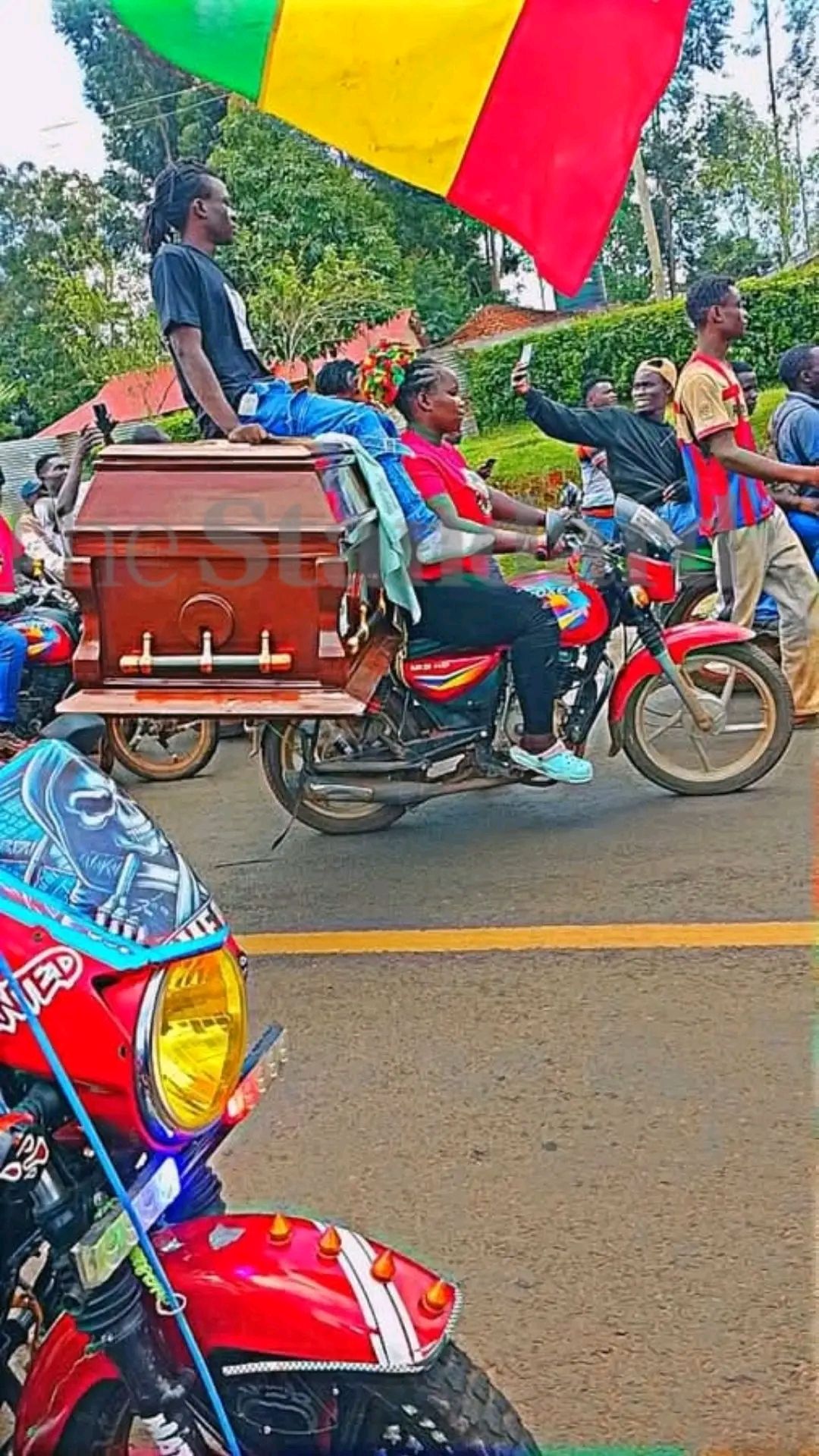
Soft-spoken off the bike, she is commanding on the road — and this has earned her a place in the brotherhood through sheer courage and consistency.
“Fear thrives where there is ignorance,” she says. “Once people saw I was not dying, not going mad, not cursed — they accepted me.”
Today, families across Kakamega request her specifically, praising her professionalism, punctuality, and gentle handling of the departed.
Beyond the shock value, what Adhiambo represents is bigger than her motorcycle. She has become a mirror reflecting the fire and resilience of women who are tired of being told, “This is not for you.”
Young girls at stalls whisper her name. Women in business groups speak of her with admiration. Even hard-shelled riders who once doubted her now defend her fiercely.
“She is not just breaking barriers,” says Brenda Kusa, a women’s rights advocate in Kakamega. “She is smashing them with steel boots and a roaring engine.”
According to Kusa, Dem Mngori is more than a rider — she is a movement redefining what is possible for women. Her story is now part of the broader conversation about women entering male-dominated spaces, from mechanics to security work to long-distance trucking.
Adhiambo dreams of forming Kakamega’s first Women Riders Funeral Unit — a daring idea that, just like her, promises to test and stretch boundaries.
For now, she continues her daily hustle: ferrying passengers in the morning, running errands in the afternoon, and when the call comes — leading a funeral escort with a calmness that belies the weight of the moment.
As the sun sinks behind the Kakamega forest and engines go silent, one truth remains: Dem Mngori has not just broken taboos — she has taken a hammer to a patriarchal wall and ridden straight through it. And the county, whether ready or not, is being forced to shift with her.