|
Getting your Trinity Audio player ready...
|
By Melisa Mong’ina
Nairobi, Kenya: Non-communicable diseases (NCDs) such as diabetes, hypertension, cancer, heart disease, mental health conditions, and chronic kidney disease are on the rise in Kenya, accounting for nearly 40% of all deaths in the country.
These conditions are often caused by unhealthy diets, alcohol, tobacco use, air/environmental pollution, and physical inactivity. Due to limited consumer awareness, NCDs continue to increase each day, silently causing harm to people’s health.
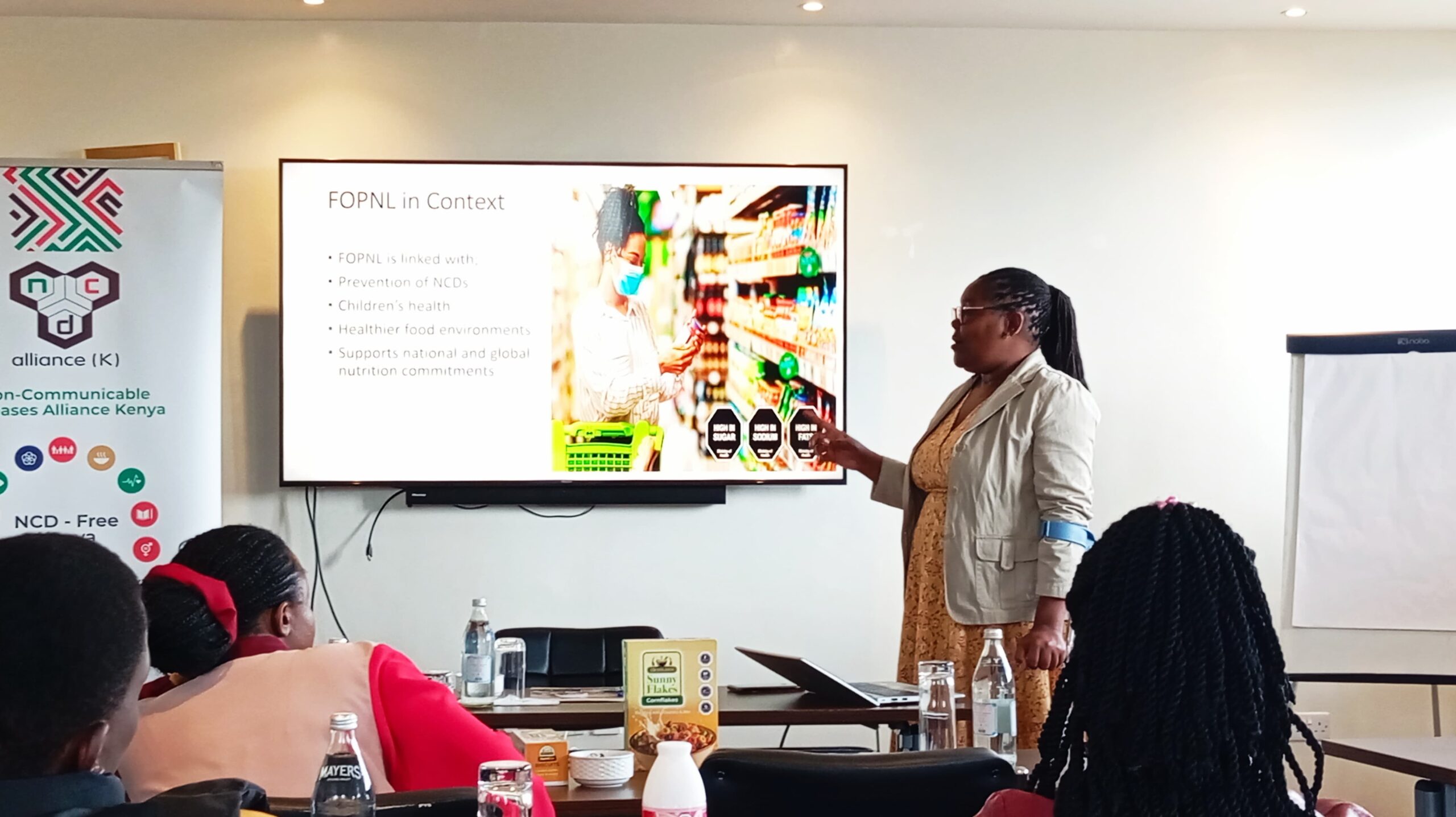
To address this issue, NCD Alliance Kenya brought together Nairobi County Chapter Advocates for a sensitization forum on Front-of-Pack Nutrition Labelling (FOPNL), Nutrient Profile Models (NPM), and Marketing Restrictions of unhealthy food and alcohol, especially among children and adolescents.
Speaking during the sensitization forum, Anne Swakei, Program Officer at NCD Alliance Kenya, highlighted that the Kenya Nutrient Profile Model (KNPM), available on the Ministry of Health’s website, was developed to serve as a guideline for food policies in Kenya and also help in identifying foods that may expose the public to higher risks of NCDs such as obesity, certain cancers, type 2 diabetes, and hypertension.
“KNPM is going to act as the basis upon which food regulations are developed. The model helps in classifying and ranking foods, especially processed and ultra-processed foods that are high in nutrients of concern.
It also shows how these foods can expose the public to the risk of diet-related NCDs,” she said.

She further underscored the importance of front-of-pack nutrition labels (FOPNL) on foods that contain high levels of nutrients of concern. The jet-black, octagonal warning symbols placed on the front of packaging of ultra-processed foods are designed to be bold, simple, and easily visible so that consumers can quickly recognize when a product contains excessive sugar, salt, or fat.
“Ultra-processed foods are foods that have been removed from their natural form,” said Swakei. “Most of the time these foods have high amounts of sugar, salt or fat. Kenya has adopted the jet black octagonal warning labels placed on the front of packaging so that when you see the product you can immediately know what it contains.”
Most consumers have limited technical knowledge needed to interpret complicated nutrition labels, making the information provided on the back of packaging ineffective for many people.
“The back of pack labeling has been very complex for everyone apart from maybe a few who have knowledge in nutrition and science. Now, when you go shopping and see a product with the FOPNL, you should be able to tell from the label that it is high in sugar, salt, or fat,” Swakei explained.
She emphasized that non-communicable diseases (NCDs) do not only affect health but also reduce household income when spending money on treatment and healthcare.
“If we have ten deaths, four of them are caused by non-communicable diseases. This reduces household incomes because families spend a lot of money treating and managing these conditions,” she observed.
Swakei advised that public health communication is not about forcing people to change their behavior. Instead, it is about providing citizens with accurate and reliable information so they can make informed decisions.
“Remember, we are not forcing people to change. We are offering information because it is the right thing and to also enable the public to make healthier choices,” she noted.
The ‘Big Lie’ Behind Alcohol Marketing and Consumption
According to Harrison Andeko, Program Officer at NCD Alliance Kenya, products are often marketed in different colors, styles, or formats to appeal to different groups, and sometimes even by gender.
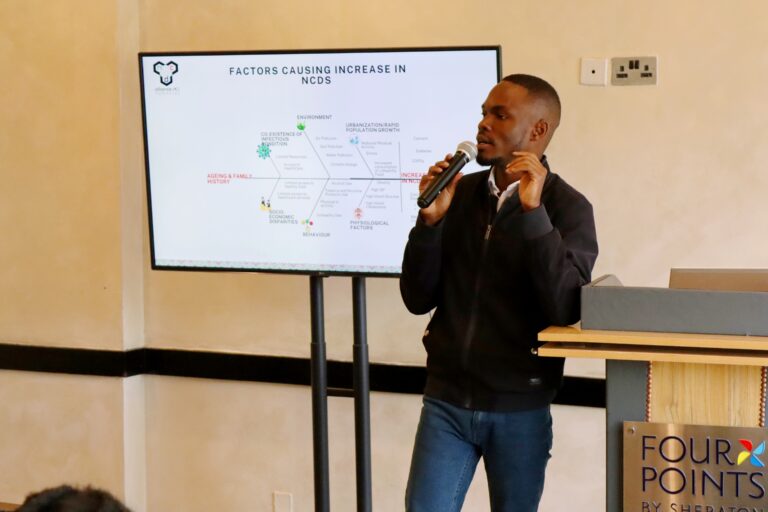
“You will think these alcoholic beverages are different, but what they’re selling is ethanol in different percentages. Just the same way, they’re giving you these ultra-processed products high in nutrients of concern,” he noted.
Andeko explained that at the beginning of consumption, alcohol produces pleasurable sensations and emotional responses that make people feel good. However, this continuous consumption eventually leads to negative outcomes.
“At the onset, there’s all the pleasurable feelings that you desire from consuming alcohol. But tell me why after three hours of consumption, at the peak alcohol gives you three effects. You get tired, depressed, and stressed. But the industry markets this case and that’s why they create pictures of beautiful ladies and gentlemen because that’s the feel-good thing they are trying to portray,” he said.
He further pointed out that women’s bodies metabolize alcohol differently and generally less efficiently than men’s bodies. Because of this, alcohol can have stronger effects on women even when consumed in smaller amounts compared to men.
“To the ladies, your body metabolizes alcohol differently from men because men have a higher alcohol metabolism. That’s why women are given alcoholic beverages with a lower percentage, around four to six percent,” added Andeko.
Andeko observed that companies have learned that marketing strategies for men and women differ. “If you look at the past few years, the trend of the new alcohol beverages being introduced mostly targets women.”
The sensitization forum aimed to equip advocates with accurate knowledge that will enable them to provide the public with the right information to make healthier decisions, thus helping fight Non-Communicable Diseases in their communities.