|
Getting your Trinity Audio player ready...
|
By Mercy Kachenge
Nairobi, Kenya: Global research by UNESCO shows that only one in five women journalists who experience sexual harassment report the incident, leaving nearly 80 per cent of cases hidden. Kenya reflects this reality, where harassment continues behind newsroom doors, sustained by silence, power imbalances, and weak accountability structures—particularly within freelance journalism.
Sexual harassment has long been a quiet crisis in Kenya’s media industry. For many journalists, especially women and young freelancers, it is not an isolated experience but a career-limiting force.
Editors at Talk Africa say the decision to develop a sexual harassment policy was not prompted by a crisis but by unsettling industry data. “Many women are unable to reach their full potential because of what happens in newsrooms,” explains Talk Africa editor Mary Mwendwa. Although the newsroom had not recorded a formal case, the absence of a policy felt risky. “If a case happens and you don’t have guidelines, both the survivor and the alleged perpetrator are left without a fair process.”
That recognition mirrors findings by the Association of Media Women in Kenya (AMWIK), whose research shows sexual harassment is both widespread and underreported. According to AMWIK Executive Director Queenter Mbori, over 60 per cent of media practitioners surveyed have experienced harassment, with women—especially interns and early-career journalists—disproportionately affected. In some studies, nearly 40 per cent of female interns reported harassment, often perpetrated by editors or supervisors who control assignments and career progression.
Small newsrooms and freelance spaces remain particularly exposed. While Kenya’s Employment Act requires organizations with more than 20 employees to have sexual harassment policies, smaller outlets often operate without such safeguards. “That is where the protection gap is widest,” Mbori explains.
Freelancers, who are not formal employees, face economic pressure and isolation. “Many don’t know where to report harassment, especially when it comes from sources or editors outside their primary newsroom,” says Talk Africa Managing Editor Winnie Kamau. Approval of a single story often determines whether a freelancer earns income, creating opportunities for exploitation.
Fear of retaliation remains the strongest barrier to reporting. Survivors often worry about being blacklisted, losing future assignments, or being labelled “difficult.” In some cases, perpetrators shield themselves through influence, legal threats, or institutional silence.
Gendered power dynamics worsen the situation. Kenyan newsrooms are still largely male-led, and harassment complaints are often handled by the same hierarchies that protect perpetrators. Younger journalists are especially vulnerable, fighting for bylines, visibility, and survival in a shrinking media economy. “Speaking up can feel like career suicide,” Kamau says.
Yet both Talk Africa and AMWIK argue that silence carries a greater cost—not just for individuals, but for journalism itself. “If we cannot address misconduct within our own industry, how can we credibly report on harassment in other sectors?” Kamau asks.
In response, Talk Africa has positioned its sexual harassment policy as both a preventive and supportive tool. While it formally applies to contributors, the newsroom extends a duty of care through networks, including close collaboration with AMWIK.
Freelancers can be referred for legal guidance, psychosocial support, and reporting pathways, even when incidents occur outside the newsroom. “We can’t control other organizations,” Mwendwa says, “but we can help journalists understand their rights and the legal procedures available.”
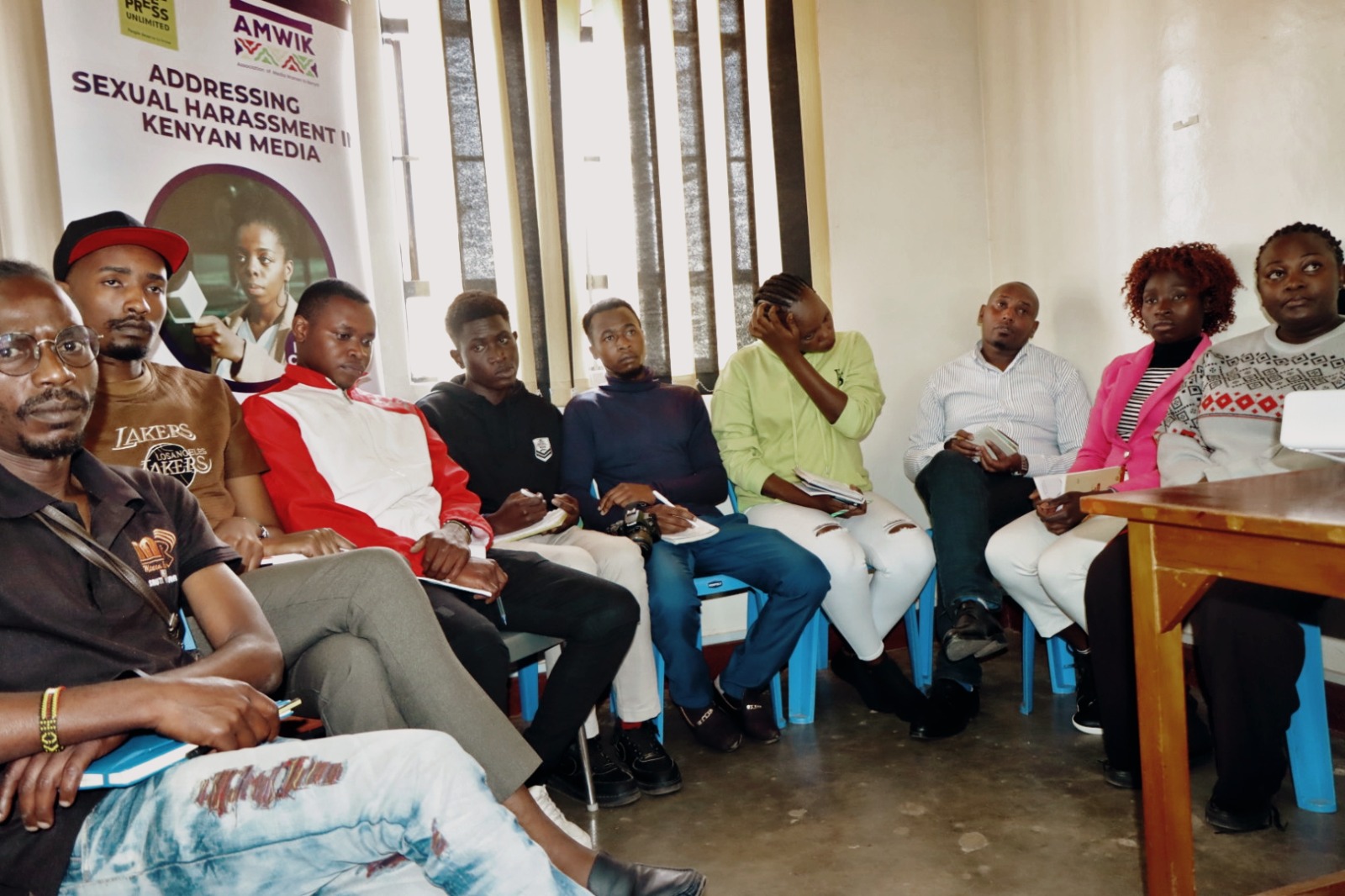
Training is central to this approach. Through AMWIK-led sessions, freelancers learn that sexual harassment is a crime under Kenya’s Sexual Offences Act. “You do not need to give in to sexual advances to succeed,” Mwendwa says. “Your excellence, your integrity, and your work are what build a career.”
Kamau adds that safety is treated as a newsroom value, not an afterthought. Editors are expected to balance authority with compassion, professionalism with humanity. “We listen, we advise, and we walk with journalists,” she says. Mental health support, safe reporting spaces, and mentorship are embedded into the newsroom culture.
Looking ahead, sustaining a culture of safety requires networks and accountability. Freelancers operating in isolation are at risk, but belonging to professional networks ensures support, guidance, and oversight. “When you belong to networks, people notice if something happens, and that itself is protection,” Mwendwa notes.
Ultimately, Talk Africa’s initiative reflects a broader shift in Kenya’s media ecosystem—a recognition that safety is not optional, freelancing does not negate rights, and silence should no longer be the default response to abuse.
As sexual harassment continues to threaten careers and lives, the message from these three voices is clear: prevention, policy, and solidarity are necessities. In an industry built on truth-telling, protecting journalists from harm is the story that must finally be told.