|
Getting your Trinity Audio player ready...
|
By Lenah Bosibori
Kakamega County, Kenya: The brutal murder of a 16-year-old girl in Kakamega is not an isolated tragedy. It is a stark, screaming headline in a growing ledger of death. Her story one of a life cut short has become a devastatingly familiar refrain in Kenya, where the wheels of justice turn with agonizing slowness against a relentless tide of femicide. This is not merely a crime story; it is a national emergency, a critical failure that demands to be addressed not with fleeting outrage, but with systemic, immediate action. The death of this young woman is a chilling testament to a culture that too often devalues women’s lives, and a judicial system that fails to protect them.
On the night of March 12, 2025, the Wasamba home in Lutaso village, Navakholo Sub-County, Kakamega County, was filled with laughter and chatter after a long school day. Sixteen-year-old Grace Wafula, a Form Two student, had just finished having dinner with her two younger siblings.
Hours later, her life would be brutally taken by someone she knew, adding her name to the growing list of women and girls murdered across Kenya in recent years.
“She had deep cuts on her head and back. The suspect had brutally murdered her,” recalls her grandfather, Robert Wasamba, his voice trembling with grief.
Wafula’s life was cut short by a person well-known to her, just when her grandfather had begun to see hope for her future after struggling to support her through secondary school. Her story, one of love, betrayal, and government systemic failure, reflects how justice for femicide victims in Kenya remains painfully slow.
The Night That Changed Everything
According to Wasamba, that evening seemed ordinary. After dinner, Wafula and her siblings went to sleep in their grandmother’s kitchen, which doubled as their bedroom. Their mother had died years earlier, leaving them in the care of their grandparents and their father, who is physically disabled.
The bedroom that once offered Wafula comfort now lingers as a painful memory for her younger siblings where they last saw her alive. That night, after everyone had gone to sleep, a familiar tap sounded on the window. Her 14-year-old sister, curious, asked who it was. The boy’s calm voice came through as he introduced himself moments before tragedy struck.
He then gave Wafula some pills, asking her to end her pregnancy. Earlier, she had told him she was carrying his baby, but he denied responsibility and pressured her to terminate it. Wafula had refused, saying she wanted to move in with him and raise the child, a decision that angered the Form Four student.
“The boy left, pretending to go to school the next morning, but came back at around 4 a.m.,” says Wasamba.
When Wafula heard another knock on the window, something she had grown used to, she got up to see off her boyfriend, planning to return home and get ready for school. But moments later, the quiet night was shattered by screams.
“Immediately we heard the screams, we rushed towards the sound, but before I got there, people were already running towards my home. When they saw me, they said, ‘Mzee, pole (Old man, sorry), they have killed your granddaughter,’” recalls Wasamba.
Her body was found just 300 meters from her home. The suspect fled the scene but was later arrested at school, where he had reported as usual and continued with his normal classes as if nothing had happened.
A Slow and Painful Search for Justice
Wasamba lives about 160 kilometers from Navakholo, where the suspect was first detained at the local police station for a month before being transferred to the Kakamega High Court, where the case remains pending.
“We began the court process on June 16, three months after the murder,” Wasamba explains. “The case was postponed in July, then again in August. The most recent hearing was on October 21, when the suspect requested bail,” said Wasamba.
In Kenya, the courts can grant bail which is a cash amount paid to the court to guarantee court appearance while a bond is a written undertaking, often involving a surety, to comply with court conditions.
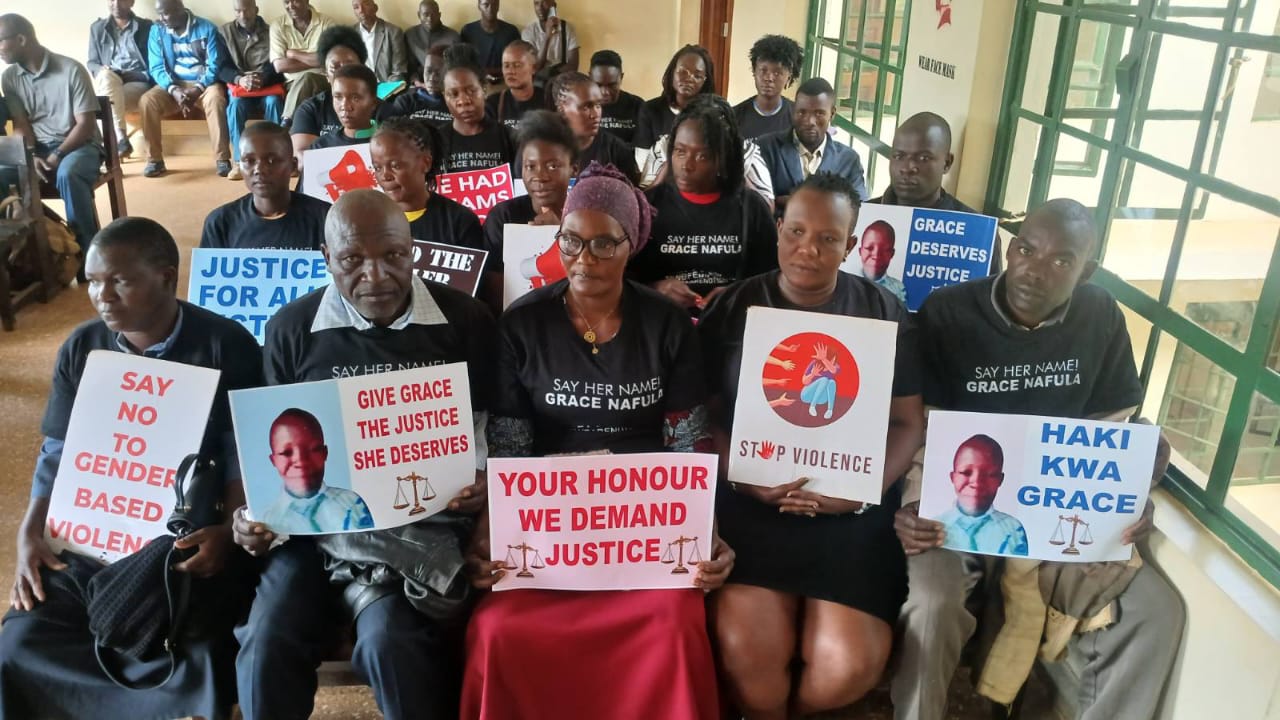
The next hearing is scheduled for December 8. This allows the school-going suspect to sit for his Kenya Certificate of Secondary Education (KCSE) exams, when the court will also decide whether he will be granted bail.
“The suspect’s family say they will win because they have money,” says Wasamba adding that since his granddaughter’s death, he has not been okay and is suffering financially after a motorbike accident.
“I used to earn a living from riding a motorcycle, but I had an accident. Now I am just at home,” said Wasamba.
Wafula’s father, who has a physical disability as well as mental challenges, has been in deep sorrow since the incident, lacking the strength to pursue justice for his daughter actively. The bereaved family said the suspect’s family has never offered condolences nor did they attend the burial.
According to End Femicide Kenya (EFK) a grassroots movement formed in 2022 to end gender-based killings of women and girls. During court sessions, the suspect’s father remains outside the courtroom, only stepping in at the end to collect the next hearing date.
End Femicide Kenya Steps In
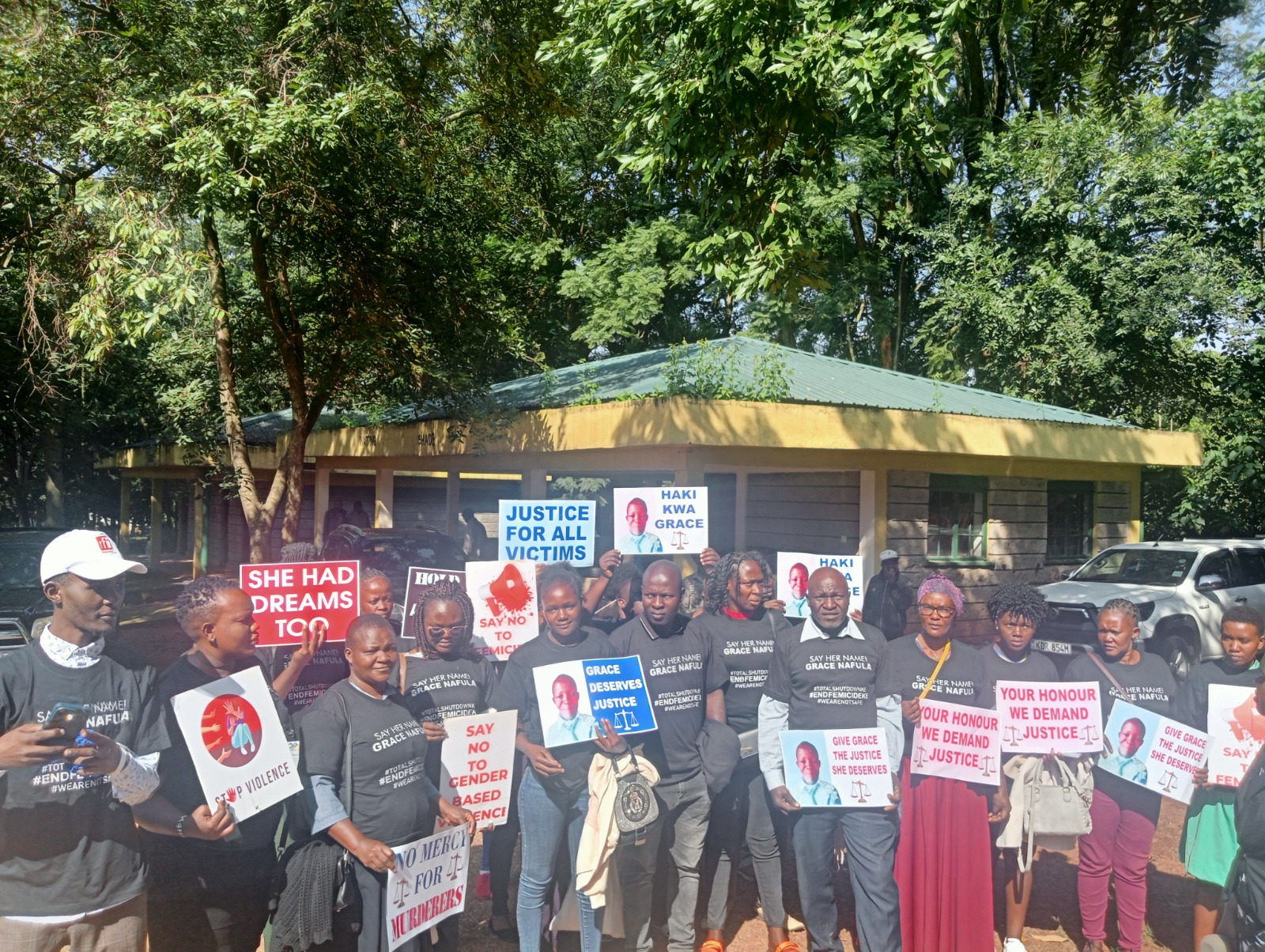
EFK which also brings together activists, journalists and lawyers to track cases, support survivors’ families and push for femicide to be recognized as a aspecific crime in Kenya learned about Wafula’s case, they immediately intervened.
“We received the report in March 2025. Wafula was six months pregnant. The suspect had brought her pills to terminate the pregnancy, but she refused,” says Sharon Zimangi, EFK’s Kakamega County Coordinator.
At first, the case file went missing from the court. “If it were not for End Femicide Kenya, the file would have been lost forever,” says Wasamba, adding that EFK not only helped the family find a lawyer but they have stood by the family.
EFK assigned a pro bono lawyer who now accompanies the family to every mention and ensures the case stays active despite delays.
“The suspect is currently held in a juvenile remand facility,” says Zimangi. “But we fear he might be released because under Kenya’s 2010 Constitution, every suspect has a right to bond. And since the murder weapon was never recovered, we depend heavily on forensic evidence.”
Wafula’s case is not unique. End Femicide Kenya reports that 152 women were killed in 2023, and over 80 cases have already been recorded in 2025.
A 2024 report by Africa Data Hub revealed that a woman is killed every three days in Kenya, often by intimate partners, most of them aged between 15 and 35 years. Africa Data Hub
“Since January, we have handled five femicide cases in Kakamega County alone, two in October alone,” says Zimangi, adding that many cases go unreported as some families fear revenge while others stay silent to avoid stigma.
According to FIDA-Kenya’s 2023 Gender Justice Report, only 12% of femicide cases filed between 2020 and 2023 resulted in convictions. The rest were delayed, withdrawn, or dismissed due to poor investigations or witness intimidation.
Barriers to Justice
For Wafula’s family, justice comes at a high cost. From their home to the Kakamega High Court is a 200-kilometer journey, mostly on rough, dusty roads accessible only by motorcycle.
“There’s no public transport to the court,” says Zimangi. “Each court date means borrowing money for transport, yet the family has almost nothing.”
Court delays are frequent. Families often arrive after long, costly trips only to find sessions postponed. “The investigating officers know this in advance, but rarely inform families,” Zimangi said, adding that it is “frustrating and emotionally draining.”
A 2023 Judiciary report cited case backlogs, a shortage of legal officers, and underfunded witness protection programs as the main causes of case delays which in turn disproportionately affect Gender Based Violence and femicide cases.
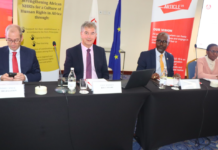
During the launch of a regional study on Media Framing of Sexual and Gender-Based Violence and Femicide in East Africa, Nancy Baraza, chair of a 42-member Technical Working Group on GBV and Femicide, called for greater media involvement, proposing that journalists should follow these court cases to their conclusive ends.
Wafula’s younger siblings still sleep in their grandmother’s grass-thatched kitchen, haunted by the memory of that night.
“The suspect’s father has never spoken about it,” says Zimangi softly. “It’s as if he feels guilty or lost.”
For the victim’s family, justice feels distant. But with help from activists, neighbors, and volunteers, they continue to fight, refusing to let Wafula’s name be forgotten.
Gender rights organizations are pushing for a national femicide law, stronger forensic capacity, and the fast-tracking of GBV cases, alongside increased funding for legal aid and witness protection.
“Femicide is not just a women’s issue,” says Zimangi. “It’s a national crisis that shows how little we value girls’ lives. Without reform, Wafula’s story will repeat itself,” she said.
As the December 8 hearing approaches, Wasamba prays for strength and justice.
“All I want,” he says quietly, “is justice for my granddaughter. She was only sixteen. She deserved to live.”
At the end of 2024, President William Ruto announced a KSh100 million fund to combat femicide by providing safe houses and shelters for survivors. However, activists note that months later, little progress has been made even as more women continue to lose their lives.
Irungu Houghton, Executive Director of Amnesty International Kenya, questioned why femicide is still not recognized as a specific crime in the Penal Code. Irungu urged newsrooms to establish dedicated desks that report on femicide cases consistently, to help families pursue justice.
This story was made possible with the grant from WANIFRA-WIN SIRI Accelerator Programme.