
|
Getting your Trinity Audio player ready...
|
By Winnie Kamau
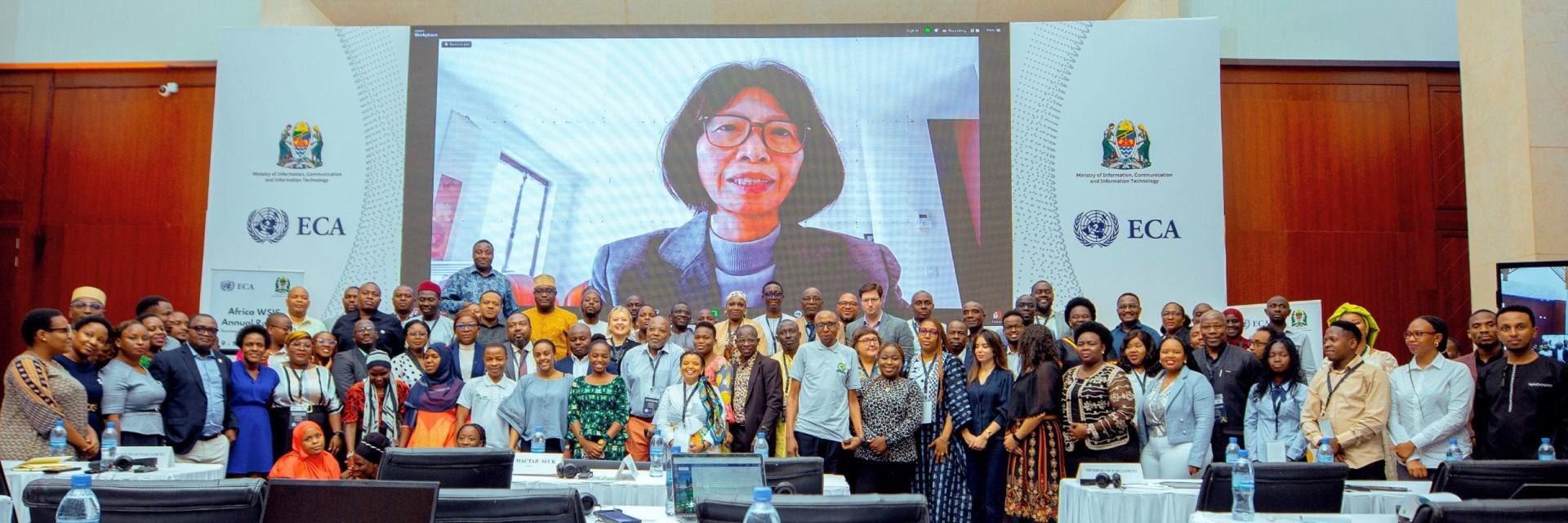
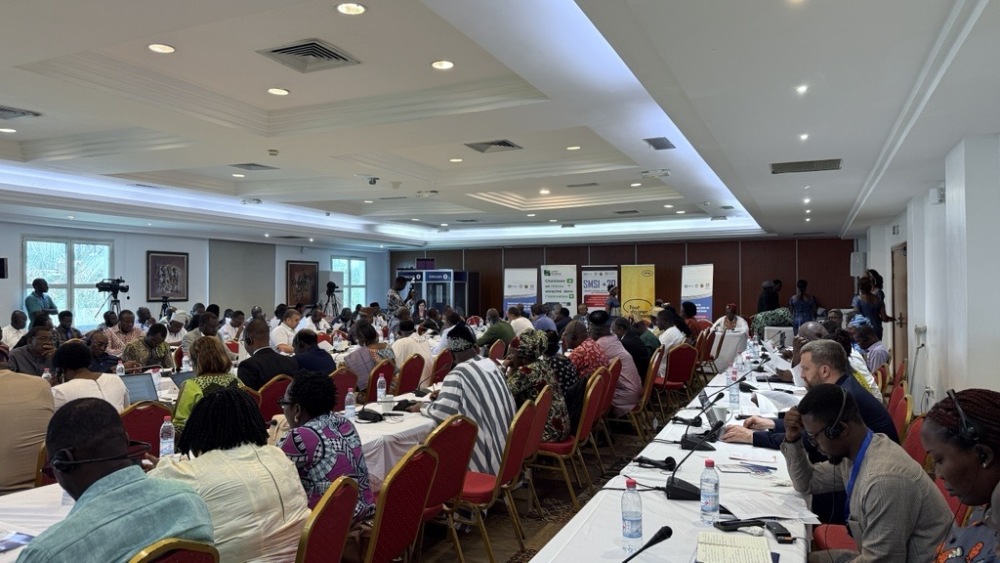
Nairobi, Kenya: In the heart of Cotonou, Benin, last month, delegates from across Africa gathered for the WSIS+20 Africa Summit dubbed Reflecting on Two Decades of Digital Transformation.
The meeting is part of the twenty-year review of the World Summit on the Information Society (WSISPlus20), a moment to reflect on the digital progress and challenges facing the continent.
The opening ceremony was presided over by H.E. Louis Gbèhounou Vlavonou, President of the National Assembly of Benin, alongside Mrs. Aurelie Adam Soulé Zoumarou, Benin’s Minister of Digital Economy and Digitalization, and Mactar Seck, Chief of the Emerging Technologies, Innovation and Digital Transformation Section at the United Nations Economic Commission for Africa (ECA), among other distinguished guests.
In his keynote address, H.E. Louis Gbèhounou Vlavonou emphasized that WSIS has evolved far beyond a summit. “Today, WSIS is a global dynamic, an ecosystem of cooperation, monitoring, and the sharing of best practices,”
Adding “In 2025, the process enters its maturity phase, with pressing challenges ahead: technological sovereignty, AI ethics, equitable data access, and the inclusion of women and youth in the digital economy” said Louis.
Echoing these sentiments, Minister Aurelie Adam Soulé Zoumarou highlighted Benin’s leadership in advancing digital inclusion
“By hosting this meeting in Cotonou, Benin reaffirms its commitment to an inclusive, sovereign, and sustainable digital future. We firmly believe that digital technology is a catalyst for Africa’s transformation if we harmonize our efforts, frameworks, and invest in the talents of tomorrow” noted Aurelie.
ECA’s Mactar Seck underlined Africa’s digital progress over the past two decades: “Mobile phone subscriptions have grown from 91 million in 2005 to over 1.18 billion in 2024, reflecting the rapid adoption of mobile technology across the continent. Active mobile broadband lines soared from 23 million to 562 million. And with 5G networks now reaching 21 million users, Africa is embracing cutting-edge innovation.”
However, challenges persist, the Chief of the Emerging Technologies, Innovation, and Digital Transformation Section at ECA cautioned.
 “The digital divide remains a harsh reality. Millions still lack access to infrastructure, digital skills, and economic opportunities. Approximately 860 million people, or 71%, are not connected to the internet, and only 22% of rural residents use the internet. Africans spend 6.5% of their monthly income on just 2 GB of data, 14 times more than in Europe. Meanwhile, 42% of Africans lack basic digital skills, women comprise only 24% of the tech workforce, and the continent accounts for just 1.3% of global installed data center capacity.” He emphasized that WSIS+20 is a key moment to unify the historic WSIS process with the Global Digital Compact, shaping a fair, secure, and inclusive digital future for all.
A Cotonou Declaration was made and adopted by the participants which is more than just a document; it is a promise, a commitment to bridging the digital divide and ensuring that every African has the opportunity to thrive in the digital age.
Here is the full Cotonou Declaration as adopted:
Cotonou Declaration on Accelerating the Digital Transformation of Africa
Preamble
- We, the representatives of African Member States, have gathered in Cotonou, Benin, from 14 to 16 May 2025, for the African twenty-year review of the World Summit on the Information Society. The review was convened under the auspices of the Economic Commission for Africa, in collaboration with the Government of Benin and key national, regional and international stakeholders from the private sector, civil society, academia, the technical community, and the youth population.
- We recognize the strides made since the World Summit on the Information Society, held in Geneva in 2003 and Tunis in 2005, and its complementarity with the Global Digital Compact, adopted as an annex to the Pact for the Future.1
- We reaffirm our shared commitment to a people-centred, inclusive, and development-oriented information society. We resolve to move decisively from rhetoric to measurable action and to ensure alignment with the Global Digital Compact, with a view to positioning Africa as a key and proactive player in shaping a global digital future, while addressing the continent’s unique challenges and leveraging its unique opportunities.
- Acknowledgment of key issues
- We recognize that, while two decades of implementation of the outcomes of the World Summit on the Information Society have yielded meaningful progress in African countries, the digital landscape on the continent remains marked by critical gaps that demand urgent attention. We highlight the following challenges:
(a) Infrastructure and connectivity. While mobile network expansion has improved access, rural connectivity remains critically lagging. Mobile data costs in Africa, which are among the highest globally, underscore the immediate need for innovative financing solutions, cost-reduction measures, and policies that deliver affordable broadband connectivity to all.
(b) Comprehensive digital inclusion. Despite commendable gender-focused initiatives, large segments of society, such as persons with disabilities, young people in rural areas and other marginalized groups, continue to be left behind. A truly inclusive digital society requires targeted programmes that ensure that every African has access to affordable and accessible digital services with culturally relevant content.
(c) Emerging technologies and regulatory readiness. The progress of Africa in artificial intelligence, the Internet of things, other emerging and frontier technologies, and data privacy has been undermined by slow and fragmented regulatory interventions. Many countries lack clear policies to govern artificial intelligence, thereby creating uncertainty for investors, limiting adoption and slowing innovation. Without proactive regulation, Africa risks falling behind in the global race to harness emerging technologies for social and economic transformation. Strengthening policy coherence and developing ethical guidelines and institutional capacity are, therefore, critical to unlocking the full potential of those innovations.
(d) Advanced capacity development. While basic digital literacy programmes have laid a foundation, our global competitiveness hinges on developing advanced skills in such areas as artificial intelligence, big data analytics and the Internet of things. With many educational entities still lacking modern technology
and expertise, we must urgently scale up both foundational and advanced capacity development, including the review and development of relevant curriculums at all levels of learning.
(e) Stakeholder engagement and accountability. Although multi-stakeholder dialogues have enriched our discussions, the absence of clearly defined roles and accountability for Government, the private sector, academia and civil society remains a notable gap. Consequently, enhanced funding and strategically mobilized partnerships are essential to harness the full potential of all stakeholders.
(f) Energy infrastructure and accessibility. A stable and sustainable power supply is essential for digital transformation, yet it remains unreliable in many African countries, which hinders the deployment of information and communications technology (ICT) and the attainment of broader development goals.
(g) Critical minerals. Africa is richly endowed with critical minerals, including graphite, lithium, copper, cobalt, rare earth elements and aluminium, all of which are essential for global industry and digital transformation. However, the extraction of critical minerals also raises challenges relating to security, over exploitation, geopolitics, climate change, biodiversity degradation and environmental pollution.
III. Commitment to action
- We resolve to translate our collective vision into a concrete, measurable road map for the digital transformation of Africa. In doing so, we adopt the following core principles to guide our shared agenda:
(a) Sustainable and inclusive transformation. We shall incorporate rigorous environmental sustainability standards and address comprehensive digital inclusion in all strategies for implementing the action lines and targets of the World Summit on the Information Society2and the objectives of the Global Digital Compact. Our initiatives will ensure that every segment of society— including women, persons with disabilities, rural communities and other marginalized groups—not only benefit equitably from the digital revolution but are also given the opportunity to contribute to it.
(b) Differentiated and realistic targets. We acknowledge the variation in the degree of digital maturity of African Member States and commit to setting realistic yet ambitious benchmarks for the year 2030. These benchmarks will define clear performance milestones for both leading and emerging countries to drive measurable progress in digital transformation. See World Summit on the Information Society, Plan of Action (WSIS-03/GENEVA/DOC/5-E).
(c) Active participation and transparent oversight. With an annual review process for the World Summit on the Information Society already in place and a high-level review planned for the Global Digital Compact at the eighty-second session of the General Assembly, we commit to active engagement and accountability. We shall participate fully in those reviews—contributing to continuous evaluation, policy refinement and the sharing of best practices— thereby ensuring that our collective digital agenda remains adaptive, transparent and result-driven.
Concrete steps for implementation
- We commit to a results‐oriented road map for our digital future by taking decisive steps to implement the action lines and targets of the World Summit on the Information Society and the objectives of the Global Digital Compact, with a view to ensuring their alignment and complementarity.
- To accelerate the process towards universal connectivity, we will focus on the following:
(a) Infrastructure expansion. We will push for a robust roll-out of broadband connectivity that ensures near‐universal coverage for leading nations and achieves minimum standards for others by 2030.
(b) Affordability and innovation. We will implement targeted cost‐reduction strategies to cut mobile data costs by 50 per cent while leveraging such innovative financing mechanisms as public-private partnerships and universal service funds to bridge rural connectivity gaps.
(c) Energy infrastructure connectivity. We will strengthen regional energy systems by modernizing electricity grids through digitalization and upgrading existing infrastructure to ensure a reliable and sustainable power supply, and deploy innovative energy solutions to expand access in remote areas, extend Internet connectivity and increase digital inclusion for underserved communities.
- To enhance digital inclusion and advance skills development, we will focus on the following:
(a) Broad-based inclusion. We will accelerate the deployment of comprehensive digital literacy programmes that promote lifelong learning and that extend beyond gender parity to include persons with disabilities, young people in rural areas and other marginalized groups.
(b) Advanced capacity. We will integrate into national academic curriculums advanced digital skills modules relating to artificial intelligence (e.g. machine learning, deep learning, generative artificial intelligence and large language models), the Internet of things, big data, edge computing and quantum computing,
and establish centres of excellence to ensure measurable increases in technology equipped educational institutions.
- To advance the governance and ethical adoption of artificial intelligence, we will focus on the following:
(a) Clear and adaptive governance of artificial intelligence. We will develop comprehensive national artificial intelligence strategies with robust regulatory frameworks, including sandboxes, to ensure the responsible adoption of technology while fostering innovation. We will strengthen institutional capacity by training policymakers, regulators and legal experts to effectively oversee artificial intelligence implementation and security standards.
(b) Ethical artificial intelligence and inclusive innovation. We will embed transparency, fairness and inclusivity into artificial intelligence governance to ensure that technology benefits all communities while mitigating risks such as bias, misuse and disinformation. We will also facilitate cross-sector collaboration to encourage artificial intelligence-driven solutions that align with the continent’s socioeconomic priorities.
- To strengthening data governance and cybersecurity, we will focus on the following:
(a) Legal harmonization. We will harmonize data protection and privacy laws across the continent to safeguard the flow of data across borders.
(b) Cyber resilience. We will conduct periodic cybersecurity maturity assessments, aiming for full compliance with established frameworks in leading nations and minimum compliance in others by 2030.
- To advancing digital public infrastructure, we will focus on the following:
(a) Interoperability and access. We will develop interoperable frameworks for digital public infrastructure that are based on open standards to ensure robust and inclusive digital service delivery.
(b) Timely rollout. We will ensure that all African Member States establish foundational frameworks by 2030 and that leading nations have fully operational digital public infrastructure systems by that same year.
(c) Logistics infrastructure and services. We will build well-connected and paved roads and provide efficient and information technology-enabled logistics services to facilitate e-commerce and promote the sale of locally-produced goods.
- To foster regional integration, digital trade and inclusive partnerships, we will focus on the following:
(a) Cross-border collaboration. We will strengthen frameworks for cross border e-commerce and harmonize digital taxation and regulatory policies within the African Continental Free Trade Area to promote seamless digital trade integration.
(b) Partnerships and accountability. We will define clear roles, responsibilities and accountability mechanisms for private sector investment and civil society participation, with a view to ensuring that those stakeholders contribute meaningfully to the digital transformation of Africa.
- To stimulate manufacturing of digital equipment, we will focus on the following:
(a) Sustainable mineral extraction and value addition. We will promote manufacturing of digital equipment in Africa while ensuring environmental sustainability in mineral extraction through carbon emission reduction strategies, biodiversity protection and improved waste and chemical management practices.
(b) Sustainable digital supply chains. We will enhance capacity, infrastructure and resource mobilization to support the sustainable management of e-waste resulting from digital transformation.
- To actively engage in digital cooperation processes, we will focus on continuous improvement. We commit to proactive and meaningful participation in established annual platforms to review the implementation of the outcomes of the World Summit on the Information Society in Africa under the oversight of the Economic Commission for Africa and as part of the high-level review of the Global Digital Compact to be held in 2027, thereby facilitating transparent performance monitoring, rapid policy refinement and the exchange of best practices.
- Targets for digital transformation by 2030
- Recognizing the varying levels of digital maturity among African Member States, we have established differentiated targets for leading and emerging countries to ensure realistic and achievable progress (see table).
| Priority areas Objectives for leading countries (by 2030)
Objectives for emerging countries (by 2030) |
| Broadband connectivity Increase 95 percent broadband coverage from 75 percent broadband coverage |
| Mobile data costs 50 per ent reduction in average cost to 30 percent reduction in average 1 GB cost for 1 GB |
| Digital literacy Inrease by 80 percent overall digital literacy from 60 percent overall digital literacy (young people, women, persons with disabilities) |
| Advanced digital skills Establish centres of excellence on artificial intelligence and the Internet of things; 70 percent of schools equipped to teach digital skills
Establish pilot programmes; 40 percent of schools equipped to teach digital skills |
| Artificial intelligence driven public services Fully operational artificial intelligence research hubs driving local initiatives innovation
Operational artificial intelligence |
| Cybersecurity compliance Full compliance with cybersecurity frameworks internationally recognized
Foundational compliance with cybersecurity standards |
| Digital public infrastructure Fully operational digital public infrastructure systems
Establishment of foundational digital public infrastructure frameworks |
| Digital trade integration Full integration within the African Continental Free Trade Area with establishment of Africa-wide e-commerce platforms |
| Environmental sustainability 20 percent reduction in data centre green ICT policies, set measurable milestones for policy adoption
Initiate and implement national energy consumption; at least 5 percent of e-waste is formally recycled |
| Electricity generation from renewable energy sources (e.g. wind, solar and biogas)
25 percent share of renewable energy sources in electricity generation increased from10 percent share of renewable energy sources in electricity generation |
Monitoring progress and evaluation
- To ensure accountability and measurable progress, we will implement a rigorous evaluation framework that strengthens data-driven decision-making through the following means:
(a) Africa digital performance index. We will establish an annual Africa specific ICT index, which will provide a means of benchmarking connectivity, digital skills and innovation across African Member States to identify progress and gaps.
(b) Ministerial peer reviews. We will convene annual high-level forums where policymakers, private sector leaders and civil society share success stories, challenges and best practices, with a view to fostering continuous refinement of digital strategies.
(c) Standardized data collection. We will strengthen national and regional reporting mechanisms by leveraging the platform established by the International Telecommunication Union for taking stock of progress on the action lines of the World Summit on the Information Society, the forthcoming map for the implementation of the Global Digital Compact and the capabilities of national statistical offices, to ensure consistent and transparent tracking of implementation efforts.
VII. Conclusion
- The present declaration represents the collective commitment of Africa to accelerating digital transformation through clear strategies, measurable targets and strengthened collaboration. We reaffirm our responsibility to bridge the digital divide, foster sustainable innovation and create inclusive digital economies that benefit all people in Africa. By raising the level of sophistication of the continent’s value chains, we aim to attract greater investment and deliver on the wider development agenda.
- To ensure that such progress remains aligned with global priorities, we call for the continuation throughout the next decade of the processes that are ongoing within the framework of the World Summit on the Information Society, including the Internet Governance Forum and World Summit on the Information Society Forum High-Level Event, and we look forward to their alignment with the Global Digital Compact. Doing so will help to enhance African leadership in digital governance and ensure that technology serves as a force for socioeconomic progress, sustainability and equity.
- In addition, initiatives within the framework of the World Summit on the Information Society to take stock of and award prizes for projects and activities that leverage ICT for sustainable development have played a crucial role in highlighting impactful digital initiatives and in promoting the work of stakeholders in digitalization for development. Governments across Africa are encouraged to submit projects for global recognition, with a view to fostering innovation and strengthening the presence of Africa in the evolving digital landscape.
- With a shared vision, structured monitoring and a commitment to actionable policies, we are ready to take meaningful steps towards creating a digitally connected, resilient and future-ready continent.
Done at Cotonou, Benin, on 16 May 2025