
|
Getting your Trinity Audio player ready...
|
By Juliet Akoth
Nairobi, Kenya: Kenya is entering the final stretch before producing its first commercial crude oil, with the initial barrel slated for December 1, 2026, and an export cargo of approximately 600,000 barrels anticipated in early 2027. However, Energy and Petroleum Regulatory Authority (EPRA) representatives emphasize that reaching this milestone will not automatically resolve the country’s petroleum issues.
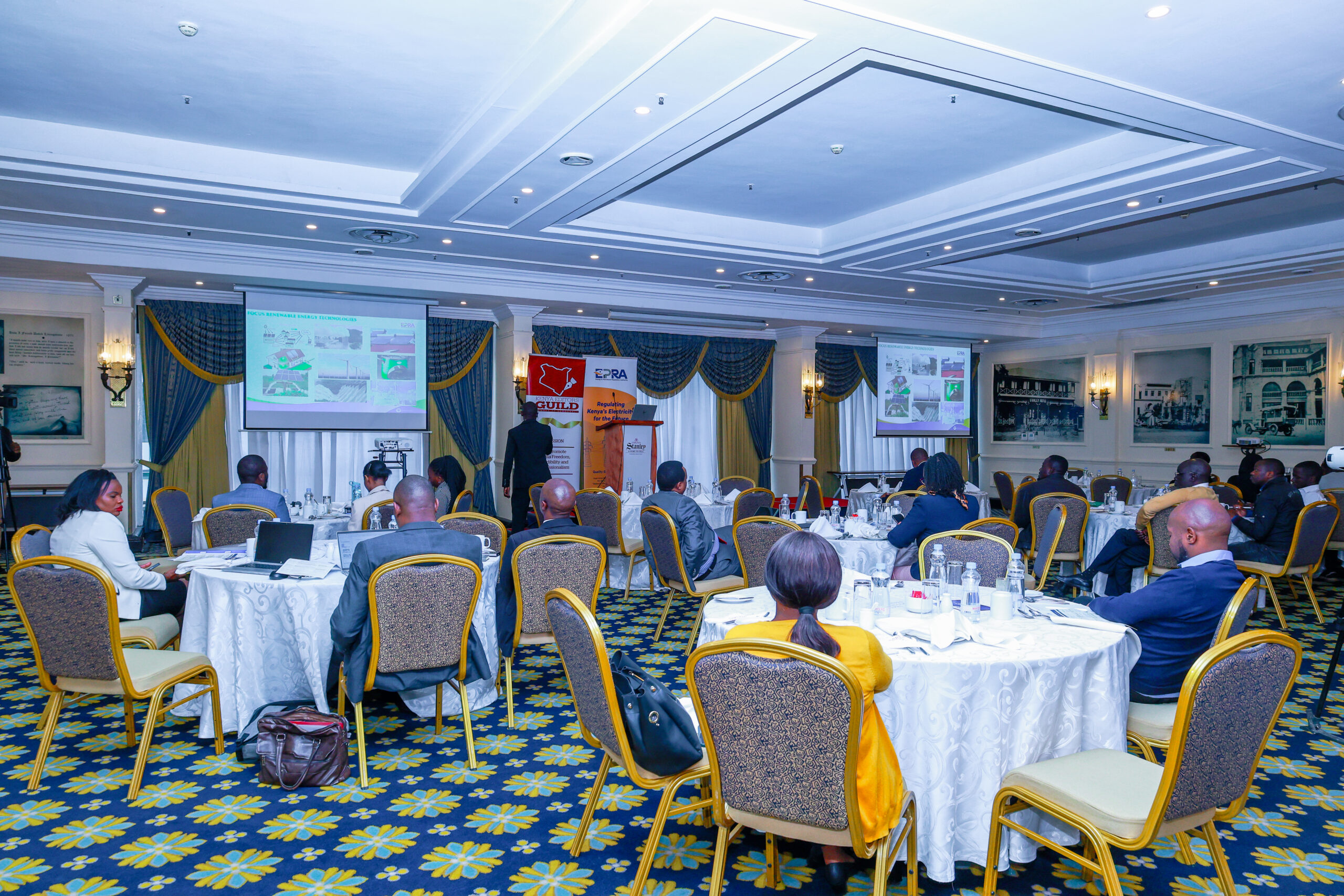
These insights were highlighted on Monday in Nairobi during an EPRA media session with journalists and editors. The event outlined the evolution of Kenya’s petroleum sector from exploration into development, alongside upcoming expectations as production draws near.
Engineer Edward Mwirigi Kinyua, EPRA’s Petroleum and Gas Director, pointed out that the nation’s energy potential stretches past the widely discussed Turkana deposits. He noted that Kenya features four sedimentary basins—Lamu, Mandera, Anza, and the Tertiary Rift Basin.
According to the Director, Kenya has four sedimentary basins: Lamu, Mandera, Anza and the Tertiary Rift Basin. The Tertiary Rift Basin covers about 100,000 square kilometers and contains the South Lokichar oil fields in Turkana, where discoveries in Blocks T6 and T7 are now moving towards production.
“In total, we’ve had 13 discoveries, and 10 of those discoveries have been in the Tertiary Rift Basin, specifically in Blocks T6 and T7.”
Moving those discoveries into production has taken years of appraisal, regulatory review and approvals. Kinyua said Parliament ratified the Field Development Plan on February 25, 2026, clearing the way for the contractor to begin development.
Noting “The contractor was given the green light to start the process of development, so the contractor is out in the field as we speak.”
The first phase will involve a modular development producing 20,000 barrels a day. Kinyua said 43 wells are planned during the first three years, with production eventually expected to rise to about 50,000 barrels a day in the second phase.
“We are starting with a production of 20,000 barrels a day” he said.
But producing the crude is only part of the challenge. Getting it from the oil fields in Turkana to the coast will require special handling because of its characteristics.
Kinyua noted that Kenyan crude is sweet, meaning it has relatively low Sulphur content, but it is also waxy. While the former is generally favorable from a refining perspective, the latter creates a transportation challenge because the crude becomes increasingly viscous as it cools.
Kinyua said the crude has a wax appearance temperature of about 65 degrees Celsius, meaning it needs to be kept sufficiently warm to maintain its flow. Explaining the effect in simpler terms, Kinyua said: “If it falls below 65 degrees, it starts becoming like your shoe polish.”
For the first phase, the crude will therefore be transported in heated trucks over roughly 1,100 kilometers from Turkana to Mombasa.
The need to transport crude to the coast also highlights a distinction that could be easily missed as Kenya approaches its first commercial oil production: producing crude does not mean the country will immediately produce its own petrol, diesel or jet fuel.
“We are currently importing everything” he noted.
Refined petroleum products such as petrol, diesel and jet fuel will continue to enter through Mombasa before being stored, transported inland and eventually delivered to filling stations.
This continued dependence on imported refined products places EPRA’s economic regulation role at the center of the petroleum market.

According to Waweru Karanja, EPRA’s Deputy Director for Pricing Analysis, Tariffs and Competition, regulation is not simply about controlling businesses, but also about protecting consumers and ensuring that the energy market functions efficiently.
“We monitor competition in the industry because we do not want dominance, abuse of dominance or exploitation of customers,” Karanja noted.
That role becomes particularly important as Kenya moves into a new phase in which it will produce crude oil while continuing to import the refined petroleum products used by consumers and businesses.