|
Getting your Trinity Audio player ready...
|
By Jane Meza
Mombasa, Kenya: A price hike of a few shillings or an empty supermarket shelf is typically the first indication of trouble in Kenya’s dairy sector for most households.
However, beneath these retail shortages lies a far broader systemic challenge: maintaining milk output and feed supplies within a distribution network increases the vulnerability. With the current adverse weather being experienced in the country is now causing the soaring of production expenses, and consequently affecting the supply chain vulnerabilities.
Data shows formal milk deliveries to processing plants has dropped by 3.7%, sliding from 84.4 million litres in June to 81.3 million litres in July 2026. Early estimates from the Kenya Dairy Board (KDB) point toward a continued downward trend through August and September.
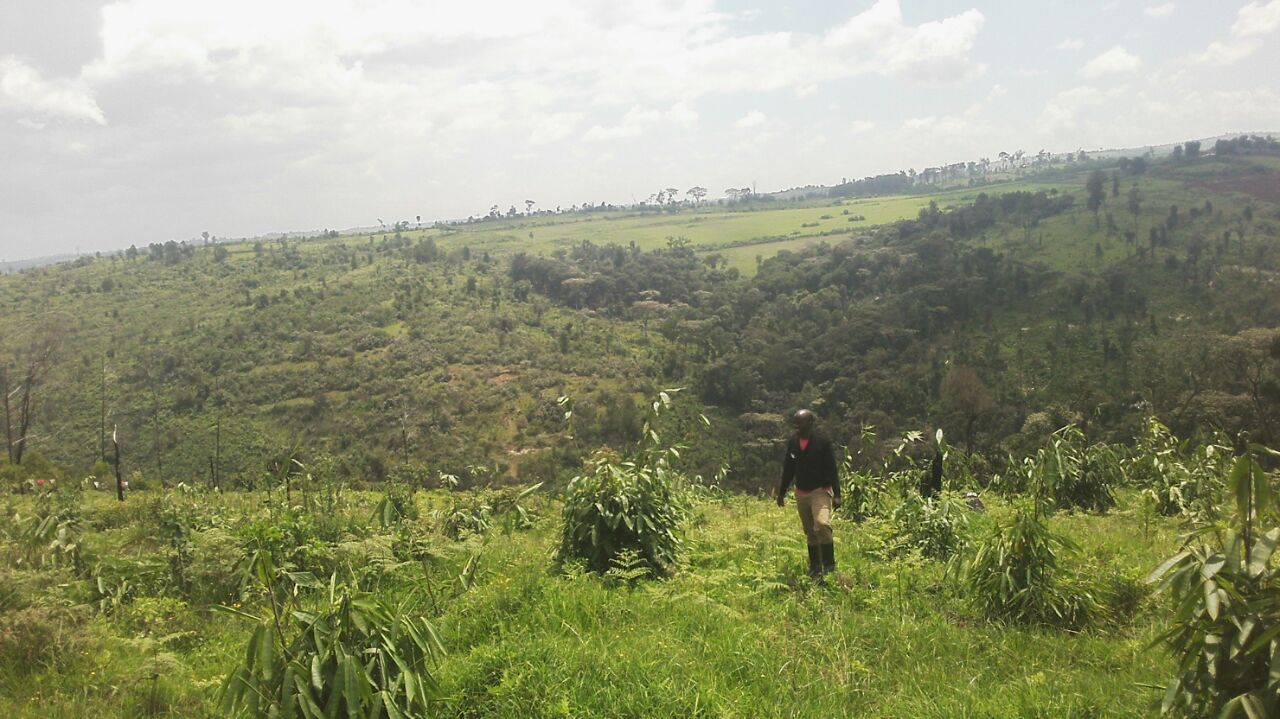
The government says the immediate cause is prolonged dry and cold weather in key dairy-producing areas, which has reduced pasture and increased pressure on animal feeds. But the crisis is also exposing questions about how prepared Kenya is for a dairy industry where weather conditions are becoming increasingly difficult to predict.
Agriculture and Livestock Development Cabinet Secretary Mutahi Kagwe says inadequate rainfall has reduced the availability of natural pasture. “There is a shortage of animal feed in areas where cows normally graze on green pasture,” Kagwe said, explaining that poorly fed cows produce less milk.
For small scale farmers who depend on pasture and locally available fodder, the consequences can be immediate. In Nyeri, dairy farmer Andrew Mbogo reported a sharp decline in milk production as pasture deteriorated and feed became more difficult to obtain. Other farmers in dairy-producing regions are facing similar pressures as the cost of hay and commercial feeds rises.
 At Meskins Dairy in Nyeri, Operations Manager Jackson Maina said the company had been forced to reduce the quantity of milk supplied to clients because of the declining collections. The problem therefore moves quickly from the farm to the processor.
Less feed means lower milk production and lower production means less milk collected while Less milk collected means processors have less raw material for fresh milk and other dairy products.
The supply chain is also under pressure; drought is not the only explanation Kagwe says some farmers are selling milk directly to brokers because they offer better prices than cooperatives and this can reduce the amount of milk entering formal processing channels.
The situation highlights a difficult question for the dairy industry: if farmers cannot make enough money from formal markets, why would they continue supplying them? While facing rising feed costs and need reliable payment Cooperatives and processors need regular supplies and Consumers need affordable milk.
When one part of the chain becomes financially unattractive, the entire system can be disrupted, from farms to supermarket shelves; the disruption is already visible in towns and cities.
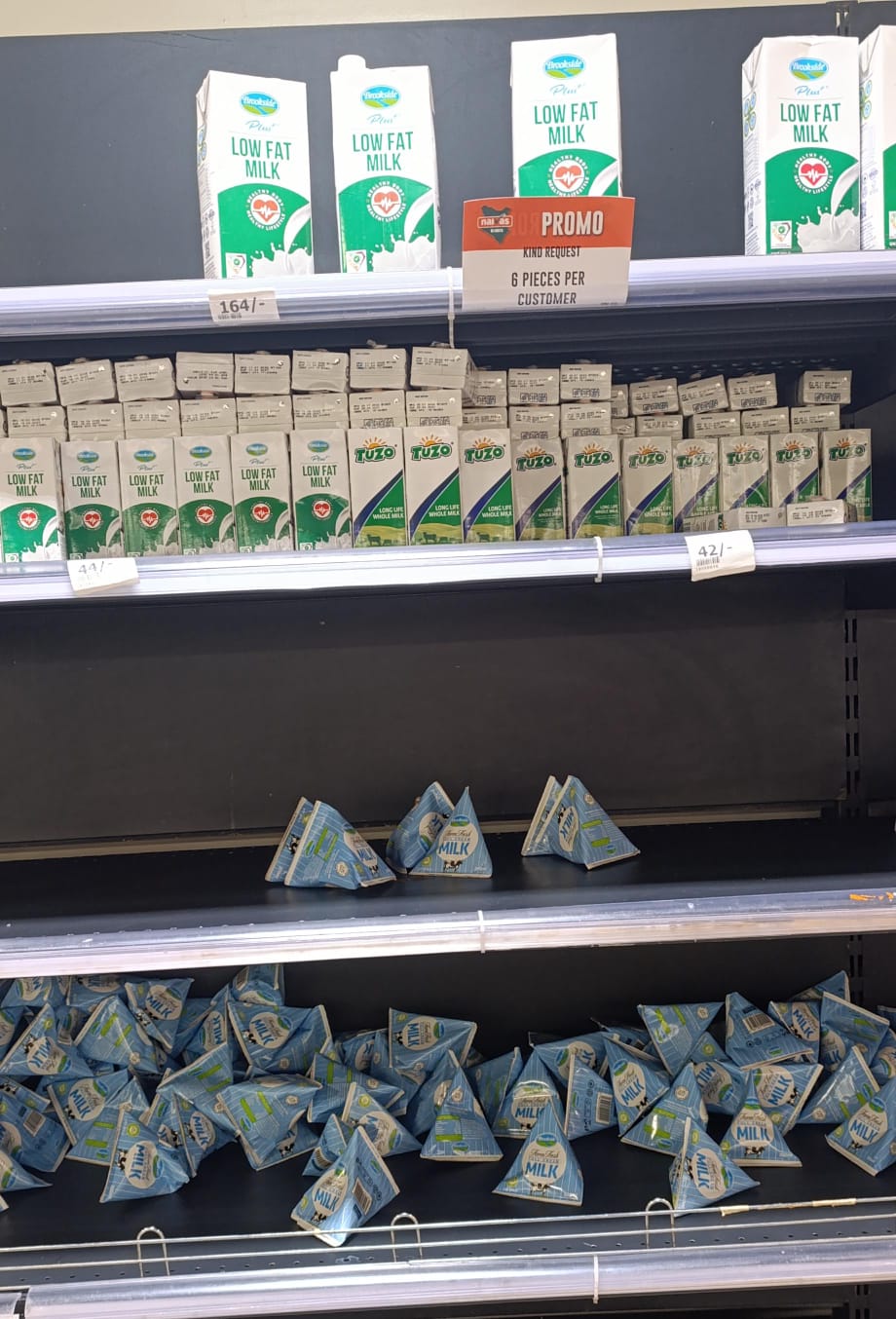
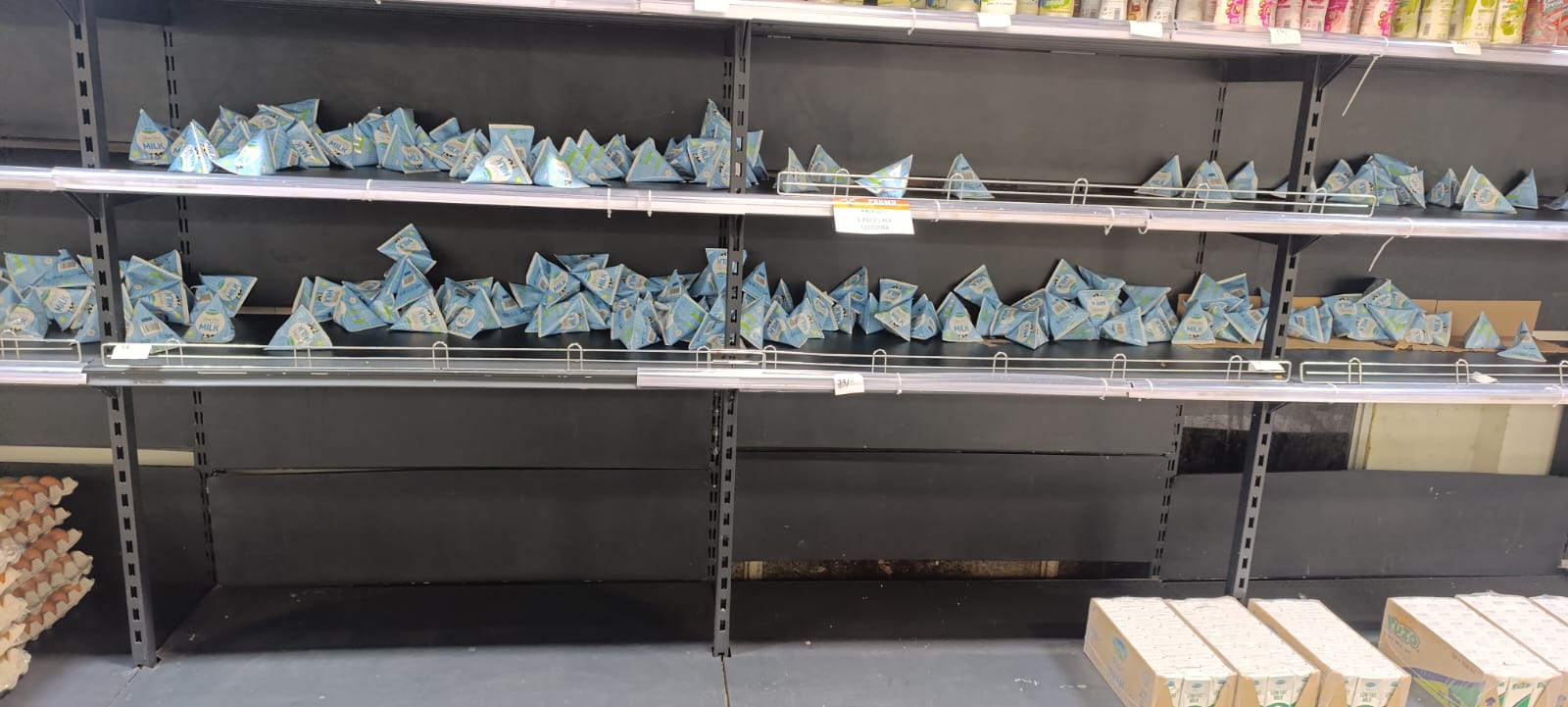
The shortage is increasingly being felt in urban shops, in Mombasa, some supermarkets including Naivas Nyali and Carrefour City Mall have reported run out of stocks completely for days now, while some outlet venders increase the price at least up to KSh 5. Some popular brands have also been unavailable.
Paul Mutisyo, a milk vendor in Bamburi, said deliveries had fallen sharply. A product that previously arrived in about 80 cartons could now come in quantities of only 10, 20 or 30 cartons. Retail prices have also increased in some outlets, with some 500ml packets reportedly rising by between KSh3 and KSh5.
KDB Managing Director Dr William Maritim says the situation is uneven rather than a complete national shortage. “Milk continues to be available in the market, despite temporary supply constraints,” Maritim assured Kenyans.
However, KDB has identified low stock levels, fewer brands and pack sizes and delayed replenishment at some outlets. Fresh pasteurised milk has been more affected, while UHT and extended-shelf-life milk remain comparatively more available, for consumers, that means the problem is not necessarily finding any milk, but finding the product they normally buy at a price they can afford.
At Magunas Supermarket in Nyeri, manager Samuel Kasyoki said the shortage was being felt by consumers. Some brands previously selling at about KSh58 had risen to around KSh62, while other brands were selling at about KSh65 for a 500ml packet.
What Happens If The Weather Does Not Improve?
The government expects the October–November-December (OND) rains to improve pasture and fodder availability and, consequently, milk production, but waiting for rain to restore the dairy sector raises a broader concern. If dairy production repeatedly depends on sufficient rainfall and natural pasture, what happens when rainfall becomes less predictable?
The current shortage should therefore be viewed not only as a seasonal market disruption but also as a test of Kenya’s preparedness for climate-related pressure on livestock production. The answer may lie in reducing dependence on rainfall dependent pasture.
Farmers can be supported to produce and store silage and hay, adopt suitable fodder varieties, improve water harvesting and access affordable animal nutrition better feed storage could allow farmers to enter dry periods with enough reserves rather than searching for expensive feed after pasture has already disappeared.
Government Seeks Short-term Solutions
The government says it is responding by working with feed manufacturers and facilitating access to animal-feed supplies. Livestock Development Principal Secretary Jonathan Mueke described the immediate challenge as “fodder pressure due to lack of rain.”
According to KDB, the government is also pursuing longer-term interventions, including milk coolers to improve milk aggregation and preservation and subsidized sexed semen to improve dairy herds but interventions will need to reach the farmer before the next feed crisis.
For the consumer, the lesson from the current shortage is simple: the price and availability of milk in a supermarket can be determined months earlier by what happens in a farmer’s field. And on the other side of Kenya’s dairy sector, the bigger question is whether it can move from reacting to milk shortages to preparing for the conditions that cause them.
If the next dry spell produces the same chain reaction less pasture, expensive feed, lower milk yields, reduced processing and higher consumer prices the country will be dealing with more than a temporary shortage It will be confronting the resilience of an entire food system.