|
Getting your Trinity Audio player ready...
|
By Liz Anyango
Nairobi, Kenya: According to the 2018 Kenya Household Health Expenditure and Utilization Survey, 13.2% of Kenyans turn to local retail pharmacies as their primary healthcare entry point.
Consequently, for many Kenyans, the nearest neighborhood chemist rather than a clinic or hospital serves as their initial medical contact.
Following a five-year pilot assessing the feasibility of delivering family planning services through pharmacies, a broader question has arisen: can this model be expanded across Kenya?
Spearheaded by inSupply Health, an organization dedicated to enhancing access to essential health products and services within Kenya’s healthcare system the project’s Market Test initiative has served over 200,000 women.
According to inSupply Health CEO Yasmin Chandani, the project operated across up to 600 pharmacies located in 10 counties. For Chandani, the five-year project was about finding out whether pharmacies could provide quality family planning services while remaining profitable enough to continue.
“Five years ago, we started with a question. Can community pharmacies offer quality family planning services and still remain viable as businesses? And through that journey, we’ve discovered the answer is yes,” Chandani says.
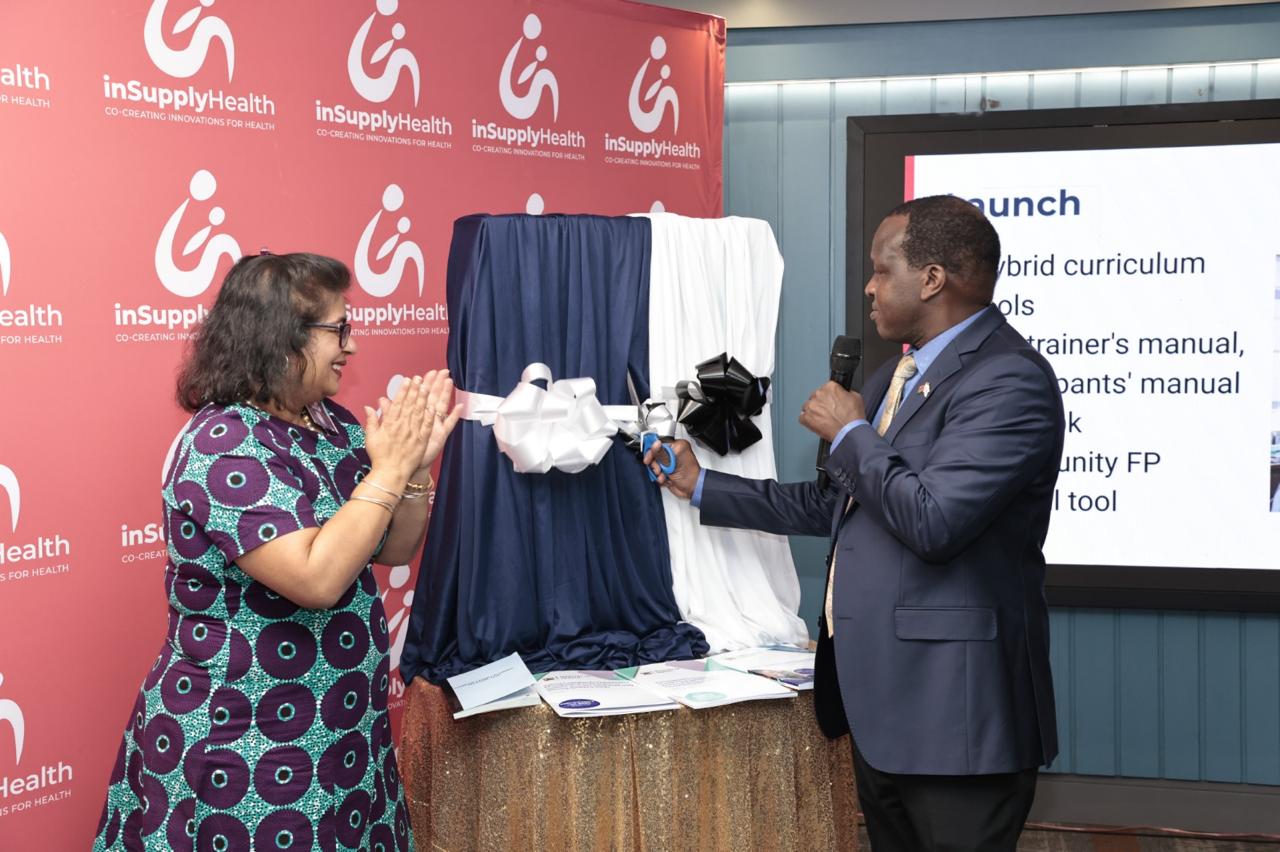
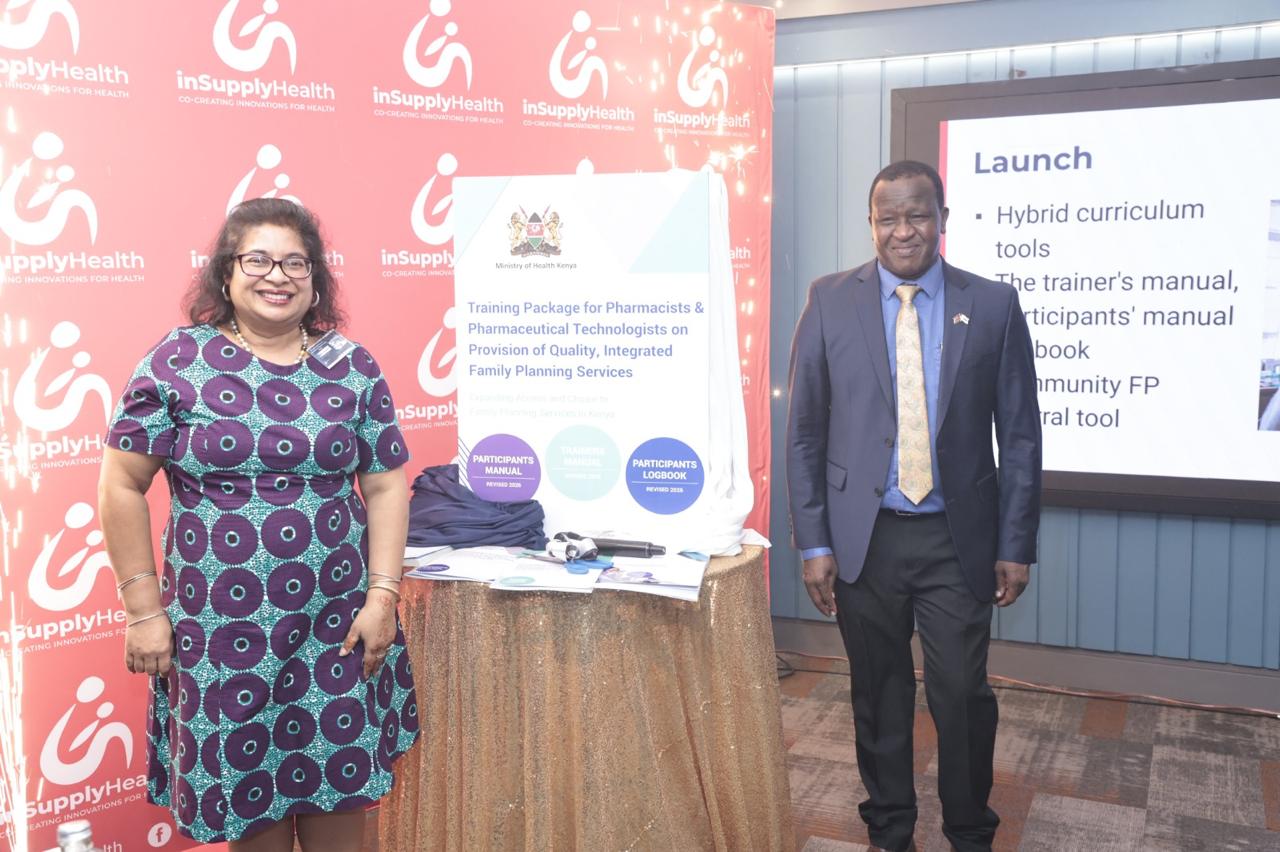
Reproductive, Maternal, Newborn, Child and Adolescent Health (RMNCAH) at Kenya’s Ministry of Health,
during the official launch of the Family Planning in Pharmacy Training Hybrid Curriculum in Nairobi.
The project has also expanded the range of family planning methods available through the pharmacy channel.
Why the Pharmacy Matters
The appeal is partly about convenience. A woman seeking family planning services may not always want to spend hours waiting at a health facility. A pharmacy may be closer to home, open beyond normal working hours and offer a more private interaction.
But Chandani says proximity alone does not explain why some pharmacies performed better than others.
“The pharmacies that have been most successful are the ones that are owner operated and the ones that really listen to clients and have an approach of service delivery that speaks to clients’ needs,” she says.
That relationship can matter in reproductive health, where trust can determine whether someone feels comfortable asking questions or seeking advice. Research in Kenya has also pointed to the potential of the model.
Evidence from an earlier pharmacy-based family planning programme also points to the potential of the model. A study by researchers from The Challenge Initiative East Africa/Jhpiego, Kenya’s Ministry of Health and the Kenya Pharmaceutical Association, published in 2023, examined 150 pharmacies in Nairobi, Mombasa and Kilifi.
The programme, which ran from 2019 to 2020, recorded 43,632 family planning client visits. The researchers found that pharmacies could complement public health facilities and expand access to family planning, while highlighting the need for trained providers, stronger referral links and better data reporting study.
Participating pharmacies provided options including condoms, oral contraceptive pills, emergency contraception and injectable contraceptives, while referring clients to public facilities for methods they could not provide.
The idea is not for pharmacies to replace hospitals and health centres, but to become another connected entry point into the health system.
From five days in a classroom to learning at the Pharmacy
But expanding that role raises another question: are pharmacy professionals adequately prepared to provide these services? The push to expand pharmacy-based family planning is also changing how providers are trained.
At the Learning and Exit Summit in Nairobi on Thursday, September 4, 2026, inSupply Health launched a new Pharmacy Family Planning Hybrid Curriculum for pharmacists and pharmaceutical technologists.
The new approach moves away from the earlier five-day classroom-based training. Instead, providers complete self-paced online learning followed by a two-day practical component.
Fridah Kaitany, Senior Health Systems and Policy Analyst at inSupply Health, said the programme takes about three to four weeks, allowing pharmacy providers to complete the online component around their businesses before undertaking practical training.
“The training takes three to four weeks for a pharmacy provider, that is a pharmacist or the pharmaceutical technologist, to go through the training,” Kaitany said.
Adding “We thought it was good for us to just have it as a hybrid curriculum whereby we have the three to four weeks training that is self-paced and have a two-day in-person practicum just to ensure that they have the skills and knowledge to offer these family planning services.”
For pharmacy owners, that flexibility could make a difference. Closing a business for several days to attend training can mean lost income. A hybrid model reduces that disruption while retaining the practical component needed to build providers’ skills.
The move also comes as Kenya’s national family planning guidelines increasingly recognise the role of community pharmacies.
The 2025 Seventh Edition of the National Family Planning Guidelines includes community pharmacy among approaches that can increase access to family planning services, alongside self-care interventions and strategies such as task shifting.
But can the Model Survive Without Donors?
For Chandani, the next test is not simply whether pharmacies can provide family planning services. It is whether the model can work on a larger scale. The Market Test training has benefited from donor support, but Chandani says the model now needs to move towards a more sustainable approach.
“Donor funding is not there forever. Our intention was to bring that cost so low that it could be afforded by any of the pharmacies,” she says.
The ambition is to work with professional associations to offer the training on a wider, self-paid basis. Chandani says the business case is that the value of being able to provide the service should outweigh the cost of training.
“If each pharmacy can pay a small amount to facilitate that training, the value that comes out of them being able to deliver the service will more than cover the cost of that training,” she says.
That would mark an important shift: from a donor-supported project to a model that can operate through the market.
From 10 counties to 47?
Kenya has about 7,500 registered pharmacies, but only about 600 are currently part of the Market Test network. The ambition is to take the model to all 47 counties.
For Chandani, that expansion is about making sure where a woman lives does not determine whether she can access convenient and affordable family planning services.
“Our dream would be to cover all 47 counties because every Kenyan woman needs access. It doesn’t matter if you live in Wajir or if you live in Nairobi. Fundamentally, women seek affordable quality care that’s convenient and that suits what their needs are,” she says.
But reaching more pharmacies will require more than training providers. The pharmacies will need stronger links with health facilities, better data, professional oversight and consistent quality of care. Chandani says stronger referral systems will be particularly important.
“We need to strengthen referral networks, bi-directional referral between public, private sector clinics and pharmacies. And that leads to better quality of care,” she says.
The need for stronger referrals and better reporting was also highlighted in a 2023 study of pharmacy-based family planning services in Nairobi, Mombasa and Kilifi. As pharmacies take on a bigger role in primary healthcare, regulation and quality standards will also become increasingly important.
The Bigger Question
The five-year Market Test may have answered one question: pharmacies can provide a convenient additional channel for family planning.
However, the more complex issue lies ahead: can this approach operate independently of ongoing donor funding? As the initiative scales up, will pharmacies be able to sustain care quality? Furthermore, can seamless links to health centers and hospitals be preserved whenever patients require care beyond a pharmacy’s capacity?
For a woman looking for family planning services, those questions may seem far removed from the decision to walk into a pharmacy. What matters may be simpler.
Is it nearby? Is it open when she needs it? Can she get the information and service she needs? And can she trust the person serving her?
If Kenya can answer those questions while maintaining quality, regulation and strong referral links, the pharmacy on the corner could become more than a place to buy medicine.
It could become another doorway into primary healthcare. With a model that has already reached more than 200,000 women, the next test is whether Kenya can take that doorway from 10 counties to all 47.