|
Getting your Trinity Audio player ready...
|
By Mary Mwendwa
Nairobi, Kenya: Nairobi conference pivots from political pledges to legal obligations, as experts warn climate financing gap threatens development gains across the continent.
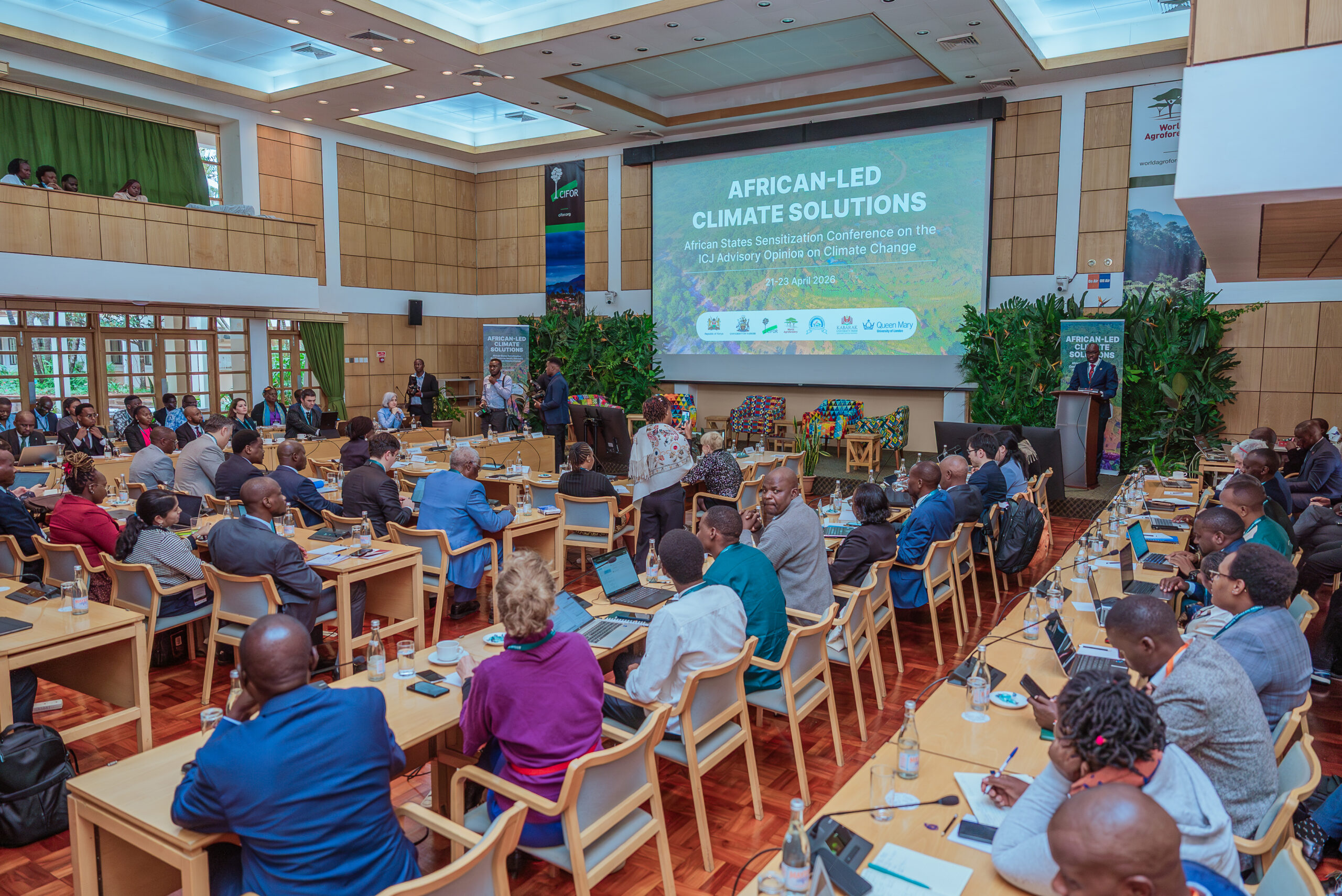
One year after a landmark International Court of Justice (ICJ) advisory opinion made climate commitments legally binding, African leaders, legal experts, and scientists have opened a high-level conference in Nairobi with a unified demand: move beyond victimhood and build Africa-led solutions to a crisis the continent did not create.
The three-day meeting (21–23 April 2026), convened by the Centre for International Forestry Research and World Agroforestry (CIFOR-ICRAF) in partnership with the Government of Kenya, Queen Mary University of London, Kabarak University, and the Technical University of Kenya, has drawn senior government officials from East Africa and the Horn of Africa, alongside representatives from the East African Community, African Union Commission, the United Nations, and civil society.
At the heart of the discussions is the ICJ’s Advisory Opinion of 23 July 2025, which affirmed that states have binding legal obligations to protect the climate system and may face consequences for climate-related harm.
“This ruling changes the rules of the game,” said Dr Korir Sing’Oei, Principal Secretary for Foreign and Diaspora Affairs, Kenya. “Climate commitments are no longer political choices. They are legal obligations. For Kenya, this means accelerating implementation, strengthening enforcement, and fully integrating climate action into our development and economic decisions.”
From Legal Leverage to Frontline Action
While Africa contributes less than 4% of global greenhouse gas emissions, according to the African Development Bank and other international datasets, the continent suffers disproportionately from rising temperatures, recurrent droughts, and intensifying floods. The Intergovernmental Panel on Climate Change notes that Africa is already experiencing widespread loss and damage across key sectors, including agriculture, water, and infrastructure.
Leaders at the Nairobi conference argue that the ICJ opinion fundamentally strengthens Africa’s hand—not as a passive victim, but as a shaper of solutions and a claimant for accountability.
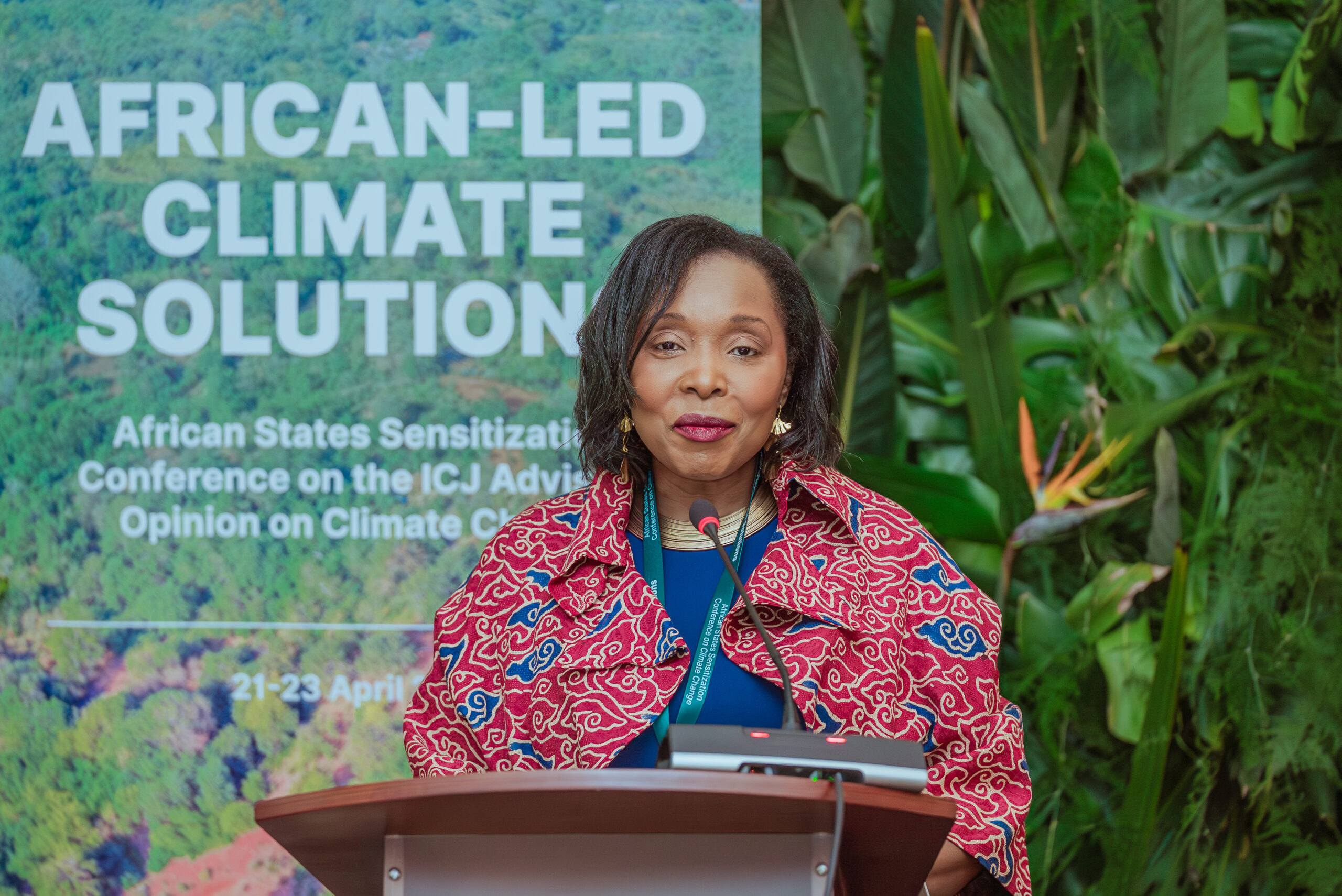
“Climate change is not only an environmental or legal issue,” said Dr Éliane Ubalijoro, CEO of CIFOR-ICRAF. “It is fundamentally a human and development issue. We need science, law and policy to work together so we can move from principle to action and deliver real solutions for communities.”
The Implementation Challenge
Despite the legal breakthrough, a stark financing gap remains. At COP28, countries agreed to operationalise a Loss and Damage Fund, but current pledges—estimated at under USD 1 billion—fall far short of the hundreds of billions of dollars annually that developing countries are projected to need.
“The ICJ advisory opinion is a game changer,” said Dr George Wamukoya, Team Leader of the African Group of Negotiators Experts Support (AGNES). “It affirms that states can be held accountable beyond specific agreements. The challenge now is no longer about commitments. It is about implementation—and ensuring countries have the financing needed to deliver.”
Dr Philip Osano, Chief Operating Officer of CIFOR-ICRAF, added: “The advisory opinion gives developing countries stronger leverage to demand accountability and to push for the support and financing needed to meet their climate goals.”
Africa Is Not Waiting
Despite these headwinds, the conference has also showcased a continent in motion. From the African Forest Landscape Restoration Initiative (AFR100) and climate-smart agroforestry to community-led adaptation strategies rooted in indigenous knowledge, African countries and communities are already building scalable solutions.
“The real test lies in implementation,” participants said in a joint statement. “The ICJ opinion’s true value depends on how effectively it is translated into concrete policies, targeted investments, and sustained action that delivers meaningful benefits for communities across Africa.”