
|
Getting your Trinity Audio player ready...
|
By Jasmine Atieno
Mombasa, Kenya: For far too long, conversations about ocean conservation have been held in air-conditioned conference halls, far removed from the salty winds and shifting tides that define life along Kenya’s coast.
Policies are drafted, strategies unveiled, and commitments announced yet the people who live with the ocean every day, who know its moods and mysteries, are rarely present. This year, that dynamic is being disrupted in a profound way.
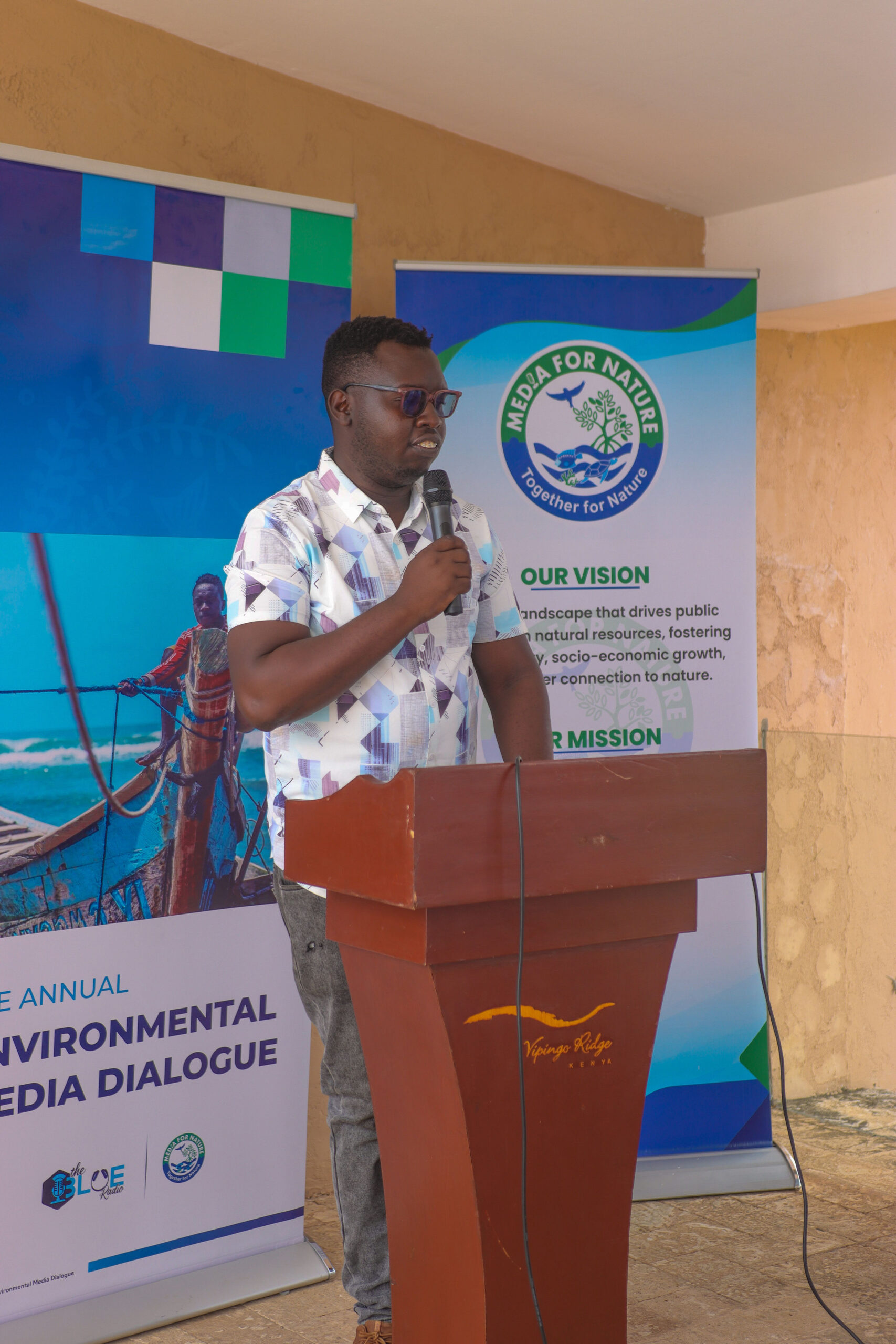
Thanks to the vision of Media for Nature and Blue Radio, the Environmental Media Dialogue is moving directly into fishing communities, and that shift is nothing short of transformative.
When journalists, scientists, and policymakers gather in villages like Kuruwitu, they are not just holding another meeting. They are acknowledging that fisherfolk, divers, and coastal women restoring coral reefs are not passive subjects of conservation, they are its frontline experts.
These communities have read the ocean for generations, predicting storms from the winds, identifying fish migrations, seabird patterns, and sensing subtle changes in currents long before any satellite imagery could confirm them.
Their knowledge is not folklore; it is a living science, honed through centuries of observation and practice. Yet, until now, it has been largely absent from the narratives shaping national and global policy.
By situating the dialogue in fishing villages, Media for Nature and Blue Radio are forcing the media to listen, not just report. Journalists are being challenged to immerse themselves in the realities of coastal life, even learning to dive so they can witness firsthand the painstaking work of women restoring coral reefs without oxygen tanks.
This is not about parachuting in for a headline; it is about becoming witnesses to lived experiences. And that changes everything. It redefines the role of media from interpreter of policy to amplifier of community wisdom.
The timing could not be more critical. Kenya is preparing to host the Our Ocean Conference in June 2026, the first time Africa will welcome this global gathering. The world will be watching. But what will truly set Kenya apart is not just the grandeur of the conference itself, but the groundwork being laid in villages like Kuruwitu.
By embedding media dialogues in community spaces, Kenya is offering a blueprint for conservation that is not imposed from above but built from the shoreline up. It is a model that says: the future of ocean governance must be co-authored by the people who know the ocean best.
For journalists, the benefits are immense. Too often, international coverage of ocean issues reduces local communities to footnotes, their voices drowned out by technical jargon or political soundbites. By engaging directly with fisherfolk and coastal leaders, reporters gain access to stories that are richer, more authentic, and more impactful.
They learn to see conservation not as an abstract policy goal but as a lived struggle for survival, dignity, and cultural preservation. And in doing so, they elevate their own craft. If we don’t tell these stories ourselves, the world will never know that Kenya’s coastal communities are innovators, not victims.
There is also an urgency to this work. Indigenous knowledge of the ocean is at risk of vanishing. Elders recall how certain winds foretold storms or how seabirds signaled the arrival of shoals, but younger generations are losing touch with these traditions.
Hosting dialogues in fishing communities ensures that this knowledge is documented, valued, and integrated into national policy before it fades away. It is not just about conservation, it is about cultural preservation, about ensuring that the wisdom of the past informs the resilience of the future.
The decision by Media for Nature and Blue Radio to bring the Environmental Media Dialogue into fishing villages is not a logistical choice, it is a philosophical one. It signals that the future of ocean conservation will not be written solely in policy papers or press releases.
It will be shaped in conversations held on sandy beaches, in boats rocking gently on the tide, in the voices of communities who have always listened to the ocean. And now, finally, the world is beginning to listen too.
The Writer is an Environmental, Gender and Health journalist and the ViceChairperson, Mombasa Press Club