|
Getting your Trinity Audio player ready...
|
By Shaban Makokha
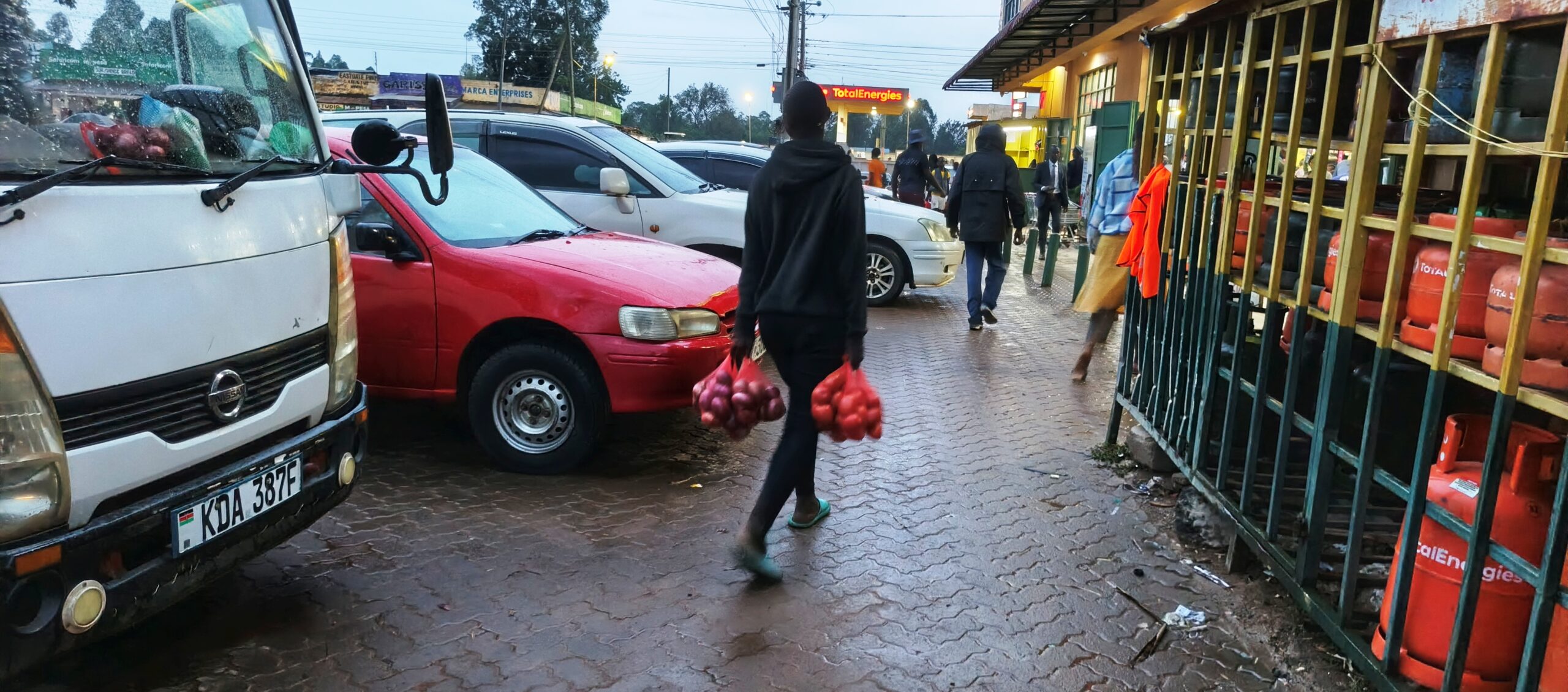
Kakamega, Kenya: The hot February sun hangs low over the congested market of Mumias town on a Friday morning. The scene is a blur of beaming colours from diverse items as people move through the bustle. Some sell, some buy, others merely admire the merchandise.
Within the busy crowd move small figures, children competing with grown-ups. They balance stock on their heads, hang it from their shoulders, or push it on wheelbarrows. These are children whose childhoods have been stolen, their dreams broken, their survival a daily toil.
Eight-year-old Joseph is one of them, darting through the crowd, approaching anyone he meets to sell tomatoes and onions stocked in tiny nets. Jose, as his peers call him, wears a torn white t-shirt, faded almost to grey. His shorts are held together by a string at the waist. His slippers are torn at the ends, exposing cracked feet. His tiny hands are rough, blemished, and split.
The clothes hang loosely from his thin body, a testament to missed meals and a childhood spent in labour instead of play. His market days begin before dawn, forcing him to trek long distances to reach his workplace. The work is punishing—long hours under the scorching sun, loads of produce weighing up to 10 kilograms, and exposure to adults of diverse, often harsh, attitudes.
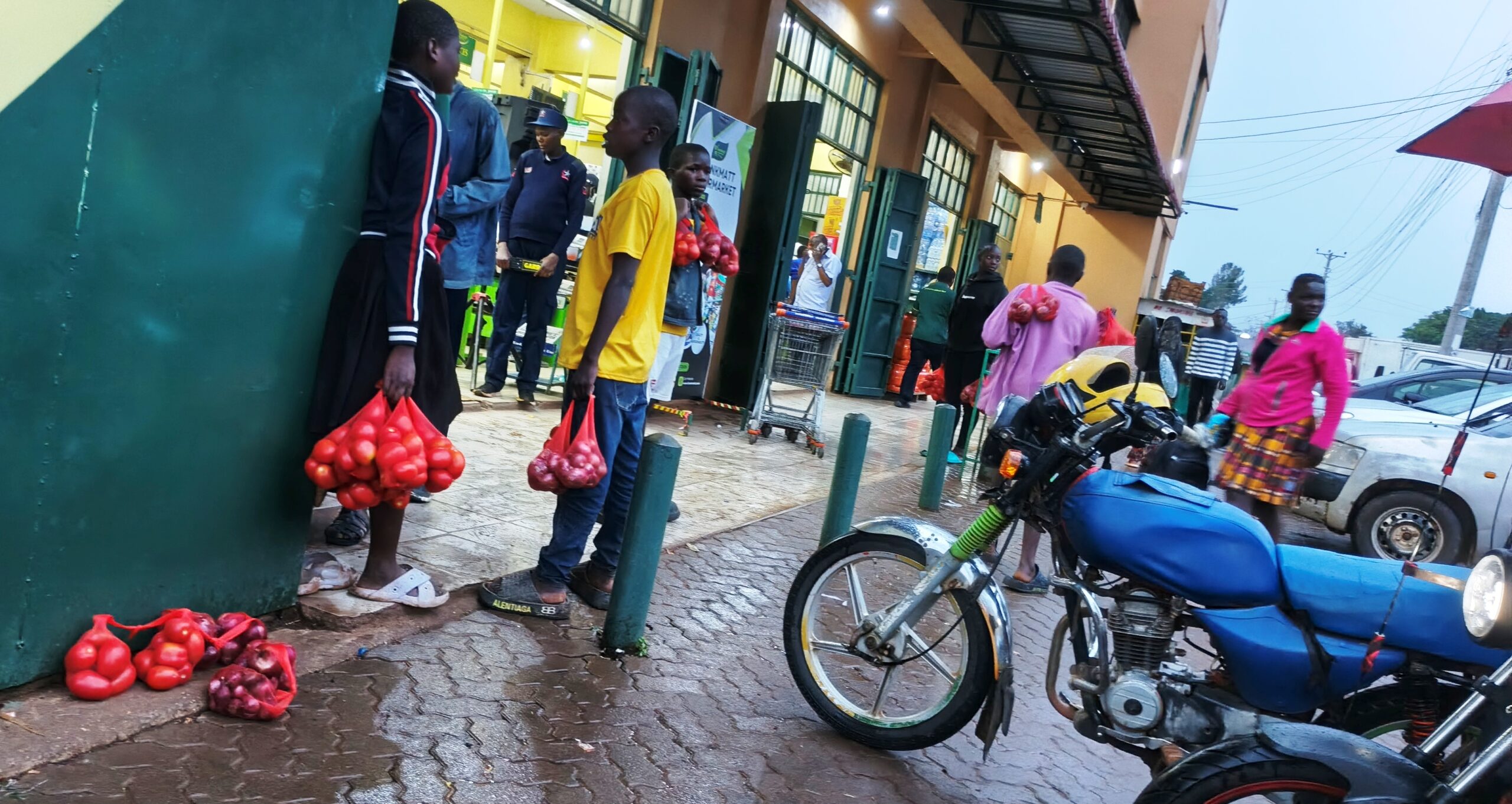
“Some clients insult us by chasing us away,” said Jose. “They claim we are supposed to be in school and not chasing after people.”
The weight of the tiny nets filled with tomatoes and onions drags his small frame forward. “I want to be a doctor,” Jose says, his voice soft. “But I have no one to educate me. My father separated from my mother. He went to Nairobi, leaving us with another woman he had remarried. She has refused to help us and said we have to survive—that is why I am selling these onions to get food and soap.”
His story is one of thousands scattered across urban Kenya, children suffering in pain and silence, their innocence lost to toil. According to UNICEF and the International Labour Organisation, over 1.3 million children in Kenya aged between 5 and 17 are engaged in child labour, the majority in unsafe conditions.
While every child deserves safety, learning, and play, UNICEF field reports indicate that Kakamega, Bungoma, Kericho, Narok, and Kilifi are among the counties where child labour is most entrenched. These regions, rich in agriculture and informal economic activities, have become silent theatres of exploitation.
Nairobi is also a hotspot. Social workers estimate the number of children in the city’s informal sector—in dumpsites, workshops, markets, and private homes—has increased by almost 60 per cent since 2019.
Child labour in Kenya is not new, but it swelled in 2020 when COVID-19 forced schools to close, pushing millions of children into work. The Ministry of Labour estimates 250,000 children entered the workforce then. The drought of 2022 and 2023 forced rural families, especially in Turkana and Garissa, to send their children to work. Inflation, job cuts, and the rising cost of living in 2024 deepened the desperation, resulting in a sharp rise in the number of working children.
Their faces tell the deeper story: stolen dreams, crushed potential, a generation raised without schooling.
Kennedy Echesa, a High Court lawyer and human rights defender, observes that child labour is a public health crisis demanding concerted effort. “These children end up with chronic injuries, respiratory diseases, severe anxiety, and sexual abuse,” he noted. “Their bodies become frail before they are even fully grown. The impact is catastrophic.”
He demands transparency in supply chains and government accountability for abating child exploitation. “We must address the root causes: poverty, inequality, hunger, and lack of basic education. This is the only way to break the cycle.”
Though the Kenyan government has pledged to eliminate child labour by 2027, enforcement remains weak. The Children Act of 2022 strengthened penalties and aligned domestic laws with international conventions, but with few labour inspectors nationwide, most cases go unreported. The informal sector, where most child labour occurs, remains almost entirely unregulated.
Dr. Donald Musi says many children forced into early work suffer respiratory illness, spinal injuries, sexual exploitation, or trafficking. “Most children visiting our facilities are suffering from adult illnesses, normally seen in people in their sixties.” He adds that some, robbed of their youth, later turn to crime, drugs, or gangs as their only means of survival.
These stories are a haunting reminder that child labour is not merely an economic issue or a legal violation—it is a theft of innocence and humanity. Ending it will require more than laws: bold action, stronger social safety nets, and a committed lift out of poverty so the children of Kakamega, Bungoma, Turkana, Nairobi, and Kericho can finally be relieved of the burdens that have stolen their futures.