|
Getting your Trinity Audio player ready...
|
By Juliet Akoth
Turkana County, Kenya: Damu KE promised to make blood easier to find across Kenya. In Lodwar, it did — until connectivity pulled the plug.
For John Ekai, a medical laboratory scientist at the Lodwar Satellite Blood Centre housed within the Lodwar County and Referral Hospital in Lodwar, Turkana County, his day starts as early.
By the time he reports for his 8 a.m. shift, the day’s pressures are already clear: donors to assess, paperwork to keep straight, and the constant need to move blood safely through a chain that depends on accurate records, cold storage, and timely coordination, especially in a county where distance can turn routine logistics into delays.
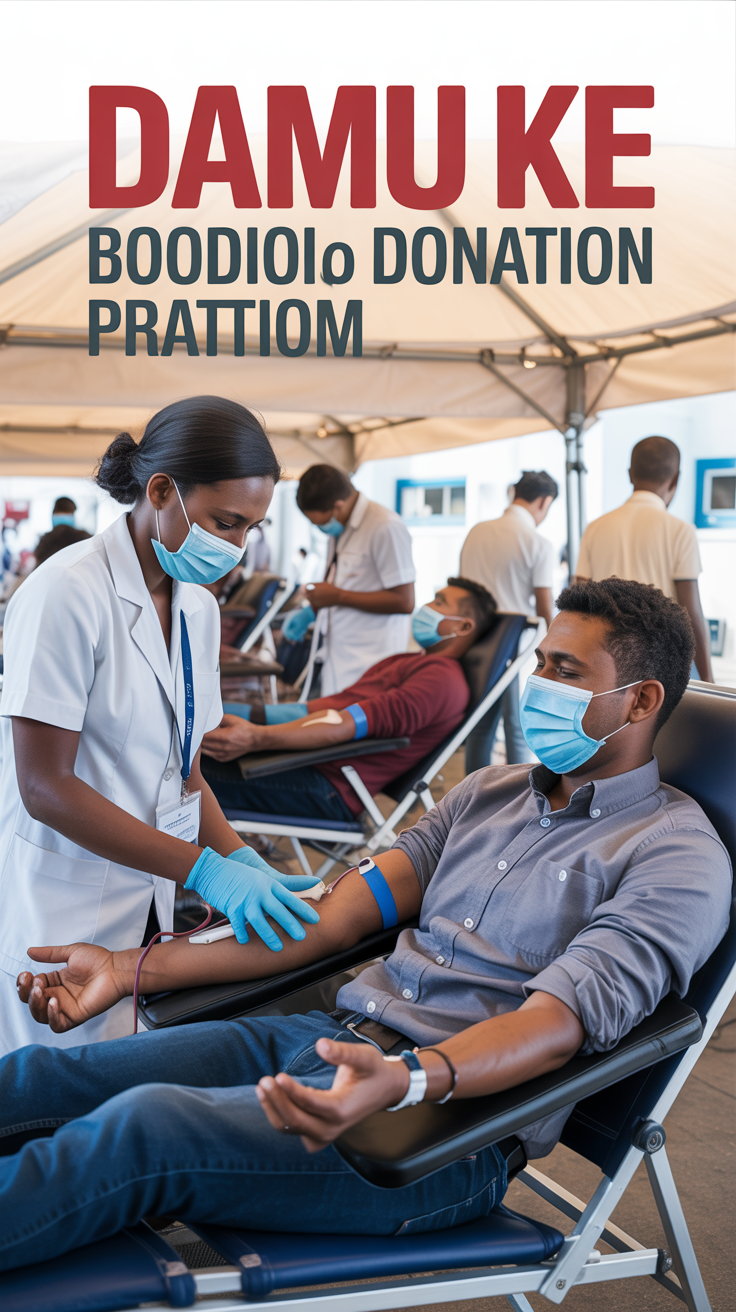
As the only blood center in the county currently, Lodwar Satellite is the front door of Turkana’s blood supply. Donors walk in from the town and its environs, and when resources allow, Ekai and his colleagues take the service on the road through outreach drives, setting up temporary donation sites to reach people who may never make it to the hospital.
Whether a donor shows up at the facility or at an outreach, the routine is tightly sequenced: assess eligibility, record donor details, and only then proceed to donation. In a typical month, Ekai says, the center handles about 200 to 300 donors, a figure shaped not just by willingness to donate but by the practical realities of staffing, supplies, transport and time. Some months they manage three to five outreaches; other months they do fewer and the numbers shift with them.
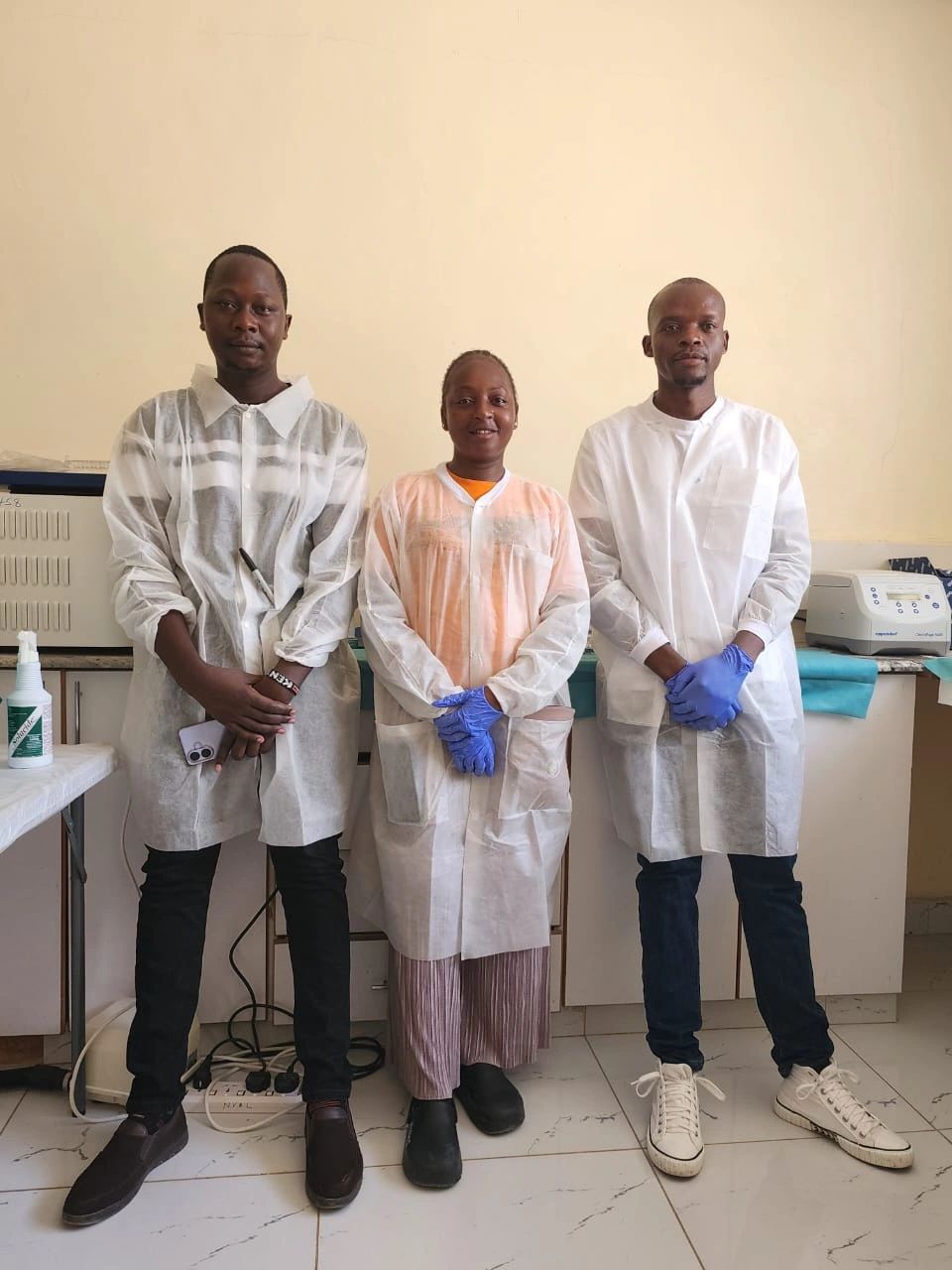
For a year and two months, much of that work was anchored on Damu KE, which is the Kenya Blood Banking Management System designed for managing blood donations and ensuring safe, efficient blood transfusion services. It is also meant to make blood availability easier to coordinate across facilities. The Lodwar Satellite center began using it in January 2024. By March 2025, Ekai says, the screen went dark. Not because the platform was rejected, but because the internet connection was unreliable.
From donor chair to cold chain
Blood collection is not a single act; it is a controlled chain of steps. A donor does not simply ‘give blood’ and leave. At the centre, Ekai’s team starts with assessment: confirming eligibility criteria such as minimum weight and haemoglobin levels, and using the donor questionnaire to screen for risk factors. “A normal day is a cycle of reception and precision,” he explains. “We receive the donors, we measure the vitals, and only when the science says yes do we begin the donation.”
Once a unit is collected, the real work intensifies. The blood must be labelled accurately, logged, and kept within a strict temperature range. If the cold chain breaks or if a unit warms up too much, or sits too long without proper storage that blood may become unsafe or unusable. In practice, the post-donation routine is an exercise in discipline: documentation, timing, packaging, and constant attention to storage conditions.
After collection, units are prepared for processing into components. In everyday language, Ekai describes this as creating ‘components.’ In blood services, component processing typically means separating whole blood into parts that can be used for different patients — for example packed red cells and plasma, and, where capacity exists, platelets.
This is how one donation can support multiple clinical needs, and why careful processing and tracking matters. “It’s like a gift that keeps on giving,” Ekai remarks with a smile. “One donor walks in, but through this processing, their contribution is multiplied. We take that single act of kindness and we split it, track it, and send it where it’s needed most. That is the beauty of the system.”
Albeit no unit can be issued safely until it is tested. Ekai says the blood is sent for screening at the regional level. In Turkana, that regional feedback has often comes from the Eldoret Regional Center.
This regional-lab relationship is central to the story: satellite centers bring donors closer to communities, but safety assurance still depends on reliable testing, communication, and logistics between the satellite and the regional hub. When connectivity is strong, that chain can move quickly. When it is weak, the chain becomes slower and more manual yet time matters when blood is needed urgently.
The paperwork problem — and what Damu KE changed
Before Damu KE, Ekai discloses that the administrative side of blood services was heavy. “The manual work is a bit hectic,” he says. “At the end of the month, you have to confirm with registers.” Those registers contain donor background information such names, next of kin, height, and weight as well as assessment results. The work is repetitive, and reporting is slow: staff must reconcile handwritten logs, check totals, and compile monthly summaries.
The platform reduced that burden by turning the donor questionnaire into a digital flow and standardising the way details were captured. “My initial reaction from using the platform was that it was user friendly and saved us from all the paperwork,” Ekai says. “It used to capture all the required information in good time.”
One practical feature was donor self-registration. The questionnaire was built into the platform, meaning a donor could be registered ahead of donation. When the donor arrived, staff could retrieve details by entering an ID number instead of rewriting everything. “So, when they come in you just key in their ID number and you get their details,” Ekai explains.
Seeing blood beyond Turkana
In emergencies, Ekai says Damu KE’s most powerful contribution is visibility across centers. “When you have Damu KE, you have access to information about other centres,” he says. If their facility needed O-negative blood and didn’t have it, he could check neighbouring facilities for example in West Pokot to see whether the type he needed was available. “The platform shows the number of units a facility has and I could just request from the system and then they would approve and the blood was dispatched,” he noted.
He describes a system that tracked stock movement: if a center collected 100 units and issued 20, the balance would reflect 80. Requests could be made inside the platform and received by the supplying facility, which could then dispatch the required units. “No payments were made whatsoever as we are all under body, just different satellites.”
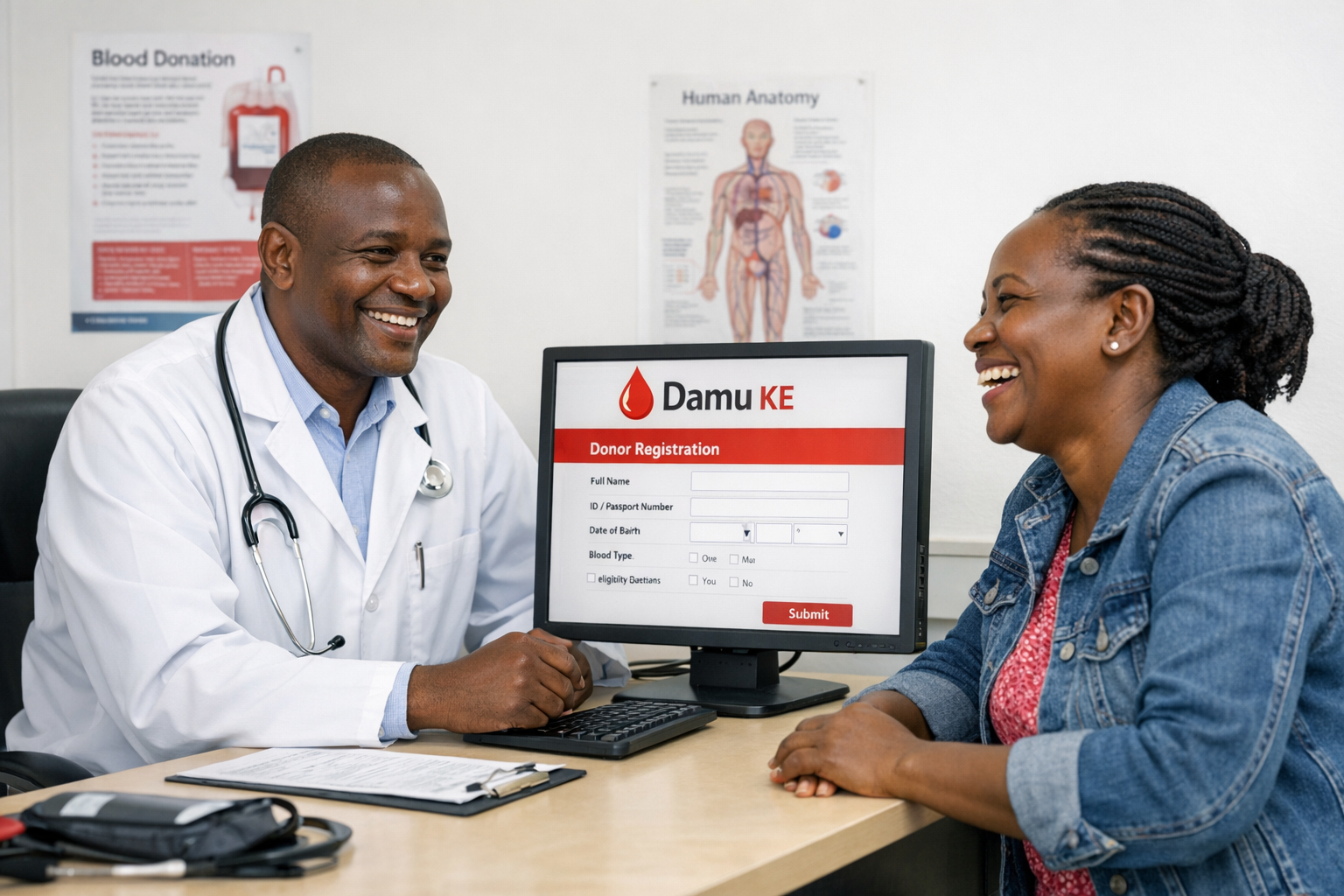
However, when the facility halted using the online platform last year due to unstable internet connection given the remoteness of the region, the center had to revert to manual processes. Coordination continued through calls and informal arrangements because blood still had to move and lives still depended on it. “Even with the internet downtime, we still collaborate,” Ekai says. “But having the system would have made work much easier. There wouldn’t have been a need to make calls. Everything was online.”
In a county where long distances already slow response, losing a system designed to reduce uncertainty exposed a deeper weakness.
The national push: reform, targets, and digitisation
At the national level, the Ministry of Health has framed blood services as a core part of Universal Health Coverage and their digitization as part of the modernization agenda. In a May 2025 briefing with the press, the Principal Secretary for the State Department for Medical Services Dr. Ouma Oluga called for strategic reforms in Kenya’s blood transfusion and transplant services, emphasising planning, optimised supply chains, and equipment modernisation. He identified governance challenges and urged alignment with the national health agenda.
According to the PS, the Directorate of Blood Transfusion and Transplant Services was advancing blood management through the Damu-KE system, with six regional centres and capacity across all 47 counties, and reported that in the 2023/2024 financial year, the Directorate surpassed its target by collecting 449,000 units of blood and blood components. A call for stronger resource mobilization and faster progress on the Kenya National Blood Transfusion Bill was also made. The draft law, currently under review by the Parliamentary Budget Office, seeks to empower the Kenya Tissue and Transplant Authority (KTTA) to oversee and regulate blood donation, testing, processing, storage, transfusion, and quality control.
The bill also seeks to impose severe penalties on individuals and organizations involved in the illegal trade of human blood in Kenya. “A person shall not buy, sell, or deal directly or indirectly in blood transfusion, any organ or tissue for transplant, body parts for therapeutic purposes, medical education, or scientific research unless otherwise provided by regulations under this Act,” reads the Bill. Those found in offence could be subject to fines of up to Sh20 million or a 10-year prison sentence.
What Lodwar teaches about digital public infrastructure
Ekai’s experience cuts through policy language. He is not arguing about ‘digital transformation’ in the abstract; he is describing what changes when the reporting burden drops, when stock visibility becomes real, and when a request can be routed through a shared system instead of through a chain of phone calls.
Asked whether he would want Damu KE back, he is emphatic. “Yes a 100 per cent,” Ekai says. “It was very efficient and easy to use.”
For policymakers, the lesson is not that digital systems don’t work in remote counties. In Lodwar, the system worked until the enabling infrastructure did not. Digital public infrastructure succeeds when the ‘public’ includes the last mile: connectivity, power, devices, maintenance, and support strong enough that a platform stays available not just in Nairobi, but in the places where distance and time make coordination most urgent.