
|
Getting your Trinity Audio player ready...
|
By William Abala
Nairobi, Kenya: The movement of hazardous waste across Africa is not only a matter of policy. It is woven into daily life, from the plastic containers used in homes and schools to old vehicles on the road and waste arriving through ports.
This reality came into sharp focus during the Bamako Convention Clearing-House Mechanism Dialogue at USIU–Africa, where policymakers, experts, and regional representatives met to confront gaps in enforcement, accountability, and public awareness around hazardous waste governance.
Moderating the discussion, the panel chair posed a question that set the tone.
“Which materials do we use in our households, most of which our children use in schools? How do we know which plastic should be used once, which should never go into a microwave?” the moderator asked.
“This is information most people do not have.” The moderator emphasized that reversing environmental damage requires not only controlling pollution but also protecting people from harm that already exists.
“How do we stop the effects that are already in our society?” the question continued, pointing to the need for public information platforms and learning from countries that are making progress.
A production problem at the core
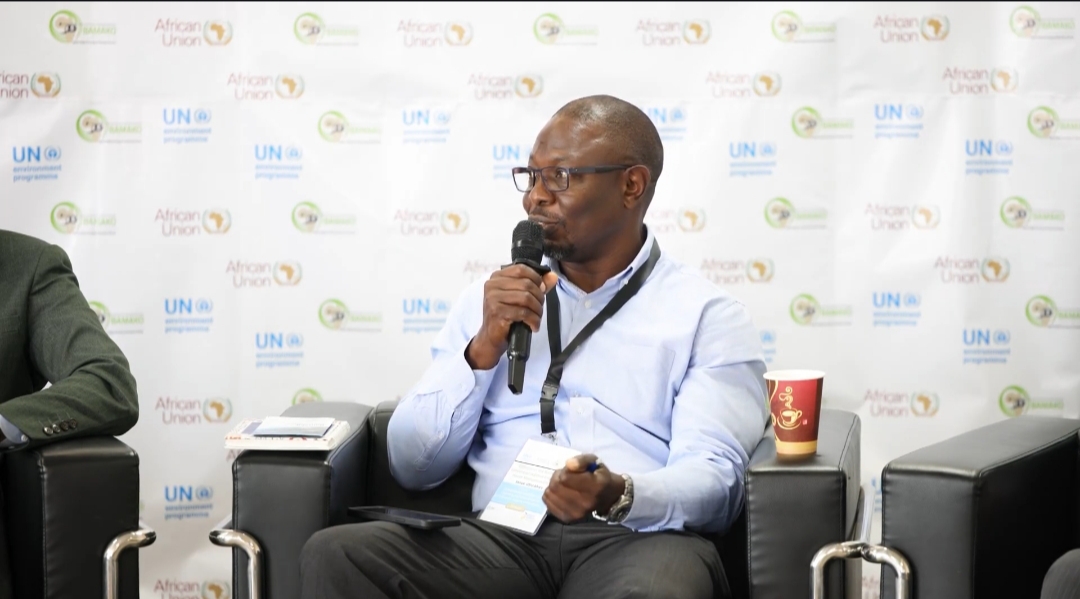
Responding first, Dr. George Serede, Dean of the School of Communication, Culture & Arts (SCCA), pointed to what he described as a fundamental gap holding Africa back.
“The first gap I would highlight is a production gap,” Dr. Serede said. He asked participants to reflect on something familiar. “When you look at your breakfast table this morning, what percentage of what you consumed was produced in your country?” he asked.
According to Dr. Serede, Africa’s dependence on imports makes it difficult to control hazardous materials and waste. “As long as a significant chunk of what we consume is imported, including the toothpick you use after eating, it is very hard to control the narrative,” he said.
Dr. Serede argued that industrialization is unavoidable if Africa is to manage hazardous waste responsibly. “We have no alternative but to industrialise,” he said. “As long as we are net importers, control becomes very hard.”
Using Kenya as an example, he pointed to the decline of local manufacturing. “Cotton was a big thing here, and it is no longer there,” Dr. Serede said. “The West is dumping clothes in Africa because we want to wear designer brands.” He described how second-hand clothing, often seen as affordable, has environmental consequences.
“When you say you want to wear Levi jeans, if your local retailer tells you they can produce the same, you say it’s not on brand,” he said. “That affects our environment because much of what we consume is imported.”
Vehicles as hazardous imports
Dr. Serede also highlighted the vehicle sector as a major contributor to pollution and waste. “Almost 99 percent of the vehicles on our roads are old vehicles from Japan,” he said. He questioned how Africa accounts for emissions and waste from imported vehicles.
“What percentage of what we drive is manufactured here, so that we can check our carbon credits?” he asked. Dr. Serede argued that exporting old vehicles to Africa should come with penalties. “If Japan sends an eight-year-old vehicle to Kenya, there has to be a penalty,” he said. “They are dumping that vehicle, not selling it.”
He warned that Africa sits at the end of the waste chain. “After you use it here, you cannot export it to another country,” Dr. Serede said. “We are dying slowly because of the depth of the production gap.”
Making data visible
The discussion then turned to how Africa can strengthen accountability through information sharing. Responding to a question on regional coordination, Mr. Omondi Kasidhi, RCHM platform developer involved in the Bamako Convention Clearing-House Mechanism, explained how the platform is designed to work.
“What we have on the clearing-house mechanism platform is a one-stop shop for all the data,” Kasidhi said.
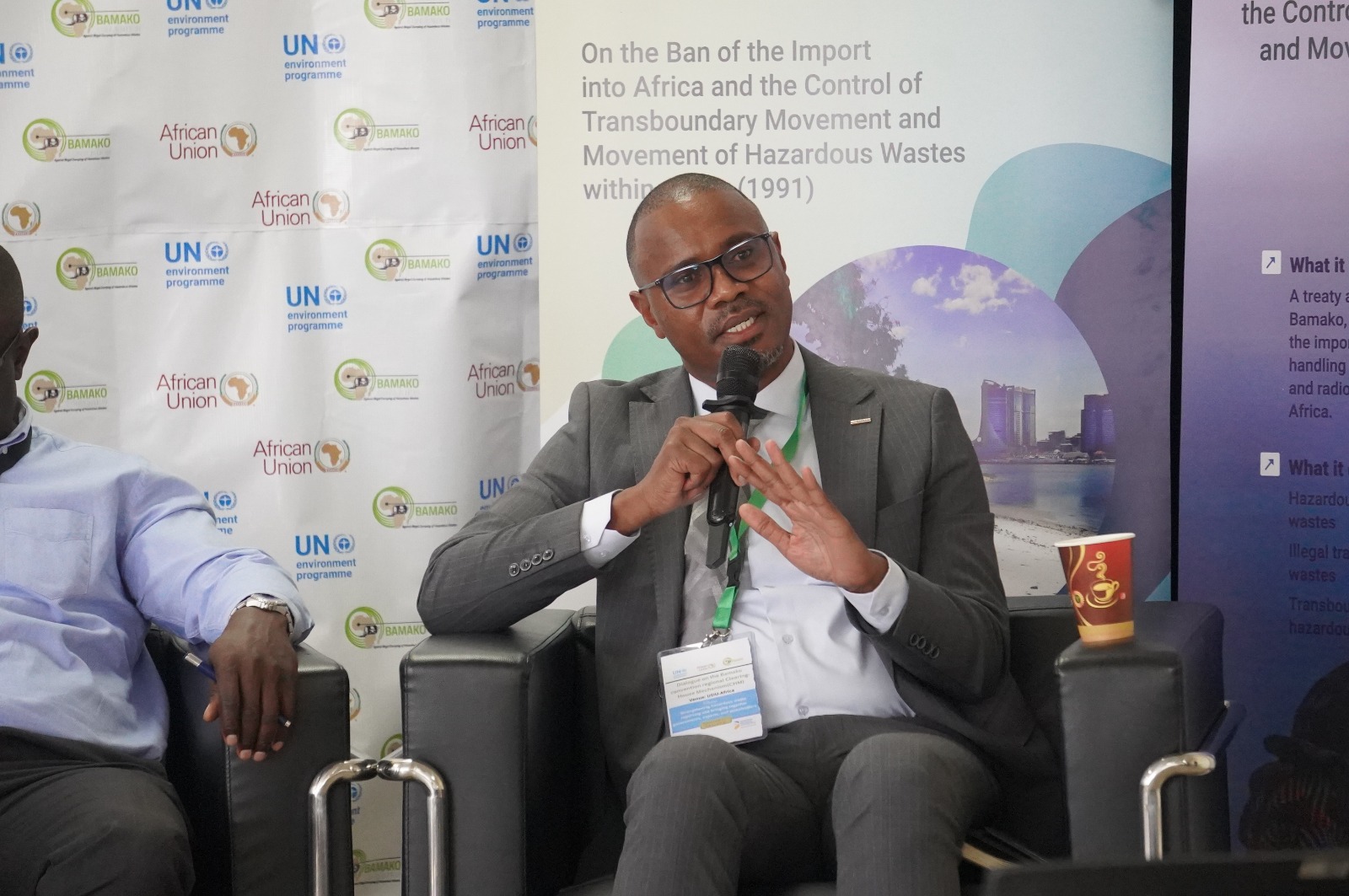
He explained that information submitted by countries is publicly accessible. “If Country X data is available, anybody can go online and search it,” he said.
Mr. Kasidhi noted that the platform also uses technology to make information easier to understand. “We also employ AI tools,” he said. “You don’t have to read the wrong things.” Transparency, he explained, is central to accountability.
“If a country is a member and has not submitted data for the last five years, that information will also be available on the platform,” Kasidhi said.
He emphasized that visibility itself creates pressure for compliance. “The first thing we are doing is making sure data and information are available,” he said. At the same time, Kasidhi acknowledged the burden reporting places on countries. “We do not want reporting to be so burdensome that countries do not have the resources to do it,” he said. Moving the system online, he explained, is meant to reduce barriers. “Making it online is our attempt to make it easier,” Kasidhi said.
Somalia’s perspective: waste as a security issue
Adding a national perspective, Bushra Ahmed Abdi, Senior Advisor to the Somali Ambassador on UNON, UNEP, and UN-HABITAT, speaking on behalf of the Federal Republic of Somalia, framed hazardous waste governance as an issue of sovereignty and safety.
“We are here to discuss more than just policy,” she said. “We are here to discuss the protection of human life and the preservation of our sovereign lands.”
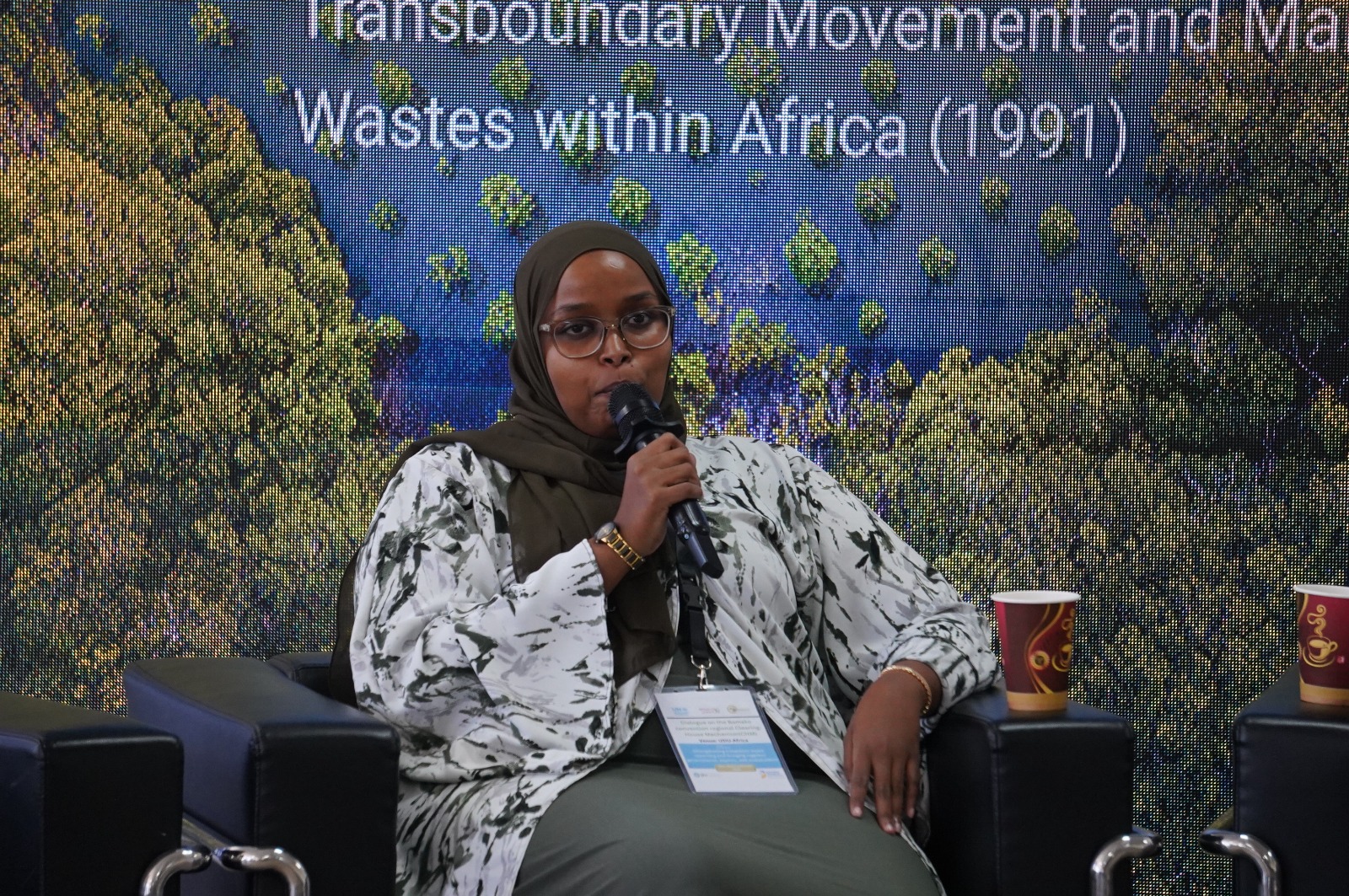
She said Africa has long been treated as a destination for hazardous waste. “For too long, the African continent has been treated as a destination for the world’s hazardous remnants,” Bushra said. For Somalia, she stressed, chemical safety is tied directly to national stability.
“The sound management of chemicals and the strengthening of waste reporting systems is not merely an environmental goal,” she said. “It is a cornerstone of our national security, our public health, and our future prosperity.”
Bushra noted that Somalia has faced the impacts of illegal dumping but is now strengthening its institutions. “We have moved from policy to practice,” she said. She highlighted progress under Somalia’s National Transformation Plan and updated climate commitments.
“Our National Environment Policy is now operational,” she said, adding that Somalia is finalizing legislation to enforce the polluter-pays principle. On regional cooperation, Bushra confirmed Somalia’s commitment to the Bamako Convention. “We are in the final stages of the ratification process for the Bamako Convention,” she said, following cabinet approval in May 2022.
She described the convention as essential for protecting African countries. “The Basel Convention manages the movement of waste,” she said. “The Bamako Convention protects Africa from it.” Bushra strongly endorsed the clearing-house mechanism.
“By sharing data and validating waste flows in real time, we can ensure that no shipment of hazardous material enters our territory undetected,” she said.
Closing a shared gap
As the dialogue concluded, a common message emerged. Hazardous waste governance in Africa is weakened by dependence on imports, limited public information, and uneven enforcement. Yet speakers also pointed to solutions already taking shape through transparency, technology, and regional cooperation.
From plastics used in schools to vehicles on the road and waste crossing borders, the conversation at USIU–Africa made one point clear: controlling hazardous waste requires action not only at borders and ports, but in everyday choices, national systems, and shared African responsibility.
As Bushra put it in her closing remarks: “Let us build a continent where our progress is measured by the health of our children and the purity of our soil.”