|
Getting your Trinity Audio player ready...
|
By Diana Chiyangwa
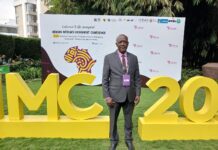
Johannesburg, South Africa: The 21st African Investigative Journalism Conference 2025 was held at Wits University’s Science Stadium from 5 to 7 November 2025. The annual conference hosted African investigative journalists from across the continent, with jam-packed sessions including discussions on journalist safety.
Journalists and media houses on the continent continue to face threats simply for doing their work. These actions send a troubling message that states are not prepared to uphold their human rights obligations or be held accountable. Political attitudes have worsened, and many countries in the region demonstrate patterns of verbal abuse, harassment of individual journalists and independent media, and, in some cases, physical attacks against journalists.
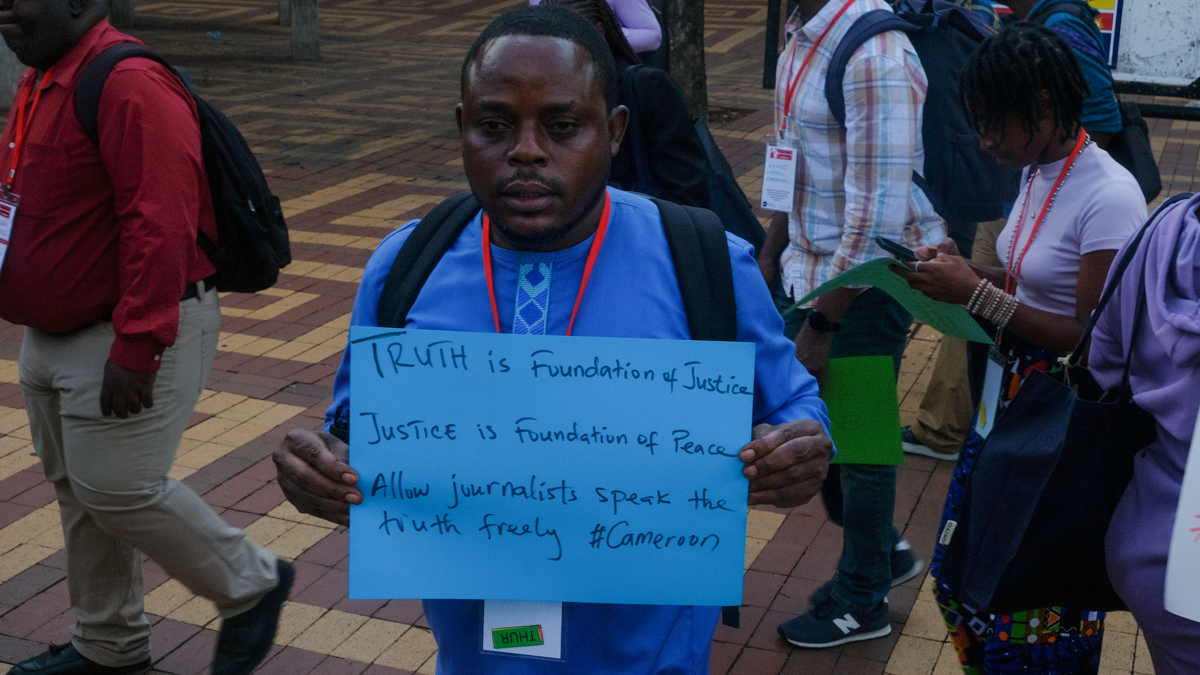
On Wednesday, 6 November 2025, a Silent Solidarity March proceeded from Science Stadium to Wits Great Hall. The solidarity march also commemorated the International Day to End Impunity for Crimes Against Journalists (2 November) under the theme of addressing gender-based violence.
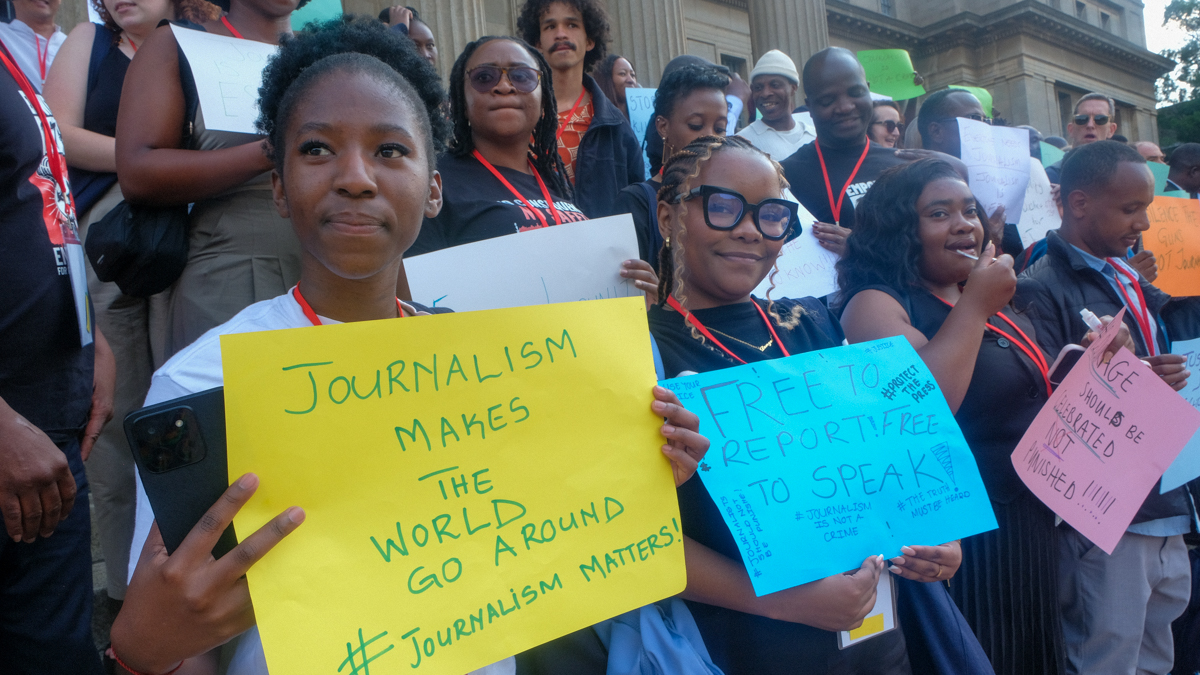
The march, led by AIJC convener Beauregard Tromp, featured journalists holding placards that echoed voices and highlighted journalists’ experiences in hostile environments, including discrimination based on age, gender, race, and sexuality. Media houses and journalists continue to operate amid growing restrictions on freedom of expression in countries like Zimbabwe, Kenya, Mozambique, Zambia, Eswatini, Tanzania, Lesotho, and many others across the continent. Some placards carried by journalists read “Sombre Friday at ZimInd. In solidarity with Faith Zaba. Journalism is not a crime.”
Zaba is an editor at Zimbabwe’s *The Independent*. She is on trial for writing a satirical article about Zimbabwean President Emmerson Mnangagwa. Her case was also mentioned during one of the conference sessions by Bongekile Macupe, whose presentation highlighted the unique challenges that female journalists face compared to their male counterparts.
Other placards read:
“Silence the guns, not journalists.”
“Pay journalists—journalism is a profession.”
“Journalism holds power to account. Together we protect it!”
“Everyone needs journalism. Journalism is life.”
Online harassment of female journalists was also highlighted during the conference. A study conducted by GMMP reports that 28% of female reporters in Africa cover major topics like crime and violence. In South Africa, there has been a 58% increase in female reporters compared to men; however, online attacks on female reporters remain a significant concern. Cyberbullying of women journalists globally has been on the rise.
This is evident in a 2021 UNESCO-commissioned report carried out by the International Center for Journalists, which examined responses from more than 900 female journalists from 125 countries and found that three-quarters of them experienced online abuse. This has led many to stop using online platforms to share their stories, and some have left journalism altogether. Another report from the International Women’s Media Foundation provides a clear examination of the professional dangers facing female journalists in today’s news environment.
The 22nd African Investigative Journalism Conference will take place in Nairobi, Kenya.
This work was made possible with the support of Fray Media Foundation.