|
Getting your Trinity Audio player ready...
|
By Maureen Bosire
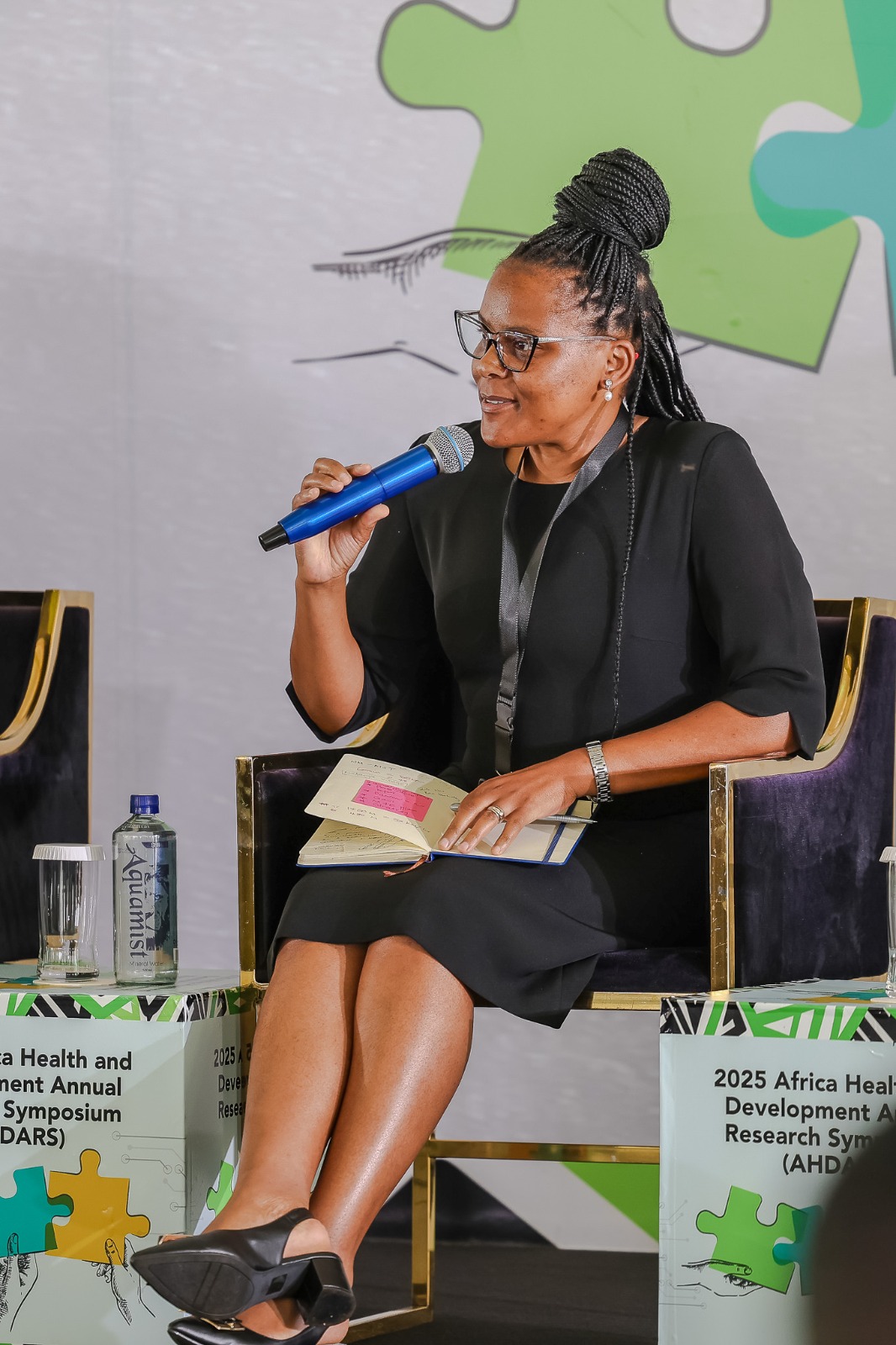
Nairobi, Kenya: Day Two of the Second Africa Health and Development Annual Research Symposium in Nairobi brought into focus the interplay between digital transformation, mobile connectivity, and equitable health systems. Representatives from the Global Systems for Mobile Communications Association (GSMA) and the East, Central and Southern Africa Health Community (ECSA-HC) unpacked the opportunities and persistent barriers shaping Africa’s journey toward decolonised, digitally empowered health systems.
The Global Systems for Mobile Communications Association is non profit organisation representing mobile network operators emphasised its mission to strengthen the mobile ecosystem through cutting-edge insights, forecasts and research that drive innovation and shape the future of connectivity.
Caroline Mbugua, the Senior Director of Public Policy and Communications for Sub-Saharan Africa, underscored GSMA’s commitment to data privacy and data protection as pillars of digital trust. “We are working to ensure smooth and secure flow of data across borders while maintaining strict privacy standards,” she said, noting that accountability in data management must remain a priority.
Mbugua highlighted GSMA’s efforts to support homegrown innovation, including funding local startups and offering guidance on scaling digital solutions. However, she pointed out persistent challenges hindering digital inclusion ; the affordability of smartphones and data, limited access to relevant local content, and low levels of digital trust.
To address these gaps, she proposed several interventions: reducing taxes on entry-level smart devices, strengthening data protection legislation to make people feel safe online, investing in local research, promoting financial literacy, and developing sovereign data systems. She added that creating reliable registries of patient information would not only enhance continuity of care but also strengthen health data governance.
Speaking on regional health priorities, Dr. Sebentile Myeni of the East, Central and Southern Africa Community Health which is an intergovernmental body promoting regional cooperation for better health outlined gaps within the Universal Health Coverage (UHC) agenda. These include unequal access to quality services, socio-economic barriers, and high maternal and neonatal mortality rates.
Dr. Myeni showcased promising innovations such as the Safer Births Bundle of Care, which uses wearable technology for pregnant women. The device detects early signs of foetal distress, enabling timely intervention and significantly reducing maternal and neonatal deaths. “These are the innovations Africa needs to scale,” she said.
Young voices also echoed the need for a stronger research culture on the continent. Steve Omollo, a project officer in partnerships for health professional education at APHRC, described research as the bridge between ideas and impact. He urged young people to consider research as a viable career path, noting that “research provides countless opportunities for the youth.”
Supporting this view, Dorcas Asianut, a public health nutritionist at APHRC working in informal settlements in Nairobi and Kisumu, stressed the growing demand for skilled researchers. “There is a real need for young trained researchers in the industry,” she said.