|
Getting your Trinity Audio player ready...
|
By Irene Sinoya
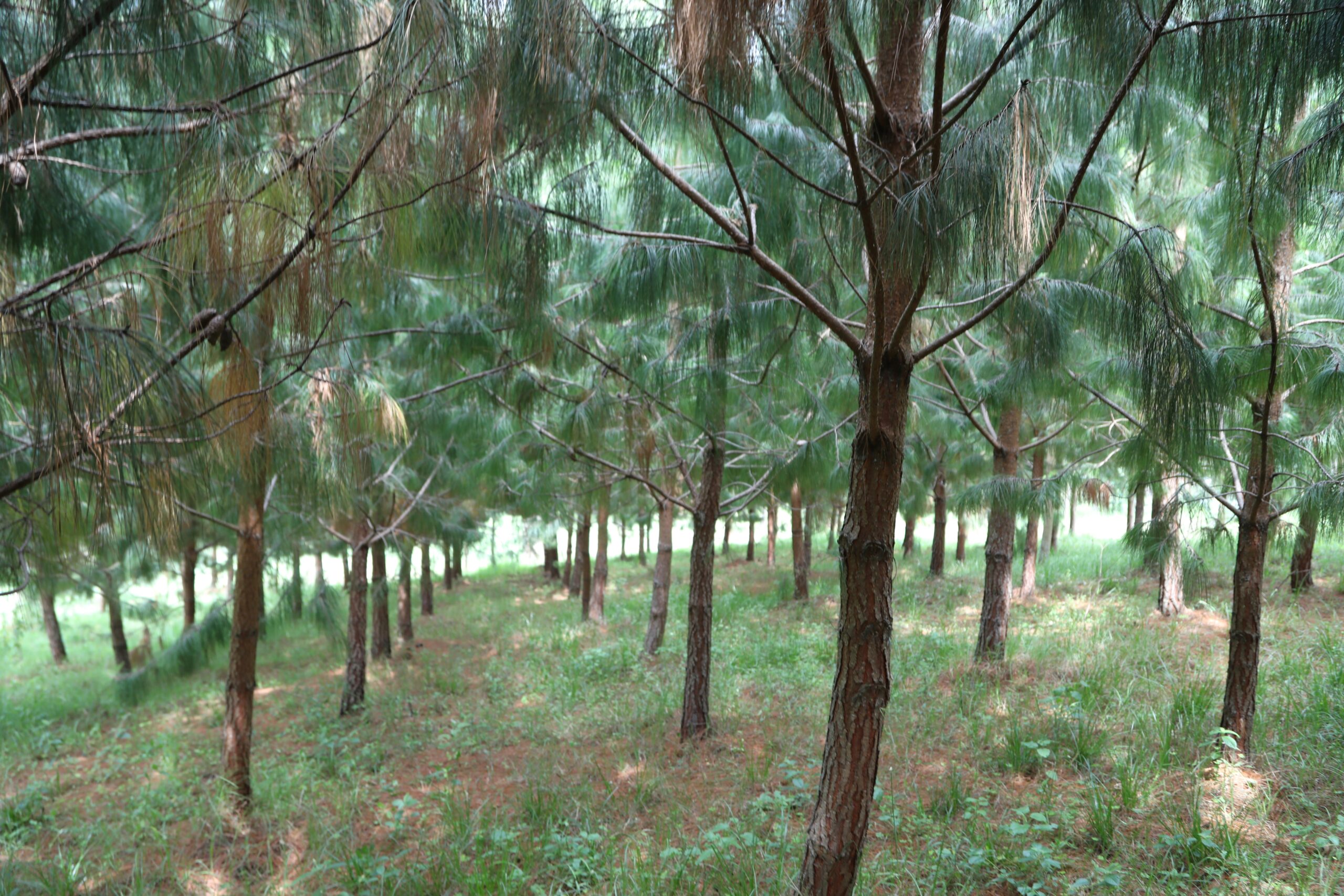
Nyandarua County, Kenya: It is a beautiful afternoon at Benjamin Uiru’s pine tree farm in Nyahururu, Kenya. Rays of sunlight can be seen filtering through a canopy of green needles, creating a mosaic of light and shadow on the ground.
The air is crisp and carries the fragrance of pine resin, mingling with the earthy scent of decaying needles. Beneath the trees lies a dense carpet of pine needles, suppressing the growth of grass.
For the past two decades, Uiru, 57, has been practising tree farming on his seven-acre piece of land in Nyandarua County. He grows exotic trees such as pine, eucalyptus, and cypress, as well as indigenous trees like Muna Tree (Prunus Africana), red cedars, bamboo, and rosewood. His farm, with its trees and gentle breezes, feels like a sanctuary, a place of peace and natural beauty.
His passion for trees started in 1988, when he was a student in secondary school. “My dream was to become a forester after the completion of my studies. However, I did not qualify to pursue a forestry course. Despite that, I was still determined to venture into tree farming, a decision that I will never regret,” says Uiru.
Uiru planted the first trees in 2005, which did not do well. “Initially, I did not have much knowledge of successful tree farming. I planted seeds that were not certified, and as a result, their quality and growth rate were low. I had to harvest them prematurely and got very minimal returns,” he adds.
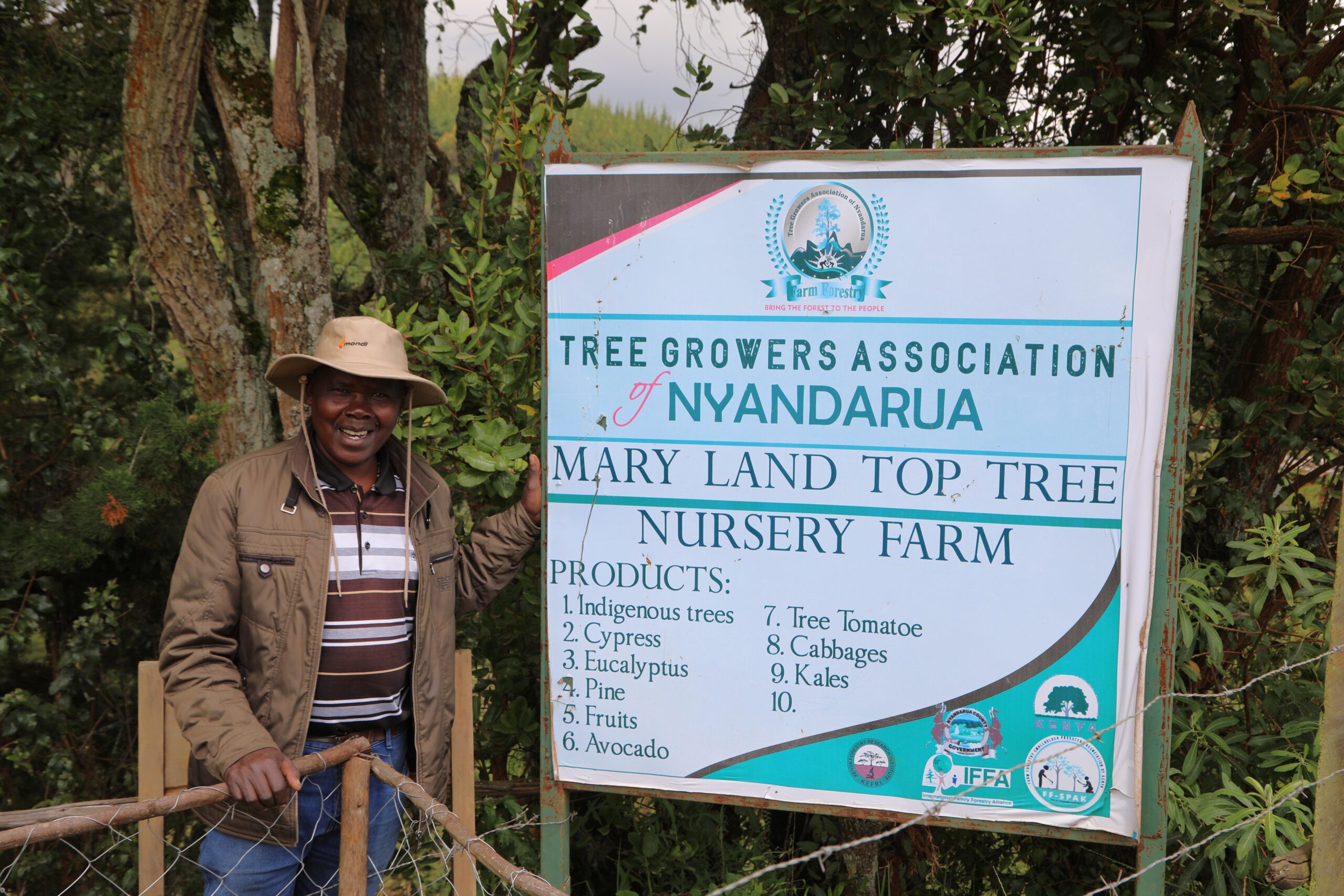
In a quest to empower himself with information on successful afforestation initiatives, Uiru joined the Tree Growers Association of Nyandarua (TGAN), a key organization focused on forest and landscape restoration in Nyandarua County, Kenya. Through training, he acquired more knowledge and skills on transforming his farm into a more productive, resilient, and sustainable ecosystem, contributing to both his livelihood and the environment.
He actively involved himself in tree planting initiatives with other members, working in collaboration with the Kenya Forest Service (KFS) and other stakeholders to address forest degradation and promote sustainable management of forest landscapes.
Through trainings and interactions with forest experts, Uiru and other members of the association developed a deep understanding of tree farming. They learned how to select the right tree species, seedling production, planting techniques, and ongoing care, which significantly impacts tree health and overall productivity.
They also signed a Memorandum of Understanding with Kenya Forestry Research Institute (KEFRI), a state corporation that provides them with certified tree seedlings.
Currently, Uiru is the chairperson of the Tree Growers Association of Nyandarua. The association has a well-established tree nursery with over 22,000 tree seedlings of different species. They sell indigenous tree seedlings, fruit trees like avocado, as well as vegetable seedlings such as cabbage and kale to small-holder farmers, promoting the establishment of family forests in the region. They also have seedlings like Prunus africana that have medicinal value.
Through tree farming, Uiru has educated all his children without struggling. He says, “Apart from improving soil fertility, trees have a lot of commercial benefits. I get money from selling trees for timber, electricity transmission poles, and also firewood. Indigenous trees, such as cedars, have high-quality timber and can be sold for Ksh 20,000 per tree. Trees like eucalyptus grow so fast, and can bring quick returns for the farmer. I have managed to educate all three of my children through trees. ”
“I also bought my first two cars using money from trees. However, I ensure that I replace the trees I cut immediately for sustainability,” he happily adds.
Apart from planting tree seedlings, Uiru has also mastered the skill of natural forest regeneration. After trees are cut, he manages the new shoots that sprout from the tree trunk by eliminating the weaker ones. The stronger shoots then grow to stronger trees naturally, leveraging existing root systems.
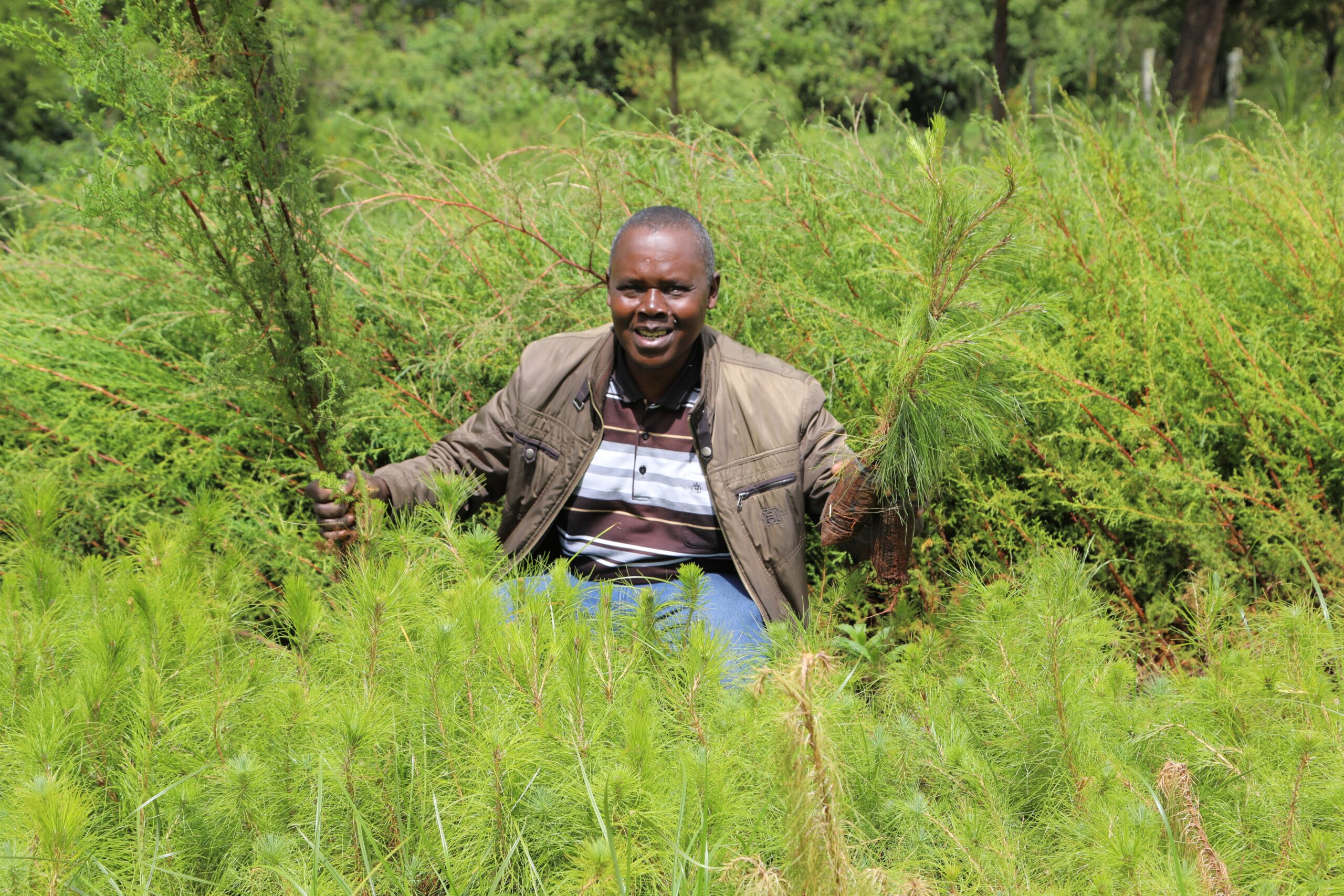
In addition, he has planted trees like bamboo and rosewood along a river that was drying up as a result of climate change and human activities. Uiru says, “When I was a young boy, we used to fetch water from this source. It was wide and full of water. But now, due to climate change, the water has really decreased. Now that I have planted different varieties of trees along the river, I am hopeful that it will be restored.
Uiru is now an inspiration in his community. He has enlightened members of his local community, including tree growers and farmers, on the importance of increasing forest cover and restoring degraded lands.
He told Talk Africa that when he started educating people on why trees matter, the majority of them were not interested. After seeing how his trees were thriving, they started to embrace the idea. They now recognize the diverse roles trees play in enhancing soil health and improving livelihoods.
Through tree farming, Uiru has travelled to Germany and Sweden for exposure visits on environmental conservation, places he confesses that he would never have visited in his lifetime.
The tree farmer is determined to leave a legacy for his generation. He has also mentored his children, who are instrumental in forest restoration initiatives in the country.