

|
Getting your Trinity Audio player ready...
|
By Lenah Bosibori
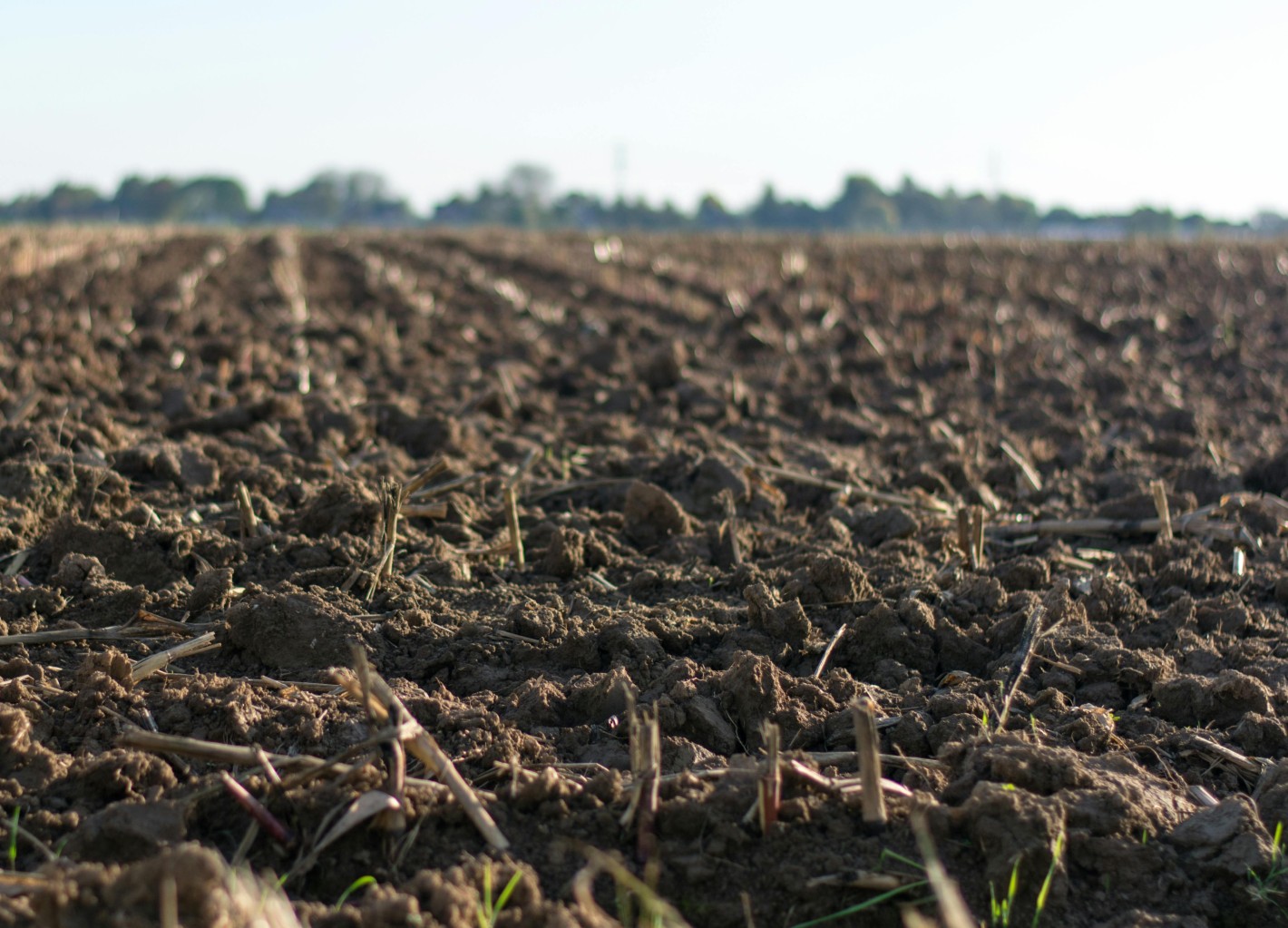
Nairobi, Kenya: Kenya is undertaking a nationwide soil analysis initiative aimed at generating detailed soil data to help farmers apply the right fertilizers for their specific soil types, in a move designed to curb widespread soil acidity and nutrient depletion.
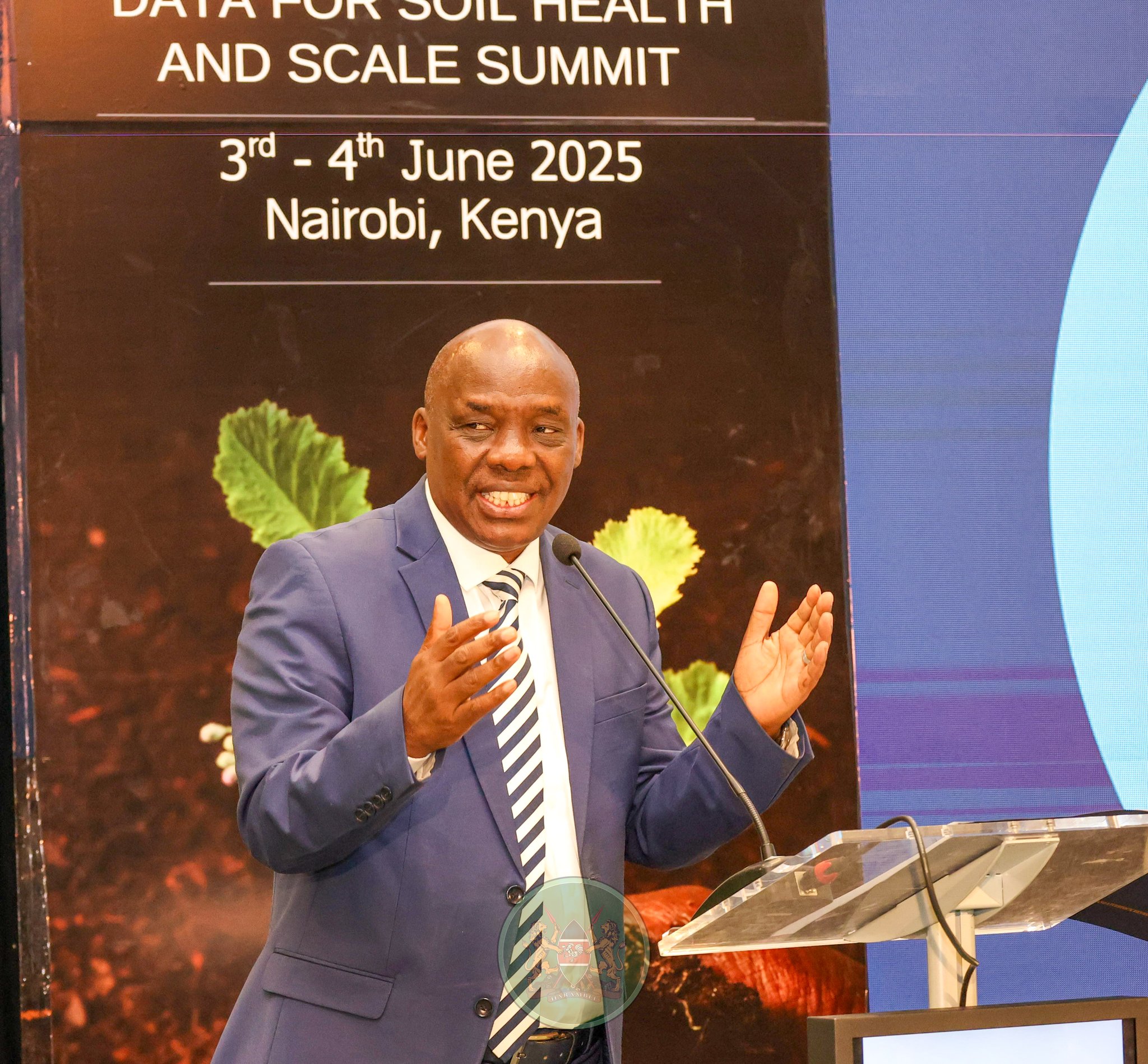
Speaking during the Data4Soil Health Summit in Nairobi, Dr. Paul Ronoh, Principal Secretary in the Ministry of Agriculture and Livestock Development, emphasized the importance of adopting a smarter approach to soil health.
“We have deployed seven young professionals in every ward, equipped with modern soil testing tools. This will enable us to address soil health issues swiftly and provide farmers with timely information on the nutrients their soils need,” Dr. Ronoh said.
He noted that many farmers are unknowingly using the wrong fertilizers or applying nutrients their soils don’t require. “This gathering of minds is crucial in consolidating data, fostering innovation, and optimizing technology to drive actionable solutions,” he added.
Kenya has set an ambitious goal to triple its domestic production and distribution of certified organic and inorganic fertilizers by 2034. According to Dr. Ronoh, this goal will be accelerated through five key programs and supported by a strengthened policy framework that can serve as a model for the rest of Africa.
“This summit comes at a timely moment, building on last year’s historic Africa Fertilizer and Soil Health Summit that resulted in the Nairobi Declaration on Soil Health. Today, we continue that momentum with practical action, innovation, and unity. In Kenya, agriculture is not just a sector it is life,” he emphasized.
Dr. Ronoh urged greater adoption of organic fertilizers, noting that Kenya’s soil was once naturally healthy. “We must return our soils to that productive state, where farmers can grow crops with minimal additional inputs,” he said.
He also highlighted the importance of technological solutions: “Kenya has adopted technologies that can provide farmers with instant, location-specific soil information, enabling informed decision-making at the farm level.”
In addition, he called for better data sharing frameworks: “We need transparent, comprehensive mechanisms for sharing soil data. This is a resource-intensive area, but it is critical if we are to move with speed and fix the problem.”
Mutahi Kahiga, Vice Chair of the Council of Governors, echoed Dr. Ronoh’s concerns, stating that agriculture contributed over 21% to Kenya’s GDP in the 2024 financial year and employed more than 60% of the rural population. Over 75% of Kenyan households rely directly on agriculture for their livelihoods, he noted.
“Yet our soils are in crisis. Approximately 65% of Kenya’s soils are degraded, acidic, or nutrient-depleted. Fertilizer use is often inadequate or mismatched, and land is being farmed but not restored,” Kahiga warned. “This is not merely an agronomic issue—it is an economic, environmental, and national security challenge.”
He pointed to fragmented soil data systems and underfunded digital agriculture as major barriers: “Soil data is scattered and largely inaccessible. Digital tools often fail to reach smallholder farmers, and promising agri-tech startups lack sufficient financing and regulatory support.”
Highlighting progress in his own county, Kahiga said: “In Nyeri, we have completed over 3,000 soil tests and promoted lime application in acidic zones. We’ve partnered with agri-tech firms like Agro-Care and Precision Agriculture to provide mobile-based soil health services.”
He added that the Council of Governors is aligning county laws with national frameworks and advocating for harmonized data governance, public-private partnerships, and co-funding mechanisms to unlock investment in soil health.
“Let us empower startups solving real problems. Let us bring scientific innovations down to the village level. Let us make soil data a public good—accessible, understandable, and useful to every farmer,” he said.
Urgent Need for Soil Health Investment
Currently, Kenya is distributing approximately 225 million bags of fertilizer across the country. However, officials say more targeted and region-specific interventions are needed.
Soil acidity remains a significant challenge. Around 13% of Kenya’s total land area—and a staggering 39% of arable land, or about 7 million acres—is considered strongly acidic. Meanwhile, smallholder farmers often rely mainly on nitrogen and phosphorus fertilizers, overlooking other essential nutrients such as potassium, sulfur, calcium, magnesium, zinc, and boron, which are critical for improving crop yields.
While the private sector has invested in fertilizer production facilities with an annual capacity of 1.2 billion metric tons, utilization remains low, between 17% and 20%. The government is now realigning its subsidy program to encourage more private sector participation.
Parmesh Shah, Global Head for Digital Agriculture, Data, and Innovation at the World Bank, noted that Kenya is “solution-obsessed” but lacks centralized access to soil data. “There are 16 sources of soil data, all scattered. Without integration, meaningful action is hard,” he said.
Anne M. Bakilana, the World Bank’s Manager of Operations for Kenya, Rwanda, Uganda, and Somalia, said the agriculture sector could unlock sustainable growth by fully embracing data.
As the summit concluded, stakeholders called for a program-based action plan that will guide future steps in revitalizing soil health, strengthening food security, and boosting farmer productivity across the country.














[…] Kenya – June 6, 2025 — Cutting-edge technology took center stage at the inaugural Data for Soil Health and Scale Summit, a two-day event hosted by Kenya’s Ministry of Agriculture and Livestock Development in […]
Comments are closed.