|
Getting your Trinity Audio player ready...
|
By Henry Owino
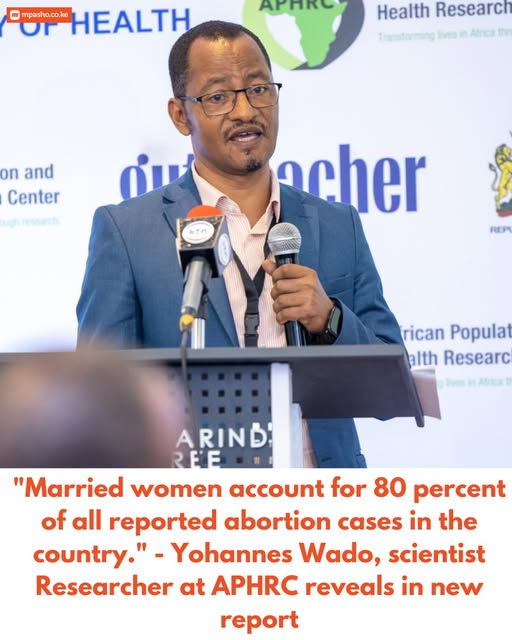
Nairobi, Kenya: A recent report by the African Population and Health Research Center (APHRC), in collaboration with Kenya’s Ministry of Health and the Guttmacher Institute, indicates that in 2023, Kenya recorded approximately 792,694 induced abortions, with over 78% involving married women.
This challenges prevailing perceptions that abortions are predominantly sought by adolescents and unmarried women.
The study highlights that the primary reasons for these abortions include the desire to delay or limit childbearing, financial constraints, and career aspirations. Notably, women aged 24 to 34 constituted the largest age group seeking abortions, accounting for 41.8% of the cases.
Women aged over 35 (15.6 percent) and adolescents under 20 (13.6 percent) followed a distant second and third respectively.
Additionally, the report notes that approximately 65.6% of women who had abortions had previously given birth, with 29.1% having experienced four or more pregnancies in their lifetime.
Overall, in that year, some 2.8 million pregnancies were reported, of these, 2.4 million pregnancies were unintended, according to the report. Thus, shows number of pregnancies that were not allowed to full term.
Debunking Abortion Myths
The report dubbed “Incidence of induced abortions and the severity of abortions related complications in Kenya”, shows 78.6 percent of the estimated 792,694 induced abortions occurred among married women.
And 16.6 percent among these are never-married women, while 4.8 percent are those who are divorced, separated, or widowed.
Further details show that the vast majority of women obtaining abortions in Kenya identify as Christian, approximately 90.9 percent of all cases, while Muslim women account for 9.1 percent.
Kenneth Juma, a Senior Researcher Officer at APHRC, debunked myths that induced abortions are mostly performed by adolescents and unmarried women.
“A big chunk of women in marriage are also seeking abortion. Most people get pregnant, but they do not want a child. This is coupled with hard economic times and a career. Some also terminate pregnancies because they want to delay giving birth or child spacing,” said Juma during the release of the report.

“About 65.6 percent had previously given birth, and 29.1 percent had four or more pregnancies in their lifetime,’ reads a section of the study’s findings.
The number of abortions documented in 2023 significantly increased from 464,690 recorded in 2012.
Pregnancy lasts for about 280 days or 40 weeks. So, abortion is the termination of pregnancy, below 28 weeks, thus 7 months.
Methods Used to Procure Abortions
The report also sheds light on the methods employed for abortion. Many women initially resorted to unsafe practices, such as ingesting harmful substances or using sharp objects, before turning to medical abortions using pills obtained from pharmacies or clinics. This sequence often led to complications, with over 304,000 women seeking post-abortion care in 2023. Of these, 1.4% experienced severe maternal outcomes, including death or coma, while 16.4% faced potentially life-threatening complications.
“Most women are using medication abortion because it provides a lot of secrecy, but sometimes they begin with harmful methods before turning to medication abortion if they fail,” Juma observed. Adding that medication is mainly used in tablets bought in local pharmacies, chemists, or offered in some hospitals.
Abortion to Unintended Pregnancies
For example, in 2023, there were a total of 2,850,346 pregnancies in Kenya, of which 1,435,998 were unintended and 792,694 ended in induced abortions.
“This corresponds to an unintended pregnancy rate of 103. 8 percent per 1,00 women of reproductive age, an induced abortion incidence rate of 57.3 percent per 1,000 women of reproductive age, and an induced abortion ratio of 48.1 per 100 live births,” added a section of the report.
“Unintended pregnancy is the highest contributor of induced abortions,” Juma said. “We need to empower women to know when to get pregnant. Of all pregnancies, about half were unintended”.
Regions with the Most Abortion Cases
Geographically, the Central Region and Nairobi led with 234,125 cases, Nyanza and Western reported 222,196, Rift Valley 153,314, Eastern 108,910, while Coast and North Eastern recorded 74,150 low cases of abortions.
Similarly, Kenyan regions with the highest unintended-pregnancy rates also report the highest induced-abortion rates.
Nationally, the unintended-pregnancy rate stood at 104.1 per 1,000 women, of which 48.3 percent resulted in induced abortion.
In Nyanza and Western were leading with the highest cases of unintended pregnancy rate at 138.9 percent, whereas at least 60.7 percent end in abortion.
Central and Nairobi recorded 96.6 per 1,000 unintended pregnancies, 72.4 percent of which were terminated. In Coast and North Eastern, the rate was 78.4 per 1,000, and 30.3 percent of those pregnancies were induced abortions.
Meanwhile, Rift Valley had 100.9 percent of unintended pregnancies, with 36.1 percent ending in induced abortions.
Abortion Preventive Strategies
According to experts in the study to control induced abortions, there is a need to prevent unintended pregnancies and promote the use of family planning, particularly modern contraceptive methods.
“While unintended pregnancies have reduced, induced abortions have increased because women want to limit children, and they are engaged in careers. Economic pressure also limits the number of babies,” said Juma.
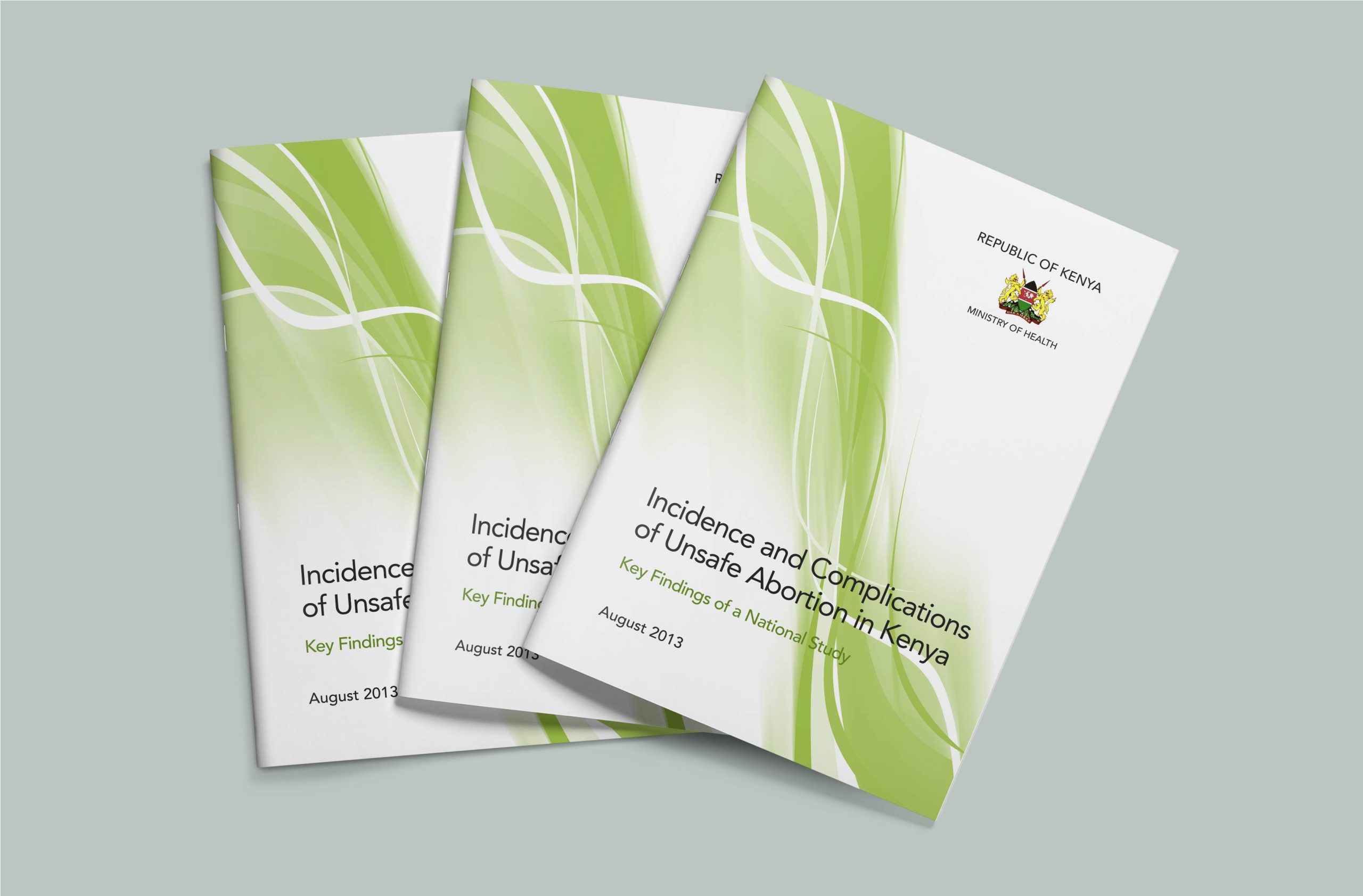
The study was conducted between April 2023 to May 2024.
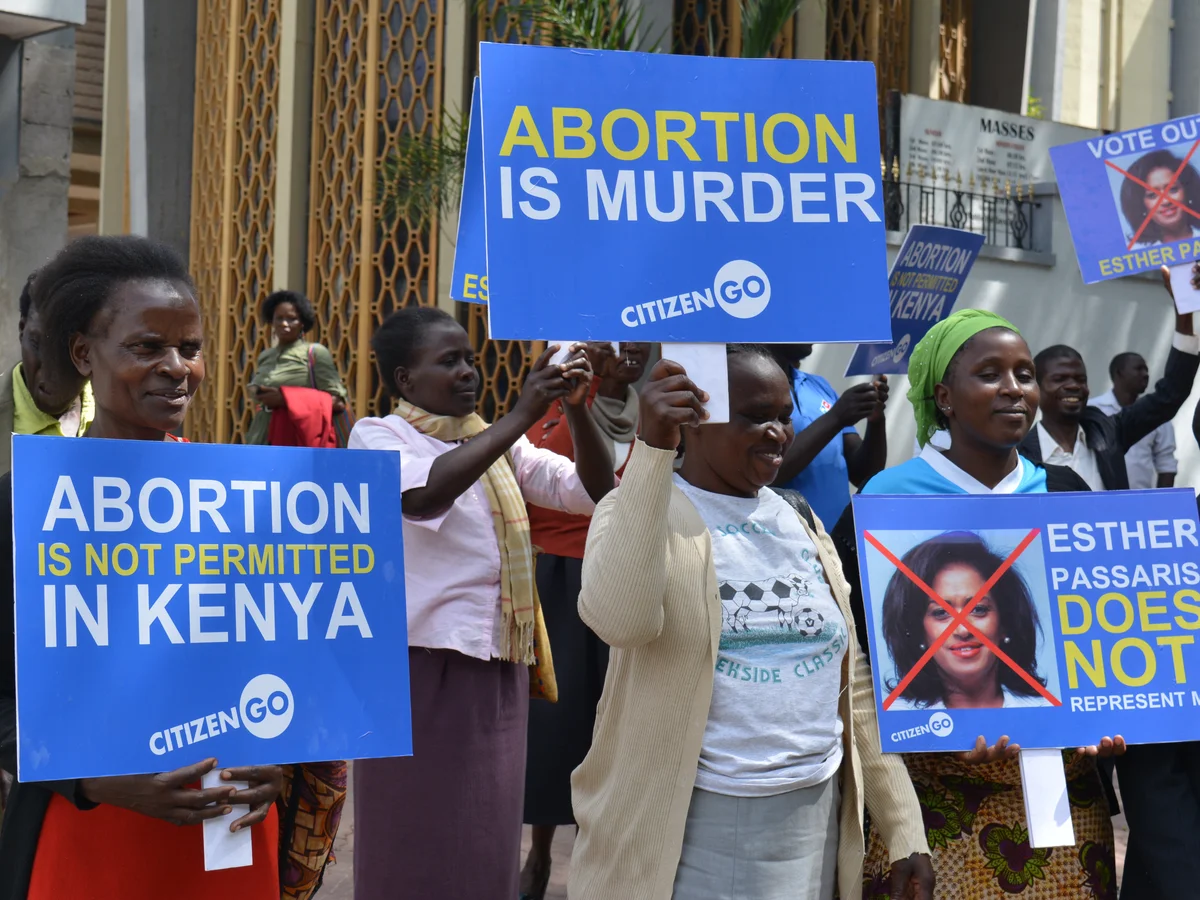
In Kenya, the Constitution 2010 legally restricts abortion but only permits it if, in the opinion of a trained health professional, there is a need for emergency treatment, the life or health of the mother is in danger, or if permitted by any other written law.
Abortion is a contributing factor to maternal deaths in the country, where at least 6,000 to 8,000 maternal deaths are reported in the country annually.
The 2012 study, majority of women needing abortions resort to clandestine and mostly unsafe abortion methods. The study (2012) reported a relatively high case-fatality rate of 266 deaths per 100,000 unsafe abortions.
Regarding the severity of abortion-related complications, 1.4 percent of women treated for post-abortion complications experienced severe maternal outcomes in the newest study, about 16.4 percent presented with potentially life-threatening complications, 28.5 percent had moderately severe complications, and 53.7 percent had mild complications.
In a period of one month, during the study, at least 5 women died due to the severity of abortions, translating to at least 60 deaths annually.
Compared to the 2012 study, the proportion of women with more severe complications has reduced significantly. One possible explanation for this finding is that access to postabortion care services in Kenya has increased over the past decade, resulting in more women with less severe complications who are able to present at a health facility for post-abortion care,” reads the study.
For many women who develop complications after an abortion, the first point of care is often at dispensaries or Level II hospitals, which then refer the most serious cases up the chain to Level III, IV, V, and VI facilities. The higher levels, staffing, equipment, and technology are better suited to deliver comprehensive treatment.
According to the report, “more than half of all the women with post-abortion complications were treated in public health facilities (50.6 percent), and seven in ten women were treated in primary-level facilities (69.3 percent).”
Addressing Gaps in Contraceptive Needs
To address these gaps, the researchers urge an urgent scale-up of family-planning services and improvements in the quality of post-abortion care, with particular attention to removing barriers faced by adolescents and young women.
They also call for strengthening the capacity of lower-level health facilities through targeted training of mid-level providers and by ensuring that dispensaries and health centres are consistently supplied with the necessary post-abortion care commodities and equipment.
“Evidence demonstrates that abortion-related morbidities and deaths are preventable with improved access to safe abortion and family planning services,” underscored the report.
In 2023, the national treatment rate for post-abortion care peaked in the Eastern region at 27.1 per 1,000 women, followed closely by Nyanza and Western at 24.9 per 1,000, and Nairobi and Central at 23.3 per 1,000.
In contrast, the Rift Valley region recorded the lowest treatment rate of 16.9 per 1,000.
Of the 304,159 women who received post-abortion care that year, approximately 256,620 were treated for complications arising from induced abortions, while the remaining 47,540 sought care following spontaneous abortions.
Of the 13,594 total facilities in Kenya as of July 2022, 658 hospitals participated in the survey.
Nationally, more than eight in ten hospitals that took part in the study reported that they provide post-abortion care, though public hospitals and Level II facilities lag slightly behind, at 78.6 percent and 73.8 percent coverage, respectively.
In 2023 alone, a total of 304,159 women, both those who underwent induced abortions and those who experienced spontaneous miscarriage, received post-abortion treatment in Kenyan health facilities.
Over half of these women (51 percent) were treated in public hospitals, yet the majority (69.3 percent) sought care at lower-level, primary-level centres.
Juma, reflecting on the findings, observed that “the biggest burden of abortion complications falls on public hospitals. Most cases first present at Level II facilities, where only severe complications are referred up.
Yet, government funding prioritizes Level V and VI hospitals. We must strengthen Level II and III facilities, because women with bleeding complications show up there, and without adequate resources, they are at risk of dying.”