
By Juliet Akoth
Nairobi, Kenya: “I believe that the youth are actually the leaders of today and not tomorrow, because the actions that we take today will influence our future,” says Phoebe Matunda, Chief of Operations at Stand Up Shout Out, a youth-led conservation organization in Kenya.
It is a conviction that drives her work in the Amboseli ecosystem and one that was reinforced through her experience with Nature Buddy, an AI-powered WhatsApp chatbot designed to educate and mobilize young people around biodiversity conservation.
Young people across Africa are eager to take part in global biodiversity and climate conversations, yet they often find themselves excluded.
A 2025 study of Kenyan youth climate activists revealed that although many engage in grassroots work such as tree planting and wetland restoration, they remain underrepresented in policymaking spaces and lack access to youth-friendly, locally relevant educational resources.
Barriers such as finances, language, and limited access to information reinforce this exclusion, leaving youth enthusiastic but unable to influence the decisions that will shape their futures.
The We Are Nature: Youth Biodiversity Challenge was designed to help close this gap. Developed by the United Nations Environment Programme (UNEP) in partnership with Greenpop Foundation and supported by the Captain Planet Foundation, it was co-designed with more than 20 youth networks worldwide, including the Global Youth Biodiversity Network.
The challenge aims to empower young people, and those from local communities, to take action for biodiversity at the individual, community, and policy levels. The pilot phase, launched on July 15, 2025, is being implemented in Kenya and South Africa.
In Kenya, the African Wildlife Foundation (AWF) is the lead partner alongside the Kenya Youth Biodiversity Network, while in South Africa, the Wildlife and Environment Society of South Africa leads with the support of the South African Youth Biodiversity Network.
The project set an ambitious target of engaging 10,000 young adults aged 18 to 35 in just three months, with the goal of 30 percent completing the highest level of the challenge: taking concrete action to restore and protect nature in their communities.
At the heart of the challenge is Nature Buddy, also called Moyo, a chatbot built on WhatsApp that supports three languages: English, Kiswahili, and isiZulu. The choice of platform was deliberate.
WhatsApp is the most widely used communication tool in both Kenya and South Africa, with 97 percent of Kenyan internet users and 96 percent of South African internet users active on it, according to Global Web Index’s Social Media User Trends Report.
With smartphone penetration increasing rapidly, particularly among youth, organizers saw WhatsApp as the best way to reach young people where they already spend much of their time. Nicola Wilson, the project’s learning designer, said this was an exciting shift.
“For me as a learning designer, it was quite exciting to be using WhatsApp as a medium for education because it’s not traditional,” she explained. “Usually it’s a learning management system with modules and units, but WhatsApp is actually becoming quite a popular medium for educational courses to be rolled out in Africa.”
The process begins with a link shared among interested youth. Once they join, participants introduce themselves to Moyo and answer a few questions that allow the chatbot to assess their level of understanding of biodiversity and the Kunming Montreal Global Biodiversity Framework (KMGBF).
The journey is then structured in three levels. Level one focuses on education and provides toolkits on why biodiversity matters, how the KMGBF works, and how National Biodiversity Strategies and Action Plans (NBSAPs) connect to local realities.
Participants also learn about the ecosystems in their countries and the specific actions they can take to get involved. A short quiz helps test their understanding before moving to the next stage.
Level two is about collaboration. Here, youth are connected to local and global organizations working on biodiversity issues and placed into WhatsApp groups.
There are currently 12 different WhatsApp groups. In Kenya, these groups are organized by ecosystems such as wetlands, forests, or oceans and coasts. In South Africa, they are organized provincially, allowing young people to work with peers in their own regions.
Partner organizations, including the African Wildlife Foundation in Kenya and the Wildlife and Environment Society of South Africa in South Africa, moderate these groups. The moderators encourage collaboration, share opportunities for workshops and events, and help participants brainstorm collective actions.
Level three is about implementation. Youth choose an action from a library aligned with the Global Biodiversity Framework (GBF) targets or design their own action card adapted to their context.
They then collaborate within their WhatsApp groups to put these actions into practice. Those who complete all three levels receive a certificate from UNEP, while particularly motivated participants are invited to workshops and, in some cases, to take part in policy dialogues such as the development of NBSAPs.
As of October 2, Nature Buddy had reached more than 3,800 young people, with nearly 2,200 pledging to protect and restore nature, about 1,600 active in WhatsApp community groups, and nearly 600 completing all three levels of the challenge to become We Are Nature Champions.
Moreover, to encourage sustained participation, organizers have also introduced incentives for those who complete the challenge. “We have introduced 10 micro-grants of $100 each that are currently being awarded to We Are Nature Champions for their ongoing actions in Level 3. We have already announced the first batch of four winners,” Wilson said.
She added that five short course sets from Learn Biomimicry, an educational platform, are also being awarded to participants whose efforts stand out.
Youth voices: bridging the gap between knowledge and action
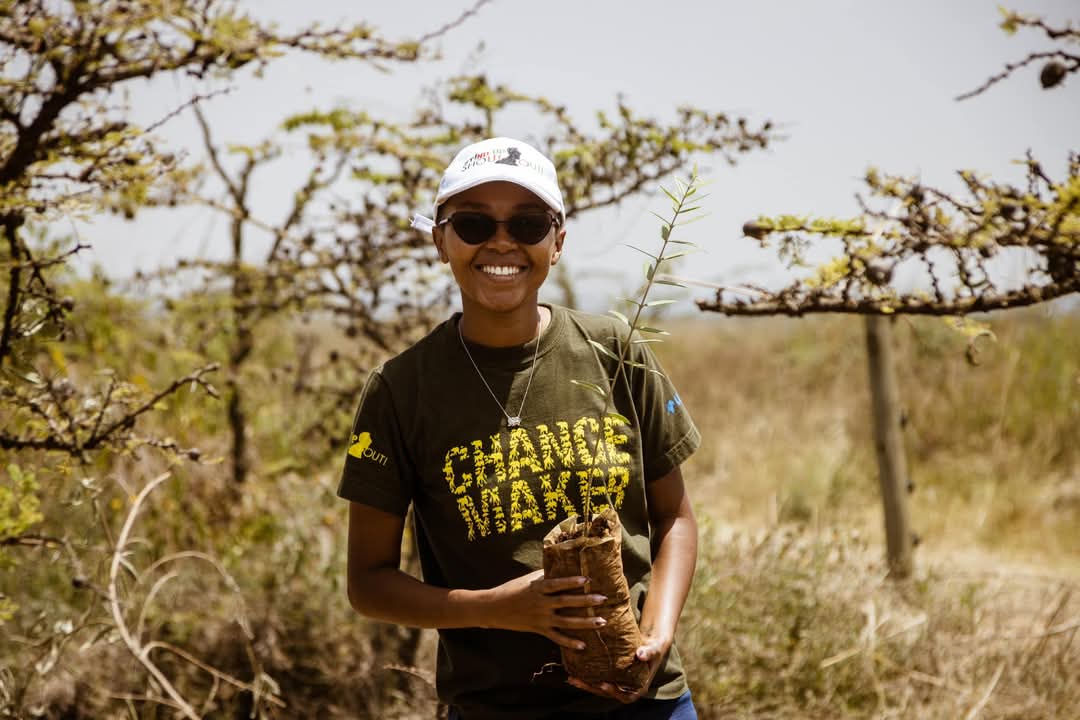
For Phoebe Matunda, whose conservation efforts are rooted in Kenya’s Amboseli ecosystem, Nature Buddy became a tool to deepen work she was already leading. Through Stand Up Shout Out, she helped establish a tree nursery run by local women, offering income while restoring degraded areas.
With encouragement from the challenge, she expanded this effort by planting trees in homesteads, engaging families on climate resilience and human-wildlife coexistence. “In Amboseli, people live with wildlife.
And while we are planting these trees, we are continuing to say that we need nature and we are ready to coexist with nature,” she explained. “The trees are being planted for people and for nature. So for shade for people and also for food for the wildlife, which is especially important for elephants.”
She also said that the chatbot helped her break down complex biodiversity concepts into accessible lessons for communities with low literacy, making conservation more relatable.
“Something I’ve always noticed in the conservation space is that there’s a lot of jargon,” Matunda explained. “What Moyo showed me is how all this jargon can be simplified into beautiful nuggets that I can share with communities and other young people, whether we are talking about wildlife, environmental, or biodiversity conservation.”
In Nakuru County, student and climate advocate Christabel Kisang, who works with the Global Climate Innovators organization, found the AI chatbot equally valuable in shaping her work.
After completing the challenge, she continued consulting Moyo to refine her action plan and improve how she communicated her projects online. “It was comprehensive in guiding me each step of the way, always encouraging me as a user, and even after finishing the challenge, it remained open to more questions,” she explained.
The chatbot also helped her focus her efforts by breaking biodiversity into distinct sectors like water, land, animals, and people, and by pointing her toward organizations working in similar fields.
With that support, and together with friends, she organized a cleanup of River Gilgil. The team traced the river from its source to its mouth, documenting the journey and speaking with local communities about farming practices and water use. With the help of a scientist, they tested water quality and later held workshops with local leaders to encourage sustainable management.
“Our hope was that the cleanup would be just the beginning,” she said, “and that efforts to protect River Gilgil will continue and be replicated elsewhere.”
Similar stories are also emerging in South Africa. In Pretoria, nature conservation student Sello Maluleka joined after receiving the link from his supervisor. He developed an action card for a river cleanup, but said the biggest change was personal growth.
“It has helped me in terms of public speaking,” he explained. “I can address a group of 10 people now, as compared to before.” His project has since evolved into a collaboration with some members of the South African Youth Biodiversity Network.
On her end, environmental educator Makgwale Mpho emphasized the value of the isiZulu version of the chatbot. “The terms were so simple and easy to understand, I got to take that with me to the youth and make them understand the way I understood it,” she said.
At the same time, she felt the content was too brief in depth and scope. “It covers what biodiversity is, the types we have in South Africa, and policies like the GBF and NBSAPs, but it ends there. I think it needs to go deeper, for example, into how climate change or air pollution affects biodiversity, and become a place where young people can ask any biodiversity question and get an answer.”
Partners and Implementation
Partner organizations in Kenya and South Africa have played a central role in moving the challenge beyond the digital space. In Kenya, the African Wildlife Foundation (AWF) and the Kenya Youth Biodiversity Network manage WhatsApp groups, promote events, and support workshops.
In South Africa, the Wildlife and Environment Society of South Africa and the South African Youth Biodiversity Network perform similar roles. These groups not only maintain activity online but also ensure participants have opportunities to meet in person through cleanups, webinars, and training sessions.
AWF hosted three activator events during the pilot phase, including one in Nakuru and another in Nairobi, each attracting more than 60 participants. These gatherings were aimed at giving young people the chance to discuss conservation and collaborate face-to-face.
“From my perspective, some of the challenges youth face is not having access to a network of like-minded people,” said Simangele Msweli, Associate Director of Conservation Education and Youth Leadership at AWF. “Through this challenge, people are able to connect with fellow leaders, some based in their counties, who are championing similar work, but they didn’t know each other.”
For Misha Teasdale, CEO of Greenpop Foundation, Nature Buddy was also an experiment in whether digital technology could drive meaningful conservation action.
“The hypothesis is to see if Nature Buddy can not just overcome barriers of engaging a specific youth audience, but also offer pathways and continuous engagement to inspire youth, increase their knowledge, and incubate a new nature network of advocates,” he explained.
This is because the chatbot idea was built on lessons from the Tide Turners Plastic Challenge, a UNEP initiative launched in 2018 that has reached nearly one million young people in more than 60 countries by encouraging campaigns, cleanups, and advocacy against plastic pollution.
Looking beyond Kenya and South Africa, Teasdale said Greenpop’s and other partners’ ambition is to expand the challenge to 20 countries within five years, depending on funding.
Priority nations have already been mapped based on biodiversity status, existing policy frameworks, and the size of youth and Indigenous populations. Before launching in each country, they plan to conduct surveys, workshops, and interviews to assess digital literacy, platform accessibility, and cultural context.
“In some places, the format may need to adapt if technology is a barrier,” he said. “The goal is to tailor the product so that youth can participate meaningfully, whatever their starting point.”
Challenges and lessons
Despite positive feedback, the initiative has not been without difficulties. Nicola Wilson acknowledged that the target of 10,000 young people in just three months was overly ambitious.
The launch coincided with school holidays, reducing initial engagement, while the QR code system created hurdles for some participants, and high data costs limited access for others.
Gender disparities also emerged, with participation skewed heavily toward young women. “It seems like more women want to change the world, and men may have other priorities. We’d love to reach more men,” Wilson observed.
While this reflects wider patterns in environmental activism, it has prompted organizers to rethink outreach strategies.
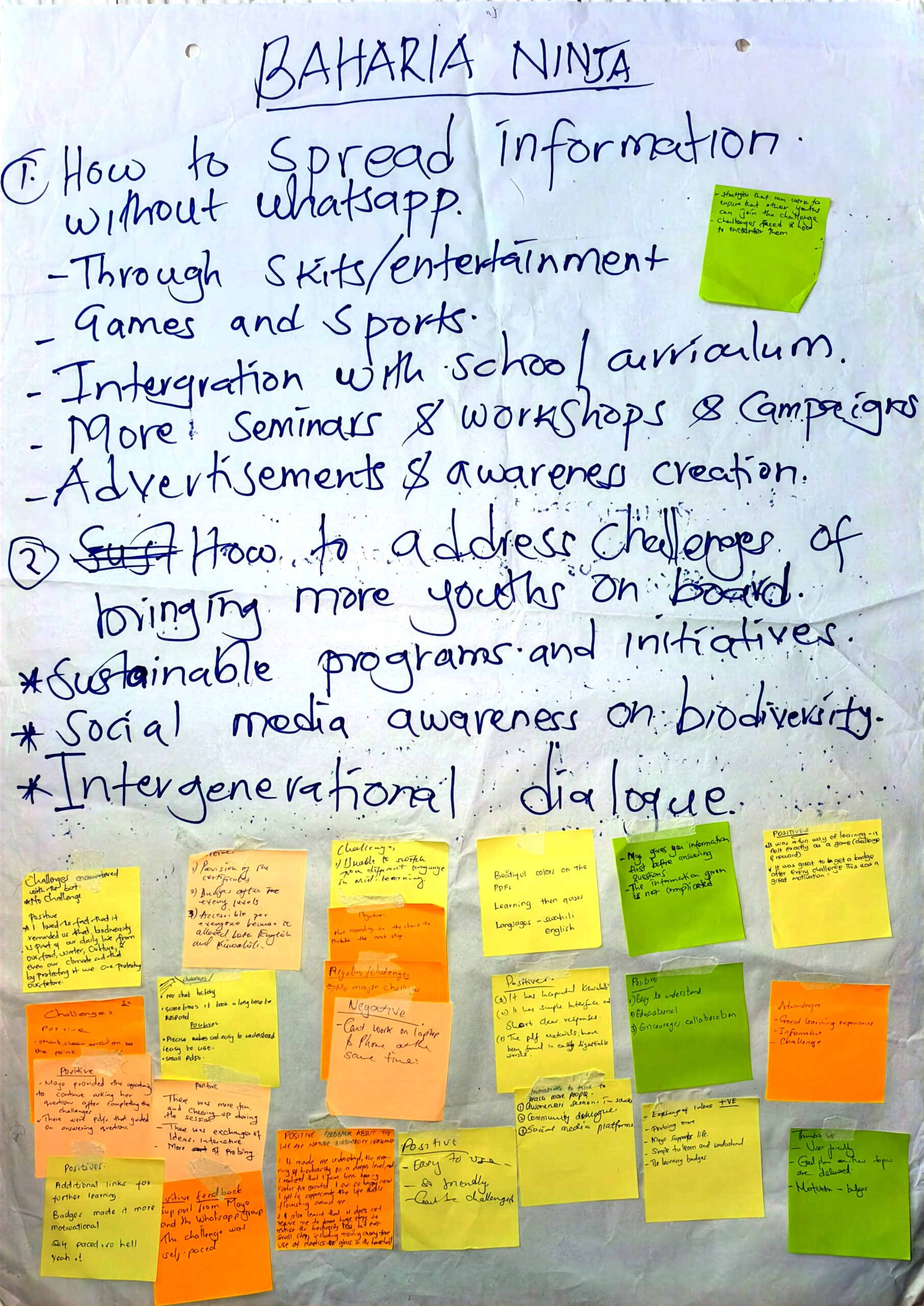
Still, the chatbot itself has been well received. “It’s difficult to know how people respond to AI or how people respond to a bot, something non-human that is taking you on this journey,” Wilson said. “We were a little bit surprised to see, based on our feedback form so far, that the experience of the chatbot has been quite a positive one.”
Looking forward
For UNEP, the project is a step toward localizing the Global Biodiversity Framework by giving youth accessible entry points to action. Carina Mutschele, Youth Programme Lead at UNEP, emphasized the importance of meeting young people where they are.
“Digital tools like this offer opportunities for meeting people where they are, with the aim of reaching people in languages and places they spend their time,” she said. While only a minority accessed Swahili and isiZulu content, UNEP sees adaptation to local languages and contexts as essential for long-term inclusion.
As the pilot phase draws to a close on October 15, the focus will shift to whether youth participation translates into lasting conservation behaviors. Mutschele said the lessons from Kenya and South Africa will be vital in shaping the next phase.
“Technology can be a powerful enabler if adapted carefully,” she explained. “Ultimately, we need to secure the right incentives and the right support so that young people everywhere have the opportunity to lead in biodiversity action.”