|
Getting your Trinity Audio player ready...
|
By Omboki Monayo
Nairobi, Kenya: In the bustling heart of Nairobi’s Eastlands, surrounded by the shouts of street vendors and the frequent hooting of matatus passing by, Abigail Makato reflects on her journey as a mother of four. Hers is a story echoed by countless Kenyan women, navigating the maze of contraceptive choices amid economic hardship and, frequently, alone.
“I found myself defaulting on the pills and still conceived for the second time. I then started using the intrauterine coil device (IUCD), which resulted in painful menses accompanied by backaches that made it very hard for me to do my chores around the house,” recalls Abigail, a 41-year-old businesswoman whose relentless pursuit of birth control reads like a primer on the country’s perplexing family planning (FP) landscape.
An Uphill Battle
Abigail’s introduction to modern contraception began after her first childbirth. “Having delivered my firstborn, I attended the postnatal clinic sessions for advice on family nutrition and family planning. After consulting the medics, I opted for Norplant, the underarm implant that was supposed to keep me from getting pregnant for five years.” The results were far from reassuring: “I had issues with irregular periods and discomfort,” she says.
That discomfort rippled through her family life. “We were having conflicts with my husband because he was worried about unintended pregnancies and the burden of having to fend for more children in this adverse economic situation.”
The monthly pill was supposed to be her next solution, but life had other plans. “I found myself defaulting on the pills, and still conceived for the second time,” Abigail shares. The IUCD came next, then another round with Norplant, just before she left for contract work in the Middle East. The story repeated: discomfort, irregular periods, this time complicated by the misunderstanding and indifference of her foreign employers. “When I left Kenya, I was 62 kilos, but by the time I returned, I was weighing 48 kilos. I was relieved to be back and eager to try a different solution.”
Condoms were suggested, but she says, “The medics recommended that we use condoms, but after 3 months, my husband said he couldn’t go on with it.” At her wits’ end, Abigail tried herbal medicine—a solution as old as the hills and, in her case, just as ineffective. “While in the third month of usage, I got pregnant for the third time.”
Her final pregnancy was intentional, planned so her youngest wouldn’t be lonely. After the birth, she was adamant: “I asked my friends if they knew where I could get my tubes tied. One of them referred me to Marie Stopes Kenya, and I was directed to Makadara Health Centre where I underwent the bilateral tubal ligation (BTL) procedure in August 2024,” Abigail recounts.
Tubal ligation is a surgery to close a woman’s fallopian tubes, which connect the ovaries to the uterus. It is often referred to as “tying the tubes.” A woman who has this surgery can no longer get pregnant.
Ruth’s Reprieve and the Complex Calculus of Choice
In Machakos County, south-east of Nairobi, Ruth Ndunge found herself at a painful crossroads. Four years after she was widowed, Ruth, also a mother of four, began a new relationship. “I was using the pill, but sometimes forgot to take it as per the doctor’s orders,” she tells me. The result: an unexpected pregnancy and a partner who vanished, leaving her to raise four children single-handedly. “I was left to shoulder the burden of a newborn alone, in addition to educating and feeding three other young children.”
A conversation with reproductive health specialist Riziki Zainabu, who works at Matuu Level 4 Hospital’s reproductive health unit, changed everything. Ruth heard about BTL—a permanent form of contraception. “I examined all the possible options and, as a widow and single mother, I saw there is no need to continue giving birth to more children,” she says.
Riziki notes that most of the clients who come for FP at the facility are young mothers.
“This area has a large number of young women with many children, and they rarely involve their husbands in the counselling sessions before we give them FP services. When they come for the procedure, most come alone, with a firm resolve to either delay childbearing or stop it altogether,” says Riziki.
For both Abigail and Ruth, the permanent solution brought relief—and a measure of controversy. “That myth of BTL causing loss of sexual desire is very far from the truth. I am still able to enjoy the pleasure of making love with my husband, but without the stress and pressure of worrying about getting pregnant,” Abigail declares.
A System Under Strain: The Kenyan Context
Such stories are far from unique. According to the latest figures, Kenya’s contraceptive prevalence rate (CPR) for modern methods among married women stands at around 57% as of 2023. The total fertility rate (TFR), once hovering above six children per woman in the 1980s, has now fallen to approximately 3.4—a testament to decades of policy work and advocacy. Yet, gaps remain: about 14% of married women report an unmet need for contraception.
Why is access still such a struggle, especially for low-income families?
In Nairobi’s poorer estates and Kenya’s remote regions, the hurdles are rooted in economics and logistics. The stock of family planning commodities is uneven, public facilities are overburdened, and private clinics—where supplies are more dependable—charge fees out of reach for many.
For a woman in an urban slum earning less than 2 USD (Kes259) a day, even the cost of a contraceptive injection, which commonly ranges from 13.30 to 20 USD (Kes1,720 to 2585) in a private facility, can be daunting. Distance to clinics, inconsistent health worker training, and deeply rooted myths or male partner opposition further complicate the picture.
Marie Stopes International works with selected government facilities to fund some of the FP services and plug the gap in unmet contraceptive needs. For instance, at Embakasi Health Centre, BTL and vasectomy services are offered free of charge courtesy of this partnership.
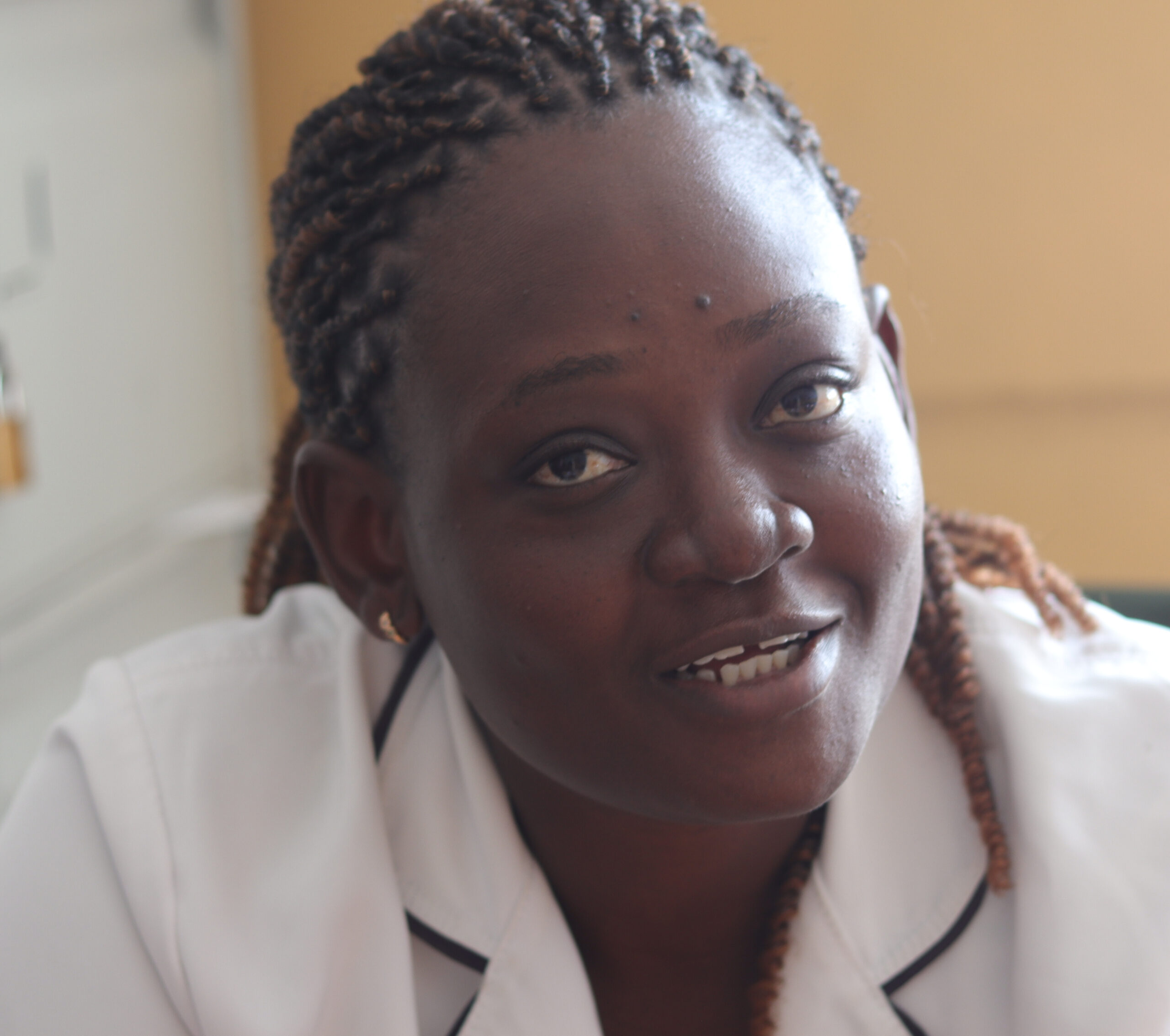
Brenda Onyango, a nurse and reproductive health specialist at Embakasi Health Centre, outlines the process. “We provide long-term and short-term methods like Implanon, the three-year implant, Jadelle, the five-year hormonal implant, the copper coil, and hormonal coil commonly known as Mirena,” she says. But the human resources are limited—at her facility, only two, including a clinician, are trained to provide the full spectrum of services.
Informing Choice, Battling Stigma
For Brenda and her colleagues, consent and counselling are the bedrock. “We give the clients all the information, what to expect, and the side effects. For instance, Implanon and Jadelle are hormonal and might react differently with some clients. So we ensure they are aware of the side effects and how we will control them if they occur,” she notes.
Consent is doubly crucial for young clients. Abigail’s husband accompanied her for the counseling sessions prior to the minor surgery.
“He was fully aware of my decision and consented to it,” she reveals.
Brenda describes a peculiar rise in requests for BTL and vasectomy from “young adults, some as young as 20 years, who are part of a group that calls itself child-free.” The facility proceeds cautiously: “We don’t rush to provide the service because they are young and there is a possibility they might regret their actions later. We normally delay giving them the service and request them to take a psychological evaluation to ascertain that they are aware of the consequences and are not merely being pushed by peer pressure,” Brenda explains.
Yet these checks sometimes backfire. “We have had friction with some of them when we delay the procedure because they feel that they are adults and can give informed consent,” she says.
Demystifying Contraception—One Dialogue at a Time
Beyond clinical walls, outreach is vital. “We hold community dialogues at the facility where we get to hear what the community is hearing in terms of family planning information. We get to know their fears and give them clear information to demystify myths and misconceptions about family planning,” Brenda says. In these sessions, community health promoters, local mothers, and even skeptics gather to discuss everything from BTL to vasectomy and short-term methods.
For Abigail, life after sterilisation is unclouded by old fears. “I had the operation and took two weeks to rest and heal. After a fortnight, I was healed and ready to do household chores and perform my conjugal duties,” she says. Ruth is similarly resolved: “I have enough children to take care of. It will be a challenge because I currently depend on odd jobs to make a living, but with faith in God, I believe everything is possible.”
As Kenya edges towards universal health coverage, the hope is that more women will gain not only access to contraception but also the power to plan their futures on their own terms.