|
Getting your Trinity Audio player ready...
|
By Lenah Bosibori
Nairobi, Kenya: As the world marked the final days of the 16 Days of Activism against Gender-Based Violence, artist Raphael Seleti used his artwork to tell stories many women struggle to speak out loud. Through bold colours and striking images showcased recently at a Nairobi hotel, Seleti’s paintings confronted issues around sexual and reproductive health and rights (SRHR) an area where women’s voices are often silenced.
In an interview with him, Seleti’s work tell stories of women who have endured pain, power, resistance and hope. “I paint around social and environmental issues,” Seleti says. “I try to use my artwork to give a voice to issues that are not spoken about every day.”
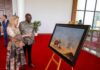
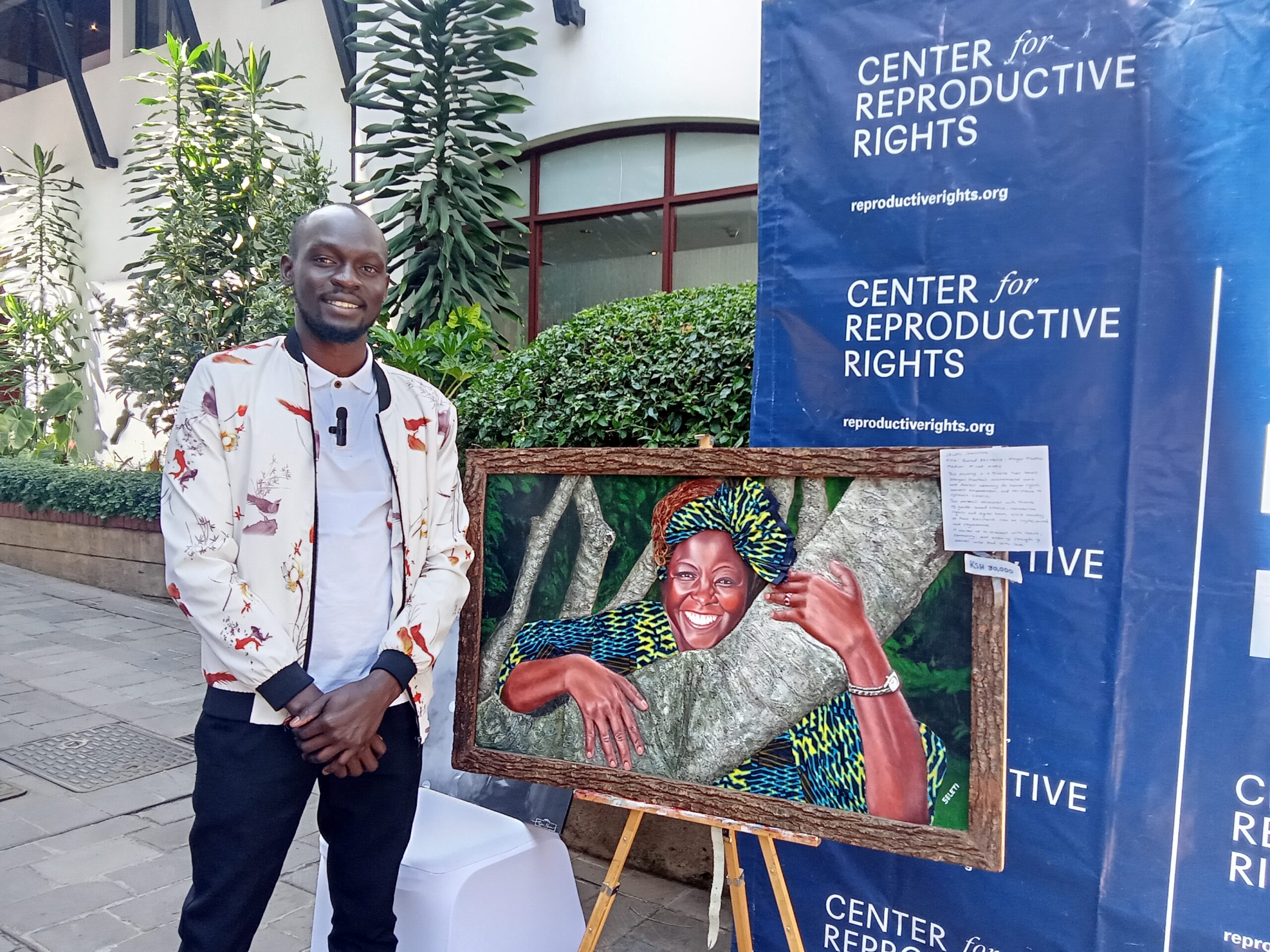
One of Seleti’s standout pieces is a mixed-media oil painting inspired by the late Wangari Maathai. More than an environmental tribute, the artwork reflects Maathai’s legacy as a fearless human rights defender who stood up for women, children, and marginalized communities.
“To me, Wangari Maathai is an icon,” Seleti explains. “She empowered women to speak up, raise awareness about their issues, and be part of the solutions not to stay silent.”
The 16 Days of Activism against Gender-Based Violence is a global campaign observed every year from 25 November to 10th December. The 2025 global theme, “UNiTE to End Digital Violence Against All Women and Girls,” focuses on ending online harassment, abuse, and other forms of technology-facilitated violence, while promoting safer digital spaces for women and girls.
The painting is a call-to-action urging people to use their voices and platforms to address issues often pushed to the margins, including SRHR and online violence. In Maathai’s image, Seleti sees proof that speaking out can help build safer and more just communities.
Another powerful piece is a green-toned painting of a tree shaped like a woman cradling a child. The artwork symbolizes the natural power of women to give life, something Seleti believes should never be politicized or debated.
“The power to conceive and give birth is natural,” he says. “It’s not an opinion. It’s not something external forces should control. Women have sovereign power over their bodies and their choices.”
This message of bodily autonomy continues in a pink painting showing a confident woman standing tall. The artwork challenges the rules society places on women, how they should dress, behave, or live. “It’s about a woman’s right to speak, to choose, to decide,” Seleti says. “That power should never be taken away.”
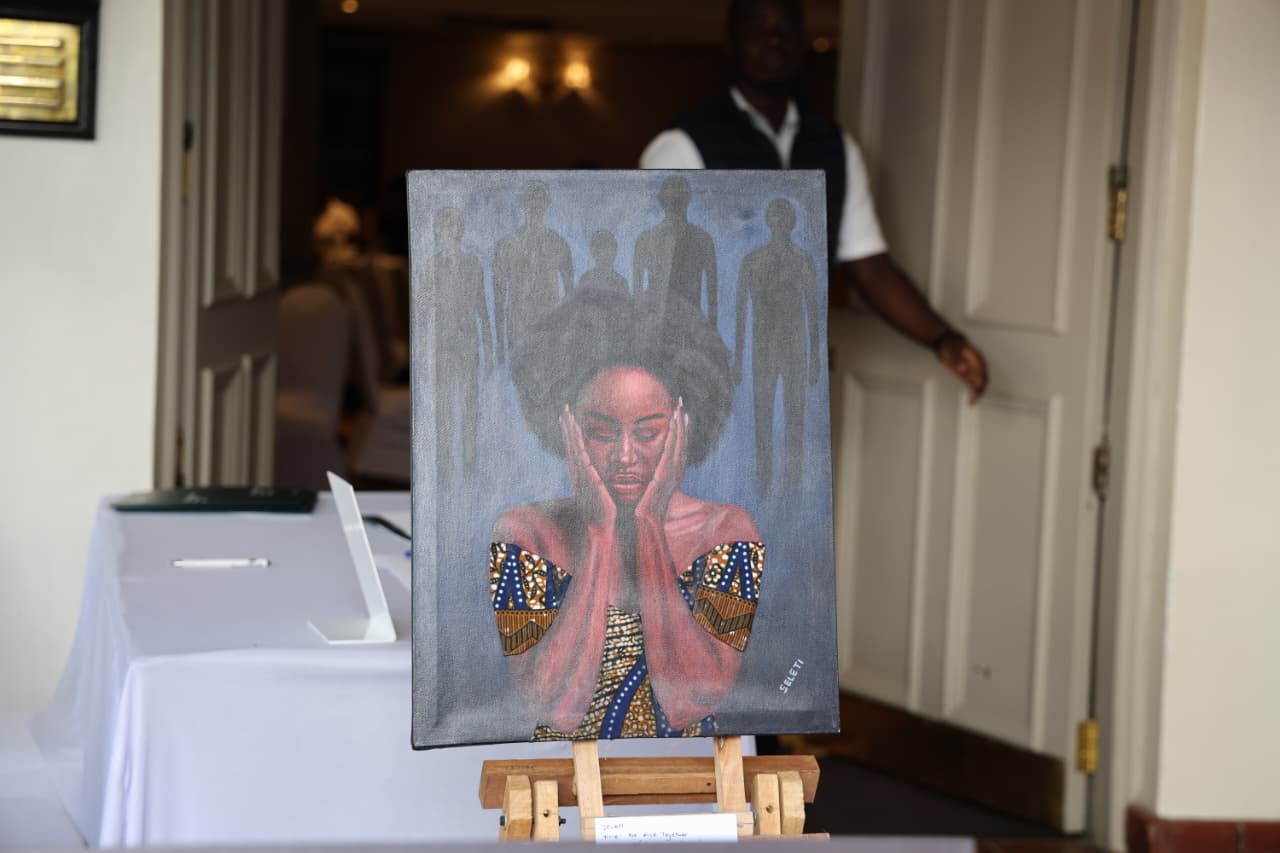
Perhaps the most haunting artwork is Echoes of Silence. It depicts a woman holding her face in visible pain, surrounded by shadowy figures. The painting reflects the trauma of online violence, sexual harassment, and intimidation both forms of abuse that often leave no physical marks.
“She’s in pain, but she wants to be seen,” Seleti explains. “She refuses to be silenced.”
The figures behind her, mostly male, create a sense of fear and vulnerability. “Men have a responsibility to help create safer spaces where women feel protected, not threatened,” he adds.
This powerful link between art and justice is why the Centre for Reproductive Rights brought artists together during the 16 Days of Activism.
“We see reproductive rights as human rights,” says Elsy Saina, Associate Director for Advocacy and External Relations at the Centre. “They are interconnected. You cannot separate the right to health from the right to life, dignity, and freedom from violence.”
Working across several African countries, the Centre uses legal advocacy to challenge laws and policies that harm women and girls. This year’s focus on digital violence highlights how online abuse fuels gender-based violence and leaves deep psychological scars.
“Physical violence is easy to document,” Elsie explains. “But emotional and psychological trauma what we call invisible wounds are rarely discussed, yet they are just as damaging, Adds Saina.
Art, she says, helps make these hidden experiences visible. It humanises legal cases and turns statistics into real, relatable stories. “Art allows communities to feel justice, not just hear about it,” reiterates Saina. “It makes these issues urgent and real.”
Seleti has not only used his art work to expose hidden realities, spark conversation but also pushed society towards change. “These things are happening,” he says. “Art helps us see them, feel them, and ask what can we do better.”