|
Getting your Trinity Audio player ready...
|
By Lenah Bosibori
Kajiado County, Kenya: Inside the quiet compound of the AIC Childcare Centre in Kajiado, voices of rescued girls fill the church with songs of praise and gratitude for a second chance at education after escaping early marriages and abusive homes.
Earlier, the same girls sat beneath the shade of an acacia tree, shielding themselves from the scorching sun as they wove baskets and mats while listening to their instructors.
The centre, which shelters children with disabilities alongside girls rescued from Female Genital Mutilation (FGM) and child marriage, has long been a place of safety and healing. But today, it is also emerging as a frontline in a growing public health concern: rising HIV infections among vulnerable children and adolescents.
Keswe Mapena, the Centre Manager, says their work goes far beyond rehabilitation and shelter.
“We do community rehabilitation, teach families that disability is not a curse, and promote inclusive education,” he says. “But we also emphasize that HIV is a reality that knows no barrier whether a child is disabled or rescued from harmful practices.”
Although the centre currently has no HIV-positive children under its program, Mapena warns that the risks remain high, especially for girls escaping traditional FGM ceremonies still conducted with unsafe blades and poor hygiene.
“FGM handlers are not careful. Shared blades and mishandling of blood remain a threat,” he says. “We put safeguards in place and educate our staff and children to protect them.”
Many parents in the locality already rely on the nearby Comprehensive Care Clinic (CCC) for HIV treatment, highlighting the persistent risk in surrounding communities.
This year, AIC Childcare Centre hosted the Kenya National Bureau of Statistics (KNBS) during the 2025 World AIDS Day commemoration, themed “Overcoming Disruption, Transforming the AIDS Response.”
The Director General’s speech delivered by Senior Manager for Human Resources, Rose Awino, on behalf of Dr. Macdonald George Obudho, echoed the centre’s concerns.
“This day reminds us that behind every statistic is a story, a dream, and a future worth protecting,” Awino said. She emphasized that the theme reflects both the disruptions caused by funding cuts and the resilience of communities finding new ways to fight HIV.
Awino described the childcare centre as a “symbol of courage, hope, and transformation,” home to girls who have survived violence, FGM, and forced marriages.
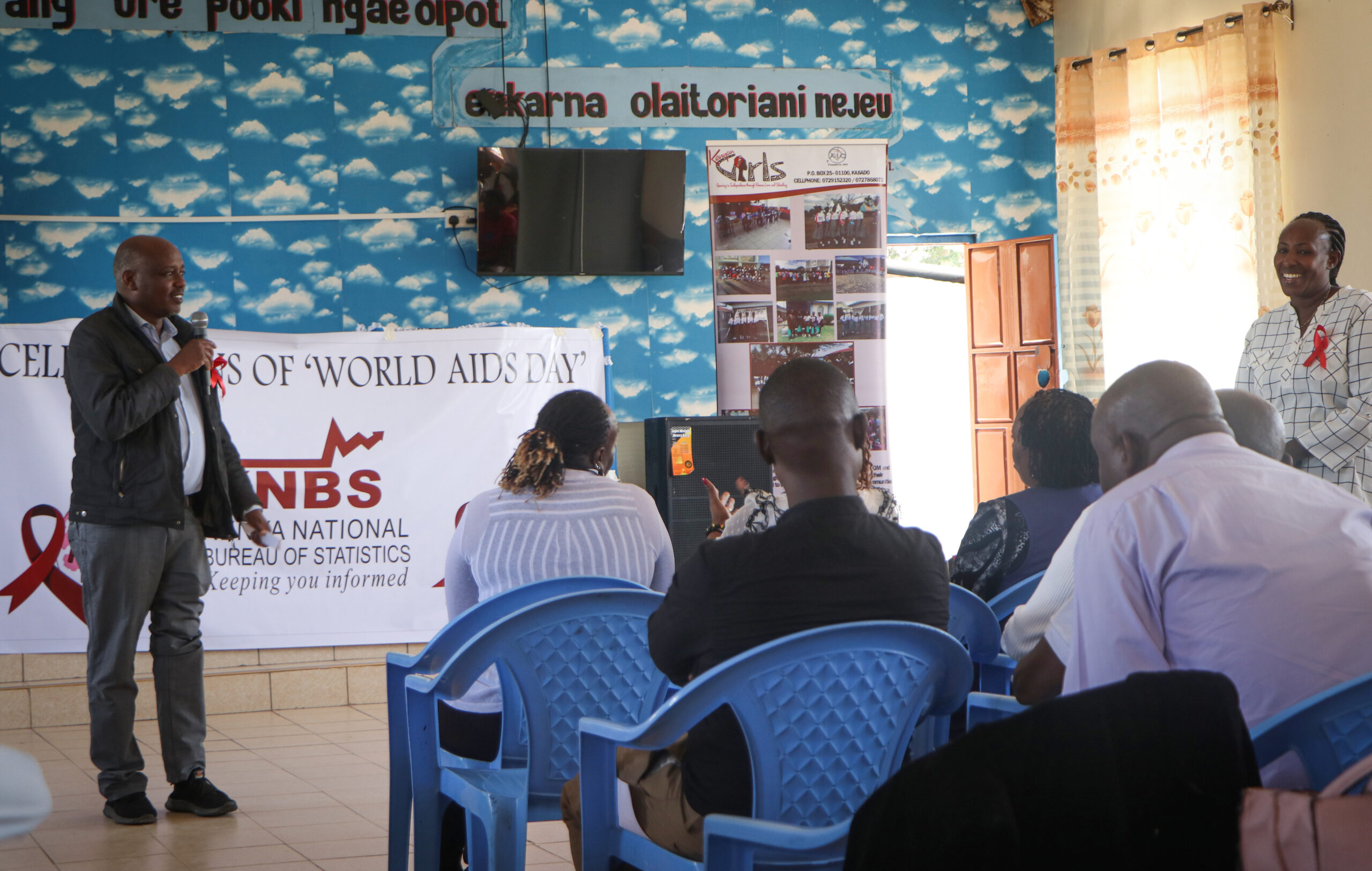
“At KNBS, we believe that data is not just about numbers—it is about people, communities, and the lived realities behind every statistic,” Awino said. “Centres like this help us understand the progress made and the work that still lies ahead.”
Three key messages shaped the agency’s call to action: education saves lives, inclusivity is non-negotiable, and ending HIV requires collective responsibility. From government agencies to faith-based institutions and families.
According to Awino, Kenya must build stronger support systems to ensure no child is left behind. “To the girls here today: You are strong. You are valuable. You are the future of this nation,” she said.
Funding Cuts, Rising Infections, and Lingering Fear of Testing
Pauline Waweru, KNBS’s Human Resource Manager and AIDS Control Unit coordinator, noted that Kenya is experiencing a rise in HIV infections, according to the latest survey. She said the increase persists despite extensive efforts to curb the epidemic, largely due to shrinking international funding and a declining public willingness to get tested.
“As per the latest national survey, there has been a rise in HIV cases,” she said. “We rely heavily on international funding, and when that support drops, prevention programs are affected.”
According to a survey by the National Syndemic Disease Control Council (NSDCC) released ahead of World AIDS Day 2025, Kenya recorded 19,991 new HIV infections in the past year, marking a 19% increase from 16,752 the previous year. New infections are highest among youth aged 15–34
A troubling trend, she noted, is the number of people, including civil servants, who avoid HIV testing even when other health screenings are available. “Mostly, people are afraid to know their status. Even within our own institution, we see the same pattern,” she said.
“When we call for screenings, people readily come for BMI checks and other tests, but when it comes to HIV, very few are willing. Many would rather remain unaware of their status.”
She adds that stigma has reduced over the years, but it still exists. “Yes, it still exists, although it has generally reduced. Many people still believe that having HIV means certain death, which is no longer the case thanks to available treatments.
Today, many people living with HIV leads full lives they have families and continue to contribute meaningfully to society.”
Another emerging challenge is among young adults born with HIV who fear disclosing their status when entering relationships. “Some feel that revealing their status may deny them friendship or marriage,” she explained. “So, they choose silence, which increases the risk of spreading the virus.”
Why Childcare Centres Must Not Be Overlooked
For Waweru, sensitization at childcare centres remains essential, especially for girls who often return to the same communities that exposed them to early marriage and FGM.
“It is important that awareness reaches everyone,” she said. “Young girls need to know how to protect themselves. When they go back home after mentorship, they carry information that can save their lives.”
She noted that infections linked to FGM and child marriage have reduced due to stronger laws, increased awareness, and government rescue centres but the practices persist in hotspots such as Narok and Kajiado.
Waweru also highlighted the decline of once-effective interventions such as HIV educational films in schools. “They worked well, but such methods are now rare,” she said.
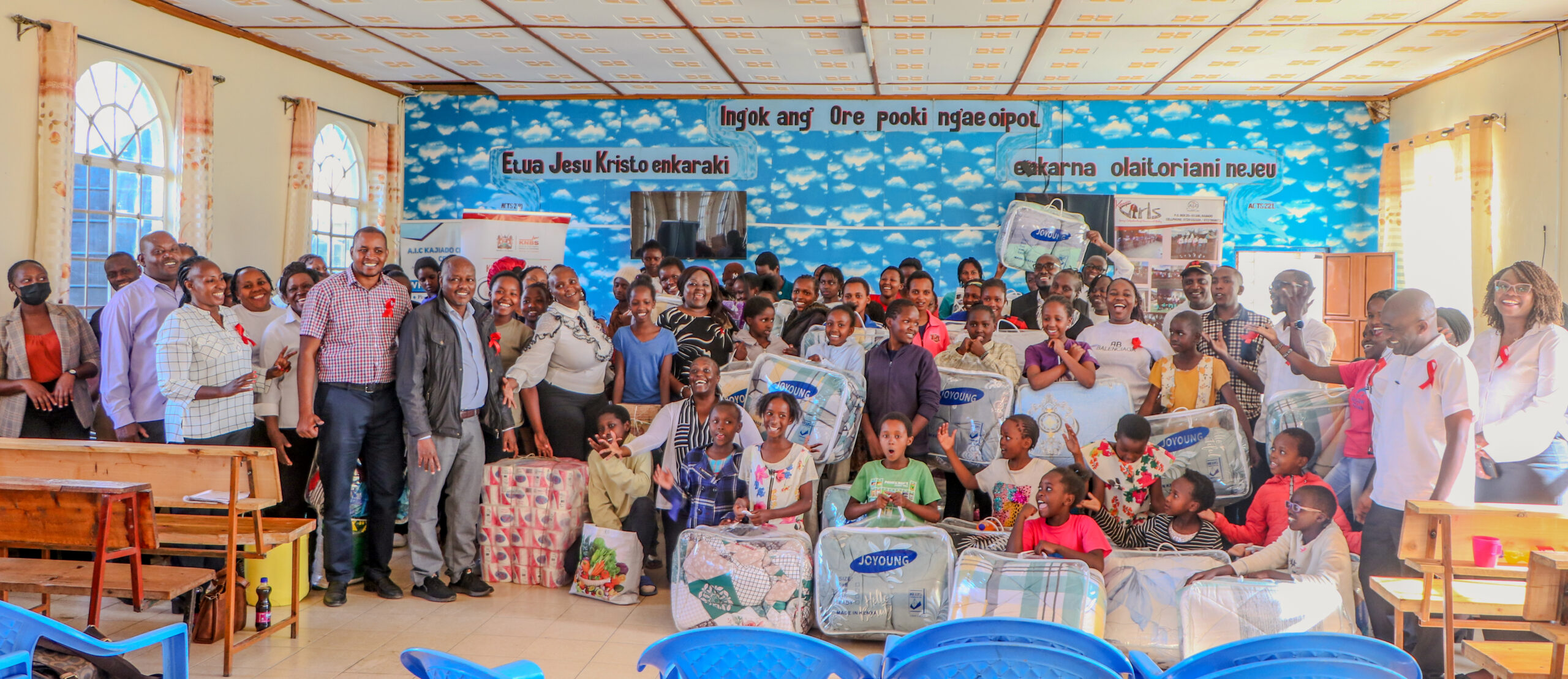
As the event concluded, KNBS staff handed over donations to the centre and held a networking session a show of support for the girls, many of whom are away from home. The gesture was symbolic but deeply appreciated.
For Mapena and her team, the message remains urgent: protection begins with knowledge, and safeguarding vulnerable children requires a united front.
And as Kenya navigates funding cuts, shifting infection patterns, and lingering stigma, the call from Kajiado is clear: no child should be left behind.