|
Getting your Trinity Audio player ready...
|
By Prof. James Ogude
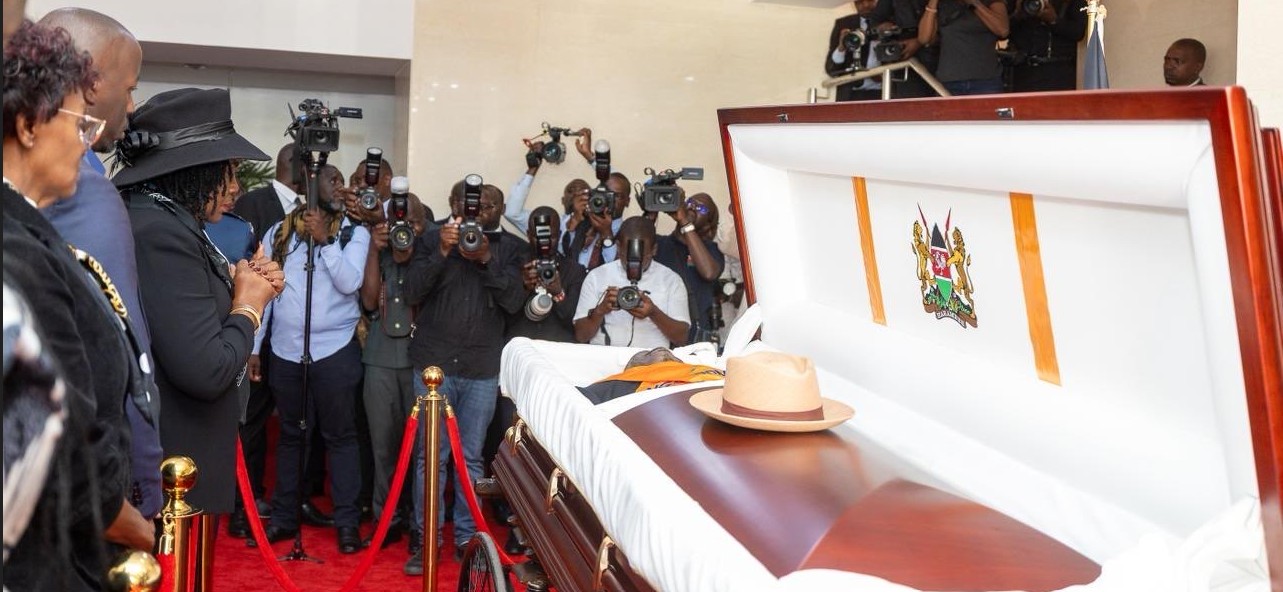
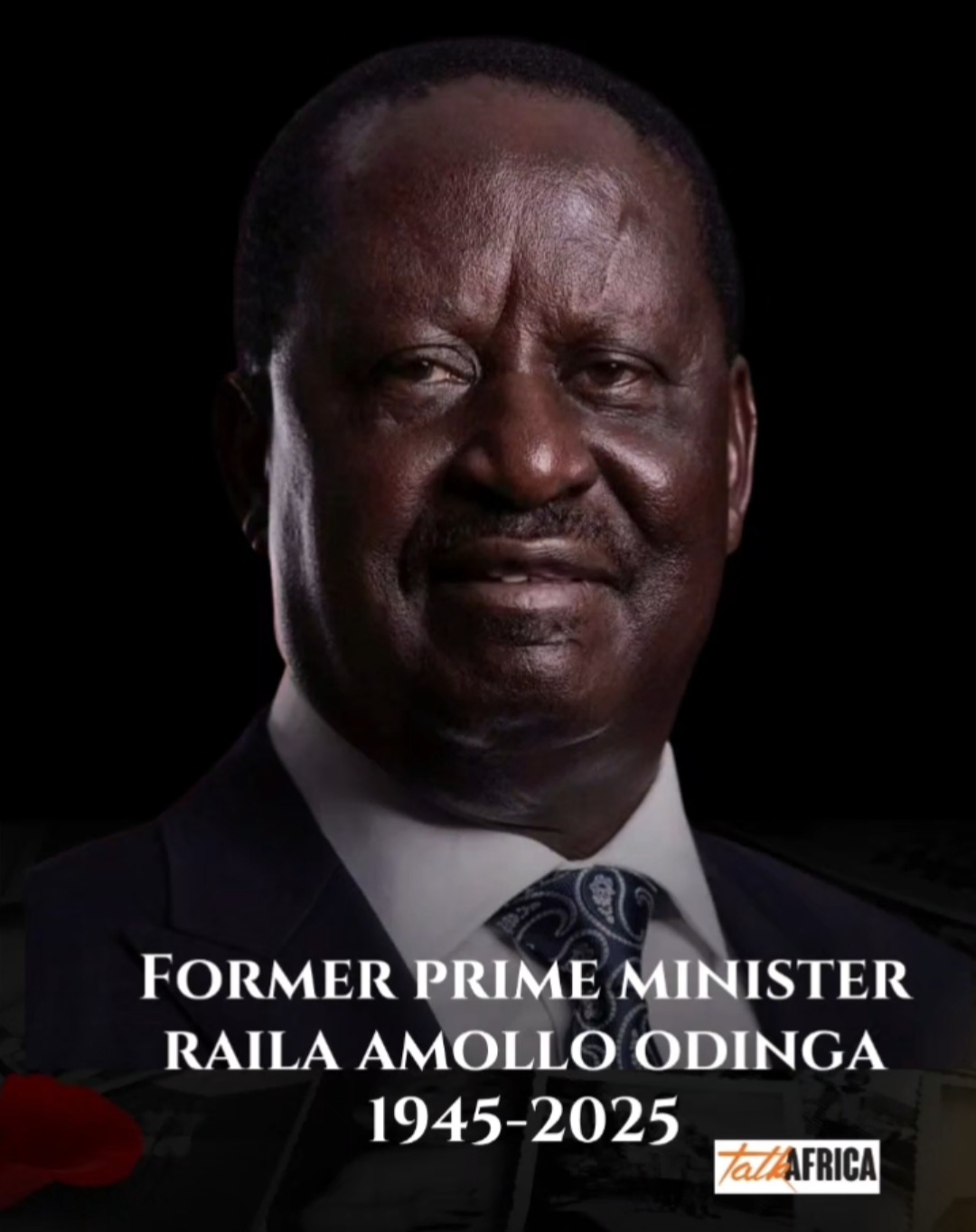
Nairobi, Kenya: This last Sunday Kenya bid farewell to a great and an indomitable politician – easily the most consequential politician Kenya has had in decades. He loomed large and his legacy in politics eclipsed even that of his father, the late Jaramogi Oginga Odinga, and perhaps for generational reasons.
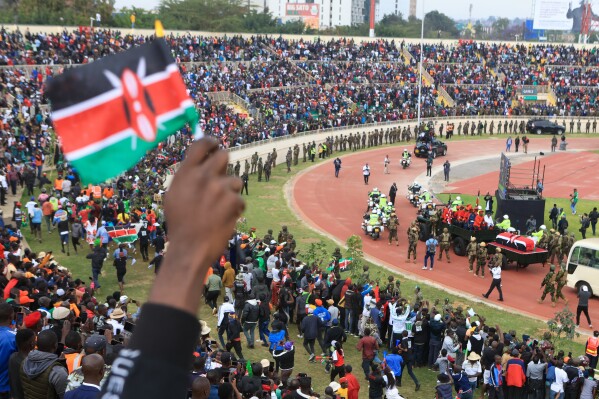
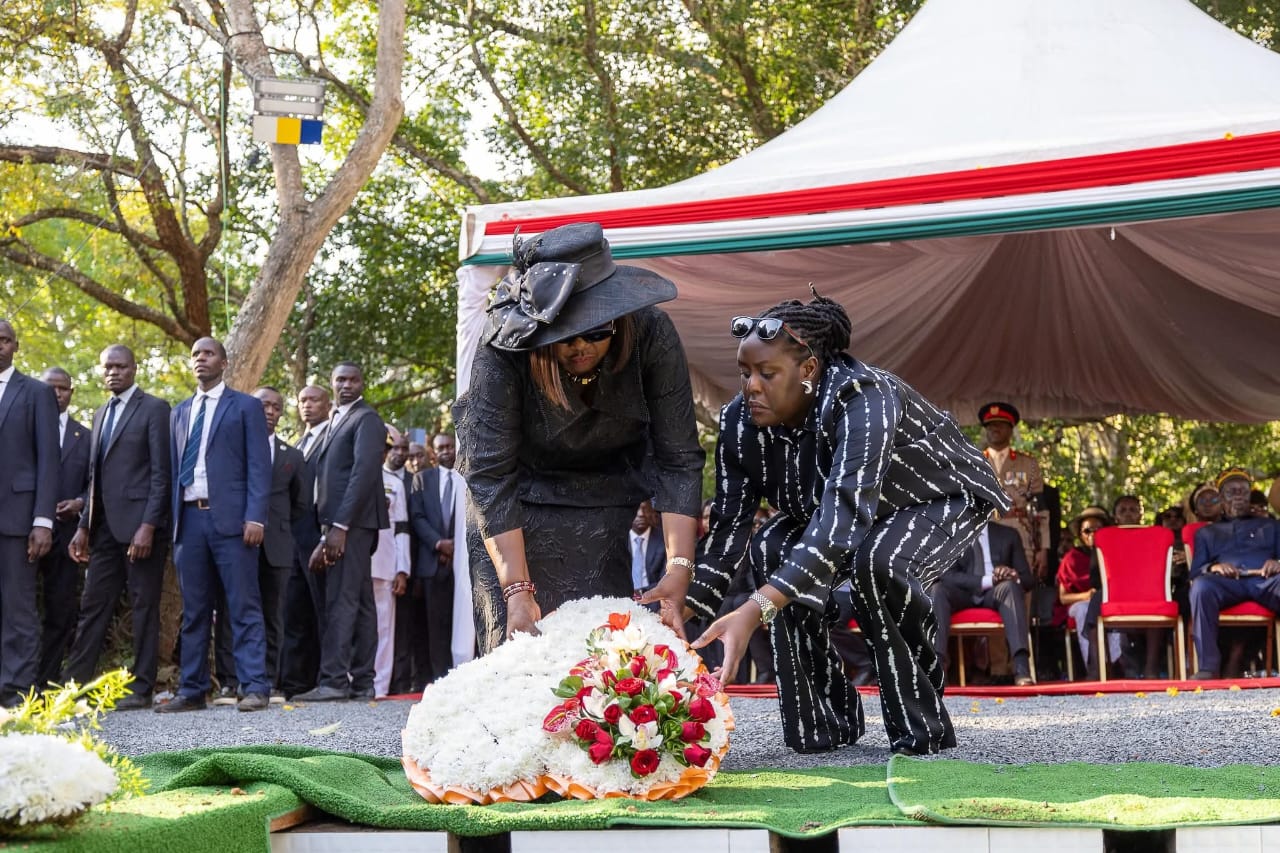
Over the last few days since the news of his unexpected death in India reached Kenya, there has been an unimaginable outpouring of grief. For over three decades, Raila had embodied the hopes of many Kenyans across ethnic and class divides: he embodied what could be and what was possible – the aspirations of many Kenyans who yawned for justice, equality and dignity of life.
But all these were possible because Raila was a selfless leader, deeply sensitive, ordinary and forgiving. Raila had single-handedly inserted himself in that difficult space of occult instability where the people dwell. He was at home in that space and when he opted to contest for parliamentary elections in a constituency right in the heart of Nairobi and to represent the damned of the damned in Kibera slums, he was sending a strong signal about his political forte.
Attempts to dislodge him from this seat year after year, failed. He would extend his influence across the province of Nairobi and those that he anointed would reap the fruits of a formidable base he had built with amazing agility and tact. He was a superb grassroots organizer, a strong strategist and with a singular resolve to win against all odds.

Although I came from the same constituency and division of Bondo in Siaya District then, now Siaya County, I never met Raila while I was growing up in Kenya. I knew his father, Jaramogi Oginga Odinga, a good friend of my father and a frequent visitor to our home, always clad in khaki shorts and Chinese style shirts and ‘Akala shoes’ (shoes made from old car rubber tyres), that would become a major fashion in Nyanza and Western provinces of Kenya in the 70s, among the youth.
I met Raila for the first time during Nelson Mandela’s inauguration as the first President of a Democratic South Africa in 1994. As people filed in, very early on a cold morning, I saw Raila pacing up and down, deep in thought and I gathered the courage to go and greet him.
The moment I mentioned my surname – Ogude – he brightened up. “Wuod wuon Nyaoro” (the son of Ogude son of Nyaoro – as my father was widely known), what are you doing here? Are you Ogude’s son or grandson? “I am Ogude’s son – one of the last born”, I responded. “And I am a lecturer at the University of the Witwatersrand”.
He beamed and added: “your father was a very good friend of Jaramogi”. Then began a relationship that lasted until his death. He fondly referred to me as “Wuod wuon Nyaoro” every time we met and even when years passed by without any encounter, Raila would never ever forget me; he never forgot people that easily like many a pedestrian politician I know of.
That was one of his many enduring human sides – a sense of ordinariness that you would never take away from him. Every time I was in Nairobi, I always bumped into Raila as he came for his regular gym and body massage at Serena Hotel – my preferred hotel while passing through Nairobi to my home by the Lake in Rarieda.
Raila would always break ranks with his security to have a quick chat. When he formed the Orange Democratic Party (ODM) to contest the 2007 elections, Sam Munda and together with a number of Kenyans in South Africa came together to organize for him a fundraiser to support his presidential bid and to meet the business community in South Africa. He was deeply grateful.
But I tell the story of our meeting with Raila at Mandela’s installation for one important reason. As if in deep reflection, Raila remarked that if Mandela who was jailed for 27 years could forgive and join hands with his erstwhile jailors in order to build a new nation, why can’t we do that back home.
Raila himself had been in and out of detention for 8 years, and in his own words, never slept on a bed for 10 years, either because he was being hounded by the police or in detention sleeping on the floor. His father had been jailed for 7 years.
If there is something that Mandela’s magnanimity did for Raila’s tortured soul and understandable bitterness for what his family, starting with his father, had gone through, it was the idea that it was not only possible to forgive your enemies, but also to work with them for the greater good of the country.
The moral high ground was putting your country and its people first – above personal pain and bitterness. He admired Mandela deeply for his profound human act – the sheer will to rekindle the Ubuntu/Utu in us and to turn despair into hope; our fragility into wholeness; our wounds and trauma into a tapestry for healing.
Over the years as I watched Raila engage in what was a political game of treachery and suffering, one thing is certain: he had learnt that it is not enough to fight for justice, equity and national unity, if you cannot forgive and work with your friends and foes alike; indeed, if you cannot put the interests of the nation and its people first irrespective of their station in life, ethnicity, class or gender.
Those with low order judgement accused him of political opportunism, while others went as far as suggesting that he was not interested in becoming a president – he was a coward they surmised. But steadfast he remained and stood by his conviction, every now and again, that it was not worth rising to power on the back of ordinary Kenyan’s corpses as many are wont to do.
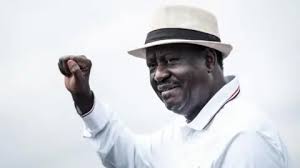
No wonder he was the only politician in recent memory who could galvanize so much support; so much good will; so much emotion and trust from Mombasa to the Lake region, from Kilifi to Wajir; Embu to Malaba. Love him or hate him, even his political rivals admitted that he was a force to reckon with, yet deeply devoted to piecing together those fragments of Kenya’s soul and tortured self, due to the politics of greed guarded by senseless violence.
Raila’s support was not baseless. It was driven by a tacit acknowledgement of the political will to fight for justice and fairness; to choose peace over violence, even if that meant sacrificing ascendance to a position of authority and this he did on several occasions, to the annoyance of some of his closest aides and followers.
I heard one of the mourners saying that Raila carried fire on the one hand and water on the other. I want to add that he did more; he also carried the spirit, because as Sembene Oumane reminds us, it is the spirit that washes water. It is not enough to douse the fires with water, you must have the spirit to bring about the healing that all strife-stricken nations need. Raila carried the spirit of benevolence in his heart. That was his greatest asset.
The story is told of how the current President, William Ruto, was so upset with Raila when he settled for politics of compromise and a government of national unity after 2007 electoral fraud and the subsequent violence that followed.
And one could understand where William Ruto was coming from, having mobilized his base to vote for Raila by almost 99% of the registered voters from his region, he did not expect less than an outright win.
Ruto had apparently insisted that in Africa power is not given; it is taken. And given our experience on the continent he may have been right. To be sure, Raila Amollo Odinga was not naïve. He too must have been aware that politics is about power, yet he took a different path.
He was aware that power, if not wrapped in the loincloth of peace; if not checked by a higher moral call, can lead to naked and rampant authority – a true gateway to bloodletting and tyranny that may never have any end because it becomes a vicious circle blind revenge.
Not once; not twice; but on a number of occasions, Raila pulled Kenyans back from the brink of a potential civil war that has rocked many nations here in Africa and abroad. For those of us who watched the Arab spring, stretching from Tunisia to Libya, Sudan to Egypt and indeed, Yemen to Syria, we now know better: that it is not enough to start a social uprising; you must also guard against it being hijacked either by political opportunists watching for cracks on the sidelines, but equally for self-interested imposters from within, and of course getting infiltrated by the regime of the day.
The latter is what Moi was adept at. First, he choreographed a hero’s welcome for Kenneth Matiba on his return from his treatment abroad and Matiba would be led to believe that he was the natural leader of Ford Kenya. He remained unyielding and totally refused to allow Jaramogi Odinga to become the sole President of the Party.
In a private conversation with Achieng Oneko, he confided in me of how in a meeting between him, Jaramogi and Matiba, Matiba showed so much disdain for Odinga’s pleadings not to play into the hands of Moi.
The opposition that had galvanized Kenyans to defeat Moi at the ballot box would be split in three factions. Moi came back with a landslide, obviously backed by the state machinery.
Fast-forward, when the National Rainbow Coalition (NARC) rallied to beat Moi’s candidate in 2002, story has it that while Mwai Kibaki, the sole candidate for the opposition was recovering in hospital in the UK, Moi sneaked into Kibaki’s hospital ward and reassured him of a peaceful handover of power as long as he reneged on his memorandum to make Raila Odinga the Prime Minister. Kibaki returned at the tail end of 2002 national elections and would win with a landslide.
But the man was already captured, first by the man he had served as the vice-president for a decade and others would add, by the return of the Mount Kenya mafia. When the 2007 post-election came following his swearing in the dead of the night after a highly contested election, Kenya’s democratic gains suffered irreparable setback and we are still reeling from these.
And in all these, Raila Odinga became the sacrificial lamb and yet because he carried Mandela’s spirit of benevolence, he refused to drive his country into the abyss of death. On many occasions Agwabo – Raila – would have the last laugh when his sworn enemies would come back running to him to steady the ship of the nation.
He had become Baba: the custodian of Kenya’s fledgling democracy – challenged and often on the verge of collapse at every turn. He could have been driven by bitterness and mindless appetite for revenge, but he put the nation first – often stretching his famous hand like other great statesmen before him, to embrace peace with the realization that Kenya is greater than all of us.
The final point I want to make about this giant of Kenya’s history is to kill the myth that he rode on the back of his father’s legacy. Unlike the lies often spread around, Raila was never anointed by his father. Jaramogi chose Wamalwa over him and James Orengo was his confidante. Raila built his own political career, almost single-handedly.
The pedigree may have been there, but without any support from a father who was so careful not to be seen as perpetuating a family dynasty.
Raila resorted to one of the most complex political experiments over the years, even with an attempted marriage with Moi as the Secretary-General of KANU that only lasted a few months, until Moi showed them that his political machinations had not ended: he openly rigged KANU elections to elect Uhuru Kenyatta as his successor.
When Raila moved out with a group of politicians to found the National Rainbow Coalition (NARC), Moi never forgave him. But Raila remained steadfast in his search for real democratic change and the inauguration of Kenya’s third republic.
He gradually built a solid base in Luo Nyanza, again out of sheer discipline, hard work, organizational agility and that ability to keep in touch with the people – the ordinary ‘Wananchi’. Even some of the Luo politicians that were sparring on the sidelines of the main ring – not worth mentioning here – would soon realise that their egos would not take them very far.
With their tails neatly coiled between their legs, watched in amazement as they caved in to Raila’s power and influence. Unfortunately, they never spoke to the people’s hearts and missed the profound lesson that all politicians in Kenya have to learn , and that is that the people know their leaders and that true leadership is not earned by grandstanding in some ivory tower, but is driven by the people from below.
It is about being with and of the people. Above all, it is about hard work with a clear vision to help the damned of the damned. But Raila also realized that it is not enough to have a local base, although all politicians need a home-ground advantage. He knew that an astute politician, seeking a national office, needs more than their backyard to succeed in national politics.
 Raila learnt this lesson early in life and extended his networks way beyond Nyanza province; experimented like a true engineer with a range of political models and spoke the language that resonated with the average Kenyan. He stood by them during difficult moments and helped to steady the national ship when it was needed: “Cometh the hour, cometh the man”.
As we continue to grieve as a nation, we have to ask Shakespeare, “Whence cometh such another?” Can we carry the torch forward? Can we bear the weight of the ongoing Kenyan national project? I hear people talking about the collapse of ODM – his party. So what? Raila was more than a party.
He was the embodiment of a spirit: the spirit for genuine change and development for his country. That is what is needed going forward: change to restore the dignity of life for our people and the name of the vessel that carries it is irrelevant!
“Tho wange tek ma onego Agwambo wuod nyar Alego. Thu Tinda. Ruoth mi adong arom kod Raila wuod Odinga” (Death you wicked clown but where is thy sting? Did you witness the outpour of grief for the man you dared to silence? His spirit continues to move across the length and breadth of this great nation – Kenyawa: Mayibuye iAfrica – Africa Return)
Professor Ogude and is the Director at the Centre for the Advancement of Scholarship, University of Pretoria