
|
Getting your Trinity Audio player ready...
|
By Mary Mwendwa
Nairobi,Kenya: Women in Science, Technology, Engineering, and Mathematics (STEM) are often celebrated for the discoveries they make, the data they decode, the diseases they conquer. But not all heroes hold a microscope.
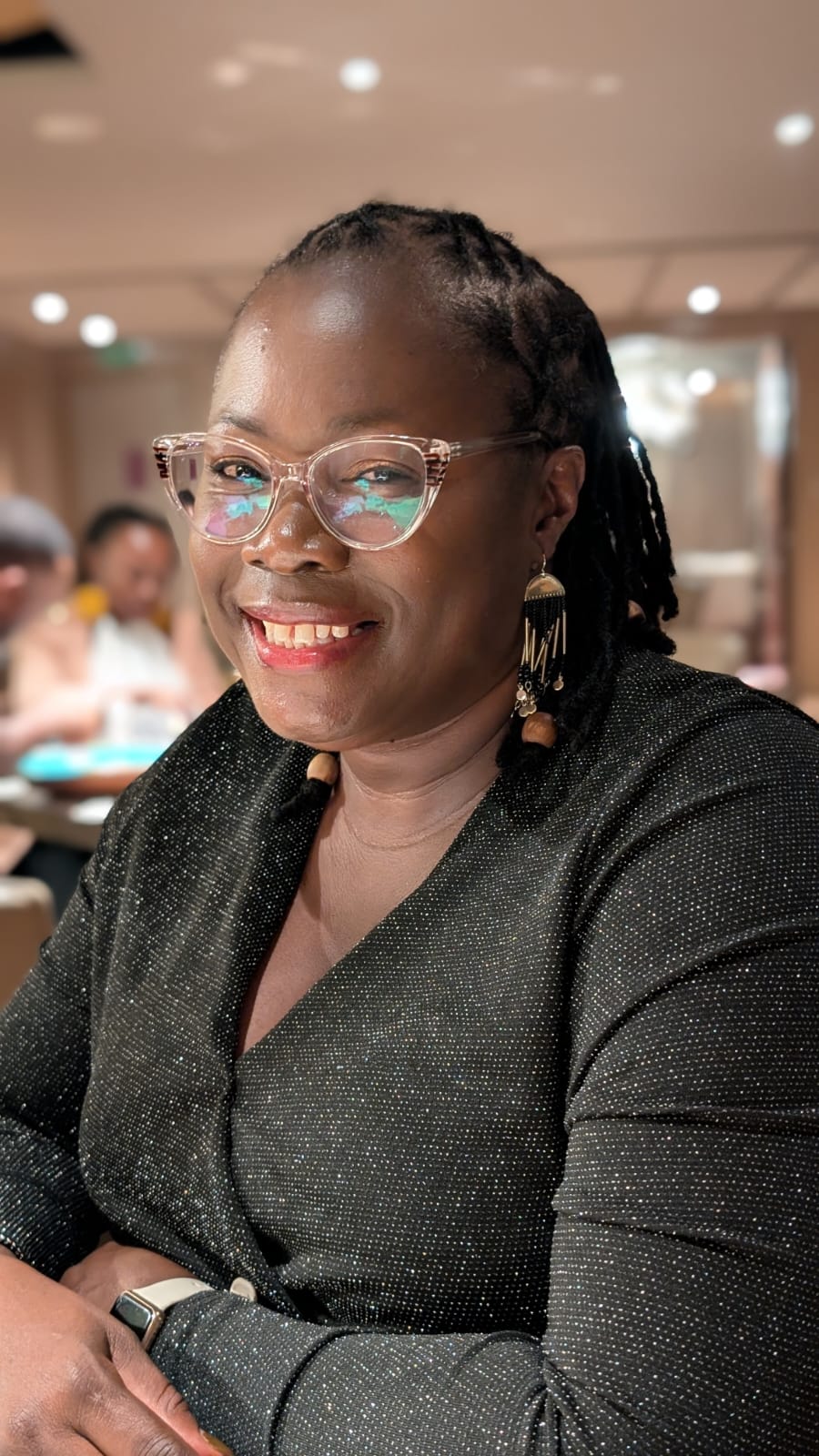
Beryl Kadeti is one of them.
For over 15 years, she has been the person researchers call when they need something, anything to work. Not the science itself. Everything that surrounds it. As Research Office Manager at the KEMRI-Wellcome Trust Research Programme—a partnership between the Kenya Medical Research Institute (KEMRI, a state corporation) and the Wellcome Trust (a global charitable foundation)—she sits at the exact intersection where scientific ambition meets operational reality. She does not hold a pipette. She does not analyse data. But she is the reason the pipettes are funded, the data is compliant, and the researcher is still standing. In an ecosystem that celebrates discovery, Beryl is the woman ensuring discovery has permission to exist.
She spoke to Mary Mwendwa for Talkafrica about her work—and the invisible engine that keeps world-class research alive.
Talkafrica: People often describe your role as “behind the scenes.” But that feels passive, and your work is clearly not passive. How do you define what you actually do?
Beryl: I define it as the engine. The work that happens before the work. Researchers see the finish line—the publication, the breakthrough, the patient outcome. I see the maze they have to walk through to get there: grant applications, budgets, ethical approvals, collaborations, timelines, regulatory submissions. My job is to clear the maze, or at least map it so clearly that the researcher barely notices the walls. I keep them free to do research. I keep everything else running.
Talkafrica: Can you give me a specific moment where that “engine” nearly failed—and no one knew?
There was a request for an annual protocol renewal. Routine, or so it seemed. But as I reviewed the documents, I realised an essential amendment had never been submitted. On paper, everything looked fine. In reality, the project was one audit away from being suspended. No one had caught it because everyone was focused on the science—the data collection, the analysis, the next publication.
I drafted the amendment myself. I expedited it through the ethics review process. I secured the approval. The PI (principle investigator) never paused their work. They never even knew there was a problem. That is the nature of this role: success is invisible. If I do my job perfectly, no one realises I was ever needed.
Talkafrica: That sounds like a heavy weight to carry—being responsible for things going right, but receiving no credit when they do. Does that ever feel unjust?
I am fortunate that in my immediate environment, my contributions are recognised. But I understand why the term “invisible labour” resonates with so many people in research support. When things run smoothly, the effort behind that smoothness is invisible by design. The challenge is that institutions then begin to assume the work is simple, or purely administrative. It is not.
What I do requires deep knowledge of ethics, regulatory standards, project management, budgeting, operational strategy, and human dynamics. That is not administrative work. That is strategic work dressed in paperwork.
Talkafrica: What is the most common misconception about your job?
Beryl: That it is purely logistical. People assume I move papers, schedule meetings, and keep calendars. And yes, I do those things. But every piece of paper I move carries compliance implications. Every meeting I schedule aligns stakeholders across finance, science, and governance. Every calendar protects a researcher’s time so they can actually think.
If I make a mistake on a data protection clause, it is not a clerical error. It is a breach of patient confidentiality. The misconception is that support roles are peripheral. In reality, we are the load-bearing walls.
Talkafrica: You mentioned being a “translator” between different worlds. What does that translation look like in practice?
Beryl: A Principal Investigator thinks in hypotheses and experimental design. The finance team thinks in expenditure lines and audit trails. The ethics board thinks in patient safety and regulatory precedent. These are not opposing priorities, but they do not naturally align. Someone has to bridge them.
I sit with the PI and learn the scientific objective—what they are trying to achieve, why it matters, what would count as success. Then I translate that vision into the language of operations: timelines, budgets, staffing plans, ethical approvals, logistical constraints. I take the “what if” and turn it into the “how to.” And then I translate again, bringing the administrative realities back to the research team in terms they understand. It is constant code-switching. It is also the only way research actually happens.
Talkafrica: How do you navigate the tension between a researcher’s vision and the operational realities that constrain it?
Beryl:I never approach it as a battle. The researcher is not my adversary—reality is our shared adversary. My role is not to say no. It is to provide clarity.
If a researcher wants to do something ambitious, I do not start with the budget shortfall or the regulatory hurdle. I start with the vision. I take the time to understand why this matters to them, what question they are trying to answer, what impact they hope to have. Only then do I layer on the operational reality: here is what this costs, here is what the ethics board will require, here is how long approval typically takes, here are the trade-offs we might need to consider.
My job is never to kill ideas. It is to make them executable.
Talkafrica: You have a unique vantage point on women in STEM leadership. From where you sit, what do women PIs specifically need more of?
Beryl: Structural support. Not mentorship seminars, not empowerment speeches—actual operational stability.
Women leaders in medical research often carry a disproportionate load. They are leading scientific teams, mentoring junior colleagues, serving on committees, and often managing caregiving responsibilities at home. That is not a weakness. It is a reality that institutions refuse to accommodate.
What women PIs need is someone who removes the operational weight so they can focus on scientific strategy. They need someone to manage the ethics renewals, track the budgets, coordinate the stakeholders, anticipate the risks. They need a buffer between their vision and the administrative chaos that inevitably surrounds it.
That is what I provide. I create space. I take the invisible labour of leadership—the tracking, the reminding, the following up, the risk-spotting—and I absorb it. That allows them to lead confidently, think strategically, and stay focused on the science. It should not be a luxury. It should be standard infrastructure.
Talkafrica: If you could change one policy or norm in academic research to better support professionals in your position, what would it be?
Beryl: Career pathways. Right now, research support roles evolve informally. Someone stays in a role for 10 years, accumulates immense expertise, and then realises there is nowhere to go. No promotion track. No structured progression. No formal recognition that the person who has spent a decade managing regulatory compliance for multi-million dollar trials might actually be an expert worth investing in.
I would create clear job families, defined progression routes, and professional development plans for support professionals. I would invest in training for research management, regulatory science, project leadership, grant development. I would treat support staff as partners in the research enterprise, not auxiliary labour.
When institutions take career development seriously, people in my position can grow, feel valued, and contribute even more strategically. When they don’t, we burn out, leave, or quietly resign ourselves to being invisible forever.
Talkafrica: What sustains you, after 15 years of work that is often unseen?
Beryl: Knowing that the work matters. I may never be named on a publication. I may never receive an award for discovery. But I know—deeply, without question—that the research I enable changes lives. Patients I will never meet receive treatments I helped make possible. Communities I have never visited benefit from trials I kept compliant and on track.
I am also sustained by watching researchers succeed. When I remove a barrier—a budget hold, a regulatory knot, a logistical dead end—and the science moves forward, I feel that momentum in my chest. It is deeply rewarding. It is enough.
Talkafrica: What would you tell a young woman considering a career in research support?
Beryl: I would tell her that she does not need to be at the bench to change medicine. She does not need a PhD to shape science. She can be the person who makes the bench work, who makes the PhD possible, who makes the entire enterprise function.
She will solve complex problems. She will work with brilliant, passionate people. She will feel the impact of research in her bones, even if her name never appears on the paper.
But I would also be honest: the work is often invisible. If she needs public applause, this field can feel lonely. If she values purpose, however—if she wants to spend her career enabling things that matter—then this is the most meaningful seat in the house.
Talkafrica: What do you wish the wider research ecosystem understood about people in your position?
Beryl: I wish they understood that strong research support is not a convenience. It is not a luxury. It is foundational work. Research depends on systems that function, on compliance that is maintained, on budgets that are managed, on timelines that are met. Without those systems, science stops.
We are not helpers. We are not assistants. We are operational architects. And when we are valued as such—when we are included in strategic conversations, credited for our contributions, and given pathways to grow—the entire research enterprise becomes stronger, more equitable, and more sustainable.
Talkafrica:You have spent 15 years making other people’s science possible. Do you ever think about what your own legacy is?
Beryl: That is a generous question. I do not think in terms of legacy. I think in terms of impact.
Every grant I helped secure, every trial I kept compliant, every researcher I protected from burnout—that impact is distributed across thousands of patients, dozens of studies, years of scientific progress. My name is not on any of it. But my work is in all of it.
That is enough. That has always been enough.