
|
Getting your Trinity Audio player ready...
|
By Mary Mwendwa
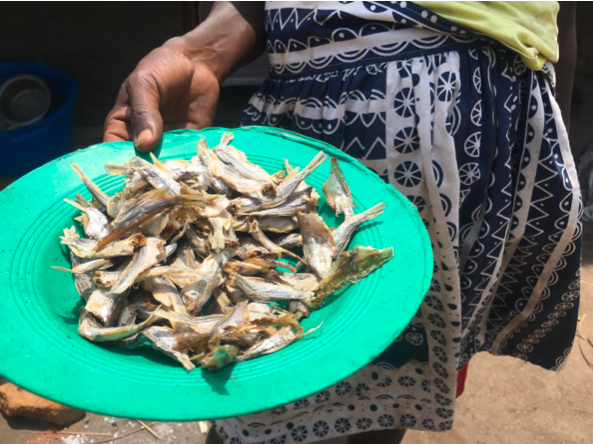
Nairobi, Kenya: The air in Githurai market is thick with the scent of dried sardines, ripe fruit, and diesel fumes—a symphony of survival and enterprise. Here, amidst the vibrant chaos, two women are building empires from stalls barely five meters wide. Their most powerful tool isn’t a freezer or a scale; it’s the digital scaffold they access through the glowing screens of their mobile phones.
At 58, Rose Achieng’s hands, weathered from years of sorting omena (sardines), tell a story of resilience. For decades, her title was “housewife,” a role synonymous with anxiety as her husband’s casual labor income ebbed and flowed. “My children knew the walk of shame, sent home from school for fees,” she recalls, her voice steady but her eyes holding the memory of that pain.
Her turning point wasn’t a grand opportunity, but a community-based microfinance initiative, a precursor to the formal digital ecosystem. By forming a women’s savings group, she accessed a seed loan of KSH 20,000. The start was brutal—spoiling fish without a freezer, uncertain customers. But persistence, and a clever diversification into sardines, fillets, and fresh fish, began to pay off.

Today, her empire is secured not by a lockbox, but by M-Pesa’s Pochi la Biashara (Business Wallet). “This market has clever thieves,” she states, tapping her phone. “But this pochi? It is my armored bank. Every sale is recorded. If my phone is stolen, my money sleeps safely in the cloud. It gives me a peace I never had with cash crumpled in my apron.” This isn’t just convenience; it’s financial identity and asset security, core pillars of DPI.
A few stalls down, 28-year-old Charity Gathoni arranges emerald-green kales with the focus of a curator. A single mother of two, her stall is her lifeline. “In Nairobi, no income means you drown quietly,” she says bluntly. Her daily profit of about KSH 1,000 is a testament to relentless hustle and the ubiquity of digital cash.
“Everyone has a phone. No one carries cash. If I said ‘cash only,’ my stall would be empty by noon,” she laughs. For Charity, M-Pesa is the invisible artery of her business. It enables instant, secure transactions with customers, but more importantly, it allows her to pay her suppliers, save for school fees, and even access micro-loans via integrated platforms like Fuliza or bank linkages. She operates on a digital credit history she’s building with every transaction.
The Scaffolding Beneath the Screen: DPI and The Law
The transformative power for Rose and Charity flows from Kenya’s pioneering Digital Public Infrastructure (DPI). This isn’t just M-Pesa in isolation. It’s the interconnected stack that includes:
-
Digital Identity: While not yet a universal national digital ID, mobile phone registration provides a foundational verification layer.
-
Real-Time Fast Payment Systems: The engine behind M-Pesa, overseen by the Central Bank of Kenya (CBK), enabling instant value transfer.
-
Consent-Based Data Sharing: Frameworks that allow services like Pochi la Biashara to operate securely.
Their economic agency is protected and enabled by critical regulations:
-
The National Payment System Act: Regulated by the CBK, this ensures the stability, security, and reliability of the very system they depend on every minute.
-
Data Protection Act (2019): This crucial law, enforced by the Office of the Data Protection Commissioner, is their digital shield. It mandates that their financial data held by Safaricom or banks is confidential, secure, and cannot be misused. It gives them ownership over their digital footprint.
-
Consumer Protection Laws: These guard against predatory digital lending and ensure fair dispute resolution for digital transactions.
Beyond Transaction: The Ripple Effect
The impact transcends mere payment. For Rose, the digital ledger of her Pochi is her financial diary, helping her plan for a freezer—a dream that will catapult her business to the next level. For Charity, it’s about dignity and autonomy; she is the sole manager of her digital finances, free from the constraints or risks of physical cash.
They represent a silent revolution. The digital scaffolding has turned a mobile phone into a bank, a ledger, and a shield. It has transformed two women in a bustling market from being economically invisible to being active, secure, and growing participants in Kenya’s formal digital economy. Their story is no longer just about selling fish and kales; it’s about how invisible digital bridges are carrying millions of Kenyans, especially women, from the margins to the center of economic life.