


|
Getting your Trinity Audio player ready...
|
By Pauline Achieng Tom
Capetown, South Africa: Africa faces a growing smoking epidemic, with the World Health Organization (WHO) estimating that the number of smokers in Sub-Saharan Africa will reach 84 million by 2025, up from 66 million in 2015. As the continent struggles with tobacco-related diseases, harm reduction has emerged as a potential public health strategy. However, unlike in developed nations where smoke-free alternatives like vapes and heated tobacco products have gained acceptance, Africa remains deeply skeptical.
Harm Reduction: A Controversial Yet Proven Strategy
Speaking at the Technovation conference in Cape Town, Dr. Esthras Moloko, former special advisor to South Africa’s Ministry of Health, defended smoke-free products as legitimate harm reduction tools. He argued that they could reduce the burden of non-communicable diseases (NCDs) linked to smoking.
“Harm reduction is not a new concept,” he said. “It has been used in public health to mitigate high-risk behaviors, like distributing condoms to sex workers to curb HIV. But when it comes to smoking, it faces resistance.”
The Real Problem: Combustion, Not Just Nicotine
The primary danger of cigarettes lies in combustion. According to the U.S. Centers for Disease Control and Prevention (CDC), burning tobacco releases 7,000 chemicals, including tar, carbon monoxide, and formaldehyde, with at least 70 known carcinogens.
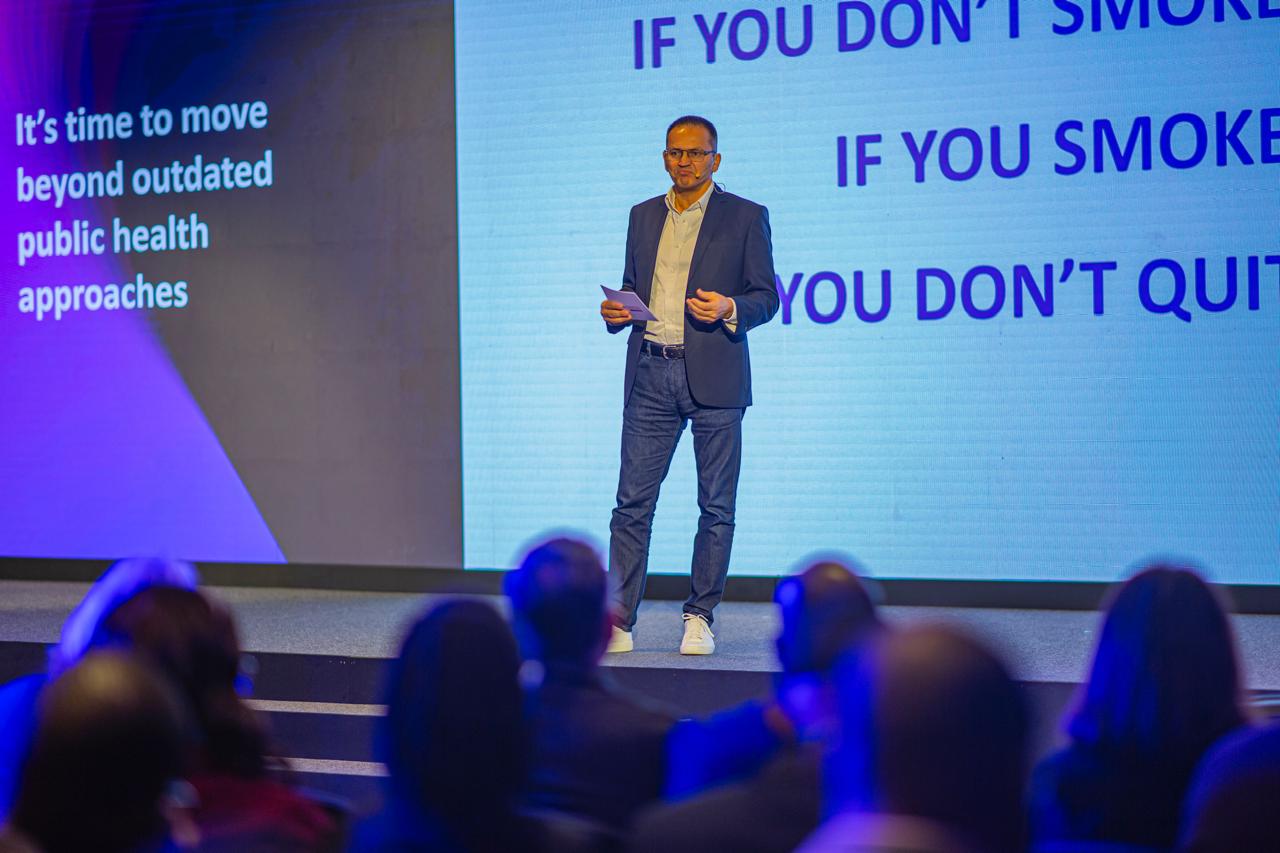
Tommaso Di Giovanni, Vice President of Communications at Philip Morris International (PMI), emphasized that the company is pushing for a smoke-free future with a clear message:
-
If you don’t smoke, don’t start.
-
If you smoke, quit.
-
If you don’t quit, change.
“Changing human behavior is hard,” he admitted. “Even when people know smoking is harmful, quitting is difficult. Smoke-free products don’t eliminate risk—they reduce harm.”
Nicotine: Addictive but Not the Main Killer
Dr. Buhle Binta, Head of Scientific Engagement at PMI for Sub-Saharan Africa, clarified:
“Nicotine is not risk-free—it’s highly addictive—but it doesn’t cause cancer. Our products contain just enough nicotine to satisfy smokers without exposing them to the toxins of combustion.”
Africa’s Dilemma: Sticking to Tradition or Embracing Innovation?
Over 80% of the world’s smokers live in low- and middle-income countries, making Africa a critical battleground for tobacco control. Meanwhile, countries like Sweden, which has embraced smoke-free alternatives, boast a smoking rate of less than 5%—one of the lowest in the world.
As science and innovation advance, Africa must decide:
-
Will it cling to traditional tobacco control methods?
-
Or will it adopt a science-backed harm reduction approach?
The choice could determine whether the continent continues to battle a growing smoking crisis or takes a pragmatic step toward reducing harm.














👏👏👏
Comments are closed.