|
Getting your Trinity Audio player ready...
|
By Mary Mwendwa
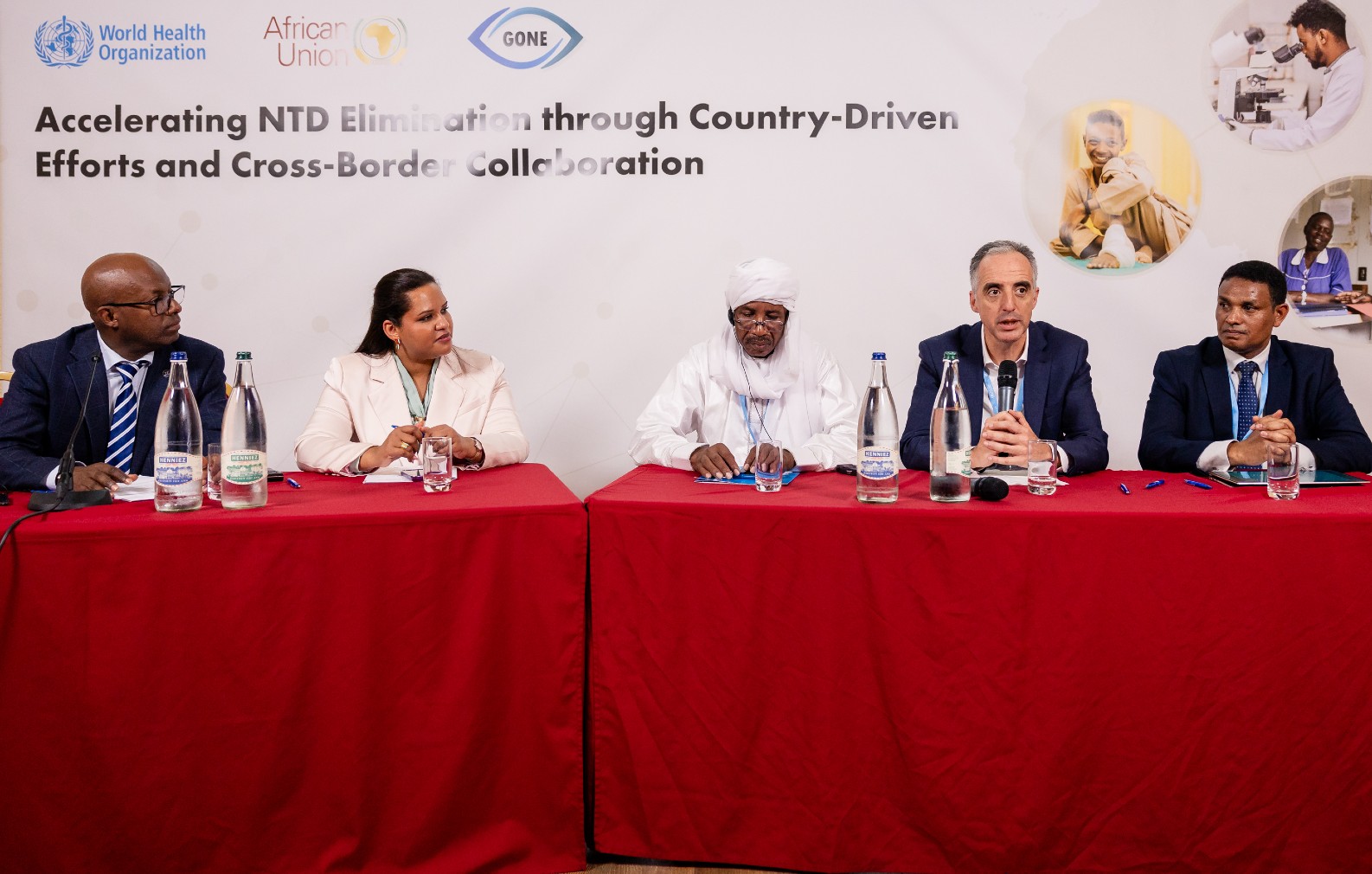
Nairobi, Kenya: In a landmark move to combat one of the world’s most lethal yet overlooked diseases, six African nations—Chad, Djibouti, Ethiopia, Somalia, South Sudan, and Sudan—signed a historic agreement today to eliminate visceral leishmaniasis (kala-azar), a parasitic killer claiming thousands of lives each year. The signing ceremony, held under the leadership of the African Union and the World Health Organization (WHO) during the 78th World Health Assembly, marks a bold step toward ending the suffering caused by this neglected tropical disease (NTD).
A Deadly Scourge in the Shadows
Kala-azar, second only to malaria in parasitic fatalities, ravages the body with fever, severe weight loss, and dangerous enlargement of the spleen and liver, leading to death if untreated. Eastern Africa bears 70% of the global burden, with half of all victims being children under 15.
But today’s agreement signals hope. The six nations pledged to pool resources, strengthen cross-border strategies, and accelerate elimination efforts under a regional framework launched last year. They were joined by Cameroon, Niger, Nigeria, Senegal, and Tanzania, which rallied for expanded collaboration against NTDs, diseases that affect over 1 billion people worldwide, trapping the poorest communities in cycles of illness and poverty.
Progress in the Fight Against NTDs
The world has seen remarkable victories: 56 countries have eliminated at least one NTD, including Togo (four NTDs) and Benin, Ghana, and India (three NTDs). Just this year, Mauritania, Chad, Guinea, and Niger earned WHO validation for eliminating an NTD—proof that progress is possible.
“As we reach the midpoint of the 2030 NTD Roadmap, the power of country-led action and cross-border solidarity cannot be overstated,” declared Dr. Ibrahima Socé Fall, Director of WHO’s Global NTD Programme.
A Continental Call to Action
Ministers from Cameroon, Niger, and Nigeria amplified the urgency with a high-level “Call for Action”, demanding stronger regional cooperation to defeat NTDs. Dr. Jean Kaseya, Director General of Africa CDC, emphasized in a statement:
“Diseases don’t stop at borders—and neither should our fight. Over 600 million Africans remain at risk of NTDs. We must act now.”
With climate change and population movements fueling NTD spread, the Call for Action urges nations to share data, synchronize policies, and invest in joint health strategies.
The Road Ahead: Innovation & Unity
Dr. Luis Pizarro of the Drugs for Neglected Diseases initiative (DNDi) highlighted the need for better treatments: “The success of Bangladesh in eliminating kala-azar proves it can be done. Africa’s leadership today is inspiring—but we need new, accessible drugs to finish the fight.”
The event, co-hosted by the African Union Commission, GONE, and WHO, with support from the END Fund and DNDi, showcased a rare moment of continental unity against a silent killer.