|
Getting your Trinity Audio player ready...
|
By Henry Owino
A feature story bridging agriculture, nutrition, and health reveals that food security is not achieved when stomachs are full, but when citizens thrive. For Kenya, the future of public health lies in the fields, kitchens, and policies that feed the nation. Our Health and Science, Senior Correspondent, Henry Owino, reports.
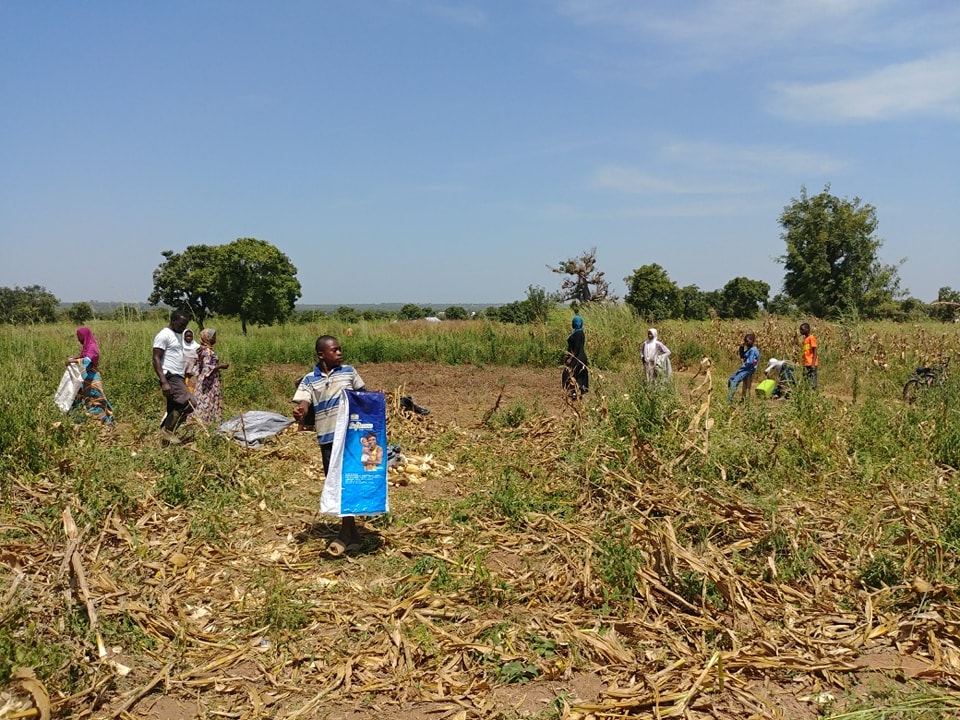
Siaya County, Kenya: In the heart of Siaya County, 58-year-old Irene Obuko walks slowly along her half-acre farm. Her maize stalks are stunted, their leaves yellowed by long dry spells. The rains came late and when they did, they flooded.
“This used to feed my family and pay school fees,” Mama Obuko says, brushing soil from her hands. “Now, I harvest half of what I planted. Sometimes, nothing.”
Mama Obuko’s words capture a growing reality across Kenya: declining harvests, poor nutrition, and rising health problems tied to what the country grows or fails to grow. Agriculture, once Kenya’s most reliable lifeline, is now at the center of a complex crisis linking food insecurity, malnutrition, and public health decline.
The Hidden Chain: From Field to Health Facility
According to Joseph Okumu, Field Agronomist, Food and Agriculture Organization (FAO), agriculture and policy shape Kenya’s food security and public wellbeing depending on how the recommended policies by experts are put into practice.
“Agriculture being a devolved function in Kenya, the national policies should cascade to grassroot to effectively benefit local, small-scale farmers in their specific operating environments,” Okumu emphasizes.
For instance, Kenya’s agriculture sector employs nearly 70 percent of the rural population and contributes about a quarter of the GDP. Yet the country faces chronic food insecurity.
It is evidence that initiatives designed at national or international levels are not ultimately reaching individual small-scale farmers in their specific operating environments.
“The chain starts from decision-making authority at national to county or sub-county levels, and then to local extension agents or farmer groups, ultimately reaching individual farmers,” Okumu affirms. This way information, resources, funding, are effectively translated into actionable plans and practice.”
Unfortunately, what is less discussed, expert says, is how this food insecurity translates into direct public health consequences.
According to the Kenya National Bureau of Statistics (KNBS), about 15 million Kenyans are food-insecure, a number that swells during drought or economic downturns.
“You can’t talk about good health when families depend on one crop and one meal a day,” says Dr Mary Gichuru, a senior nutritionist at the Ministry of Health. “Agriculture and health are not separate; they are two sides of the same coin.”
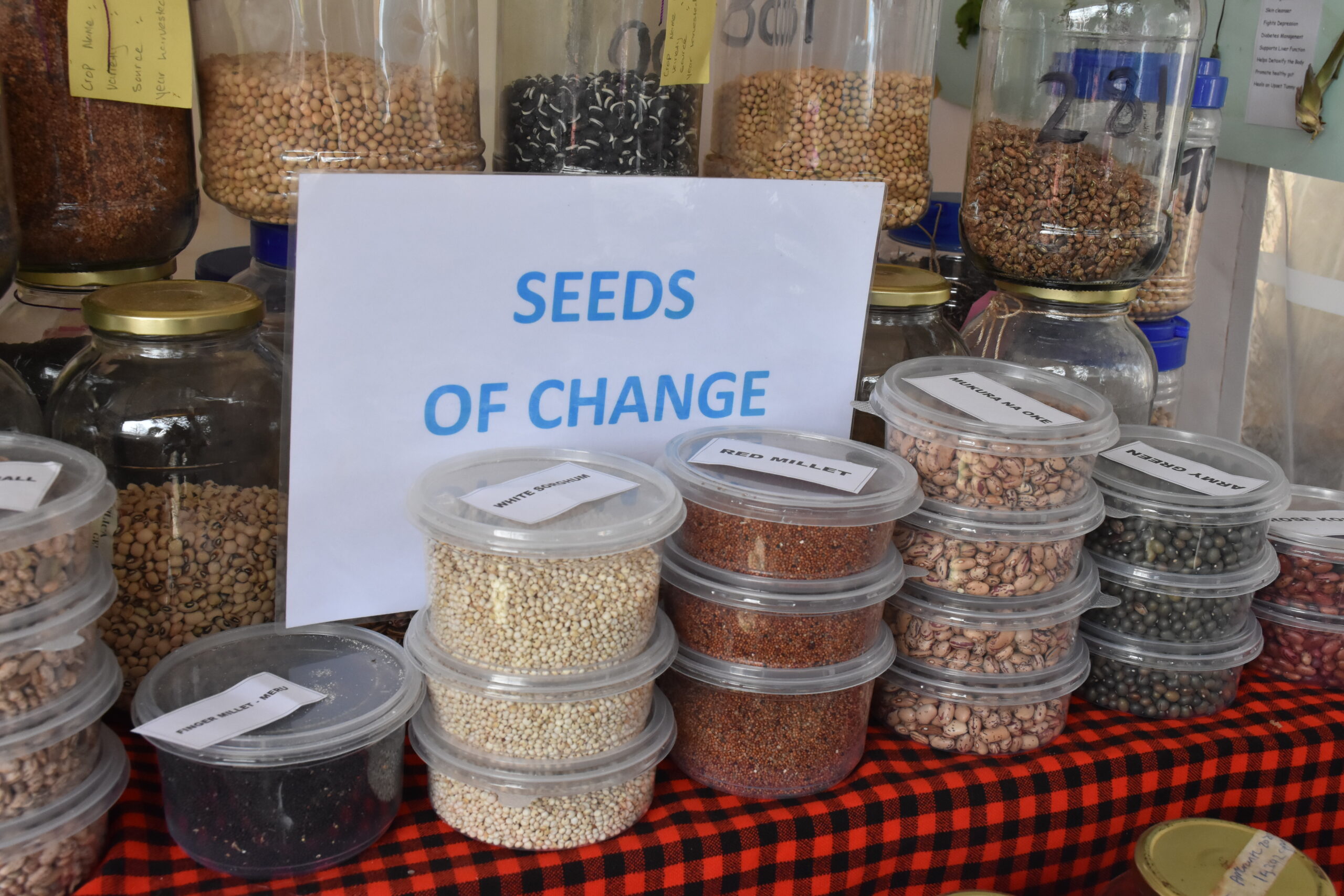
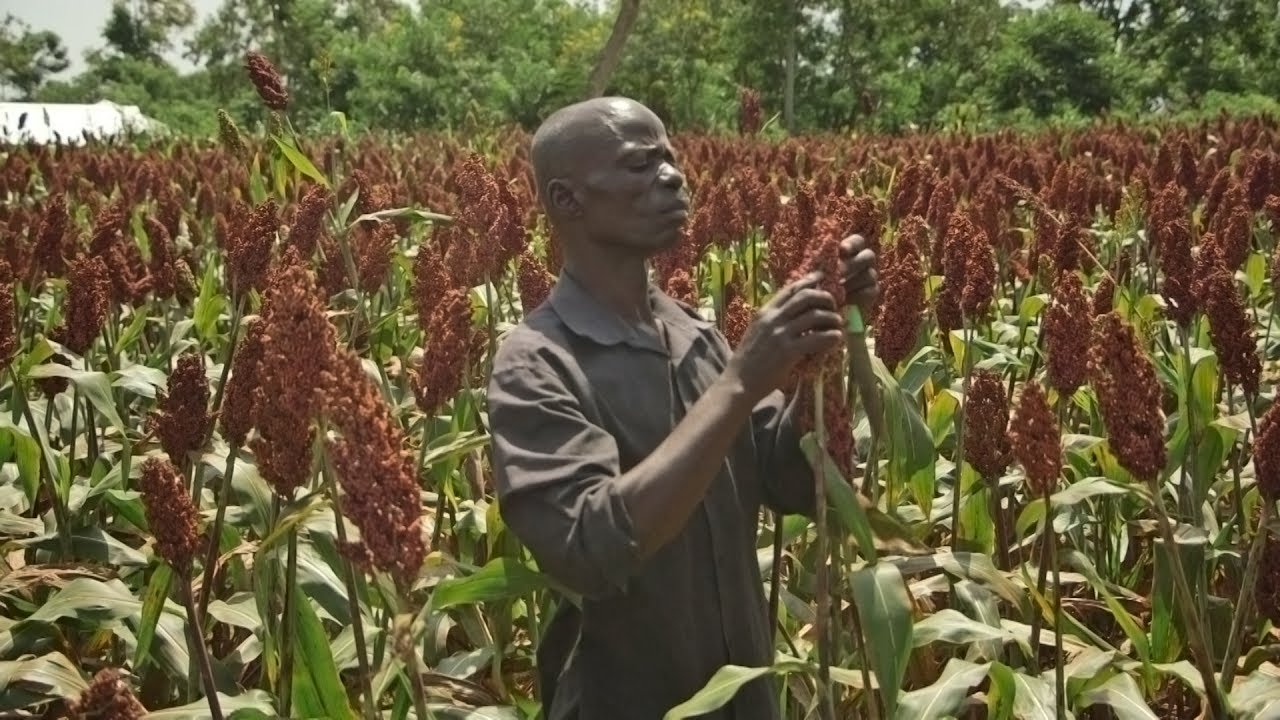
Dr Gichuru regrets decades of maize-centered policies have entrenched a calorie-sufficient but nutrient-poor diet. She observes, while maize and wheat dominate Kenya’s food system, nutrient-rich crops such as millet, sorghum, beans, fruits, and indigenous vegetables occupy smaller acreage and receive minimal policy support.
As a result, Kenya struggles with what Agriculture experts call “hidden hunger”, a condition where people consume enough calories but lack essential vitamins and minerals.
A Growing Public Health Burden
The 2022 Kenya Demographic and Health Survey (KDHS) paints a sobering picture:
- 26% of children under five are stunted due to chronic malnutrition.
- 11% of women of reproductive age suffer from anemia.
- Urban areas are seeing a sharp rise in obesity and lifestyle-related diseases such as diabetes and hypertension.
At Kenyatta National hospital, dietitian Pauline Kilonzo sees the evidence daily.
“Many patients we treat have diet-related illnesses,” Kilonzo says. “Some because they lack food, others because they consume the wrong kinds of food; processed, oily, sugary foods with little nutrition.”
The World Health Organization (WHO) estimates that non-communicable diseases (NCDs) now account for over 50% of hospital admissions in Kenya, marking a dramatic shift from infectious diseases to diet-related illnesses.
“Public health is no longer just about clean water or immunization,” adds Kilonzo. “It’s about what ends up on our plates.”
Policy Gaps: Silos that Starve Solutions
Kenya’s food and health challenges are not simply about production but they are also about policy. Experts argue that agriculture, health, and trade policies often operate in isolation.
“The Ministry of Agriculture focuses on yields and exports, while the Ministry of Health looks at diseases and nutrition,” explains Prof Philip Nyaga, a food systems researcher at Egerton University. “But who is ensuring that what we grow is actually nourishing the population?”
For instance, government subsidies often favor large-scale maize farmers, while smallholders growing nutritious crops like cowpeas, sweet potatoes, or indigenous vegetables struggle to access inputs or markets.
Meanwhile, trade policies that promote cheap imports of wheat and rice undercut local grains that could boost nutrition and rural livelihoods.
“Every decision about seeds, subsidies, and tariffs has a ripple effect on public health,” Prof Nyaga declares. “We need nutrition-sensitive agriculture, where farming decisions are made with health in mind.”
Climate Change: A Threat Multiplier
Climate change has deepened the crisis. Kenya faces recurring droughts, flash floods, and erratic rainfall patterns, which have decimated crops and livestock. The Arid and Semi-Arid Lands (ASALs), which cover more than 80% of Kenya’s landmass, are the hardest hit.
In Turkana, Garissa, and Marsabit, malnutrition levels often exceed emergency thresholds. In 2023 alone, the Ministry of Health reported over 1.5 million children in need of treatment for acute malnutrition.
“When drought hits, it’s not just about empty granaries, it’s about malnourished children, increased infections, and long-term cognitive damage,” says Dr. Samuel Lutta, a public health officer in Turkana. “Climate change is writing its story on people’s bodies.”
Government initiatives such as the Kenya Climate-Smart Agriculture Strategy (2017–2026) aim to strengthen resilience, but funding and coordination remain weak. Local farmers like Mama — say they rarely benefit from extension services or drought-resistant seeds.
The Gender Gap in Food Security
In Kenya’s rural areas, women produce up to 80% of food, yet they own less than 5% of land. They are also the primary caregivers and the first to feel the pain of food insecurity.
“When there’s no food, mothers skip meals so children can eat,” says Agnes Aoko, a community leader in Siaya. “When they have no income, they borrow or trade labor for food. But they’re rarely included in agricultural planning.”
FAO notes that equal access to resources for women farmers could raise yields by up to 30%, improving both household nutrition and national food security.
Several counties including Kisumu, Kitui, and Meru are piloting gender-inclusive programs that provide women with land leases, small grants, and training in nutrition-sensitive farming. Early results show improved household diets and reduced child malnutrition rates.
County Governments: The New Frontline
Devolution has opened new opportunities for counties to align agriculture, nutrition, and health. Kisumu County, for instance, has launched an integrated Food and Nutrition Security Strategy linking farmers, schools, and health facilities.
“We source food for school feeding programs from local smallholders,” says Dr. George Owino, Kisumu’s Director of Health. “Children eat better, farmers earn more, and everyone benefits.”
Similarly, Kitui County promotes drought-tolerant crops like millet, pigeon peas, and green grams while training health workers to educate communities about diet diversity. These localized approaches offer blueprints for national replication but they need stronger funding and oversight.
Policy Windows and Opportunities
Kenya’s National Food and Nutrition Security Policy (2023) provides a framework for linking agriculture to health outcomes. It calls for:
- Cross-ministerial collaboration between agriculture, health, and education sectors.
- Incentives for producing and consuming nutrient-rich foods.
- School feeding programs that use locally sourced crops.
- Public awareness campaigns on diet and health.
However, experts warn that without budgetary backing, the policy risks becoming another document gathering dust.
“Policies don’t feed people, implementation does,” says Prof Nyaga. “We need leadership that treats food security as a health investment, not just an economic target.”
From Field to Fork: Building a Healthier Future
Transforming Kenya’s food system will require a holistic approach — one that brings together farmers, nutritionists, policymakers, and the private sector.
Key steps include:
- Investing in smallholder farmers to diversify crops and incomes.
- Integrating nutrition education into agricultural extension programs.
- Promoting indigenous and biofortified foods for better nutrient intake.
- Strengthening safety nets for vulnerable families during food crises.
- Embedding nutrition indicators in national and county development plans.
“Food policy is health policy,” emphasizes Dr. Gichuru. “If we design agriculture to nourish, we reduce hospital admissions, improve learning outcomes, and strengthen our economy.”
A Farmer’s Hope
Back in Siaya, Mama Obuko is experimenting with millet, beans, and vegetables after a training by a local NGO. She sells part of her harvest at the market and keeps the rest for her family.
“I didn’t know vegetables could make such a difference,” she smiles. “My grandchildren fall sick less often now.”
Her small transformation mirrors a national truth: Kenya’s health begins in its soil. How the country cultivates its land and its policies will determine whether the next generation grows up nourished or neglected.
Declining Harvests, Poor Nutrition, and Rising Health Problems
Across Kenya, farmers are working harder than ever yet many are harvesting less, earning less, and eating less nutritious food.
Experts say this growing crisis is not just about bad weather or poor soils. It’s about what we grow, how we grow it, and how food policies shape our plates and our health. For instance, there are factors which leads to the declining harvests, poor nutrition and rising health problems as follows:
Overdependence on Staple Crops
For years, Kenya’s agriculture has focused mainly on a few staple crops which are; maize, wheat, and rice while traditional, nutrient-rich foods such as millet, sorghum, cassava, sweet potatoes, and indigenous vegetables have been sidelined.
This focus means the country produces enough calories but not enough nutrients to its citizens.
“People fill their stomachs but not their bodies,” says Dr. Emily Muthoni, a nutrition expert at Egerton University.
Dr Muthoni instructs that a diet dominated by maize and ugali leaves families short of essential vitamins, proteins, and minerals leading to malnutrition, stunted growth in children, and rising cases of lifestyle diseases in adults.
Climate Change and Soil Fatigue
Rains have become unpredictable, and temperatures are rising. Farmers who rely on rain-fed maize or beans are losing crops to droughts, floods, or pests. Continuous planting without replenishing soils has led to soil fatigue thereby land simply cannot feed the crops anymore.
“Our soils are sick, and sick soils can’t feed people,” says agronomist Joseph Ochieng’ from Siaya County.
Ochieng cautions that without organic matter or proper crop rotation; soil fertility drops, yields decline, and farmers spend more on fertilizer just to maintain basic harvests. He advises farmers to avoid bush burning as a method clearing land.
Poor Food Diversity, Poor Nutrition
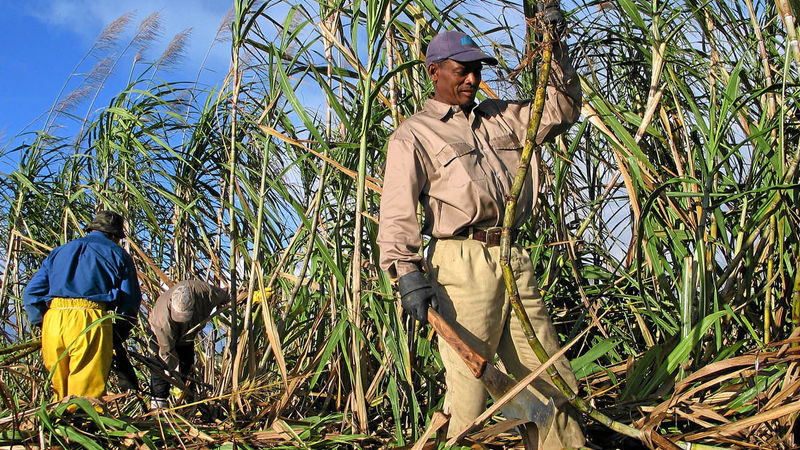
Kenya’s market system rewards cash crops such as tea, coffee, and sugarcane more than nutritious food crops. In some areas, smallholders grow for export while families go hungry.
Fewer farmers now grow vegetables, fruits, or legumes, meaning local diets have become less diverse. Children get less protein and iron, while adults face more lifestyle diseases like diabetes, obesity, and hypertension.
Policy and Market Gaps
Farmers complain that policies favor large-scale producers and imported grains instead of supporting smallholders who feed local communities. Unreliable markets discourage farmers from growing nutritious crops because they can’t find stable buyers or good prices.
Jane Sabula says at her local church, most of the stories from her fellow women are about crop failure, and the difficult choices their families have to make between buying maize flour and sending their children to school.
“It’s painful when your vegetables rot while imported maize floods the market,” says Mama Sabula a smallholder farmer from Vihiga County.
Without better farm-to-market support and storage systems, losses increase, discouraging production and deepening rural poverty.
The Link to Public Health
Nutritionists warn that declining harvests and poor diets are directly linked to rising public health problems especially among women and children. The symptoms and signs usually include:
- Stunted growth and anemia are common in rural schools.
- Adults face high rates of diabetes, high blood pressure, and heart disease.
- Poor diets weaken immunity, increasing vulnerability to infections.
“Our health begins in the soil,” says Dr Dorothy Muthoni, Nutritional Scientist “If the soil is poor and the diet is weak, the hospital will be full.”
The Way Forward: Grow Health, Not Just Food
Dr Muthoni who is also Agriculture expert encourages farmers to adopt diversified farming systems by mixing cereals with legumes, vegetables, and fruits and using compost to rebuild soil health.
“Indigenous crops like sorghum, amaranth, and cowpeas thrive in tough climates and provide better nutrition,” Dr Muthoni commends. Adding that National and County Governments must support these shifts through extension services, storage facilities, local markets, and fair pricing.
Conclusion: Farming for Health and Wealth
Kenya’s fight against hunger and disease starts on the farm. When farmers grow diverse, healthy foods and the system rewards them fairly, harvests will rise, nutrition will improve, and hospitals will have fewer diet-related illnesses.
The message is clear: good farming builds good health.
Henry Owino is a Nairobi-based Health and Science Journalist who reports on public health, agriculture, environment, and policy issues affecting communities across East Africa. His work focuses on evidence-driven storytelling that amplifies everyday experiences and informs decision-making.