|
Getting your Trinity Audio player ready...
|
By Juliet Akoth
Nairobi, Kenya:Rice is the staple food for over half of the global population. The highest consumption is concentrated in Asia, Sub-Saharan Africa, and South America, according to the U.S. State Department of Agriculture.
In 2024, worldwide rice production surpassed 520 million metric tons, with Asia responsible for nearly 90% of both output and consumption. However, the world’s increasing demand for rice is exceeding supply, a challenge made more urgent by growing populations and unpredictable climate patterns. This issue is particularly critical in Africa.
Africa’s rice consumption has soared in the past two decades, driven by rapid urbanization, changing diets, and a growing middle class.
Africa currently produces about 60% of the rice it consumes, as indicated by a 2024 study. To meet the remaining domestic demand, the continent relies heavily on imports. For example, between 2018 and 2020, the average annual amount of imported rice was 25 million metric tons (Mt). Given current global prices, filling this gap between production and consumption costs approximately US$7 billion.
In the words of Dr. Abdelbagi Ismail, the regional director for Africa at the International Rice Research Institute (IRRI), the reliance on imports is not sustainable and there’s need for Africa to come up with its own solutions.
“This reliance on imports is unsustainable,” says Dr. Ismail. “Africa has the land, water, and climate to feed itself and even to export rice in the future. But to get there, we need innovation, investment, and resilience.”
From Asia to Africa: The Changing Face of Rice
Rice’s journey from its Asian heartlands to African fields is a story of adaptation and ambition. In 1960, the IRRI was founded in the Philippines to help Asia escape the cycle of poverty and hunger.
“At that time, Asian farmers were using tall, low-yielding varieties that couldn’t respond to fertilizer,” recalls Dr. Ismail.
“The Green Revolution changed that, with new varieties that doubled or tripled yields.”
Today, as Asian countries like Vietnam and Thailand diversify into higher-value crops, Africa is emerging as the new frontier for rice. Currently, IRRI has operations in about 20 African countries.
But while the continent’s rice area has expanded rapidly, yields remain stubbornly low, averaging just 2.5 tons per hectare, compared to 4.5 tons per hectare in Asia as stated by IRRI.
“Many African farmers still grow traditional varieties released in the 1950s and 60s,” Dr. Ismail notes.
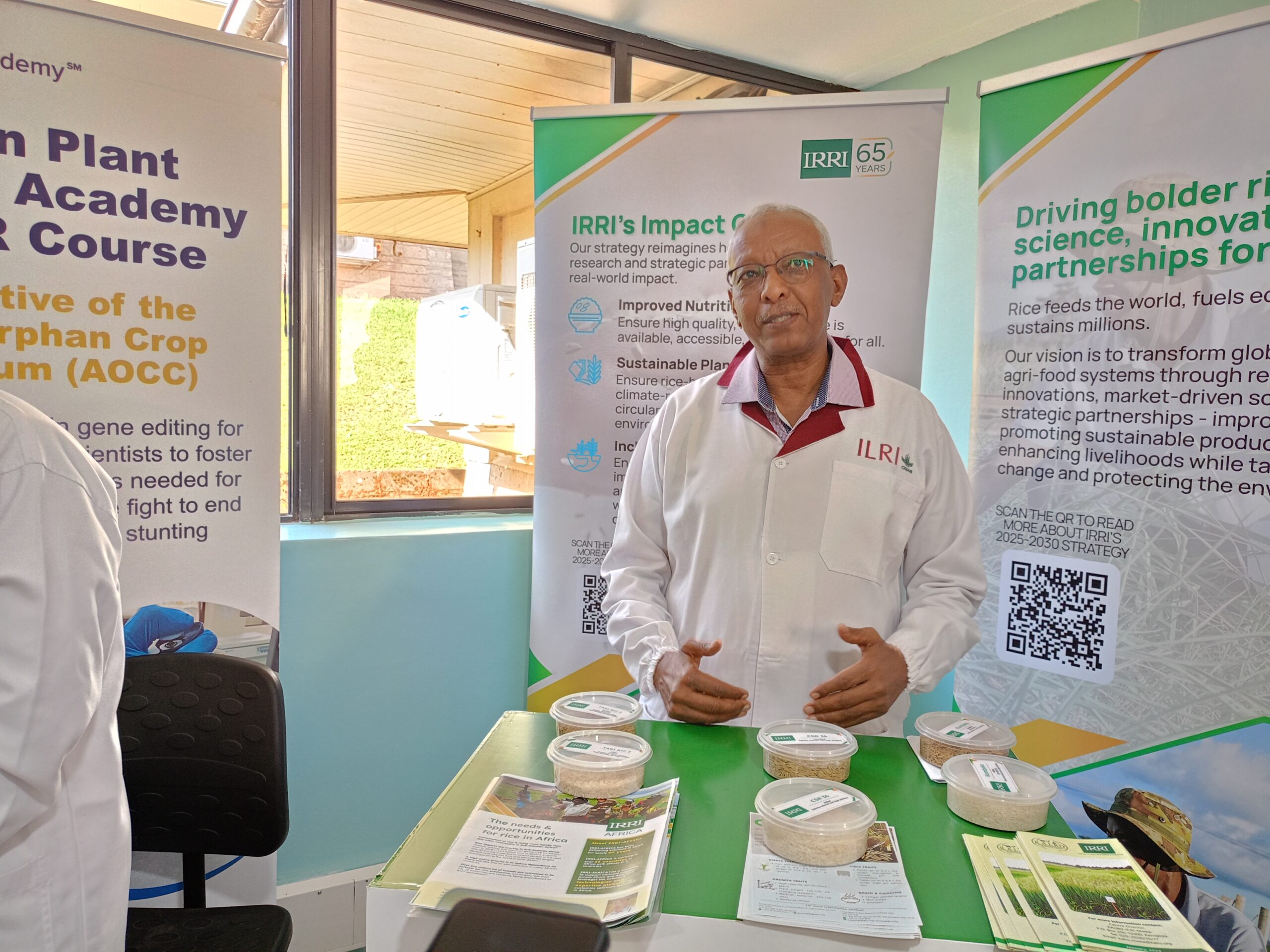
“In Kenya, the most popular variety, Basmati 370 (pishori), was released in 1958. It’s beloved for its aroma, but it can’t match the productivity or resilience of modern varieties.” The result is a widening gap between supply and demand, with imports from Asia filling supermarket shelves in Nairobi and other African cities.
But the winds of change are blowing. Across Africa, scientists and policymakers are racing to develop and deliver new rice varieties that can withstand drought, floods, pests, and diseases which are the threats that are intensifying as the climate warms.
“We’re seeing more erratic rainfall, longer dry spells, and new pest outbreaks,” says Dr. Ismail.
Adding “If we don’t adapt, the consequences for food security will be severe.”
Concerns about declining food security are supported by research, such as a 2025 review in the Food Science & Nutrition journal. This review projects that staple crop yields in Sub-Saharan Africa may decrease by 10–20% by 2050. This decline is attributed to rising temperatures and unpredictable rainfall, with East Africa already facing an increase in the frequency of droughts and subsequent crop failures.
Seeds of Resilience: Kenya’s Rice Revolution
Kenya, like much of Africa, is at a crossroads. Rice has become a staple for millions, especially in urban areas, with annual consumption growing by more than 10% in recent years according to the Kenya National Bureau of Statistics (KNBS).
Yet, local production lags far behind demand. According to the Coalition for Africa Rice Development (CARD) Kenya imports approximately 770,000 tons annually, roughly 80% of its rice to meet its domestic needs, with the rice particularly imported from Asia (India and Pakistan being the primary Asian suppliers) and 1% from Tanzania.
Regional director Ismail emphasizes that Kenya’s rice industry needs comprehensive upgrades at every stage, from developing and distributing improved seeds to adopting advanced farming practices, modern processing, efficient storage, and better marketing, so that the entire journey of rice from cultivation to the consumer’s table is brought up to modern standards.
At the heart of this transformation is the quest for better seeds. IRRI and its partners have introduced speed breeding, slashing the time needed to develop new varieties from a decade to just two years. “We’re now able to deliver high-yielding, climate-resilient varieties that can thrive in Kenya’s diverse ecologies,” Dr. Ismail says.
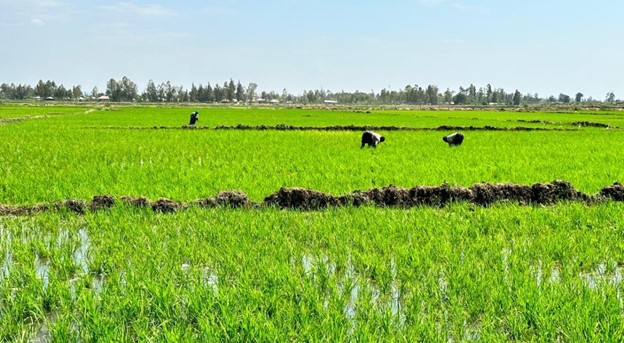
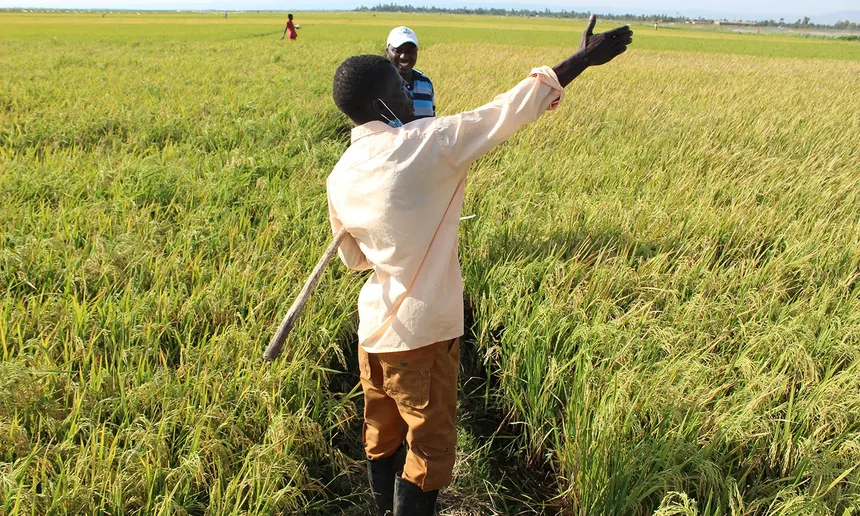
One standout rice variety is Komboka (polish rice), introduced in 2013, which now covers over 40% of rice fields in Kenya. This number has continued to grow, particularly in new rice-growing areas such as Tana River County, which is now fully dedicated to the variety’s cultivation.
“When we started, yields were less than 3 tons per hectare. With Komboka, some farmers are now harvesting over 6 tons per hectare,” he reports.
But seeds are only part of the story. Water management is now a top priority as climate change brings more frequent floods and droughts.
“Even with the best seeds, you need the right water at the right time,” Dr. Ismail emphasizes.
Recent reports confirm that rice farmers in Kenya’s major irrigation schemes, such as Mwea and Ahero, are increasingly affected by both floods and water shortages, making efficient water management essential.
IRRI are now promoting techniques like alternate wetting and drying (AWD). Studies show that AWD can reduce water use by up to 30% and lower methane emissions, helping make rice farming more sustainable and climate-friendly.
Mechanization is also projected to revolutionize rice farming in the country. “Most farmers still transplant rice by hand, a backbreaking job that takes 20 people a day to plant one hectare,” Dr. Ismail observes. “With mechanization, one machine can do 20 hectares in a day.”
The national government has shown efforts to address this. The government’s National Rice Development Strategy II (2019–2030) prioritizes investment in irrigation, mechanization, and extension services to boost productivity and attract youth to rice farming.
Dr. Mary Mutembei, Head of the Rice Promotion Program at the Ministry of Agriculture, underscored this urgency in a recent media briefing.
“Kenya’s rice production is estimated at 230,000 tons per year, with the local production meeting only about 20% of the country’s demand. This leaves a significant annual deficit, leading the country to heavily depend on imports” she adds.
The second phase of the strategy is currently underway. Its objective is to propel the country toward self-sufficiency and meet the 2030 goal of significantly boosting rice production from 147,572 tons (in 2018) to 1,301,000 tons. As of 2024, current rice production has reached 304,003 tons, with a corresponding yield of 5.6 tons per hectare.
Policy, Partnerships, and the Path Forward
Progress is real, but challenges remain. “Policy is extremely important,” Dr. Ismail says. “In the past, it took up to 15 years to release a new variety. Now, with government support, we can do it in five.” IRRI and the Ministry of Agriculture are working closely to streamline variety release, scale up seed delivery, and ensure that innovations reach smallholder farmers quickly.
Kenya’s rice value chain is largely driven by the private sector, with the government playing a regulatory and facilitative role through policy formulation, coordination, and development of strategies to guide rice development.
“Although there are no targeted campaigns to promote the consumption of local rice, the Government of Kenya is focusing on increasing local production through expansion of area under rice, as well as encouraging private sector participation along the value chain,” Dr. Mutembei notes.
Despite these hurdles, the future is bright. Kenya is partnering with local and international stakeholders to develop and disseminate improved rice production technologies, enhance access to climate-resilient, high-yielding varieties, and strengthen marketing infrastructure.
“Looking ahead, it’s important to emphasize inclusive and resilient growth, ensuring that smallholder farmers, women, and youth benefit equitably from the expanding rice sector,” Dr. Mutembei concluded.