|
Getting your Trinity Audio player ready...
|
By Liz Anyango
Nairobi, Kenya: In a world where climate change is no longer a distant threat but a present reality, how can nations ensure that health systems remain just, equitable, and resilient?
The recent trend of affluent political leaders in Kenya seeking medical treatment abroad underscores a deeply unsettling question: if those with access to power and resources are leaving the country for Healthcare, what becomes of the majority who cannot?
Kenya, like many nations, faces the dual challenge of battling climate change while building a healthcare system that serves everyone.
These urgent questions were front and center at this year’s 8th Biennial Scientific Conference, held from June 4th to 6th, 2025, at the Kenya Medical Training College (KMTC) in Nairobi.
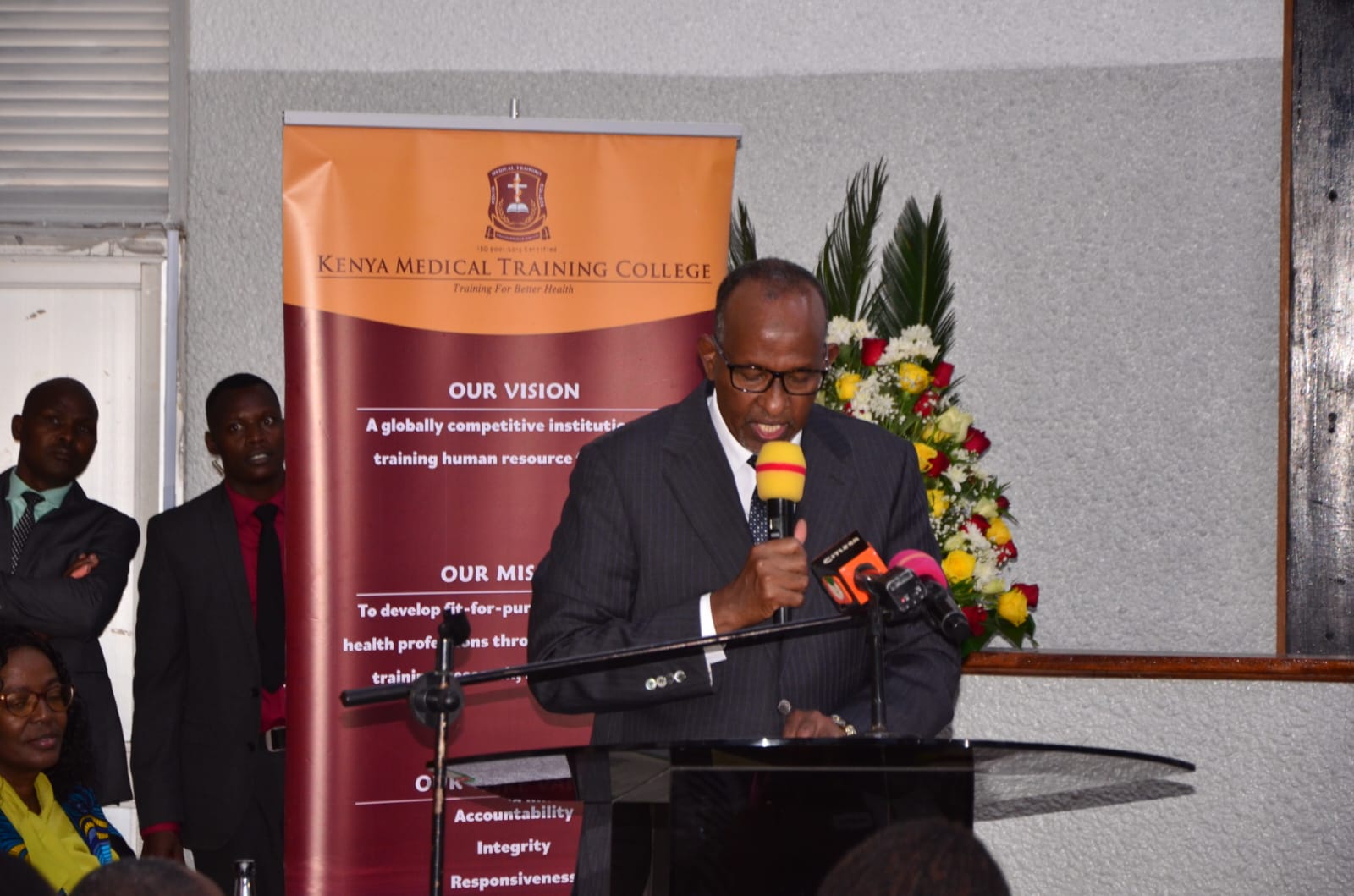
Themed “Advancing Health Equity in a Rapidly Changing Environment,” the conference gathered key voices from the health sector, academia, and research institutions to share innovations and strategies for improving Kenya’s health training and service delivery to achieve its Universal Health Coverage (UHC).
Presiding over the event was Kenya’s Health Cabinet Secretary, Hon. Aden Duale, accompanied by Principal Secretary for Public Health and Professional Standards, Ms. Mary Muthoni Muriuki, and KMTC Board Chair, Mr. Joseah K. Cheruiyot.
In his opening remarks, Mr. Cheruiyot set the tone: “Without investment in evidence-based decision-making and application of modern technologies, our mission to deliver accessible, high-quality medical training will remain out of reach.”
Indeed, recent global events have revealed how fragile health systems can be.
For Kenya, the withdrawal of U.S. aid during the Trump administration left reproductive and public health programs severely underfunded, especially in rural and marginalized areas.
According to the Ministry of Health and WHO data, maternal care, disease response, and preventive services continue to suffer, especially in areas hit by floods and droughts.
In Garissa, maternal deaths remain high at 500 per 100,000 live births. Meanwhile, 70% of Kenyans face malaria risk, and cholera outbreaks are linked to climate extremes that are on the rise.
But KMTC says it is responding not with fear but with foresight.
From implementing a ‘Research and Innovation Policy‘ to increasing support for student and staff-led projects, KMTC is evolving beyond training is becoming a lab for climate-smart health solutions
KMTC’s recent ISO 9001:2015 certification, which is an international standard for quality management systems, shows the institution’s commitment to consistently providing high-quality education and services.
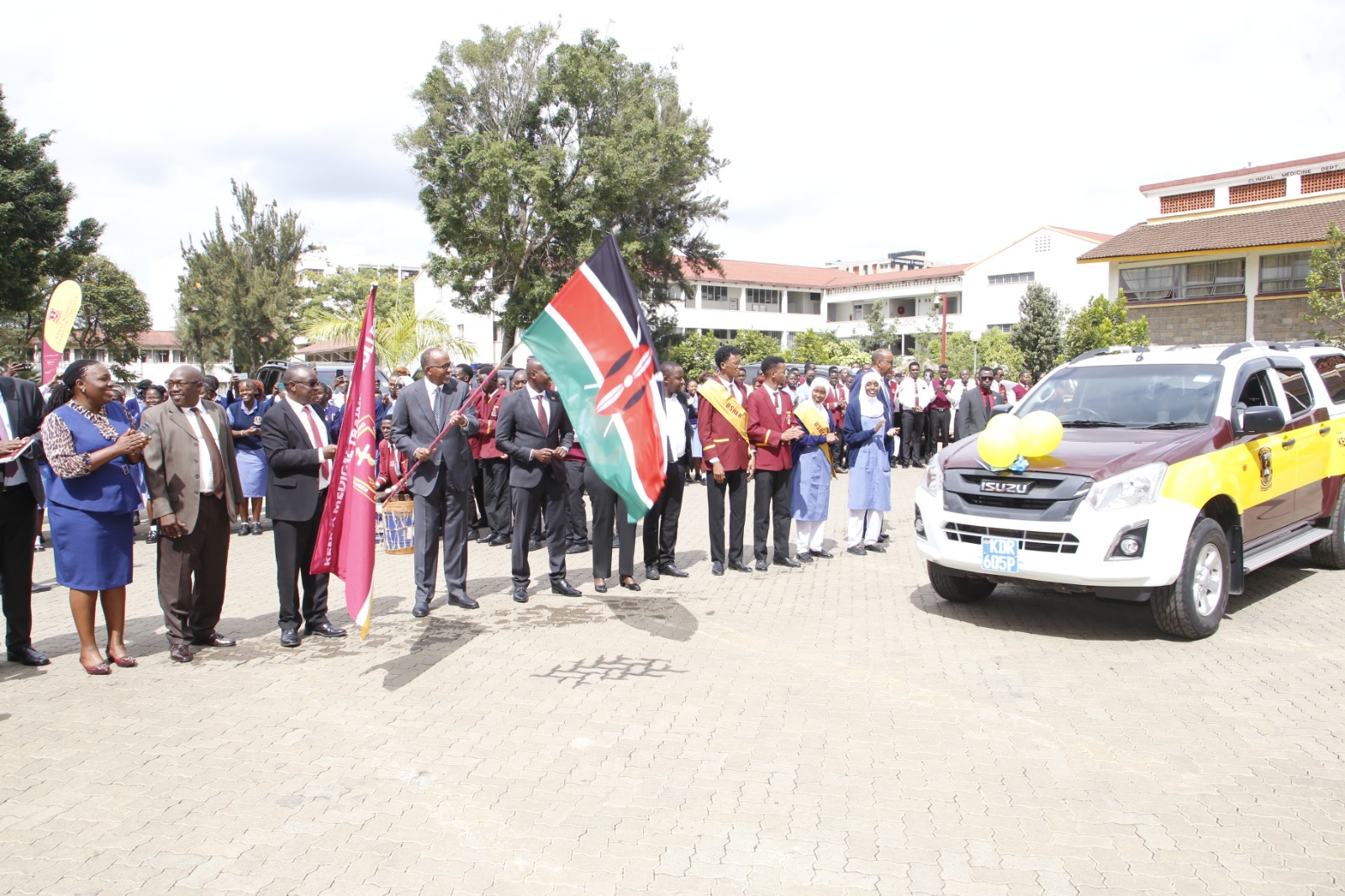
Backing these words with action, Hon. Duale flagged off seven double-cabin vehicles to be distributed across KMTC campuses set to boost access to remote clinical training sites and improve community-based service delivery.
“Research without reach is no longer acceptable,” he emphasized.
Keynote speaker Prof. Sylvester Kimaiyo echoed this urgency:
“Pandemics, climate-related illnesses, and mental health challenges will not wait for our systems to catch up. We must move now.”
The message was clear: climate change is not a future concern; it is already reshaping Kenya’s health needs.
KMTC is expanding partnerships with institutions like MicroResearch Canada, Nashville Medical College, Northwestern University, and Africa CDC, with a strong focus on ethical, applied, and scalable innovations from climate-resilient health training to community-driven mental health models.
Principal Secretary Ms. Mary Muthoni added a powerful reflection:
“We need a health system where even our MPs, not just ordinary Kenyans, trust and seek care locally.”
It was a line that earned applause, and rightly so, and this answers our big question raised at the beginning of this article.
As scientific papers were presented, one theme rang clear: health equity is not just about affordability, it is about dignity, access, justice, and trust.
In a country where communities in Garissa, Lodwar, and Marsabit face entirely different health realities than those in Nairobi, adaptability is key, and healthcare equity must be climate-informed.
“We are not just training health workers,” Mr. Cheruiyot concluded. “We are empowering changemakers, inspiring innovators, and ensuring that no Kenyan is left behind regardless of location, income, or climate condition.”
This year’s KMTC Scientific Conference was not just an academic event. It was a moment of reckoning and a bold reminder that the future of healthcare will be defined not just by the brilliance of ideas but by the courage to act on them.