|
Getting your Trinity Audio player ready...
|
By Henry Owino
Nairobi, Kenya: Kenya’s population remains strikingly young, with recent projections showing that 75% of citizens are under the age of 35 and about 59% are below 24. Nearly 46% of the population is under 18, according to the Kenya National Bureau of Statistics (KNBS). The 2024 data places Kenya’s median age at just 19.7 years, underscoring a powerful youth bulge that carries both opportunities and significant developmental challenges—particularly in education, health, and employment.
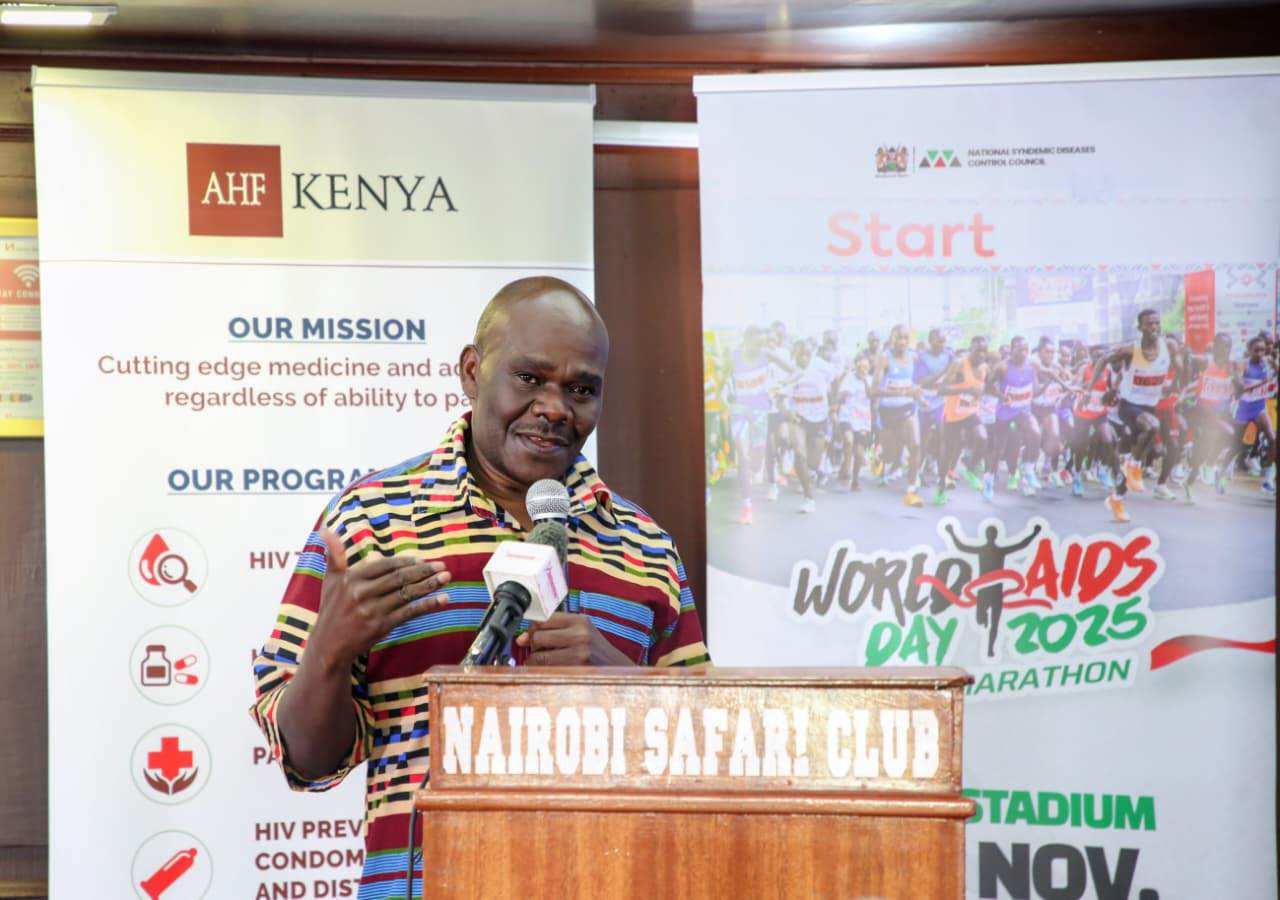
These demographic concerns were a central focus during the 2025 Pre–World AIDS Day Media Breakfast, which brought together journalists and health stakeholders to strengthen reporting on HIV and sexually transmitted infections. The event, convened by AHF–Kenya, NSDCC, NASCOP, and the Media Council of Kenya, also marked the launch of the Voices of Impact – HIV & STIs Media Awards, aimed at promoting depth, accuracy, empathy, and excellence in health reporting.
Kenya’s HIV Burden and Progress
Nelson Otuoma, CEO of NEPHAK, noted that out of Kenya’s estimated 48 million people, about 1.3 million are living with HIV. Encouragingly, 98% of them know their HIV status, and the majority are on antiretroviral therapy (ART), which suppresses viral load and prevents opportunistic infections.
Otuoma revealed that Nevirapine, widely used for preventing mother-to-child transmission for nearly two decades, will, from 2026, be made available to anyone seeking HIV prevention.
Adolescents and Young People: The Most At-Risk Group
According to Douglas Bosire, Acting CEO of the National Syndemic Diseases Control Council (NSDCC), new HIV infections are highest among adolescents and young adults, driven largely by unprotected sexual activity. Unintended pregnancies mirror this trend and remain disproportionately high among girls aged 10–19.
“There is no way pregnancy can occur without sexual intercourse between a male and female whatsoever,” Dr. Bosire said, stressing that adolescents’ rising pregnancies directly indicate unsafe sexual practices. He added that despite years of awareness campaigns, the rate at which adolescents infect each other has become alarming.

Historical Progress Threatened
Dr. Andrew Mulwa, Head of NASCOP, recalled that Kenya has marked 42 years since the first HIV case was reported in 1984. Heightened public education and media campaigns throughout the 1990s helped reduce stigma and promote safer behaviors. A major shift came in 1999, when the late President Daniel Arap Moi declared HIV a national disaster, prompting the creation of the National AIDS Control Council (now NSDCC).
“Unfortunately, gains made over the past decades are at risk due to rising new infections among adolescents and young people,” Dr. Mulwa warned.
Current Statistics: A Worrying Trend
Out of Kenya’s large youth population, 59% or 28 million people aged 0–24, infection risks remain high.
Key statistics include:
- New HIV infections rose by 34%, from 2,083 cases (2023) to 2,799 cases (2024) among adolescents and youth.
- 16% of all pregnancies (240,915) in 2024 occurred among adolescents aged 10–19.
- Girls aged 10–14 accounted for 4% (9,857) of these pregnancies.
- Mother-to-child transmission rose from 7.3% (2023) to 9.3% (2024).
Dr. Bosire described this as the Triple Threat, the combined impact of HIV, unintended pregnancies, and sexual and gender-based violence (SGBV). These overlapping risks, he said, “impede progress for Kenya’s youth” and require urgent intervention.
Economic Burden and Shrinking Donor Funding
Treating HIV costs the government KES 24.9 million, compared to KES 7.2 million for prevention. Caring for an infected child across their lifetime costs KES 17.7 million. With donor support shrinking, Kenya must increasingly rely on domestic solutions to sustain progress.
World AIDS Day 2025: Racing for Change
AHF-Kenya Director Dr. Samuel Kinyanjui announced that while World AIDS Day is commemorated globally on December 1, Kenya will mark it with enhanced activities. The 2025 Global Theme is: “Overcoming Disruption, Transforming the AIDS Response,” while Kenya’s theme—“One Race, One Goal: End AIDS in Adolescents and Young People” thus reflects its immediate priorities.
A major highlight is a countrywide race on November 30, 2025, starting from Nyayo National Stadium. Categories include:
- 21km competitive half-marathon
- 10km road race
- Wheelchair race
- 5km family fun race
- Children’s short race
- Corporate challenge
- Exclusive CEOs and youth race
Additional events include medical camps, tree planting, community dialogues, dignity kit distribution, memorial vigils, and youth engagement forums.
Those interested in participating can register via wad.nsdcc.go.ke or service code x222#. Event organizers at Nyayo Stadium can also be contacted via 0800720007 / 0733886288 / 0712365272.
Dr. Kinyanjui emphasized that all activities aim to raise awareness and protect adolescents and young people, which is now the most affected demographic in Kenya’s HIV epidemic.