|
Getting your Trinity Audio player ready...
|
By Noel Mdoe
Dar es Salaam, Tanzania: From 29 October 2025, Tanzania crossed a constitutional Rubicon. The week will be remembered not for ballots counted but for bodies, for the hush of a nation air-gapped from itself, and for a democracy that looked back at its citizens and did not recognise them.
International observers did not mince words. The African Union’s mission said the polls did not comply with continental principles and urged urgent reforms. SADC’s preliminary statement likewise concluded that Tanzania fell short of regional standards. These are not semantic quibbles; they are formal censures that pierce the fiction of procedural normalcy.
“Power without truth is only noise amplified.”
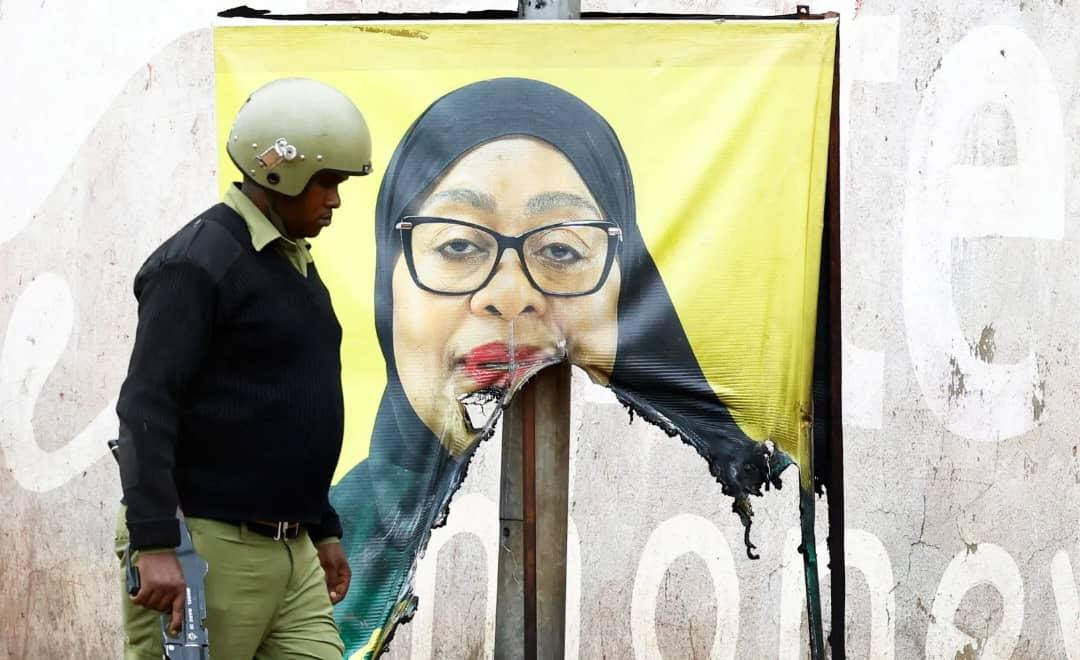
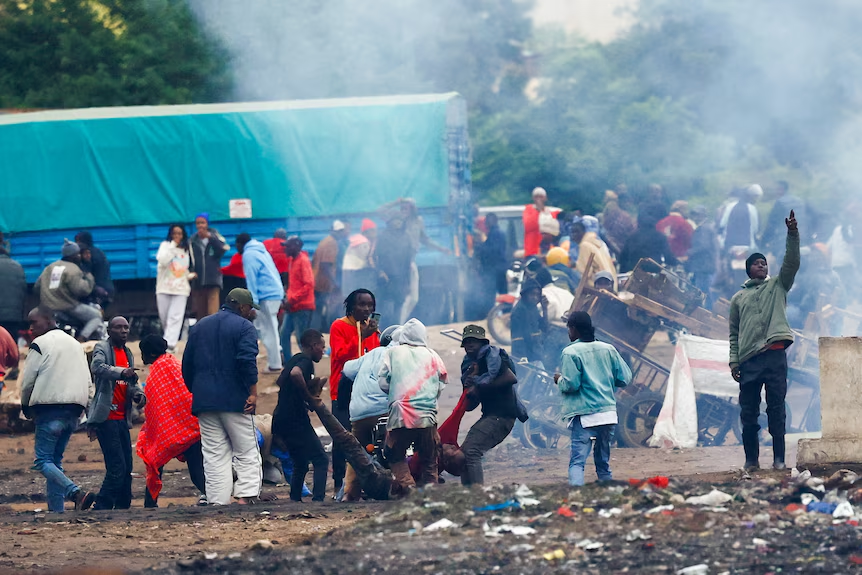
On the streets, the state met dissent – largely from young protesters, a restless generation the world calls Gen Z – with unrestrained force.
This defiance was answered with live rounds and tear gas, as if civic energy were a contagion to be sterilised. Opposition and civil-society tallies speak of hundreds of deaths, with some accounts fearing numbers far higher; the government disputes those figures, but cannot dispute the funerals.
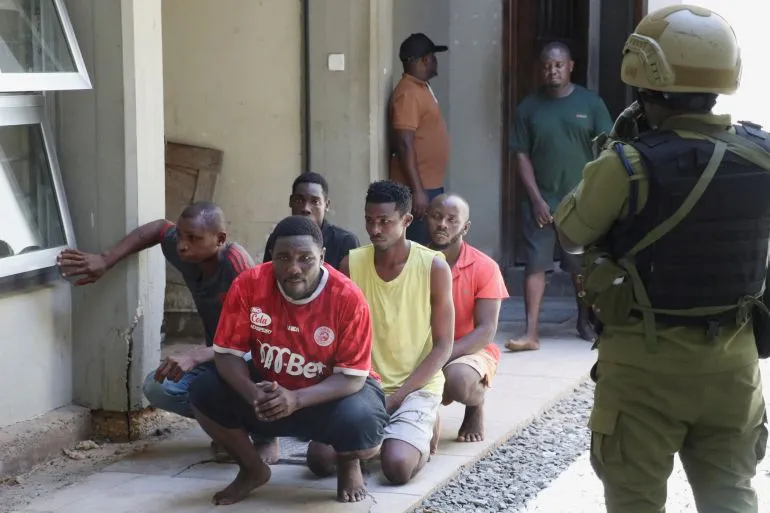
Police now warn citizens against sharing images of the carnage as internet services, cut nationwide, flicker back after five straight days in the dark. The African Commission on Human and Peoples’ Rights decried the election-day blackout itself. A society cannot deliberate when it is unplugged.
The horror did not end at the barricades. Families recount searching hospitals and morgues for missing loved ones, amid allegations that bodies were hidden or disposed of to suppress a true count of the dead.
Multiple outlets have recorded the claims, yet the silence of officialdom deepens the wound. In those spaces between grief and fear, truth was the first casualty, and dignity the next.
Abroad, the world spoke with unusual clarity. The United Nations Secretary-General appealed for restraint and dialogue. The Office of the High Commissioner for Human Rights condemned the use of lethal force.
The Commonwealth’s Secretary-General, Shirley Botchwey, voiced deep concern over the violence and loss of life. In a joint expression of solidarity, the Foreign Ministers of Canada, Norway, and the UK issued a statement urging Tanzanian authorities to restore calm, lift restrictions on media and communication, and uphold fundamental freedoms.
The United States Senate Foreign Relations Committee also released remarks on X condemning the ruling party for endangering citizens and calling for a review of U.S.–Tanzania relations. And from Rome, even Pope Leo urged Tanzania to turn away from violence and choose the path of dialogue.
These voices, which are only a few among many, neither confer nor withhold legitimacy; they remind us that legitimacy is built where citizens meet the state without fear.
Why such ferocity?
Part of the answer lies in a generational tremor across the continent. Gen Z movements in Morocco, Madagascar and Kenya have demonstrated the disruptive power of digitally networked youth.
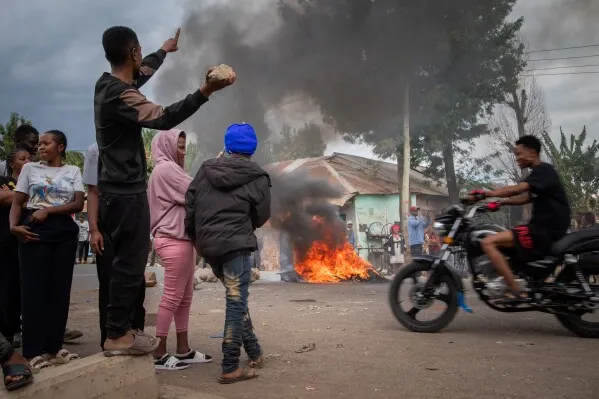
Tanzania’s response suggests a regime fearful that the same civic electricity might arc across its own streets, and so it reached for the oldest tools of control: batons, bullets, and a kill switch. That is not public order; it is digital authoritarianism layered over an electoral authoritarian core.
Then there is the election itself. INEC announced President Samia Suluhu Hassan’s re-election with 97.66% of the vote and cited roughly 31.9 million votes cast, a turnout approaching the high eighties. This is the highest presidential share since the return of multiparty politics.
Local reporting flagged the puzzle of such unprecedented turnout amid curfews, arrests, and an internet blackout. The ruling CCM also swept legislative races, with state and local outlets touting near-total victories while official granular tallies trickled out. Numbers can be precise and still be implausible.
Political theory has a vocabulary for this moment. Liberal constitutionalism presumes that power is constrained by law and legitimised by consent. Electoral authoritarianism, by contrast, instrumentalises elections to launder domination.
In a failing one, it becomes the first resort to protect rule. When observers are expelled from counts, opponents are disqualified or jailed, and critics vanish, the ballot becomes an alibi, not a choice.
The moral economy of Tanzanian politics has also fundamentally shifted. For decades, the state traded on a reputation for stability.
But stability severed from accountability curdles into quietism, and quietism enforced by truncheon is not peace. The images that slipped past the blackout, the whispered lists in hospital corridors, the congregations praying over the missing, all tell a story not of order but of fracture.
The AU and SADC verdicts matter because they map that fracture in the language of law. The collective outcry from the international community, from multilateral institutions, faith leaders, and human rights bodies alike, matter because they map it in the language of conscience.
What follows must be more than elegy
First, acknowledgment – an honest recognition of what happened, and of the collective grief and frustration now coursing through the nation. Reconciliation cannot begin where denial persists.
Second, truth – a credible, independent inquiry into the killings, disappearances, and chains of command that enabled them.
Third, remedy – the lifting of all remaining restrictions on media and digital platforms, and the release of political detainees.
Fourth, reform – sweeping constitutional, electoral, security-sector, and economic reforms that dismantle the fusion of party and state, professionalise policing, restore genuine multiparty competition, and address the deep inequalities that have hollowed out public trust. None of this is charity; it is the down payment on rebuilding a social contract cracked by fear, and the only way to begin the long process of national healing.