|
Getting your Trinity Audio player ready...
|
By Tom Kagwe, J.P.
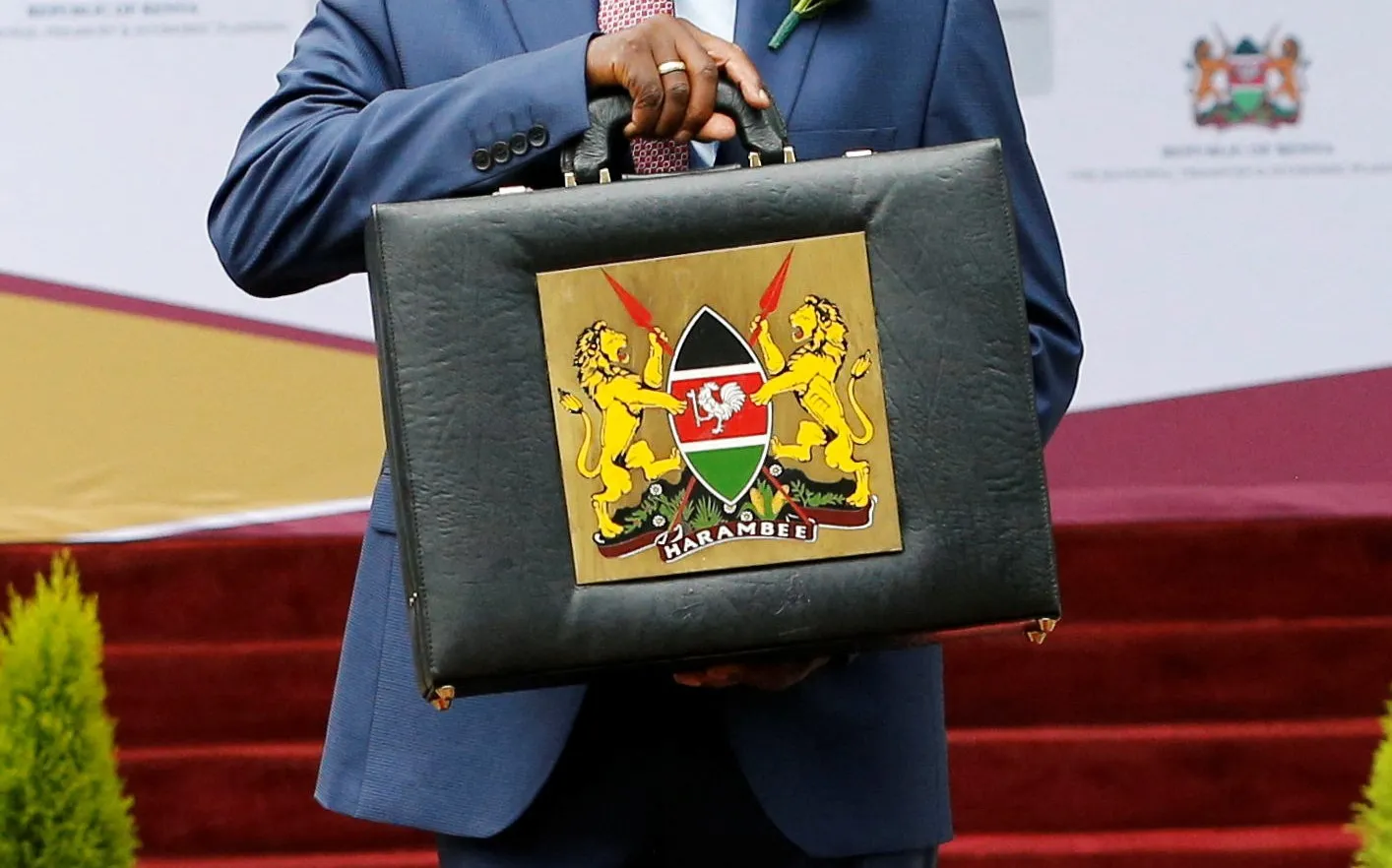
Nairobi, Kenya: The Finance Bill (2025), as generated by the National Treasury, has been tabled in the August House for debate. There are serious proposals that will make Kenyans happy, others make them doubt the so-called Kasongo’s bottom-up agenda, while others that will make Kenyans go wild; perhaps yet again into the streets?
The current Finance Act (2024), which made GEN-Zs irked ending up in country-wide protests, already has had two Supplementary Budgets, and even headed perhaps to the third one before the close of the financial year 2024/25, has not changed the basics of the Kenyan economy.
The current Finance Bill (2025) has numerous conceptual and practical challenges. In the words of the supposed author, Hon. John Mbadi, ‘has not raised any taxes for the so-called common person’. He focuses on sealing the tax loopholes such as evasion or non-compliance, rather than increasing taxes like last year. The aim is to re-strategize the revenue mobilization measures.
However, as the saying goes, the devil is in the details. After serious scrutiny of this Bill, any sane person in Kenya will reject or oppose it, despite the foregoing empty pledges from the National Treasury. This Bill requires serious amendments for it to make sense to mama mboga and watu wa boda boda; unfortunately, through the untrustworthy Parliament.
 After combing through the Finance Bill (2025), hoping that this is the official version, there are the good parts, the bad elements, and of course the ugly issues that should never see the light of the day in the Bi-Cameral Parliament. If Parliament fails, then Kenyans have known what to do: exercise their Sovereign Power directly in accordance with the Constitution of Kenya (2010) as we approach the 15th Anniversary of the same on Sunday, August 27, 2025.
The Finance Bill that proposes the National Budget Estimates (hereinafter, the Budget), is dealing with only five tax laws or Acts of Parliament: the Income Tax; the Tax Procedures; the Value-Added Tax; the Excise Duty; and, the Miscellaneous Fees and Levies. So, there is a simple way of analyzing the Budget. The Budget is being subjected to: the current government’s so-called Bottom-Up Economic Transformation Agenda (BETA); the 4th Medium-Term Economic Plan (MTP); the 2025 Budget Policy Statement (BPS); and lastly, the recent 2025 Economic Survey.
Despite being written in legalese, it is easier and faster to read, but of course with numerous pages. Some of the proposals that are good for most people if not everyone, which could spur growth of the country’s overall revenue and perhaps the economic growth, despite the dwindling figures globally. For this Commentary to reach out, all the figures, percentages, and everything else mathematical will not be part of this Commentary.
The Good
To begin with, the Finance Bill is developed against a background of an already existing National Tax Policy that “identifies and analyses the challenges of the current tax regime and sets out broad policy guidelines to address these challenges thereby forming a basis for tax reforms and review of existing tax legislation.” In so doing, and largely, the Bill is identifying some administrative measures that are needed, to streamline the five tax laws. Indeed, over half of the Bill focuses on these measures.
Further, the Bill therefore proposes what could be done to hasten vetting and settling the matter of tax refunds, by reducing the number of days needed for the Kenya Revenue Authority (KRA) to undertake this duty. The KRA also has leeway on ‘advance pricing agreement’ with businesses and the Cabinet Secretary in charge of Treasury can also waive penalties and interests that are imposed by the KRA.
Additionally, based on the global fiasco created by the ‘trade-tariff-wars’, the Bill goes further to protect the Kenyan market and business persons, by ensuring that all non-resident persons (juristic or natural) have to pay the ‘economic presence tax’ .to operate within Kenya and thus, expanding the tax base.
Moreover, the so-called ‘luxury’ that goes with either tourism hotels and motor vehicles that transport tourists, which were not paying the due tax, will now pay the tax. The Bill also extends tax payment to all those importing ‘fancy but expensive’ medical equipment to build specialized hospitals. Certain incomes derived from the members’ clubs, insurance companies, or even trade associations will also attract some tax revenues.
In terms of the construction industry, there are gains for those seeking to build houses such as the reduction of taxes on imported alloy steel and iron, which has made building up-to-standard houses very expensive resulting in low-quality buildings, which collapse every other day. For those seeking to build homes, there is a tax relief.
In summary, the Bill has two commencement dates, that straddle the implementation of the proposed measures, where some measures take effect beginning July 2025, while others will take effect next year, beginning in January 2026. This means that the same suggested tough measures have to be recalibrated slowly so as not to shock those who will get affected by the changes in the Tax Procedures.
The Bad
From the foregoing section, not all that ‘glitters is gold’. The Bill and thus the proposed Budget flip flops numerously on many grounds, despite the existence of a National Tax Policy. To commence, the roles or functions, as elaborated in the Fourth Schedule of the Constitution of Kenya (2010) for the national and county governments are treated with disdain by the Bill.
To illustrate, while the functions of agriculture or even health are devolved, the national government retains most of the monies meant to execute this function, leaving counties literally gasping for funds. The sorry state of affairs for the counties is also seen where the State Department for Devolution has been allocated a budget rise (more than five times in the current Financial Year) to carry out capacity-building and civic education in the counties. How more ludicrous can this get knowing fully that counties have been in existence for the last 13 years?
The National Executive, especially the Offices of the Presidency, the Deputy and that of the Prime Cabinet Secretary, have been allocated very huge funds. To illustrate, since the inception of the so-called ‘broad-based government’, the amount of recurrent expenditure has increased numerously.
The duplication and overlapping of the offices supporting the Presidency to execute its mandate, such as that of the Office of the Government Spokesperson and the State House budgets are humongous.
Whereas the President pledged within the GEN-Zs protests to trim the executive, it has since expanded to become a ‘bloated mongrel’ and therefore, consuming much more money in the name of ‘uniting the nation’. The numbers of principal secretaries and State departments, not to mention advisors, have also multiplied eating into the coffers of this cash-strapped nation.
These are the very reasons that the GEN-Zs campaigned for the rejection of the Finance Bill 2024. Indeed, while not noticing, the first and second supplementary budgets have incorporated almost all those matters the GEN-Zs went to the streets for, in the first place. With the third supplementary budget in the offing anytime this May, Kenyans will be in for a rude shock.
While the Budget was supposed to have ‘big cuts’ in expenditure, the problem is where those ‘big cuts’ have been subjected to: the so-called social sectors, which completes the ugly part of this proposed Budget as seen in the Finance Bill, 2025.
The Ugly
Preceding this Finance Bill, the BPS had proposed to ensure that the government brings down the cost of living, eradicate hunger, create jobs, expand the tax base and improve foreign exchange balances among other things.
However, the proposed Budget is not keen to achieve that with sincerity. The Budget cannot achieve any bottom-up agenda, since it is still tilted in favour of a top-down management of the economy by the national government at the expense of the counties.
The Budget may have allocated most of the revenues directly to education, but in the details, that is where the devil is. To illustrate, the budget for basic education has been reduced; Free Primary Education (FPE) has seen a serious cut; and, the school-feeding programme budget has been reduced.
In terms of examination and certification, the budget has been reduced significantly, whereas the budget for quality assurance and standards has faced a huge cut.
Further to those reductions, the Budget cuts have been undertaken to such crucial social functions, such as crop development and management, irrigation, social protection (of the elderly, children and other vulnerable groups), and so on.
Specifically, with regard to social protection, the total budget for the State Department for Social Protection and Senior Citizens Affairs drops considerably; the National Social Safety Net reducing by several billions; and lastly, the Social Development and Children Services has been cut seriously in billions.
Despite healthcare being allocated a serious budget, the allocation for public health and professional standards has been reduced. With regard to tackling communicable diseases, the budget has been reduced significantly. Public health services have also seen a decline in its allocation whilst the healthcare resources development and innovation has faced similar budget cuts.
Further afield is that, quoting a patriotic Kenyan economist (name withheld): “the shift of raw materials for medicine from zero-rated to tax-exempt will increase the production cost for drugs, consequently, the distribution prices. Patients will be required to pay more for their health… Livestock farmers will pay more for feeds due to VAT on feed inputs. The sugarcane farmers will face a new tax on transporting canes to mills, squeezing the already low margins. These changes will affect rural income and prices for basic staples.”
Therefore, to the national government, these are not priorities contrasted from the stocking piles of revenue in the Office of the Presidency and to a large extent, the bi-Cameral Parliament.
Evidently, Parliamentary-led plans are already underway to amend the Constitution of Kenya (2010) to bolster the funds of development, affirmative action and also create a separate fund for the Senate to oversee the counties. Despite what the courts of law have ruled about the roles of Parliament as oversight over the executive, the MPs want money to undertake functions of the counties.
The economic impacts of this budget to the Kenyan economy are simply gruesome. The consumer prices will face inflation; pharmaceuticals will cost much more; private sector business cash flow will be affected by the extension of deadlines for tax refunds to them; the right to privacy will be compromised if the KRA is given leeway to access personalized data, despite the existence of the Data Protection Act.
To further illustrate the ugly nature of the proposed Budget, there is a significant fall in the agriculture and allied sectors, including livestock, fisheries and irrigation, have faced huge budget cuts, yet we all know that these sectors are important towards meeting our food requirements to sustain our health and to enable farmers and herders to produce more, and earn more! With all this pounding rain all over the country, the Budget ridiculously trims the allocation for water harvesting and storage for irrigation in a sizable way. Just imagine!
Succinctly, the Ministries, Departments and Agencies (MDAs) of the national government will undertake duplicating or overlapping roles; costs to be borne by the taxpayer. The amount of recurrent expenditure has increased seriously, courtesy of the same.
Evidently, the tax revenue projections, similar to the last three or so years, are still unrealistic and cannot be met. Thus, the government will have to borrow more loans to fix the supposed deficits in the Budget. Indeed, in our considered opinion, if the Budget could trim the number of expenditures in the National Government, especially consolidation in the executive arm, there would be no deficit in the Budget.
In the words of the above patriotic Kenyan economist: “…the function of these State Departments under the Office of the President may point to a serious overlapping and duplicative mandates among the implementing agencies in the sector, resulting in inefficiencies and hampering public service delivery and wastage of public resources. The same sections are experiencing a rise in their budget allocations. The concentration of budget in this section is against development priorities.”
The public debt, much of which we suspect is odious debt, will increase. The public debt is already beyond the legally-set ceilings of borrowing. Moreover, the money borrowed will not be to undertake development projects, but to cater for recurrent expenditure against the set principles of financing government, both in the Constitution of Kenya (2010) and the Public Finance Management Act (2012).
The matter of pending bills still haunts this nation. Small-holder businesses have collapsed due to the weight of pending bills, who supply the government with the goods and services at the national and county levels have not been paid; occasioning the suspension of their transactions with the governments, such as a crucial service like healthcare. Doctors, nurses and other caregivers are always on strike, and so are other professionals.
Already, courtesy of government borrowing in the domestic sector, they have overcrowded the money available to the private sector, with banks not dropping their interest rates despite the ‘supposed barking’ of the Treasury.
These matters and many more make the Bill and the proposed Budget ugly and at loggerheads with the intentions stated in the BPS passed by Parliament in March 2025. This Bill is set for debate in the same untrustworthy Parliament, which passed the current Finance Act (2024), despite the loud and significant protests for rejection of the then Finance Bill. However, with the supplementary budgets, Parliament has had its way, despite the GEN-Zs say.
Final Word
The Finance Bill (2025) should and must be amended according to the wishes of Kenyans, not the executive or legislature. Already, the balance between recurrent and development expenditure has been violated against the stated provisions of the Public Finance Management Act. Without doubt, petitions will be filed in the well-funded bi-Cameral Parliament and the hugely under-funded Judiciary, if they have not already filed, as we release this Commentary.
Further, without any fear of contradiction, this Bill will be subjected to serious scrutiny not just within the country but also among those Kenyans living in the diaspora, whose remittances are a very important component in not just foreign exchange earnings and reserves, but also the overall revenue of the government.
Notably, the Budget being proposed is bigger than the current that is being implemented. Whereas the Cabinet Secretary, through the BPS has alluded to zero-based budgeting, which is ideally good, this principle is sorely lacking in the Finance Bill, since most of the estimates are simply additions to or subtractions from various sectors.
The above and many more are ways to point out the lack of fiscal consolidation, austerity and non-essential spending as envisaged in the BETA documents. Kenyans are suffocating from the cost of living, public debt and pending bills. There is increased borrowing internationally and domestically, against the party manifesto and pledges made by the President. The over-projected revenue collections are against the reality that KRA is unable to meet those targets for the last three or so years.
In conclusion, the huge appetite for the national government to keep most of the revenue for itself against county constitutional functions, needs and aspirations are visible indicators of a government that is unwilling to govern the country in accordance with the Constitution of Kenya (2010).
Ultimately however, Kenyans have Articles 1, 2, 3, 10, 22, 33, 37, 258 and many more to exercise their sovereign power, either directly or indirectly. Let us not wait and watch, but act very fast before things get any worse. Succinctly, it is just a matter of time before protests begin; yet again.
The writer is a Political Scientist and Human Rights Defender. DISCLAIMER: Based on my academic, professional and practical backgrounds, on matters public finance, this Commentary is written and released in good faith, without any solicitation from any quarters, and the contents herein are meant to provide information and avenues for the general public, the National Assembly’s Departmental Committee on Finance and Economic Planning, and all other stakeholders to engage within these contents, processes and outcomes with objective analyses and perspectives.