|
Getting your Trinity Audio player ready...
|
By Juliet Akoth
Nairobi, Kenya: For Teresia Wanjiku, a person with a disability living in the Satellite area of Dagoretti, in Kenya’s capital, Nairobi, the danger of floods is not just rising water but what it carries. During heavy rains in April 2024, floodwater mixed with sewage surged into her home.
“The water came at night. By morning, the flooding had worsened,” she recalls. She called her teenage daughter to help fill basins and pour them out, but the water rose faster than they could throw it back.
Wanjiku, born with spina bifida, uses a wheelchair outdoors but moves inside by crawling. As the flood rose, her usual way of navigating home became a health hazard. She sat on a couch, legs dangling into contaminated water. With no accessible escape route, she remained trapped for nearly a week.

Within days, the skin on her legs and knees began peeling. Deep wounds formed from prolonged contact with dirty water and became infected — so badly that doctors feared amputation. The health crisis quickly turned into an economic one. Wanjiku spent her savings on treatment; her small chips-selling business collapsed; and when she could not pay school fees, her daughter dropped out temporarily.
Long after the wounds healed, the damage to her home and sense of safety remained. Years of repeated flooding have weakened the structure, leaving parts of the house visibly unstable as the ground beneath it softens. One wall now appears to be slowly sinking, a reminder of how much water the house has absorbed over time. The cumulative damage has turned every rainy season into a source of dread.
“That’s why I’m planning to move to a different house where I won’t have to worry about this whenever it rains,” she says.
Across Kenya, seasons are becoming less predictable as climate change fuels more intense downpours and longer dry spells. In Nairobi’s informal settlements and other flood-prone neighborhoods, that volatility is a recurring disruption that turns rain into a cascading emergency where poverty, poor drainage and fragile housing intersect.
For Persons with Disabilities (PWDs), the risks are compounded. Limited mobility, inaccessible paths and weak social protection can turn a storm into confinement, illness and lost income.
A 2025 systematic review of climate resilience in Africa found that PWDs are especially vulnerable to heat waves, floods and droughts compared with people without disabilities, largely because social and institutional barriers heighten their risk.
In this regard, the 2018 African Union Protocol on the Rights of Persons with Disabilities obliges Member States to ensure accessible infrastructure, services and participation in decision-making for PWDs, rights that become crucial in the face of climate shocks like flooding and droughts. However, this is rarely the case.
In Kibera’s Olympic area, Hellen Agutu Mumia,34, experiences rain as both a physical barrier and a threat to her income. She lost the ability to walk in 2014 due to a condition affecting her nerves and muscles. “I was in denial at the time. My friends left me, and my life changed drastically,” she says.
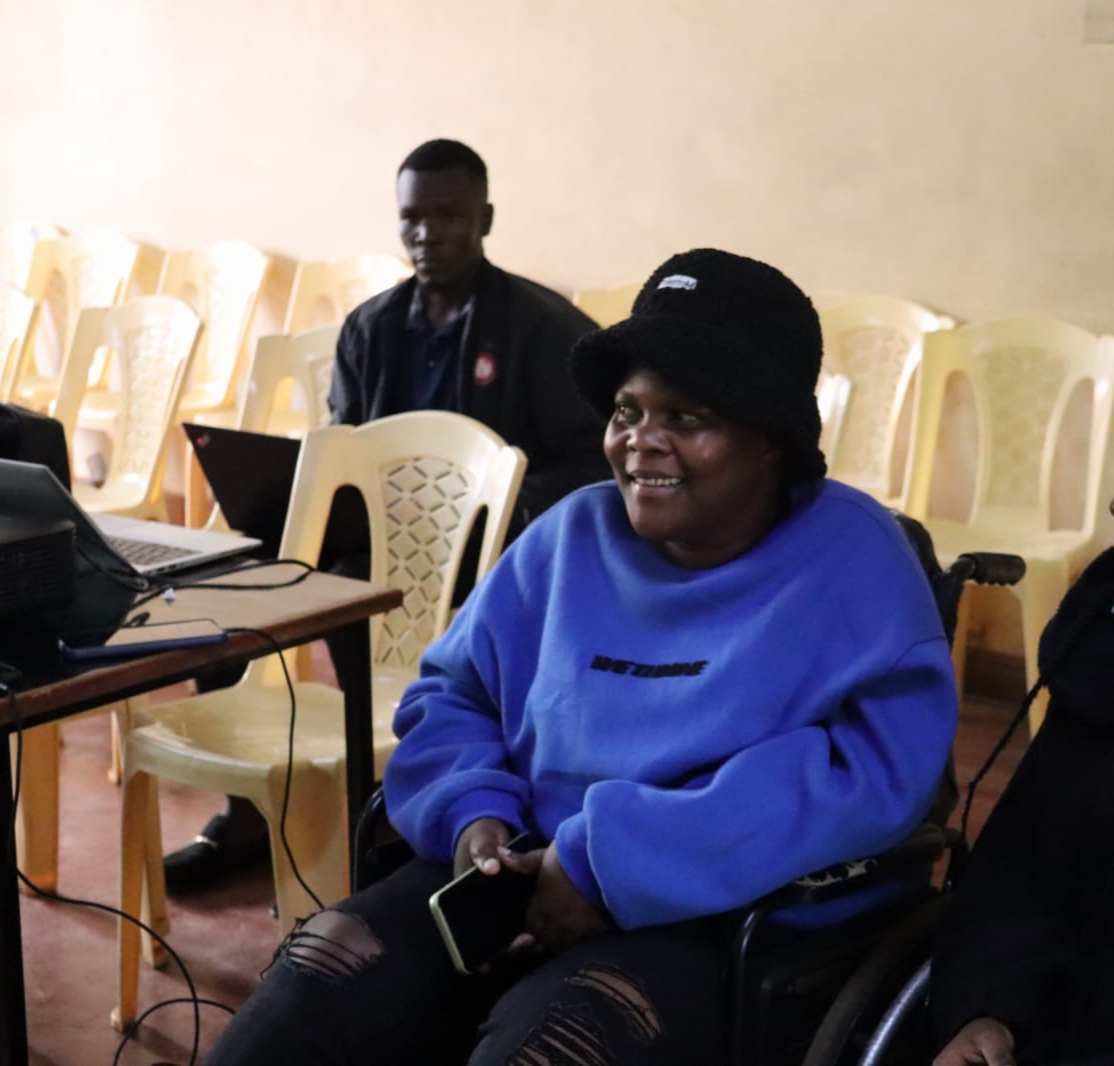
For years she has watched drainage channels overflow when plastic waste blocks the flow. During heavy rains, paths turn into mud and potholes become hidden traps. Her wheelchair sinks and stalls. If she cannot move, she cannot trade.
Mumia sells second-hand clothes (mitumba). When floods come, she often stays indoors, pausing her business and her independence until the water recedes.
A turning point: support that includes livelihoods
In late 2024, both women encountered the Gifted Community Centre (GCC), a youth-with-disabilities-led organization based in Kibera. Wanjiku was invited to climate-focused training through her self-help group, Empowered Women with Disability. Mumia learned about GCC through a community mobiliser and later joined livelihood initiatives.
Dr Sarah Musau, GCC’s director and co-founder, says the organization’s work is built around three pillars: sustainable livelihoods, health, leadership and governance, with research and advocacy cutting across.
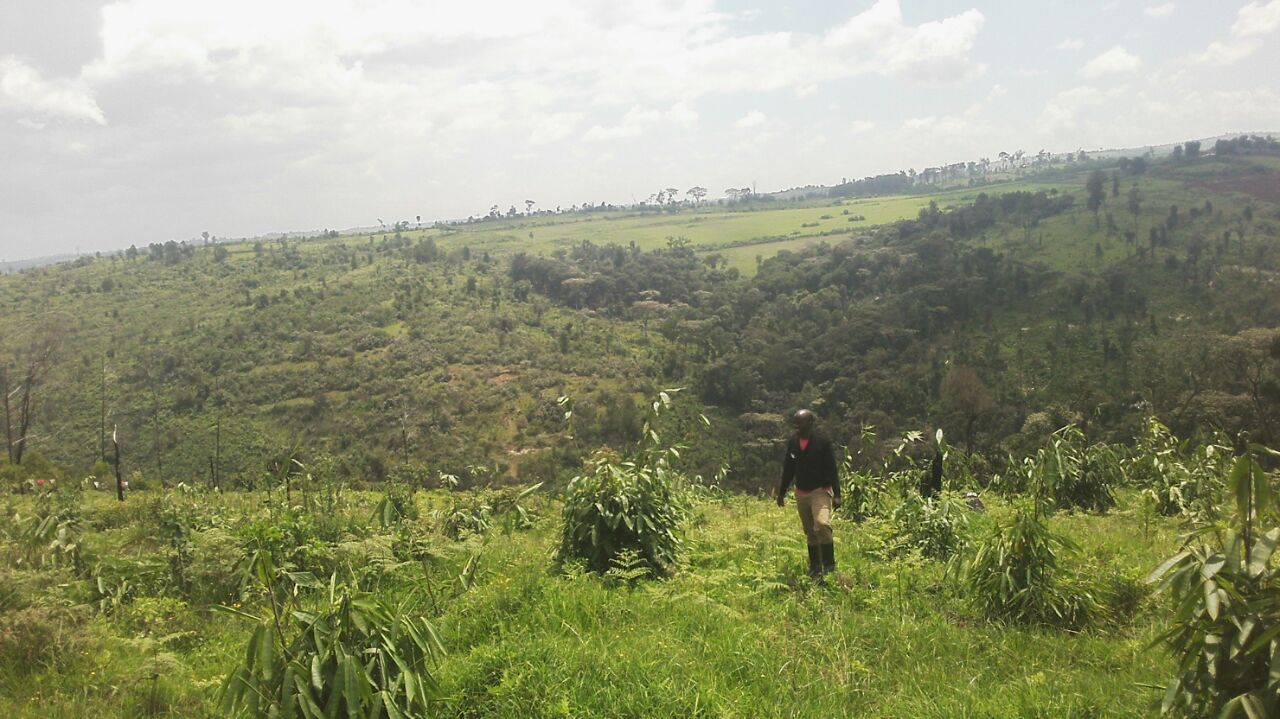
Their climate justice initiatives include tree planting, climate-smart agriculture and climate education. The group also helps with waste management and clearing drainage channels because research has shown that blocked roadside drains significantly reduce stormwater flow and worsen flooding in densely populated settlements.
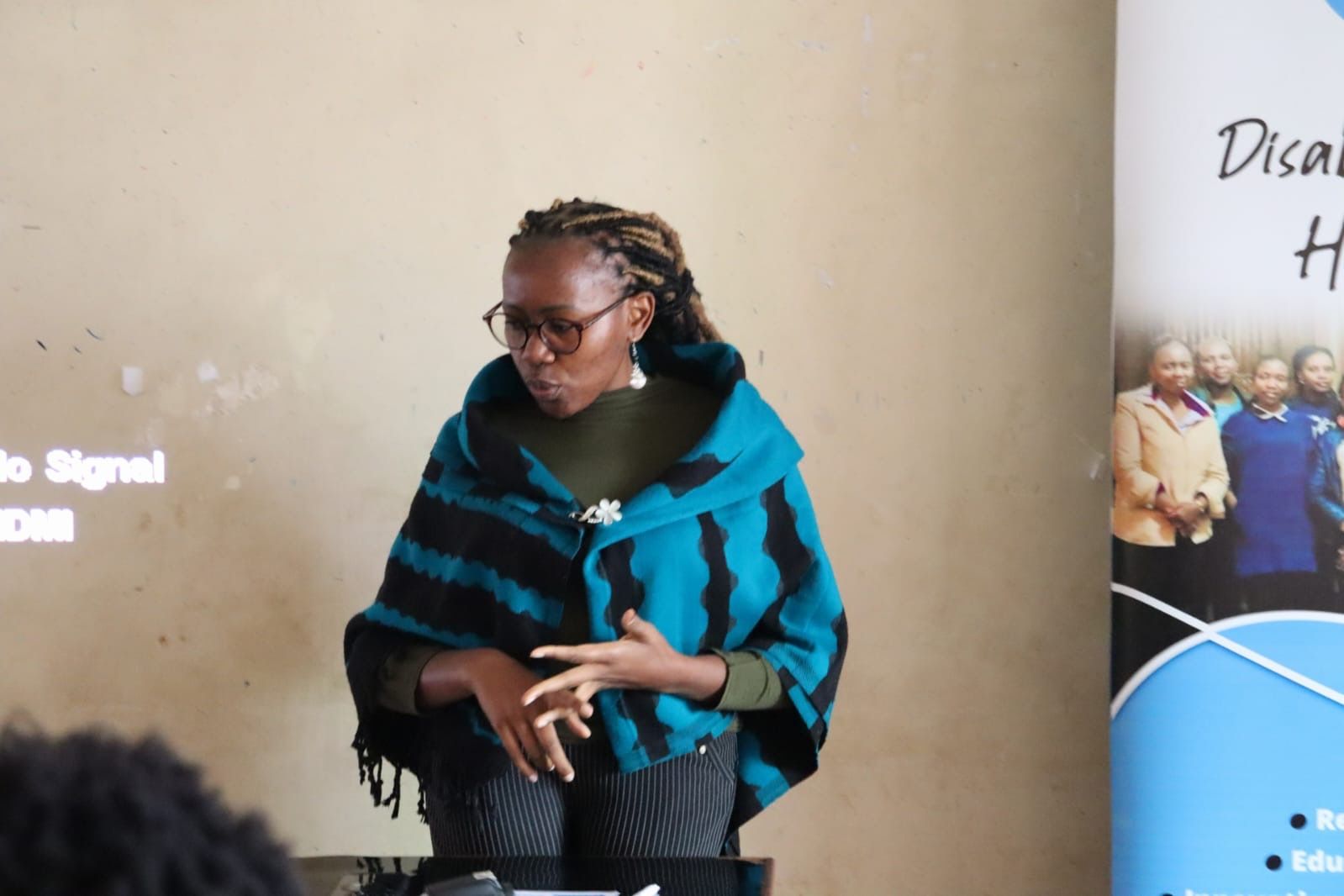
“We co-design and co-create programs with them to ensure they own them,” Musau says. “They’ve lived with those disabilities, so they understand better what they need.”
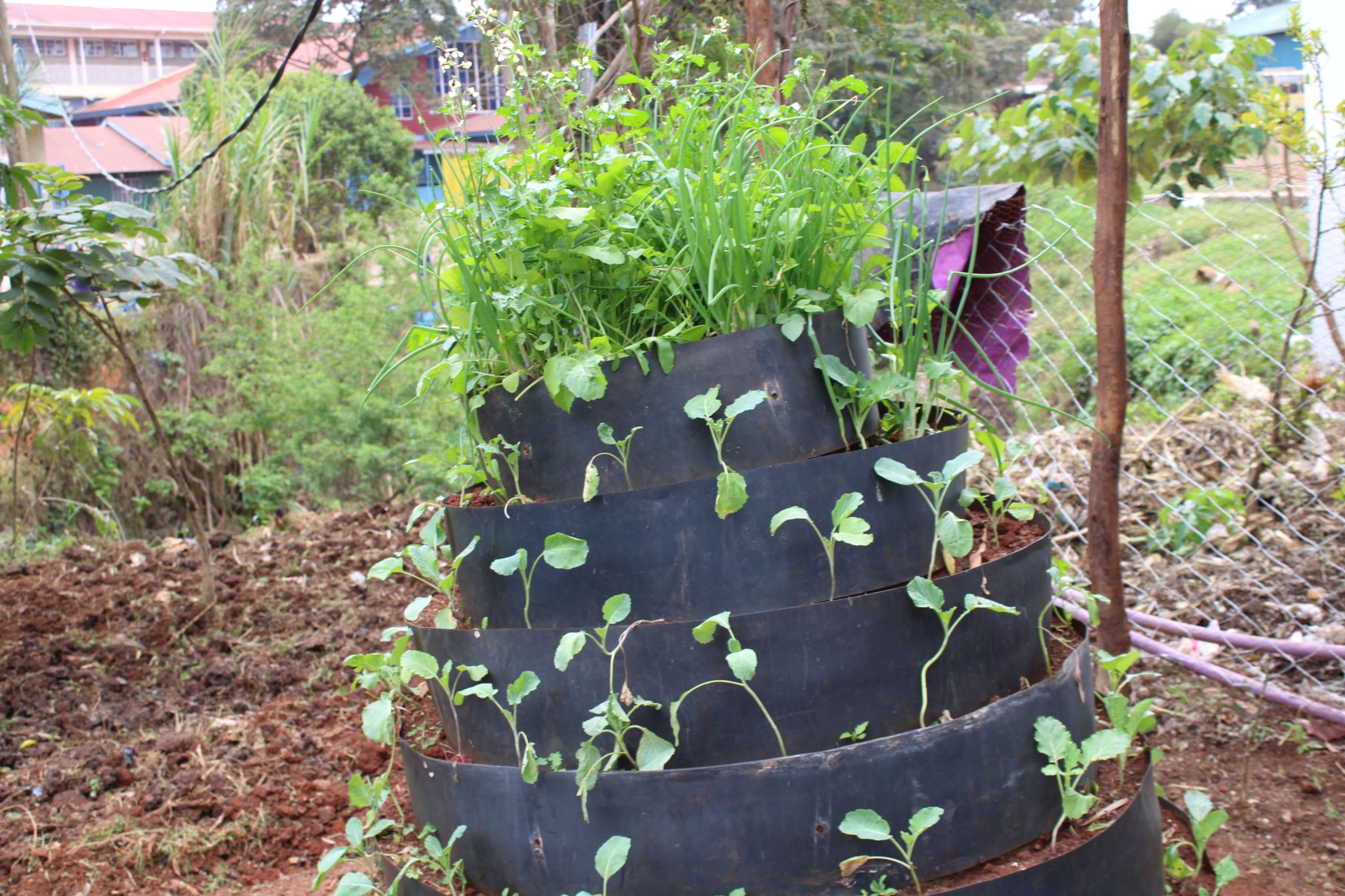
In dense settlements with little green space and high heat trapped by concrete and iron sheets, GCC promotes small-scale climate-smart agriculture: agroforestry, container gardens, vertical gardens and demonstration plots.
For Wanjiku, the training translated into recycled containers of kale, spinach, onions and indigenous greens arranged in her courtyard. She also keeps chickens and uses manure as fertilizer.
“With the seedlings and training from GCC, I established a farm using recycled containers,” she says. “I have been able to start a kiosk and earn an income again, which was impossible after the floods.” A small recyclable bag (locally known as uhuru bag) of spinach sells for about 150 shillings (US$ 1.15).
Mumia also carved out her own growing space. With guidance from the trainings, she and her brother cleared a small informal dumpsite near her home and transformed it into a vegetable garden.
“I’m so happy with how everything turned out,” she says. Previously, heavy rains would flood the area around her house because water could not drain past the piles of plastic waste. Removing the debris has stopped the localized flooding and allowed her crops to thrive, creating both food and income.
Director Musau argues that income stability is the bedrock of climate resilience. “Supporting livelihoods is not charity,” she says. “It’s a buffer against future shocks.”
This economic buffer is critical because, Stephen Mutimba, climate change expert, explains, disability acts as a “climate risk multiplier” when it intersects with poverty.
“When you have a disability, you have limitations and cannot easily move away from a hazard,” says Mutimba, who is the managing director at Climate and Energy Advisory Limited. While those with resources may be cushioned by safer housing and support networks, PWDs living in poverty face compounded vulnerability.
To address this, he notes that there is a need to emphasize skills that utilize locally available materials, reducing dependence on external aid. Peer-to-peer sharing within self-help groups moves resilience from one-off interventions toward collective, sustainable capacity as climate shocks grow more frequent.
Early warnings that don’t reach everyone
Even with community initiatives, gaps remain in disaster preparedness. Musau says early warnings issued by Kenya Meteorological Department (KMD) are not in inclusive formats for PWDs.
GCC currently relays KMD advisories via WhatsApp and word-of-mouth, but informal chains often fail those without smartphones or those who require tailored formats. This highlights a failure to meet the UN Convention on the Rights of Persons with Disabilities, which mandates that States provide public information in accessible formats and in a timely manner.
“We are engaging with the Nairobi City County Disaster Risk Management department,” she says. “The current level of coordination isn’t enough to ensure everyone can evacuate safely.”
Belindar Ogola, a senior disaster management officer in charge of Kibera sub-county, says the county prioritizes disaster risk reduction, including community guidance on clearing drainage, monitoring disease outbreaks and sharing alerts.
Targeted engineering has reduced flooding in some places, but other fixes can be socially costly and may require demolishing houses.
“Climate-related disasters, like frequent flooding, are much harder to manage once they occur,” she explains. “That’s why our main focus now is on disaster risk reduction.”
This prevention-first approach aligns with what Mutimba emphasizes: disaster reduction must go beyond reactive measures to include pre-identified shelters and hazard mapping.
He points to Denmark’s “climate parks,” these are designated spaces (sometimes schools or churches) pre-equipped as temporary refuges, as a model for how cities can plan ahead. For Nairobi, this means designing infrastructure that ensures the most vulnerable have a safe place when the next storm hits.
Furthermore, Mutinda stresses that inclusive early warning systems must be deliberate rather than accidental. This requires a precise understanding of where vulnerable individuals are located and the establishment of dedicated community networks capable of delivering life-saving information before a disaster strikes.
This is supported by a 2023 study from the United Nations Office for Disaster Risk Reduction (UNDRR) which highlights that early warning systems often fail because they are not tailored to the specific locations and communication needs of PWDs. It concludes that for these systems to be effective, they must be “intentional” by involving local community organizations in the mapping and dissemination process to ensure that no one is left behind during an emergency.
A forecast beyond fear
In Wanjiku’s home, dark clouds still trigger panic. The drainage remains narrow, and her house sits in the path of potential floods. But there is now a network she can call before the water rises, and a newfound insistence on being visible to the systems that once ignored her.
Neither women claim individual efforts can solve structural flooding or replace safe housing. Their stories show that climate resilience depends on livelihood, voice, and inclusion in survival plans. “There is nothing about us, without us,” Wanjiku says.
As Nairobi braces for more volatile seasons, the question is whether preparedness will remain generic or become specific enough to protect those who cannot outrun water. For the most vulnerable, the forecast only changes when they are no longer an afterthought in plans for their own survival
This story was produced with support from Media for Environment, Health and Agriculture (MESHA), in partnership with the International Development Research Centre (IDRC), through the ARECCCA Fellowship.