|
Getting your Trinity Audio player ready...
|
By Mary Mwendwa
The Africa Youth Employment Outlook 2026 outlines key shifts in young people’s pathways to work and the systemic barriers facing young women.
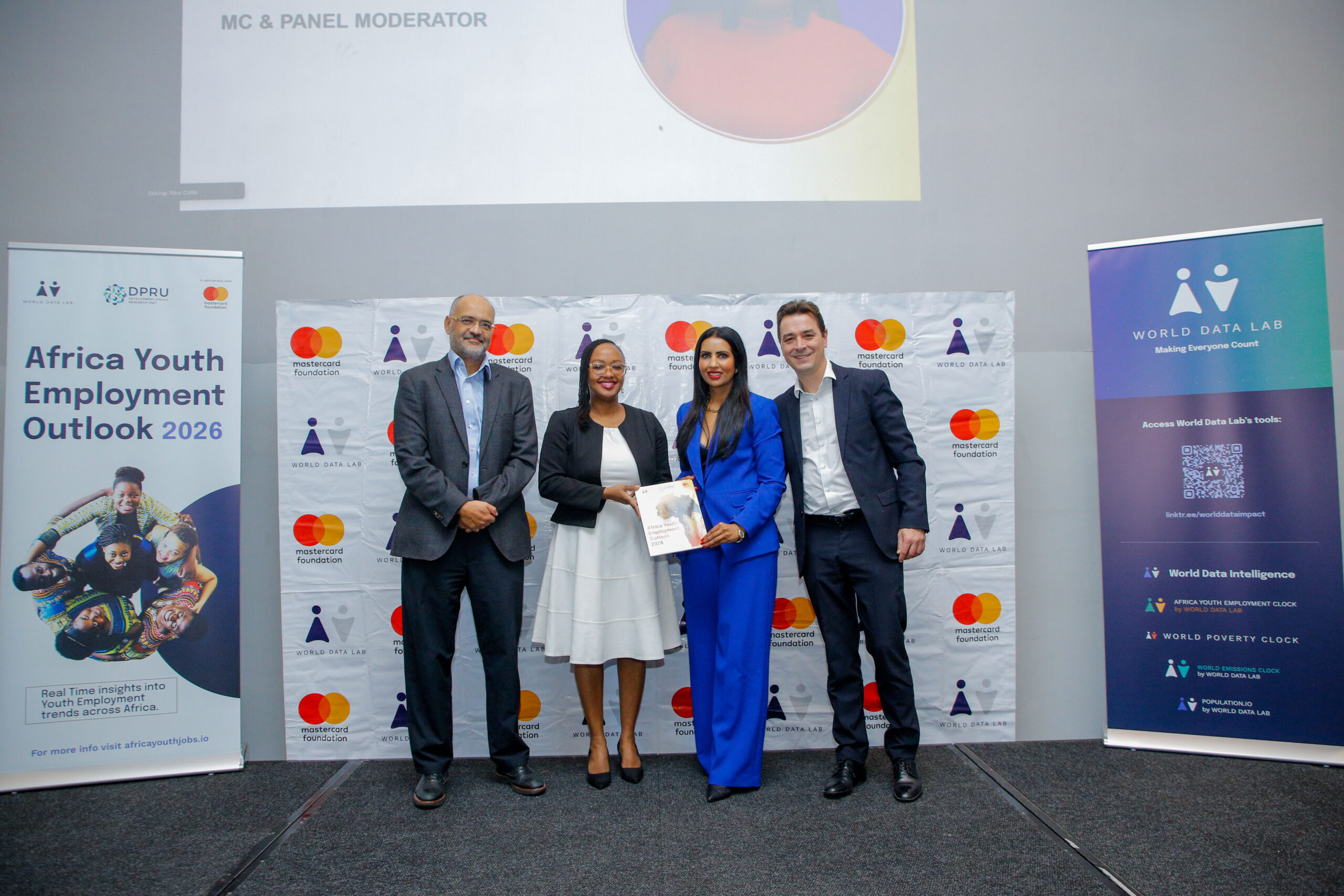
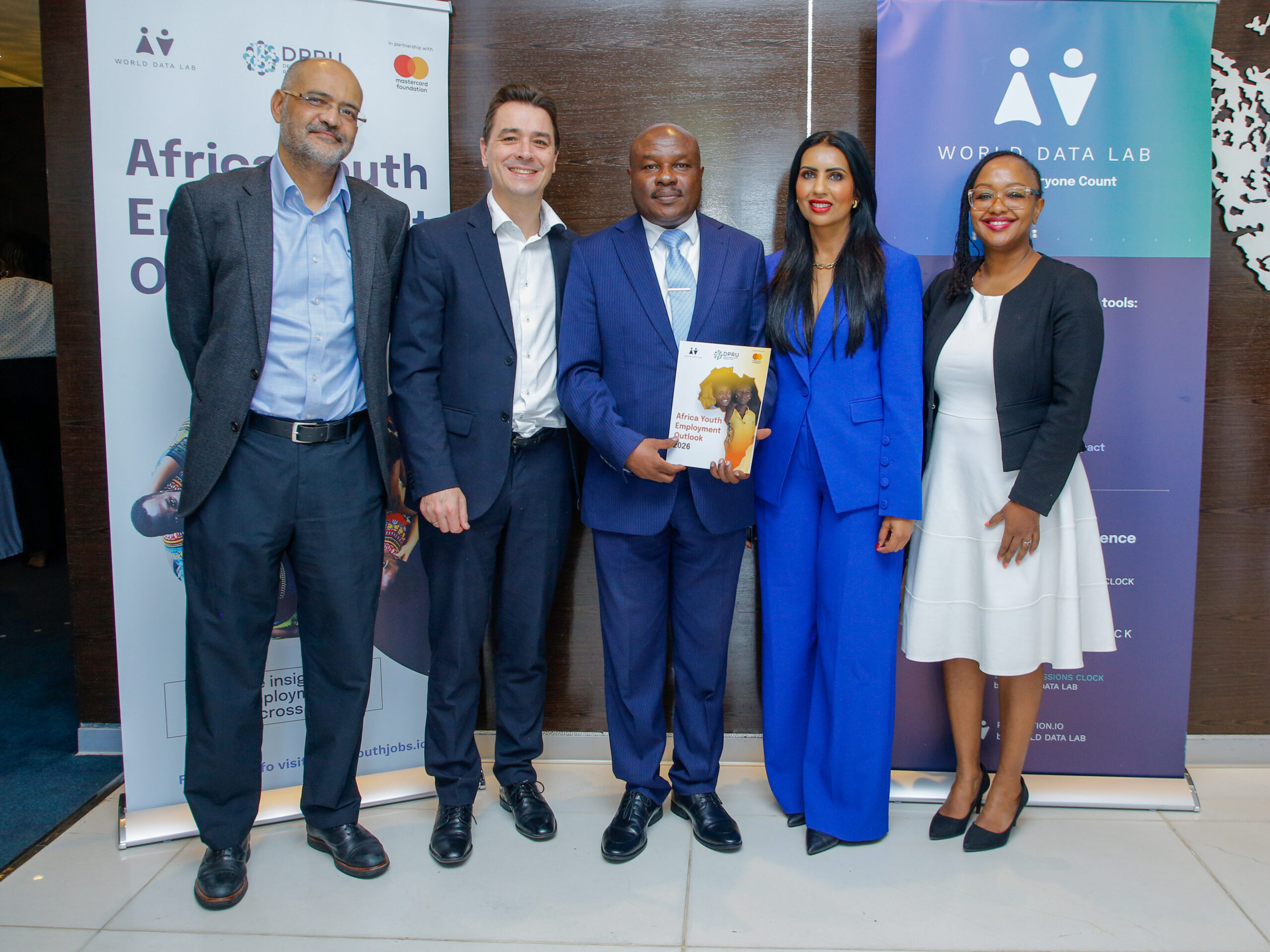
Nairobi, Kenya, February 10, 2026 – The inaugural Africa Youth Employment Outlook 2026 report was launched yesterday, marking the first in a series of reports aimed at deepening understanding of Africa’s rapidly evolving youth labour market. Produced by the World Data Lab in partnership with the Mastercard Foundation and the University of Cape Town’s Development Policy Research Unit, the report provides critical insights into the state of youth employment—with a dedicated focus on the gender dynamics that shape young people’s access to work.
While Africa is home to the world’s fastest-growing youth population projected to grow through the 2070s even as youth populations decline elsewhere the report reveals that this demographic dividend is at risk unless systemic barriers, particularly those facing young women, are urgently addressed.
Young women left behind as labour markets shift
The report finds that young women remain disproportionately excluded from Africa’s labour force. Women make up nearly 61% (62 million) of all young people not in employment, education, or training (NEET).
Unpaid care work remains the primary constraint: across Sub-Saharan Africa, 28% of women outside the labour force cite care responsibilities as the reason for their non-participation, compared to just 3% of men.
Even as Africa undergoes three major labour shifts, from work to study, from agriculture to services, and from rural to urban,women are being left behind in the sectors poised for growth. While young men are gaining a larger share of employment in the fastest-growing sectors (industry and services), young women’s share is actually rising in agriculture, even as the sector itself declines.
By 2033, the services sector will employ more young Africans than agriculture for the first time. These jobs are more likely to be formal and offer higher wages—young people in services earn 2.6 times more than those in agriculture.
However, the report warns that within services, young women are concentrated in the most informal and precarious subsectors, such as accommodation, food services, and household employment, where women account for 72% and 79% of employment, respectively. These roles offer limited social protection, low wages, and few pathways to career advancement.
Education as a lever—but only if barriers are removed
Tertiary education remains a powerful predictor of formal employment, yet only 9% of Africa’s youth have completed it. For young women, the barriers are compounded by early marriage, care responsibilities, and legal constraints on asset ownership.
The report highlights positive outliers. Namibia achieved the fastest growth in young women’s contribution to GDP (from 40% to 42% between 2017 and 2022) by investing over 25% of the national budget in education, mandating gender balance among teachers, and enacting laws on property and asset rights. Similarly, Niger, Togo, Benin, Nigeria, and Madagascar stand out as countries where women now make up over 48% of the industrial workforce, defying regional trends.
Policy responses must tackle the care economy
The Outlook argues that addressing the gender gap requires more than skilling programs—it requires dismantling systemic barriers. Tanzania’s commitment to gender-responsive care services, including the opening of over 3,000 Early Childhood Development centres, and Rwanda’s support for over 31,000 women-led businesses through entrepreneurship training and start-up capital, demonstrate that targeted interventions can shift the trajectory.
“Africa’s youth population continues to surge, positioning the continent as the world’s future talent engine,” said Hannah Tsadik, Kenya Country Director, Mastercard Foundation. “But the 2026 Outlook shows that we cannot harness this momentum without putting young women at the centre. Dismantling care burdens, keeping girls in school, and ensuring they transition into high-productivity sectors like ICT is not just a gender issue—it is an economic imperative.”
Wolfgang Fengler, CEO and Co-Founder of World Data Lab, added: “This report moves beyond aggregate trends to show the granular reality of who gets which jobs—and why. By integrating gender analysis into every section, we aim to equip policymakers with the evidence needed to design interventions that actually reach the young women being left behind.”
The Africa Youth Employment Outlook 2026 is the first in a series tracking the continent’s progress toward dignified and fulfilling work for 30 million young people, 70% of them young women, by 2030—the goal of the Mastercard Foundation’s Young Africa Works strategy.
The full report, including country-level data and interactive visualizations, is available for download from at africayouthjobs.io.