|
Getting your Trinity Audio player ready...
|
By Henry Owino | Talk Africa, SGBV Desk
Stacy Lumwagi turned a personal tragedy into a mission, advocating for women’s rights and building a business after surviving gang rape and domestic abuse.
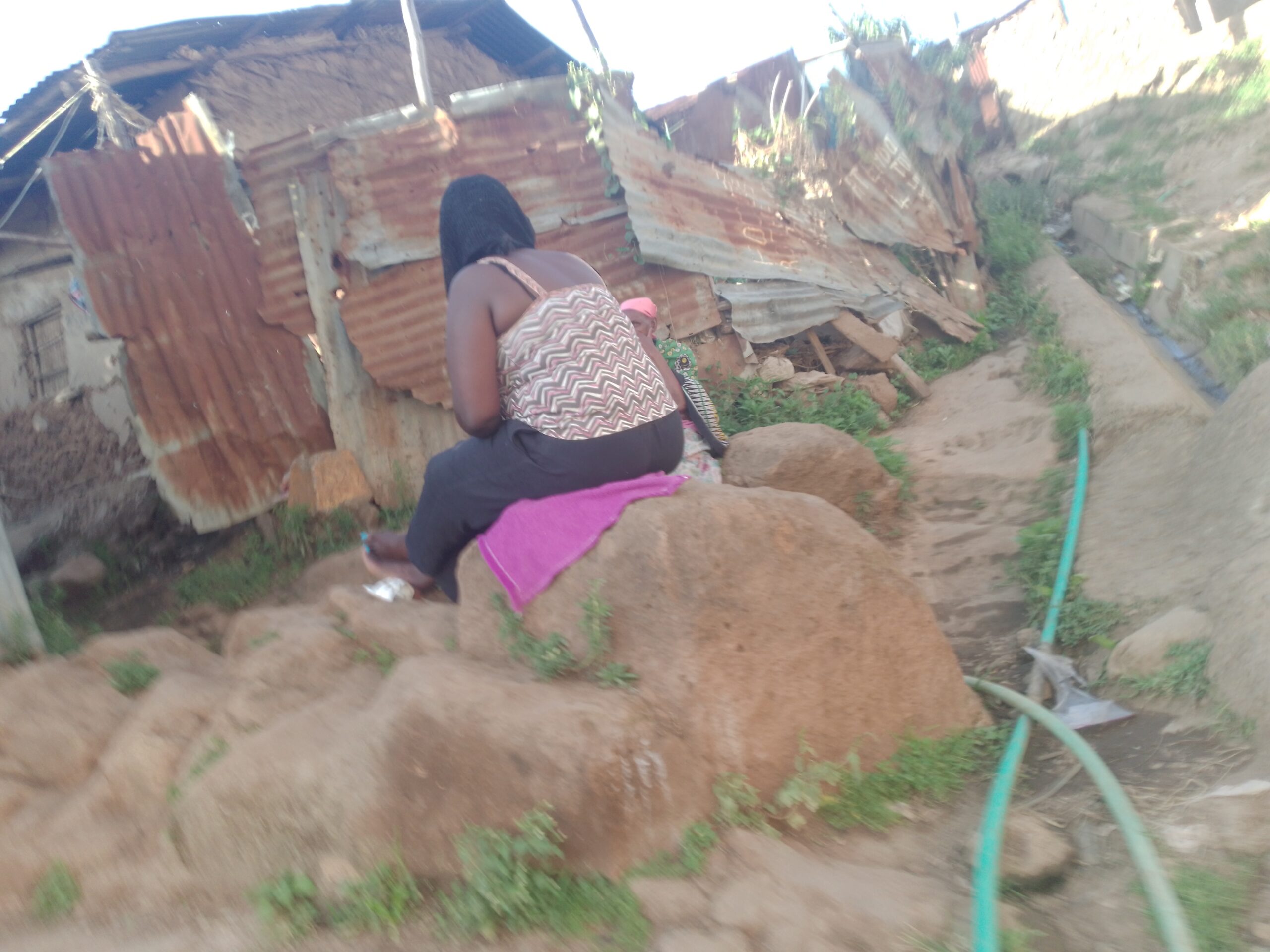
Nairobi, Kenya: Stacy Lumwagi, 32, from Mashimoni estate in Kibera, carries painful memories of sexual assault . From her small corrugated tin-sheet shelter, she reflects on the harsh realities of poverty and the modest lifestyle she leads.
Known locally as “Mama Mboga” for her green-grocery business, Lumwagi runs the small business to support her four young children and her mother back home in western Kenya. Her daily routine begins at 5:00am, catching up with vegetable suppliers at Othaya in Kibera’s Toi Market, a business she has managed since 2017, shortly after relocating to Nairobi.
Before becoming renowned as Mama Mboga, Lumwagi lived with her parents in her upcountry home. She got married and had two children, but the marriage ended bitterly. Seeking a fresh start, she moved to Nairobi and worked as a house-help in various estates before meeting a man whom she later married.
Despite her cautious approach based on her personal past experience, Lumwagi loved and trusted her new husband. He promised stability, but resisted accepting her two children from the previous marriage.
Initially, their union was smooth and mutually supportive, with the husband working on construction sites as Lumwagi supplemented the household income, ensuring the young family’s basic needs were met.
Lumwagi’s predicament began in late 2019 when her husband’s daily income declined due to fewer job opportunities. The situation worsened in May 2020 with the unprecedented outbreak of COVID-19, which led to widespread job losses, movement restrictions, and lockdowns. Curfews became the new norm, further straining their household.
“My husband’s behavior changed. He became harsh and often beat the two children. It hurt me deeply, and I couldn’t bear it anymore, so I called my mother back home for advice,” Lumwagi recalls.
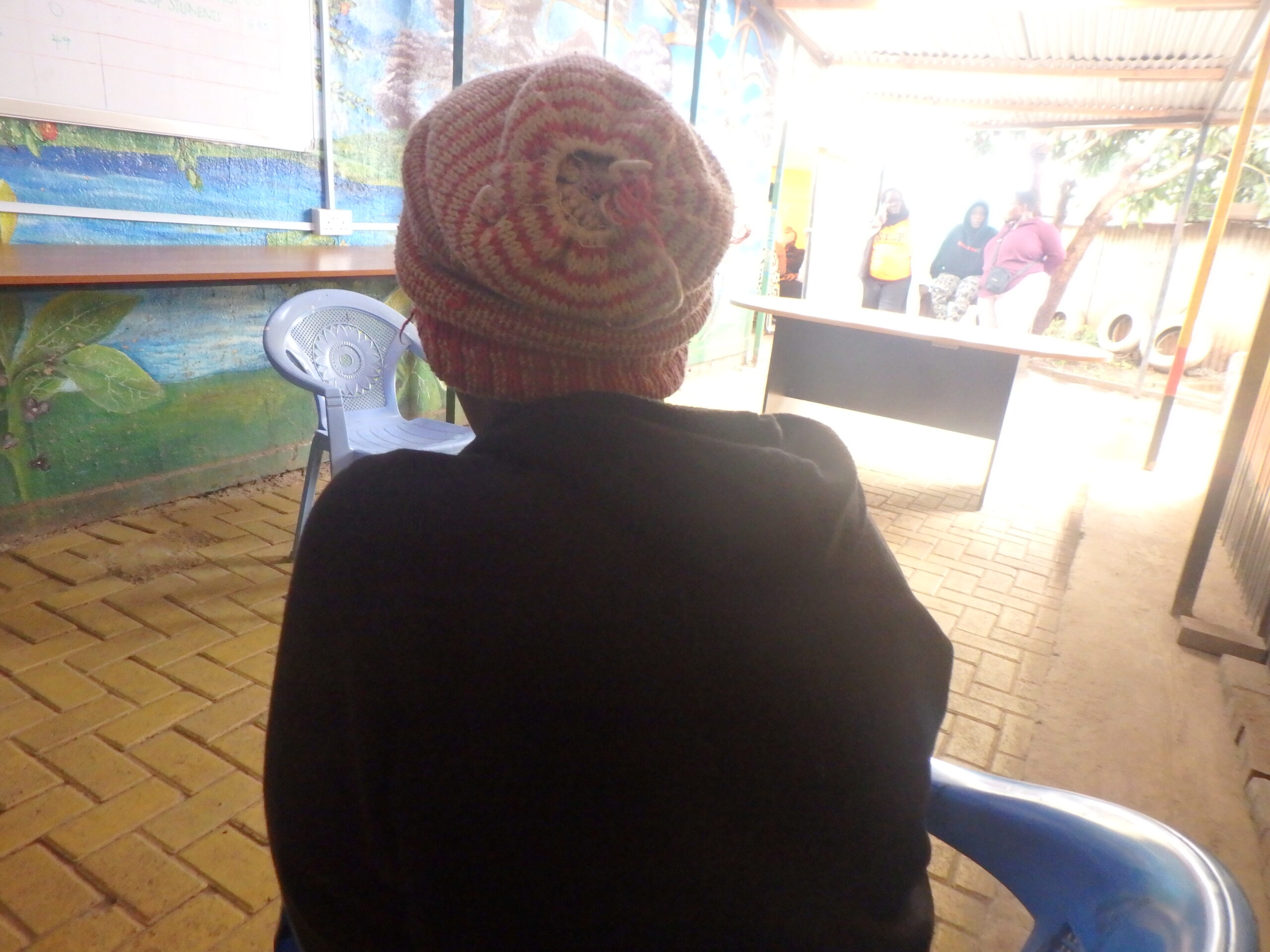
Her mother advised her to find a way to take the children to their rural home for peace and safety. Unfortunately, the country was in the grip of the pandemic, and long-distance transport from the capital Nairobi, to western Kenya had been suspended.
This situation caused increased strain in the marriage as her husband kept insisting, he was raising children who were not biologically his. He stopped buying food and spent most of his days idling in the house, sleeping, claiming the government had encouraged people to work from home and avoid crowds.
Entrepreneurship and Survival
“God also provided through well-wishers and donations, something I never expected. I was among the residents receiving a monthly stipend of KES 3,000 cash transfer as part of the COVID 19 support from an NGO,” Lumwagi explains.
She used the money to start a small green-grocery business, which gradually grew. Fortunately, the business picked up faster than she anticipated and survived despite her husband’s attempts to frustrate her economically.
This encouraged and motivated her to work even harder than usual. She no longer relied on her husband for financial support, in fact, the opposite happened.
She adjusted her daily routine, waking up at 4:00 am instead of the usual 5:00 am, so she could buy vegetables in bulk, deliver some directly to customers, and still open her stall by 10:00 am.
Her mornings also involved preparing breakfast for her children and husband, along with the usual household chores, including cleaning.
Her regular boda-boda rider was always reliable and just a phone call away at that early hour. But on this day and time, his phone remained silent. She called repeatedly, yet it became clear that he (rider) was unavailable to offer his usual transport service.
“I had a trusted rider who usually picks me that early in the morning and brings me back. I had worked with him for nearly six months without ever noticing anything suspicious,” Lumwagi asserts. “But on this particular day, he never answered my calls. So I resorted to using any available rider to avoid being late.”
Lumwagi stopped a passing rider and negotiated the fare. Since she was already running late for the market, she accepted the slightly higher cost.
To her surprise, the rider diverted to a different route. When she questioned him, he claimed it was safer and free of police patrols enforcing the 7:00pm to 6:00am night curfew.
He headed toward the Laini Saba area (opposite direction) and stopped at a junction where four other men were waiting. He switched off the motorbike engine, pretending he had run out of fuel. Before she could get off the motorbike, one of the men grabbed her from behind and pulled her to the ground.
The Traumatic Attack
The five men raped her in turns without any protection until she lost consciousness. They also robbed her of all the money she had before disappearing into the slums after the heinous act.
“What I remember,” she narrates, “is seeing four men pretending to be waiting for a rider. I was terrified, being the only woman in an unfamiliar place. Then suddenly, one of them grabbed me from behind, pulled me down, dragged me aside, and tore my trousers.”
The attackers ensured she could not scream for help. They assaulted her knowing that the curfew kept residents indoors, that no one would risk being outside in the dark, and that the area long known as a blackspot was essentially their territory.
When Lumwagi regained consciousness, she found herself lying on the floor of a chemist shop, her clothes torn. She was told that a group of Good Samaritan women had found her at the scene and rushed her to seek medical attention.
“The Good Samaritan woman paid KES 3,000 for the treatment I received at the chemist. I have never met her since, but God used her to save me,” she says gratefully.
The chemist took the necessary steps to prepare her for the legal reporting process. Unfortunately, her hope of justice was shattered at the police station.
She was asked to pay for a P3 form (which should be given to the public free of charge), she was questioned loudly about personal life details, lectured on why she had violated curfew, and even asked whether she had enough money to fund police investigation processes.
To make matters worse, the rapists including the rider were strangers to her, and she had not taken note of the motorbike’s number plate, making follow-up extremely difficult.
Police officers claimed they had no forensic expert available to collect and analyze evidence at the time. These responses discouraged Lumwagi deeply, compounding the pain of an already traumatic experience.
“My husband, on the other hand, accused me of planning the incident and suggested it was a love affair gone sour. His words were even more traumatizing, making me feel as though the entire world was weighing down on my shoulders,” she says, breaking down as she recalls the ordeal.
The case was never pursued, hindered by frustrations with the police from the onset, her limited knowledge of legal procedures, and the stigma and humiliation imposed by neighbors.
The assault and subsequent challenges also ending her marriage. Her husband, citing fears that she might have contracted STIs or HIV, forced her to leave the home, leading to divorce.
She relocated to a different part of the same estate, where her past ordeal was completely unknown, allowing her some privacy and a fresh start.
Recovery, Motherhood, and Independence
Two months after the assault, Lumwagi visited Kibera South Clinic for a thorough medical check-up following advice from a close friend. Medical examinations, including scans for internal injuries and a pregnancy test, confirmed that she was pregnant.
Five months later, her pregnancy became noticeable, sparking gossip in her new community. Regular customers began avoiding her, which temporarily affected her business. Coupled with pandemic restrictions and social stigma, Lumwagi decided to move to a new residential area to escape the scrutiny.
In 2021, she gave birth to a baby girl. Although the child is a reminder of the traumatic assault, Lumwagi embraces motherhood fully. Today, her daughter is five years old, and Lumwagi reflects that a mother’s love for her child remains unconditional, transcending even the painful circumstances of her birth.
Currently, she is a single mother of four, an independent woman free from violence, and an advocate of women rights, encouraging other women not to endure or compromise their lives for abusive husbands.
“I am not encouraging women to pursue divorce,” she concludes, “but I urge them never to endure domestic abuse in the name of preserving a marriage.”
Efforts toward Justice and Advocacy
Sarah Dafala, Paralegal Officer and GBV Team Lead at the Feminist for Peace Rights and Justice Centre (FPRJC) in Kibera, has successfully secured justice in over 20 cases but notes the challenges remain.
“It breaks survivors to see their abusers released on bail just days after arrest. Justice is not only about convicting perpetrators; it’s about restoring dignity and ensuring survivors never have to live in fear again,” Dafala explains.
Dafala confirms that Lumwagi’s experience reflects a widespread crisis facing several other Kenyan women across the country. She points out common forms of abuse include; physical, sexual that is (rape and defilement), verbal or emotional violence, and economic control. She regrets majority of the cases go unreported.
At FPRJC, Dafala clarifies survivors are psychologically counseled for healing and offered safe houses. The center also trains them on micro, small and medium enterprises (MSMEs) an economic empowerment to be independent and linked to reputable organizations offering grants, for survivors to start businesses of their choice.
“Reasons include; fear of embarrassment, lack of faith in the justice system, fear of the aggressor, family interventions and social expectation that domestic matters are private,” Dafala observes.
“Although I have successfully pursued justice in more than 20 cases, the fight is far from over,” she says. Adding, that greatest frustration is how quickly GBV offenders are released on bail, often just days after arrest, placing survivors back in danger.
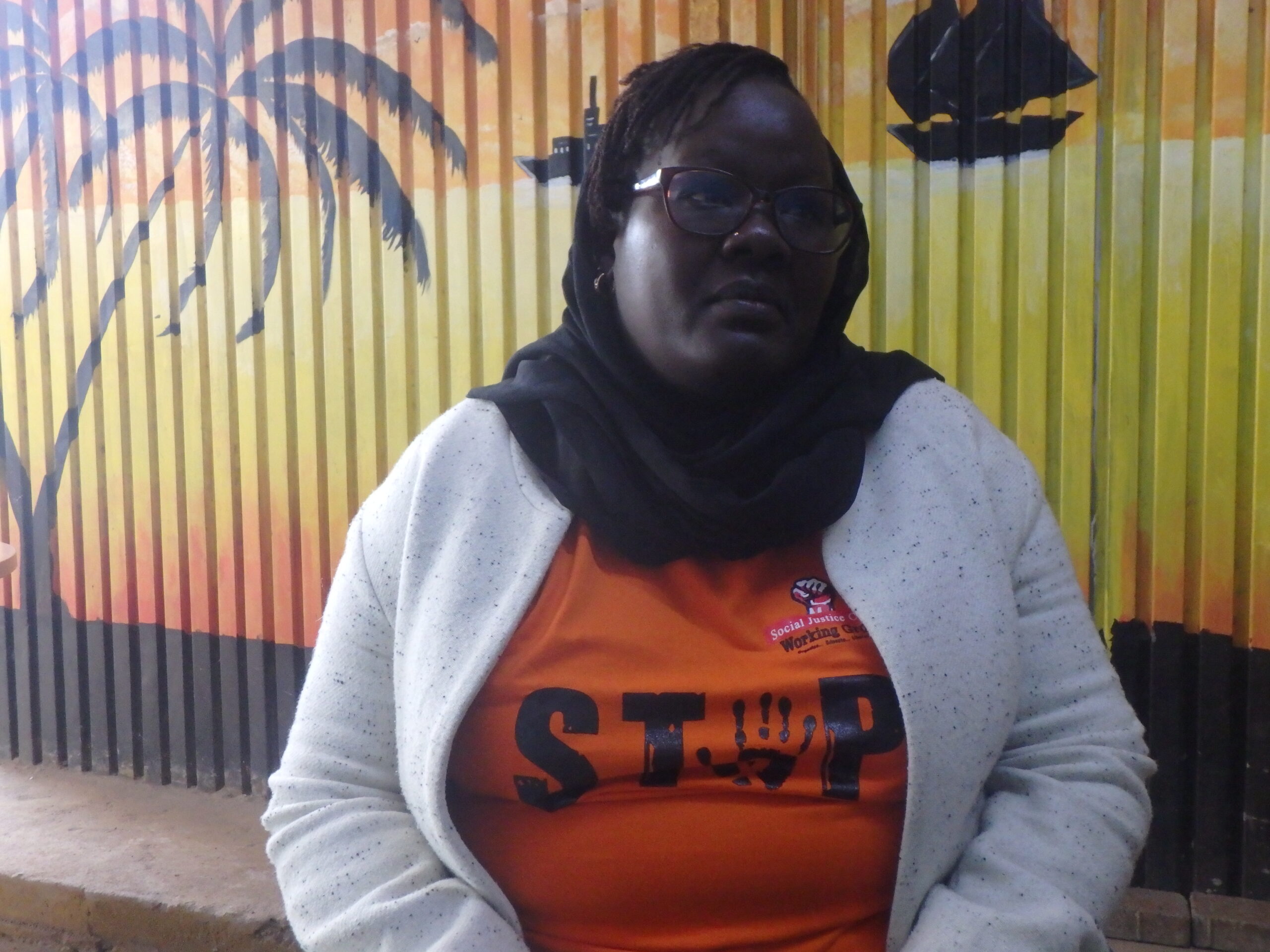
The paralegal expert believes the action endangers survivors and undermines justice. She argues that bail and bond terms for GBV cases should be reviewed or abolished to protect victims.
Dafala maintains that meaningful change is possible but will require stronger cooperation between government institutions and community-based organizations. For her, justice goes beyond convicting perpetrators; it is about restoring survivors’ dignity and ensuring they never have to live in fear again.
National GBV and Femicide Context
According to the Kenya National Bureau of Statistics (KNBS), more than 40% of women aged 15–49 have endured physical violence, most often at the hands of intimate partners. A UN Women Report 2024, warns of a troubling rise in GBV cases escalating into femicide, stressing the urgent need to support and believe survivors before violence turns fatal.
Supplementing UN Report, Africa Data Hub study 2024, found that Kenya recorded 170 femicides in 10 counties of the 47, which is the deadliest year yet. Nationally, more than one woman is killed every day, with 77% of the murders committed by partners or relatives.
Report by MIDRIFT HURINET a civil-society organisation/ human-rights network active in Nairobi and other counties indicates from 2024 and late 2023 that domestic and gender-based violence (GBV) remains a significant and pervasive issue in Nairobi’s informal settlements, including Kibera.
Several studies including WASH-GBV appearing in a global public-health journal, showing that researchers view informal-settlement GBV as not only social but also a public-health issue. Local news analyses also highlight the high prevalence of GBV in Kibera.
Key Findings on Domestic Violence in Kibera 2024 & Recent Data
- High Incidence: Between August 2023 and December 2024, over 5,000 GBV cases were recorded in the Kibra and Mukuru slums.
- National Context: 2024 saw an alarming surge in femicide cases across Kenya, which sparked national outrage and protests. Data from Femicide Count Kenya indicated about 173 documented cases as of September 2024, with many perpetrators being partners or ex-partners.
- Prevalence in Informal Settlements: Research consistently shows that informal settlements experience higher rates of GBV compared to the general population. A study (BY WHO)? published in January 2024 focusing on Nairobi informal settlements found high rates of severe intimate partner violence (IPV), with prevalent issues including a partner being violently jealous (89.3%), forced sex (82.5%), and controlling behavior.
- Forms of Abuse: Verbal abuse is a common form of abuse, accounting for a significant percentage of cases, alongside physical and sexual abuse.
- Root Causes: Key drivers of GBV identified in a 2024 Nairobi study (BY WHO)? include patriarchal norms, gender inequality, poverty, lack of education, limited economic opportunities, and alcohol/drug abuse.
- Underreporting and Challenges: Despite the high prevalence, many cases go unreported due to stigma, fear of retaliation, financial dependence on partners, and a lack of trust in the justice system.
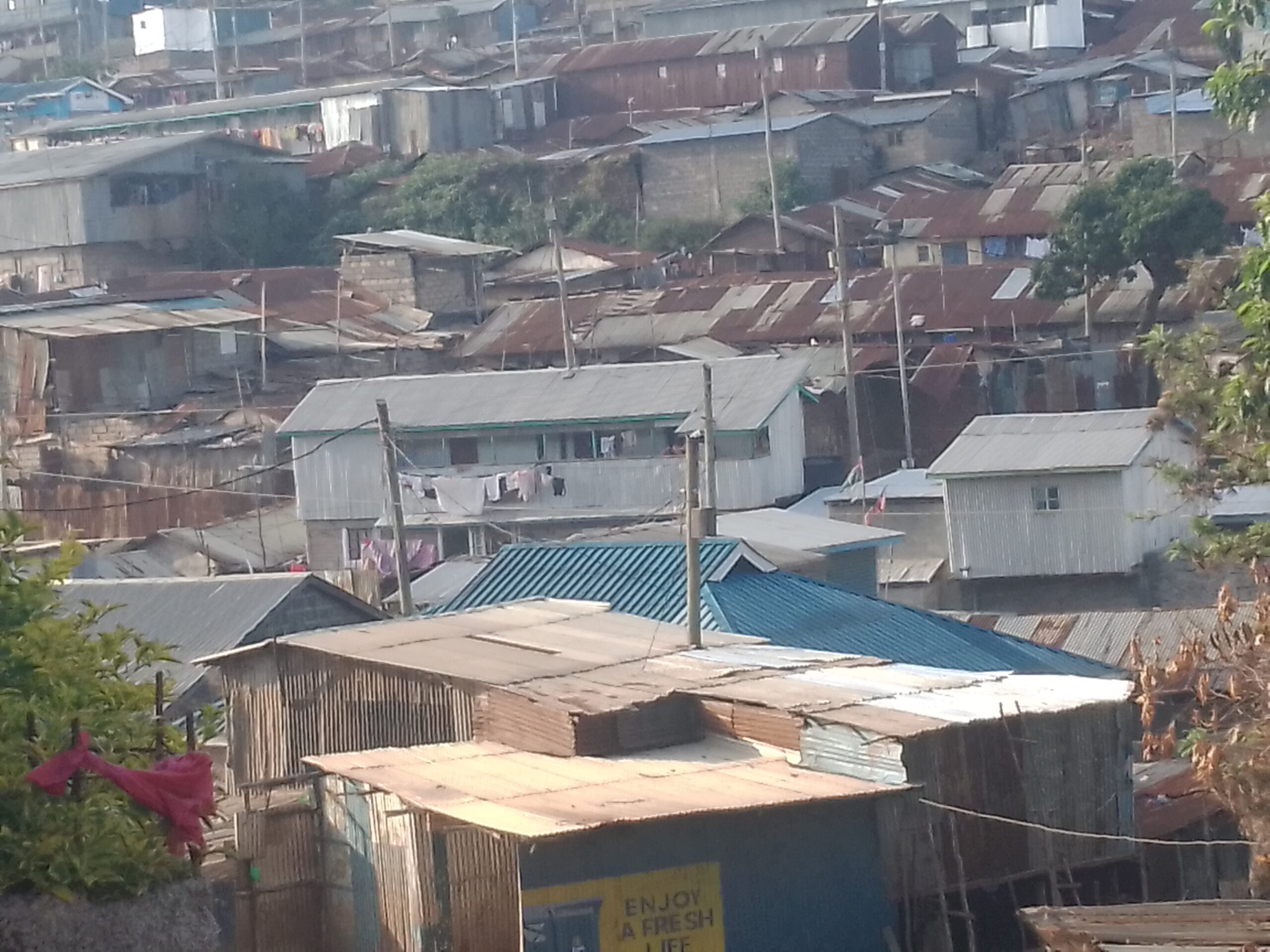
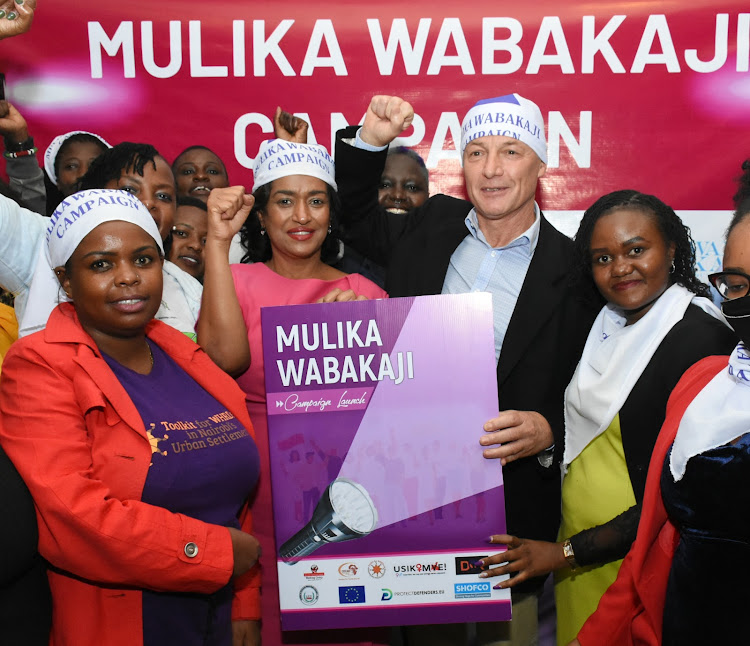
Currently, organizations based in the low income areas and slums, like Polycom Girls in Kibera, the Mathare Social Justice Centre and Usikimye are actively working on community-led interventions and support for survivors.
Note: The world marks the annual United Nations campaign dubbed 16 Days of Activism to End Gender-based Violence from 25 November to 10 December 2025. This year’s theme: “UNiTE to End Digital Violence against All Women and Girls. The campaign focuses on the escalating problem of online abuse and calls for action from governments, tech companies and individuals to stem the abuse.
This story was made possible with the grant from WANIFRA-WIN SIRI Accelerator Programme.