|
Getting your Trinity Audio player ready...
|
By Victoria Musimbi
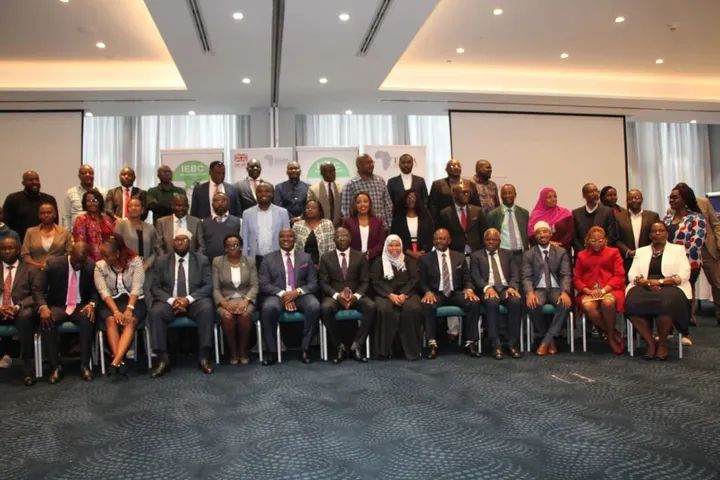
Nairobi, Kenya: In a bid to foster transparency and strengthen collaboration ahead of the 2027 General Election, the Independent Electoral and Boundaries Commission (IEBC) convened a high-level consultative roundtable with media stakeholders in Nairobi.
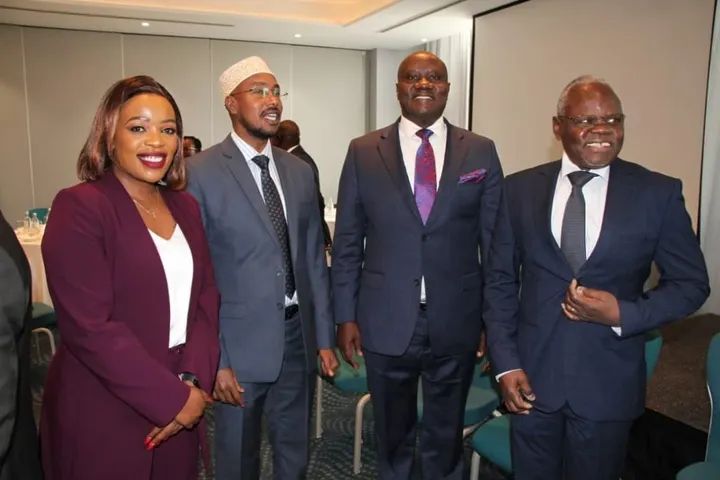
The initial formal meeting led by the Commission’s new leadership convened by IEBC Chairperson Mr. Erastus Ethekon, CEO Marjan Hussein Marjan, and commissioners. Also in attendance were Felix Odhiambo, Executive Director of the Electoral Law and Governance Institute of Africa (ELGIA), senior editors from various Kenyan media houses, and representatives from the Kenya Media Sector Working Group.
Lessons from 2022: Early Engagement is Key
Key discussion points included renewing the expired Memorandum of Understanding (MoU) with the media, addressing past electoral communication issues, and identifying ways to improve cooperation in the rapidly changing digital environment.
Kenya Editors’ Guild President Zubeidah Kananu emphasized the critical and timely nature of the meeting, held two years prior to the upcoming general election. She highlighted the early engagement provides a crucial window for media stakeholders and the IEBC to establish a strong collaborative relationship that will address potential challenges, and solidify protocols that will ensure fair and transparent election coverage.
“Reflecting briefly on the 2022 elections, one of the key lessons we learned is that early collaboration is critical for success,” she said. “Our engagement with the IEBC in 2022 led to notable improvements in media safety, access to information, and accuracy in coverage.”
Kananu pointed out several critical gaps that require immediate attention: a shortage of personnel for covering and tallying results nationwide, the absence of a central media tallying center, and safety issues during the transmission of presidential results.
“We strongly urge that cost-cutting measures must never come at the expense of credibility or operational readiness,” she warned.
Kananu emphasized the growing challenge of disinformation, deepfakes, and fake opinion polls while also recognizing the potential of technology and AI in countering such threats. She proposed a joint IEBC Media Forum focused on the role of digital technologies in elections, an expansion of fact-checking desks, and public digital literacy campaigns to bolster trust in verified information.
Media IEBC MoU: A Renewed Call
The Secretary General of the Kenya Union of Journalists, Eric Oduor stated the establishment of the Media Centre at the Bomas of Kenya, a direct outcome of a previous MoU, facilitated accurate electoral reporting and smooth information flow during the 2022 elections.
“The collaboration made work easier for journalists, as the Commission was always ready to provide data and updates,” Oduor stated.
With the MoU now expired, Oduor called for its urgent review and renewal to reflect emerging challenges, especially around misinformation and AI. He also advocated for the revival of the Joint Media Taskforce, which previously managed the relationship between media and the Commission and proposed timely solutions to electoral communication issues.
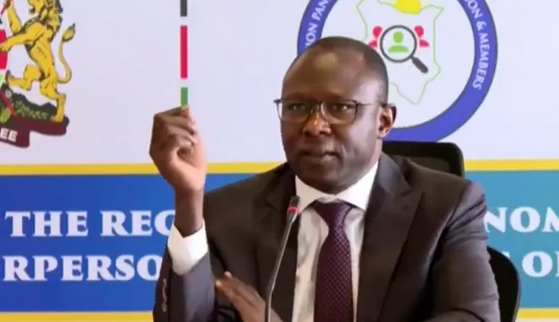
“Time is not on our side 2027 is fast approaching, and we must hit the ground running,” he emphasized, noting that several by-elections are already lined up before the general election.
Strategic Partnerships for Democratic Integrity
Felix Odhiambo, Executive Director of the Electoral Law and Governance Institute for Africa (ELGIA), called for a technical retreat between the IEBC and media stakeholders to review the expired MoUs and co-create updated frameworks for engagement.
“While the IEBC holds primary responsibility for delivering a credible election, this is not a burden it should bear alone,” he said. “Every electoral stakeholder must play their part responsibly and constructively.”
Odhiambo warned of the risks posed by digital disruption, citing deepfakes, fake polls, and misinformation as growing threats to democratic stability. He emphasized the need for conflict-sensitive reporting and reaffirmed ELGIA’s support for constructive engagement to safeguard the democratic process.
“If we get it right, Kenya will firmly enter the consolidation phase of its democratic journey. But if we get it wrong, we risk democratic reversals so profound that we may struggle to recover,” he cautioned.
A Listening Commission: IEBC’s Renewed Approach
IEBC’s Chairperson Erastus Ethekon outlined the Commission’s commitment to learning from the past and forging stronger, more responsive partnerships with stakeholders.
“As we reflect on the 2022 General Election, we must acknowledge both the gains and the gaps,” he said.
While praising improvements in media training and access to real-time information, Ethekon admitted the Commission faced critical shortcomings, including disorganized tallying processes, delays in media accreditation, and the widespread circulation of misinformation.
“Our approach, as a newly constituted Commission, is simple: we listen, we learn, we innovate, and we take action” said Ethekon.
Among the Commission’s immediate priorities is the review and update of the MoU with media to reflect the fast-evolving realities of digital information and AI. Ethekon also pledged support for joint training, capacity building, and safeguarding media freedom and professionalism during elections.
“Delivering a credible, peaceful, and transparent 2027 election is not the Commission’s responsibility alone. It is a shared duty and in that shared duty, the media is indispensable.”
He further revealed that the Commission is engaging political actors and planning a meeting with political parties to address responsible rhetoric and preserve national cohesion during the election period.
The Media are More Than Just Observers
IEBC CEO Marjan Hussein Marjan echoed the Commission’s appreciation of the media’s role in democracy.
“Access to accurate information at every stage of the electoral process is critical for building and sustaining public confidence,” he said.
Marjan emphasized that the media is not a passive observer but a vital participant in the electoral process. He called for open, constructive, and continuous engagement, positioning the media as a central player in safeguarding electoral integrity.
“Today marks the beginning of a new chapter. The media is not on the sidelines, you are at the centre. This is more than a meeting; it is a conversation. A chance to reconnect, reset, and renew a partnership that is vital to public trust and electoral integrity.”
A New Chapter Begins
As Kenya nears the 2027 General Election, the IEBC and media are re-engaging to ensure a transparent and accountable electoral process. This collaboration focuses on proactive partnership, meticulous preparation, and clear communication. This joint effort aims to create a more credible and democratic election, safeguarding Kenya’s democratic aspirations.
The success of this renewed partnership will ultimately be measured not just by the smoothness of election day operations, but by the confidence of the Kenyan public in the democratic process, a confidence built on trust, truth, and timely information.