|
Getting your Trinity Audio player ready...
|
By Soila Arasha
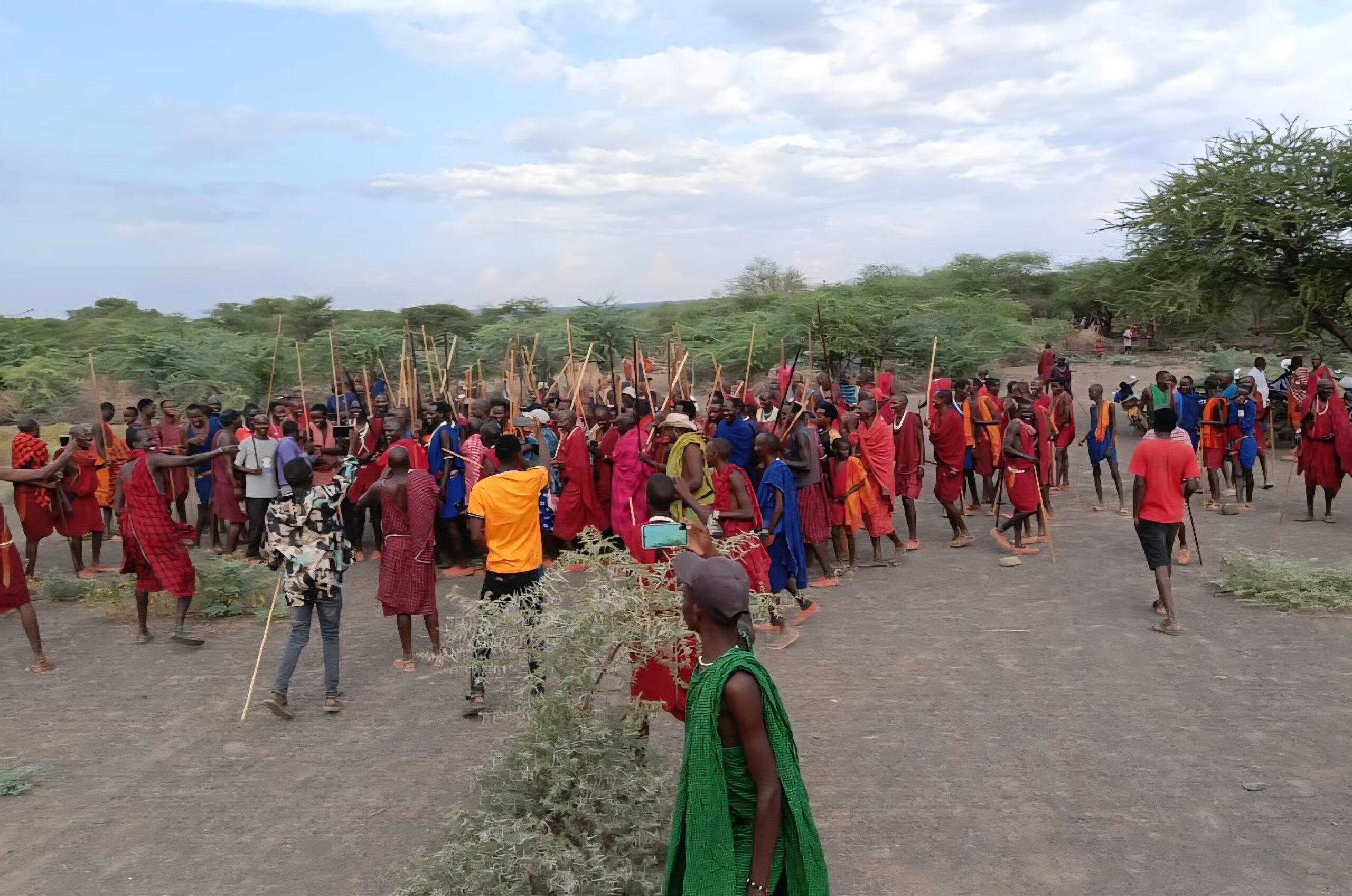
Kajiado, Kenya:The Olkeri Group Ranch, a vast landscape of approximately 24,000 acres, awakens with the sun. This ancestral home to generations of Maasai pastoralists is characterized by rocky hills, expansive open grasslands, and serene, elevated terrain in the distance.
Their daily life revolves around moving their cattle, goats, and sheep across these dry plains to find fresh grass and water. As the day begins, the animals roam freely while the Maasai families prepare for their daily routines, following traditions that have kept their herds and community thriving in this challenging environment.
This traditional way of life on indigenous lands like Olkeri Group Ranch is now facing significant challenges from expanding carbon credit projects, which are part of Kenya’s growing carbon market but are increasingly linked to human rights and land tenure concerns.
The carbon project at Olkeri Group Ranch was initiated by Soils for the Future Africa (SftFA), a Kenyan company implementing a large-scale soil carbon project in Kajiado County. This initiative, known as the Kajiado Rangelands Carbon Project, aims to restore rangelands through rotational grazing programs and to create a sustainable financing mechanism supporting ecological recovery and pastoralist resilience.
Kenya is rapidly expanding its carbon credit market, spotlighted by the world’s largest auction in June 2023, which sold over 2.2 million tonnes of carbon credits according to a PR newswire report.
Carbon credits are permits that allow companies or individuals to offset their carbon emissions by funding projects that reduce greenhouse gases or increase carbon storage or carbon sinks. This system encourages businesses to lower their overall carbon footprint and helps fight climate change.
However, the carbon credit schemes marketed as climate solutions are threatening Maasai ancestral lands in Kajiado, exposing exploitative contracts and opaque profit-sharing deals leaving local communities marginalized. According to the Africa Carbon Markets Initiative (ACMI) Status and Outlook Report 2024, carbon markets in Africa have faced credibility challenges, particularly linked to overstated emission reductions in key project categories like deforestation avoidance and clean cookstoves, which dominate supply in Africa.
Additionally, the report states that accusations of greenwashing and concerns over land rights and benefit sharing have decreased global demand by 22%, causing price declines. This has prompted a focus on building trust and integrity in the markets.
An estimated $280 billion is lost annually due to nature crimes, including illicit activities such as land coercion often linked to projects like carbon offsetting. These crimes are exacerbated by misleading contracts and the lack of free, prior, and informed consent from affected communities, leading to severe social, economic, and environmental consequences. They are often perpetrated by complex networks involving multinational corporations seeking to commodify ecosystems for profit, alongside complicit state actors.
According to Eric Yiapas, a community member from Olkeri Group Ranch, the carbon credit project was initiated with very limited and selective public participation. “When Soil for Future first came to Olkeri, they conducted a selective public participation, involving only about a third of the members. Only that fraction agreed to bring the carbon credits to Olkeri,” Eric explains.
He further highlights that many signatories to the agreements did not fully understand the terms and implications of the agreements they were asked to sign. Initially, the community was told the contracts would only last for five years. However, they later learned these were long-term agreements, lasting up to 40 years.
“Most of the local Maasai are illiterate and economically vulnerable, making them easy to manipulate. The community was advised that once they sell carbon, they would receive 15 million shillings per year. You have a child in school, and because you are pressured by school fees, you agree because you don’t have any other option,” Eric explains.
The impact of the carbon credit project has also disrupted long-established land use patterns in Olkeri causing considerable internal conflict. Traditionally, the community had a land-use plan that allowed for seasonal grazing and settlement arrangements. This has now been overridden by restrictions imposed by the project, including prohibitions on customary practices such as moving livestock at certain times and areas previously designated for seasonal living.
“We used to have a land use plan for grazing and settlement, but now the carbon project has destroyed this. Boundaries have been created, and we are told where to live, disrupting our traditional patterns,” he says.
Moreover, the project has caused concerns about potential loss of land ownership. The community reportedly lacks the title deeds to the lands under contract, raising fears that future generations might become landless. “If we do not have our title deeds, in years to come we could lose our land entirely,” Eric emphasizes.
One of the leaders from Olkeri Group Ranch who seeks to remain anonymous, further highlights that transparency around project payments is almost non-existent. “The community is told that they will be paid $2 per hectare, but they are not brought to the table to discuss how it’s calculated,” he points out.
He continues by saying that this lack of involvement in the valuation process fuels deep frustration and skepticism, as community meetings to question these issues are avoided by leaders. This forced acceptance has resulted in mismanagement of carbon revenues. Out of nearly 9 million shillings credited to the group ranch account, only a portion reached students as bursaries, while some funds mysteriously disappeared.
“They said they gave out 2.5 million to students, but after public engagement, they withdrew the money. Many checks given to beneficiaries bounced, and the number of recipients appears inflated compared to actual payments, ” he reveals.
The leader calls for transparency, inclusive community engagement, and fair management of both land and carbon funds. “Natural justice demands that we engage all community members, women, youth, and persons living with disabilities, not just a few leaders. It is wrong to take advantage of vulnerability, illiteracy and poverty to push deals that benefit a few while marginalizing many,” he asserts.
Nasieku Karani, a mentorship program head with Magadi Youth and a local resident at Olkeri Ranch, reveals how these projects, intended to restore the environment, have instead prompted nature crimes through land dispossession, exclusion, and unclear benefit-sharing.
“We did not fully understand where the carbon project originated within the group ranch. It was signed only by the Group Ranch office, excluding women and broader community consultation,” Anna reveals. She noted that public meetings were never held to engage the community, mostly men attended these meetings while women were excluded and that men likely made decisions on behalf of everyone.
“We have leased the land for five years, but some say the contracts are for 40 years. That is a big problem. We do not know what exactly the carbon credit is or how it is sold, but we fear losing ownership of our land,” she explains.
Environmentally, while the planting of grass is expected to help with water retention, Nasieku is skeptical about the actual impact. In this region, where community stewardship has historically protected wildlife and ecosystems, there are now worrying reports of disruption to natural grazing routes, disruption to traditional land use and natural resources effects linked to unregulated land deals that violate environmental laws.
Nasieku stresses that women’s voices remain unheard in key decisions despite being the primary caretakers of their households. “For future projects, we want open meetings where everyone can participate and share ideas. Women should also be employed and not sidelined, ” she affirms.
Despite these challenges, a number of community members have begun actively mobilizing to resist the project. They have collected over 200 signatures on a petition to cancel the agreement and are seeking legal advice to find ways to monitor and possibly terminate the project in the interest of the community’s welfare.
The community is petitioning for carbon projects to embrace openness and transparency regarding the sale of carbon credits, including clear disclosure of the credit price and the shares allocated to all participating stakeholders such as project developers and private investors. They demand that shared project information be complete and accurate, providing solid grounds for informed decisions and commitments.
Furthermore, the community insists that all actors ensure equitable access to information about costs, benefits, and risks. Precise and transparent data should be provided to enable communities and project developers to understand their choices fully, especially regarding benefit-sharing arrangements. This transparency is critical for protecting community rights and fostering fair and sustainable carbon credit initiatives.
“Carbon offsetting is not a climate solution, it is a dangerous distraction that sells off the future. This is disguised as a climate solution, but in reality, what we see is that it’s just giving the big polluters a license to keep polluting. They come and buy carbon credits from Africa just to allow them to keep polluting,” Sherie Gakii, Communications and Storytelling Manager at Greenpeace Africa, bluntly states.
Greenpeace Africa is an environmental campaigning organization that exposes global environmental injustices and promotes solutions essential for a green and peaceful future.
In Tanzania’s Ngorongoro, the Maasai are being violently evicted from their ancestral lands to make way for similar projects. The burden is often highest on women. “Women had to huddle all their children as they were being evicted and find a place to run away with them. They are being beaten, trying to protect their children from being beaten as they’re being evicted. They really are the carriers of their homes,” says Gakii. She continues by saying climate change makes their struggle harder. “If you used to walk 5 kilometers to find water, now you need to walk 15 or 20 kilometers,” she adds.
Gakii calls for urgent legal reforms and respect for land and human rights in carbon offsetting projects. She emphasizes that true fairness and respect for rights must underpin any climate project affecting local communities. “This subject of carbon is very new on our continent, we need to be very cognizant of land and human rights. If at all you must put up a project in somebody’s land, then you have all the right to compensate them fairly,” she asserts.
According to Gakii, Greenpeace Africa calls for prioritizing emissions reductions and investment in renewable energy across the continent. “We have a ton of renewable energy in Africa. But we are not seeing investment in that. We are seeing carbon projects being pushed more than renewable energy,” she underscores.
Additionally, Governor Joseph Ole Lenku of Kajiado County has been actively involved in addressing issues surrounding carbon credit projects in the region. In 2023, he revoked all carbon credit contracts signed between private entities and local communities.
“For the entities possessing carbon credit agreements, contracts and licenses, as far as the county government is concerned, they all stand revoked,” the Kajiado governor said. Governor Lenku emphasized the need for the National Climate Change Action Plan to include clear regulations for carbon markets to safeguard community interests while aligning with Kenya’s goals for low-carbon, climate-resilient sustainable development.