
|
Getting your Trinity Audio player ready...
|
By Lenah Bosibori
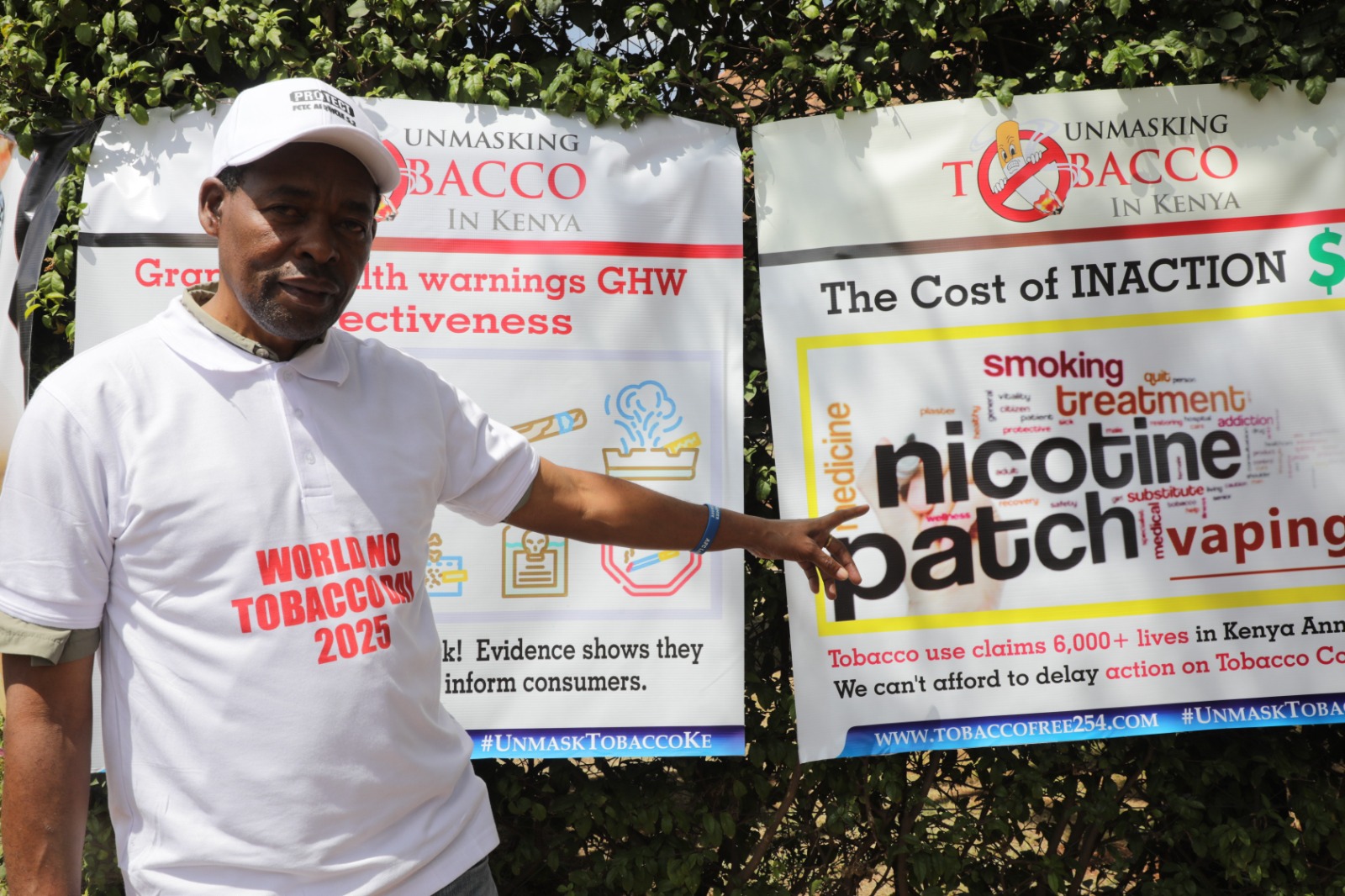
Nairobi, Kenya: Stephen Biko, a tobacco champion and now working with Kamukunji community Empowerment Initiative Advocacy, still remembers the first time he picked up a cigarette not from a shop, but from the dusty streets of Kamukunji in Majengo informal settlements while in Class Five.
“I used to collect the cigarette stubs and smoke them behind the school,” he recalls, a touch of regret in his voice. “By the time I finished high school, I was fully addicted.”
For over 20 years, Biko lived with that addiction. At the height of it, he was smoking two packs of 40 cigarettes a day. “I would wake up at midnight just to smoke, which later destroyed my health,” he shared during an interview while marking World No Tobacco Day in Nairobi.
“Smoking affected my breathing, my heart, even my marriage. My wife hated the smell. My daughter cried every time she saw me with a cigarette,” adds Biko. “It was my daughter’s tears that finally pushed me to stop.”
Across Kenya, thousands of young people are falling into the grip of nicotine addiction, not always through traditional cigarettes, but through shiny, flavored alternatives that look harmless but are anything but.
Flavored Trendy
Public health experts say the tobacco industry has evolved. While smoking rates in Kenya have declined from 23% to 8.5%, that progress masks a more dangerous shift: the rapid rise of novel nicotine products designed to bypass tobacco regulations and appeal to youth.
“We’re talking about shisha pens, e-cigarettes, oral nicotine pouches, where many of them are flavored like mint, vanilla, or fruit,” says Joel Gitali, Chairperson of the Tobacco Control and Health Promotion Alliance. “These products are aggressively marketed online, especially through influencers and youth platforms. They’re being sold as modern, clean, and ‘safe.’ But they’re highly addictive.”
Young women and teenagers are especially vulnerable. “We are seeing an increase in female users, mainly because of how the products are presented, attractive packaging, discreet use, no smoke, and peer pressure,” Gitali adds.
Experts warn that youth are being drawn to nicotine as a coping mechanism. “Unemployment, anxiety, stress, young people are already struggling with mental health,” says Morris Judica, an advocate from Air Base. “They think these products offer relief. But it’s a trap.”
Nicotine doesn’t solve the problem, it adds another. Addiction sneaks in quietly. Once hooked, many users escalate to other substances, including harder drugs.
“It starts with a vape,” says Gitali, “but we have seen people move to chewing tobacco, then cigarettes, then even cocaine. It’s a dangerous chain.”
Where the Law Falls Short
Kenya’s Tobacco Control Act is clear: public smoking zones are illegal, and tobacco marketing is restricted. But in reality, these laws are often ignored or undermined.
“When we shut down shops selling near schools, they go to court and get court orders to reopen,” says Charles Ngugi, Senior Chief of Makongeni. “We are fighting a system that is protecting the sellers.”
Worse still, allegations have emerged of collusion between public officials and tobacco companies. A leaked letter recently showed a request from the Ministry of Health to British American Tobacco (BAT) for sponsorship of a move critics say compromises the Ministry’s integrity.
“This is exactly how the industry manipulates policy,” says Thomas Lindi, Coordinator of the Kenya Tobacco Control Alliance. “They present themselves as partners in tree planting, CSR events, while lobbying against tougher laws behind closed doors.”
According to the Tobacco Control Act, no public official should partner with a tobacco company. “And yet we see them doing just that,” Lindi says.
Each year, over 12,000 Kenyans die from tobacco-related illnesses. While the country once led in tobacco control in Africa, public health advocates say progress has stalled.
“We’re tired of empty statements,” says Lindi. “We need action not just on tax, but on enforcement, education, and protecting young people from manipulation.”
The call now is for:
- Banning all public smoking zones
- Stronger crackdowns on sales near schools
- Transparency in government partnerships
- Youth-targeted education campaigns
- Activation of the Tobacco Control Fund for community-led efforts
- More research into the effects of emerging nicotine products
“Right now, CSOs can’t even access the tobacco control fund, a public resource meant for this exact work,” Gitari says. “That is unacceptable.”
Stephen Biko, now a vocal advocate, has one message for Kenya’s youth: Don’t start.
“It’s a painful road. If you haven’t smoked, don’t try. If you have, get help. It took me three tries and my daughter’s heartbreak to finally stop.”
“Animals don’t use tobacco,” Gitali says. “Only humans do. We must ask ourselves why and whether we want this habit to define the future of our children.”