|
Getting your Trinity Audio player ready...
|
By Lenah Bosibori
Nairobi, Kenya — A new report released by the Mitumba Consortium Association of Kenya (MCAK) shows that Kenyans are now spending more money on new clothes than on second-hand ones.
According to the 2025 Economic Survey, Kenya imported new clothing worth Ksh 60 billion in 2024, compared to Ksh 28 billion spent on second-hand clothes, commonly known as mitumba.
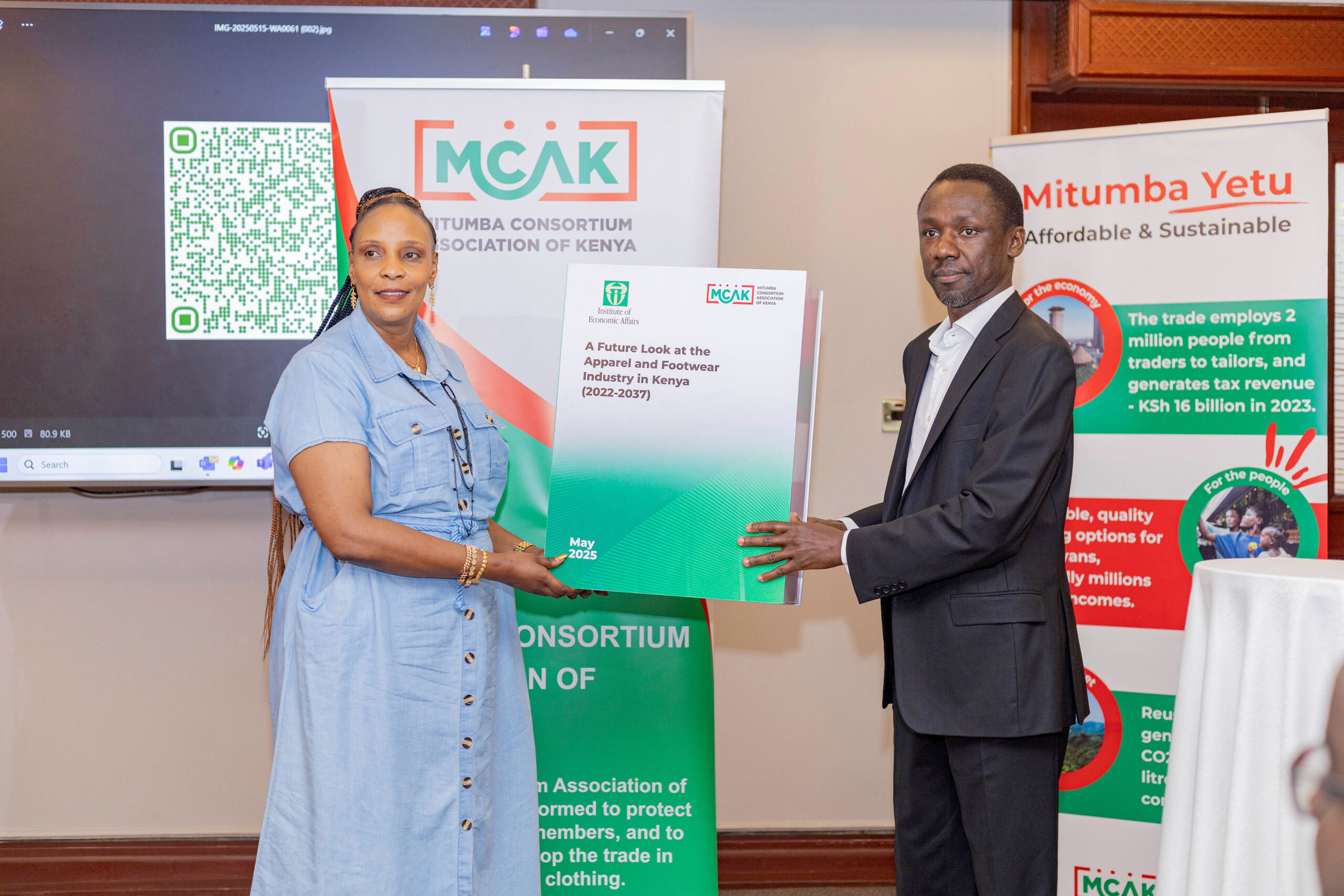
The report prepared by the Institute of Economic Affairs (IEA) on behalf of MCAK titled “A Future Look at the Apparel and Footwear Industry in Kenya (2022–2037),” highlights the growing importance of the mitumba sector in Kenya’s economy, job creation, and environmental sustainability. It was
Speaking at the report launch in Nairobi, IEA Kenya CEO Kwame Owino dismissed the common belief that mitumba is the reason local textile industries are struggling.
“It is not true that the availability of used clothes is the cause for failures in domestic textile companies,” said Owino.
In her remarks, MCAK Chairperson Teresia Njenga emphasized that the goal was not to defend the mitumba trade, but to recognize its importance.
“Today, we are not here to defend Mitumba. We are here to celebrate its role in Kenya’s economy and to prove that it can coexist with local manufacturing to create jobs, drive growth, and keep Kenya fashionably ahead,” said Njenga
The report urges policymakers not to treat second-hand clothing as a threat to local manufacturing. Instead, it calls for a policy that supports both sectors to create more jobs and grow the economy.
Millions Depend on Mitumba
The mitumba trade supports more than 2 million livelihoods in Kenya, mostly women, youth, and informal traders working across the country. It also contributes about Ksh 12 billion each year in tax revenue.
Bungoma Woman Representative Catherine Wambilianga shared her personal story, saying the mitumba trade helped shape her leadership journey. She started selling second-hand clothes in college with just Ksh 300 and continued even after becoming a teacher.
“I was calling myself Mama Mitumba,” she said. “That business helped me build networks and led me into leadership positions. Today, I serve as the national gender secretary for KUPPET and as a Member of Parliament.”
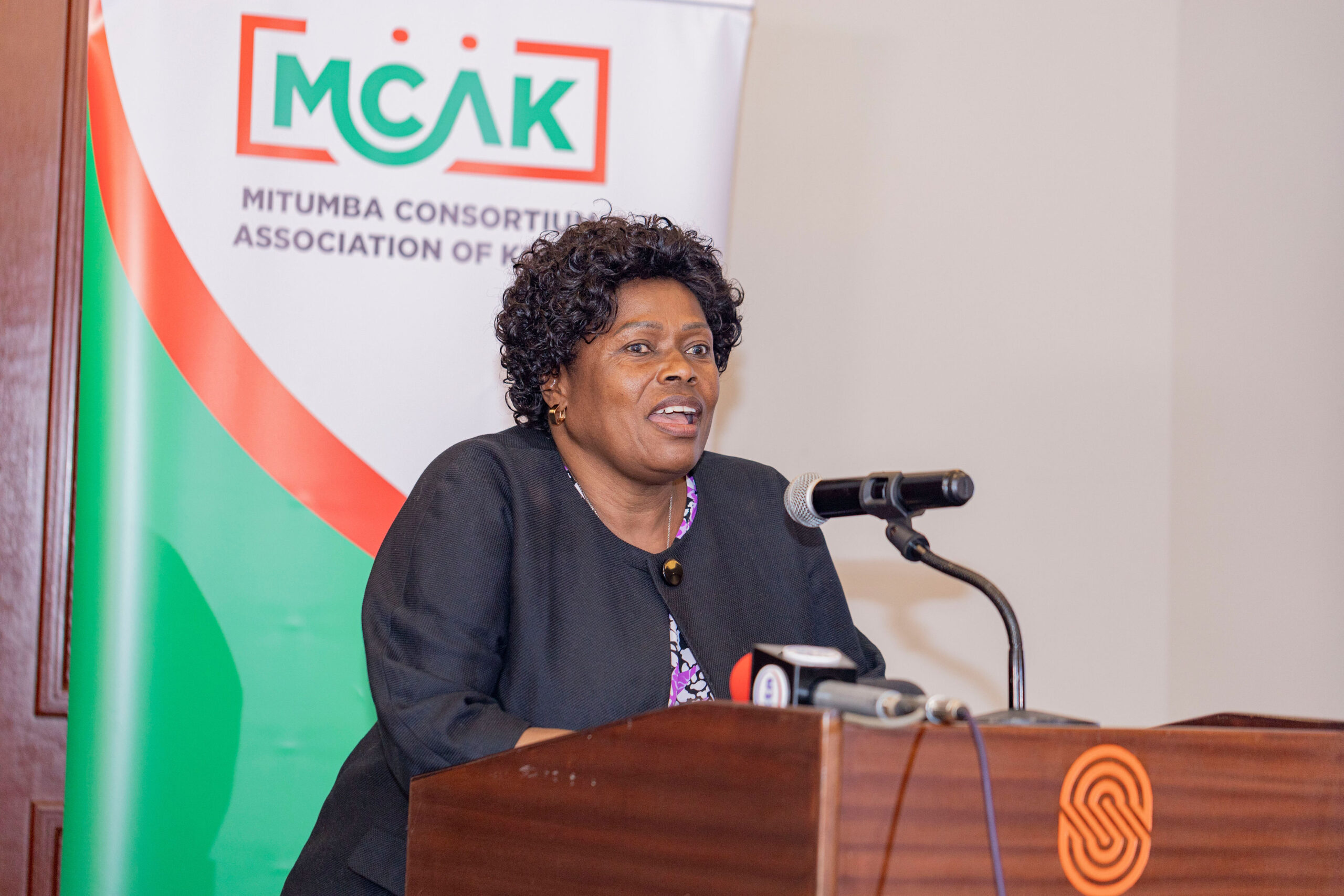
Wambilianga promised to push for reduced taxes on the mitumba trade to support small traders and make the sector more sustainable.
The report shows that mitumba remains the most affordable clothing option for many Kenyans. On average, households spend Ksh 409 per quarter on second-hand clothes, compared to Ksh 783 on new clothes. About 91.5% of mitumba shoppers spend less than Ksh 1,000 every three months.
There’s also a strong link between income and mitumba demand. For every 1% rise in income, demand for second-hand clothes goes up by 12%. This shows that mitumba is not just for poor people; choose it for its value.
MCAK Chairperson Teresia Njenga said mitumba can work alongside local textile manufacturing to create a stronger, more inclusive industry.
“We are not here to defend mitumba. We are here to celebrate its role in Kenya’s economy and show that it can grow together with local manufacturing,” Njenga said.
Dumping Claims Dismissed
The report also pushes back against claims that Kenya is a dumping ground for unwanted clothes.
“No one is going to pay $14,000 to $15,000 or about Ksh 1.5 million for a container of clothes unless they are sure they can sell them,” said Owino.
“Kenyans don’t have money to waste. Importers know the clothes have value. Plus, every container is checked by the Kenya Revenue Authority before it’s allowed into the country. So, this is not dumping its business.”
Mitumba also helps the planet by extending the life of clothes that would otherwise end up in landfills. By reusing garments, the trade plays a role in the global circular economy and cuts down on textile waste.
Kenya’s demand for clothing, both new and used, is growing fast. In 2019, Kenyans spent Ksh 197.5 billion on clothing and footwear combined. As the middle class grows, people want more variety and quality, and mitumba continues to meet that demand.
“This isn’t just second-hand fashion,” said a Nairobi trader. “It’s how we pay school fees and put food on the table.”
The study concludes that Kenya should adopt a policy that supports boththe new and used clothing sectors. It gives the example of Pakistan, which has managed to grow its textile exports while still importing second-hand clothing.
With the right policies, the report argues, Kenya can build a dynamic and inclusive clothing industry that supports jobs, protects the environment, and meets the needs of all consumers.