|
Getting your Trinity Audio player ready...
|
By Kasandra Musyimi
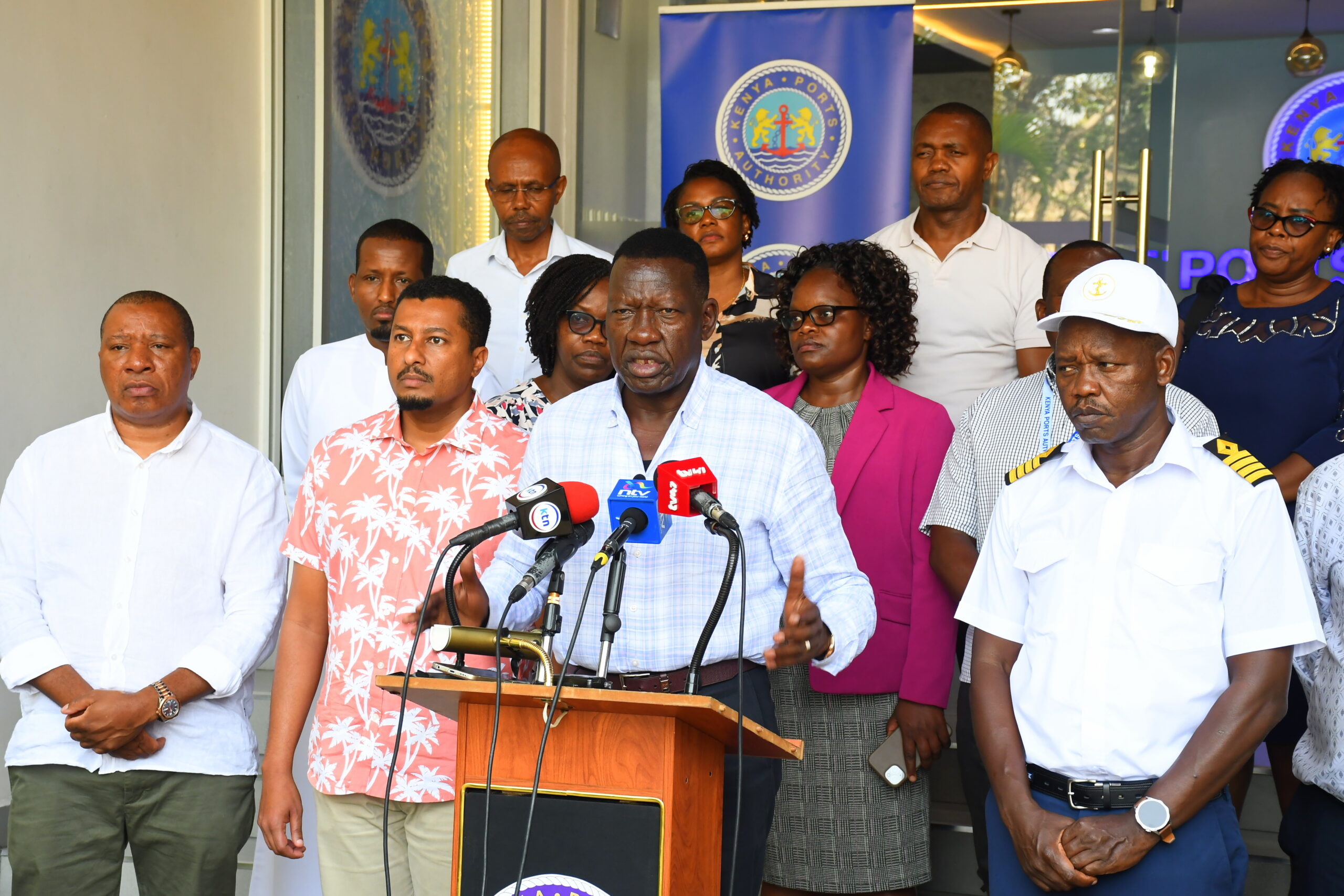
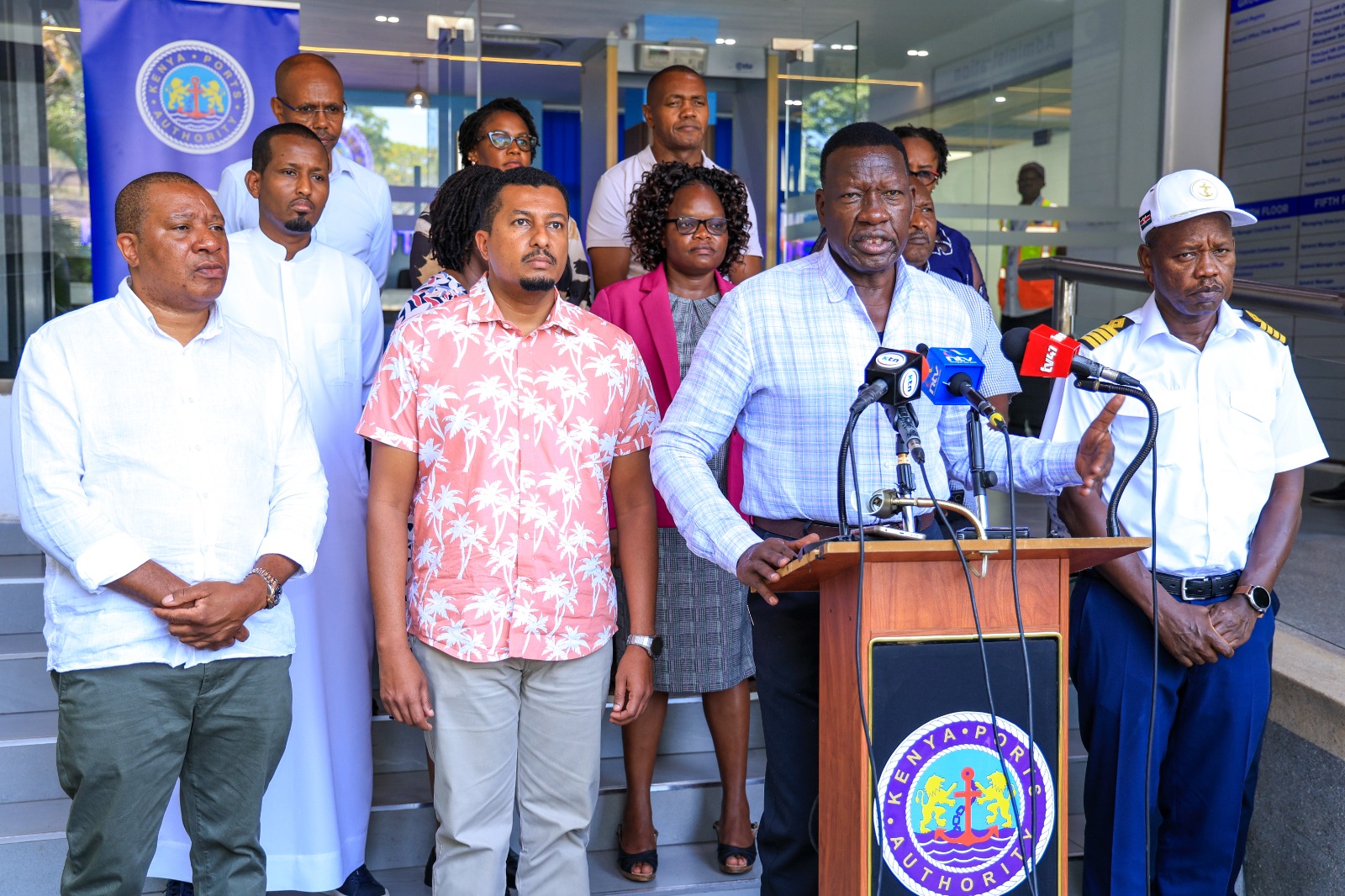
Mombasa, Kenya: The government of Kenya has launched an aggressive, three-phased strategy to eliminate cargo gridlock at the Port of Mombasa, with Transport Cabinet Secretary Davis Chirchir identifying “quick wins” in inter-agency coordination as the immediate solution to the months-long congestion.
Following a high-stakes consultative meeting at the port today, the CS moved to de-escalate concerns, characterizing the backlog that has plagued the facility since January 2026 as a series of “coordination and operational challenges” that the State is now addressing with surgical precision.
The ‘Quick Wins’: Coordination Over Capital
Addressing the media, CS Chirchir emphasized that the primary hurdles are operational. He pointed to the need for the Kenya Ports Authority (KPA) to work more seamlessly with Kenya Railways, Container Freight Stations (CFSs), and various inter-agency bodies.
“Some of the problems and challenges are basically minor coordination and operational issues. That’s why I say they are quick wins,” Chirchir stated. “They don’t need investment. They just need more communication, better working within the laid-down protocols.”
A major focus of these immediate “pressure-release” measures involves the management of empty containers, which currently clutter the terminal and drive up costs.
“How do we really accelerate the organization of the empty containers so that they do not become a cost? Because even storage is a cost. For every four containers that come in with goods, we are shipping [out] one container,” the CS noted.
Mid-to-Long Term: Equipment and Rail
While coordination solves today’s delays, the CS outlined a mid-term plan to modernize port hardware. Under the newly enacted Government-Owned Enterprise Act, KPA has been cleared to fast-track the procurement of heavy container-handling equipment to expedite the movement of cargo.
 For the long term, the government is looking at massive infrastructure links to cement Kenya’s status as a regional anchor, including-The LAPSSET Link: Connecting Lamu to Naivasha via a new 300-kilometer rail line.
Dongo Kundu: Further integration of the Special Economic Zone and road networks.
Cross-Border Trade: Finalizing the 11-kilometer Nandapal-Nakadok section to bridge the corridor into South Sudan.
Road Networks: Payouts and Progress
The CS also provided a status update on critical road arteries, noting that the government has moved to clear “pending bills” that had previously stalled contractors.
At the Mariakani-Jomvu stretch, funded by KFW and the European Investment Bank (EIB), Chirchir confirmed that Sh2 billion has been released to the National Land Commission (NLC) to compensate project-affected persons (PAPs). Similarly, for the Mombasa-Mtwapa-Kilifi dueling, another KSh2 billion has been disbursed.
“We have given the owners, through a very well-agreed framework, 30 days after being paid to remove and move out of the easement… in another two months, we’ll see the dual link through Mtwapa town,” he said, adding that while the new bridge will take another year, the old bridge remains functional.
Lamu Port: The Strategic Alternative
A central pillar of the de-congestion strategy remains the redirection of traffic to the Port of Lamu. Chirchir observed that the facility is no longer a “sleeping giant” but a fully operational alternative.
”Lamu is open for business. With two major shipping lines already docking and others expressing interest, it offers the additional capacity we need to ensure that no trader is left waiting for goods stranded at sea,” the CS noted.
The Bottom Line for Business
The congestion has not only disrupted regional supply chains but has also placed the government’s revenue targets at risk. Since January, the business community has grappled with rising demurrage costs and raw material shortages.
By addressing the long-term causes of congestion—rather than just the symptoms—the government hopes to restore the 3-to-4-day dwell time standard. The CS emphasized that these efficiency gains are non-negotiable for Kenya to maintain its competitive edge against rival ports in the Central Corridor.
“We are going to work in a coordinated manner to make sure that we continue to be that anchor state that supports the region and do good business for our country,” Chirchir concluded.