|
Getting your Trinity Audio player ready...
|
By Mercy Kachenge
Nairobi, Kenya: Dr. Ouma Oluga, Principal Secretary for Public Health, has urged counties to strengthen preventive healthcare services as Kenya faces rising HIV infections among adolescents and young adults.
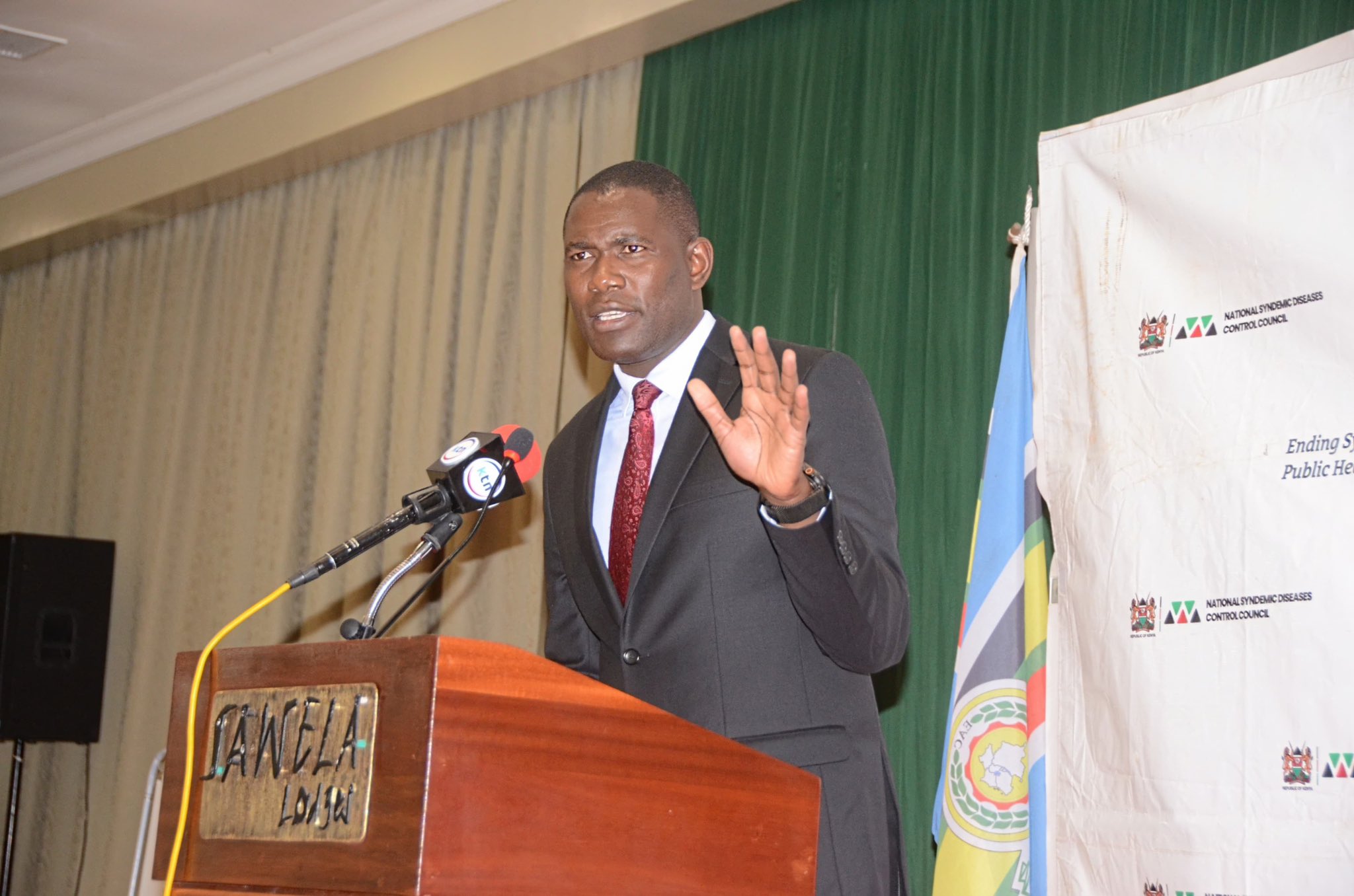
“Nearly 6,000 new HIV infections were recorded among 15-24 year olds last year – a deeply troubling trend that demands immediate action,” Dr. Oluga revealed during his opening remarks at the Joint Annual Program Review Workshop on the Syndemic Strategic Framework.
The Ministry of Health has established county-level prevention mechanisms involving surveillance officers and community health promoters. “We’re consolidating efforts to create sustainable, resilient interventions,” Dr. Oluga said, attributing high teen infection rates to gaps in education and enforcement.
The newly launched Syndemic Strategic Framework marks a paradigm shift from disease-specific approaches to integrated management of interconnected health challenges, including: HIV, TB, and malaria, Sexually transmitted infections, Viral hepatitis, Non-communicable diseases, and merging threats like antimicrobial resistance.
“Funding changes have necessitated reorganization of financing for syndemic diseases,” Dr. Oluga noted, while acknowledging Kenya’s remarkable progress in HIV control through multi-sector collaboration.
The PS highlighted the “triple threat” facing youth: New HIV infections, Unplanned pregnancies, and Sexual/gender-based violence.
Particular concern was raised about 26,273 people who inject drugs, with calls for:
-
Expanded methadone access
-
Harm reduction integration into primary care
-
Strengthened rehabilitation services
Other critical health burdens include:
-
50% of TB patients are HIV co-infected
-
Hepatitis B/C prevalence exceeding 6% in key populations
-
3.5 million malaria cases (2023), mainly affecting pregnant women and children
-
Non-communicable diseases cause 39% of deaths nationwide
“This workshop helps us assess progress and shape future responses as we implement Universal Health Coverage,” Dr. Oluga concluded.