
|
Getting your Trinity Audio player ready...
|
By Scovian Lillian
Nairobi, Kenya: Kenya has officially launched its National Carbon Registry, a digital platform designed to centralize carbon credits, restore credibility in climate markets, and position the country as a leading African player in climate finance. Beyond technical objectives, the launch highlighted a clear priority: turning carbon into a source of income for the nation and its communities.
Gitonga Mugambi, Principal Secretary in the State Department of Forestry, framed carbon markets less as environmental instruments and more as tools for national economic growth. “We must put food on the table of Kenyans. We must bring income to Kenyans,” he said, emphasizing that carbon initiatives should directly benefit the country’s people. Mugambi stressed the role of state officials in facilitating investment rather than blocking it: “You can be a gatekeeper if you want, but you can also be a facilitator.” Highlighting the importance of attracting private capital, he added, “Let us walk them through. Let us get money for our country. That is what matters at the end of the day.”
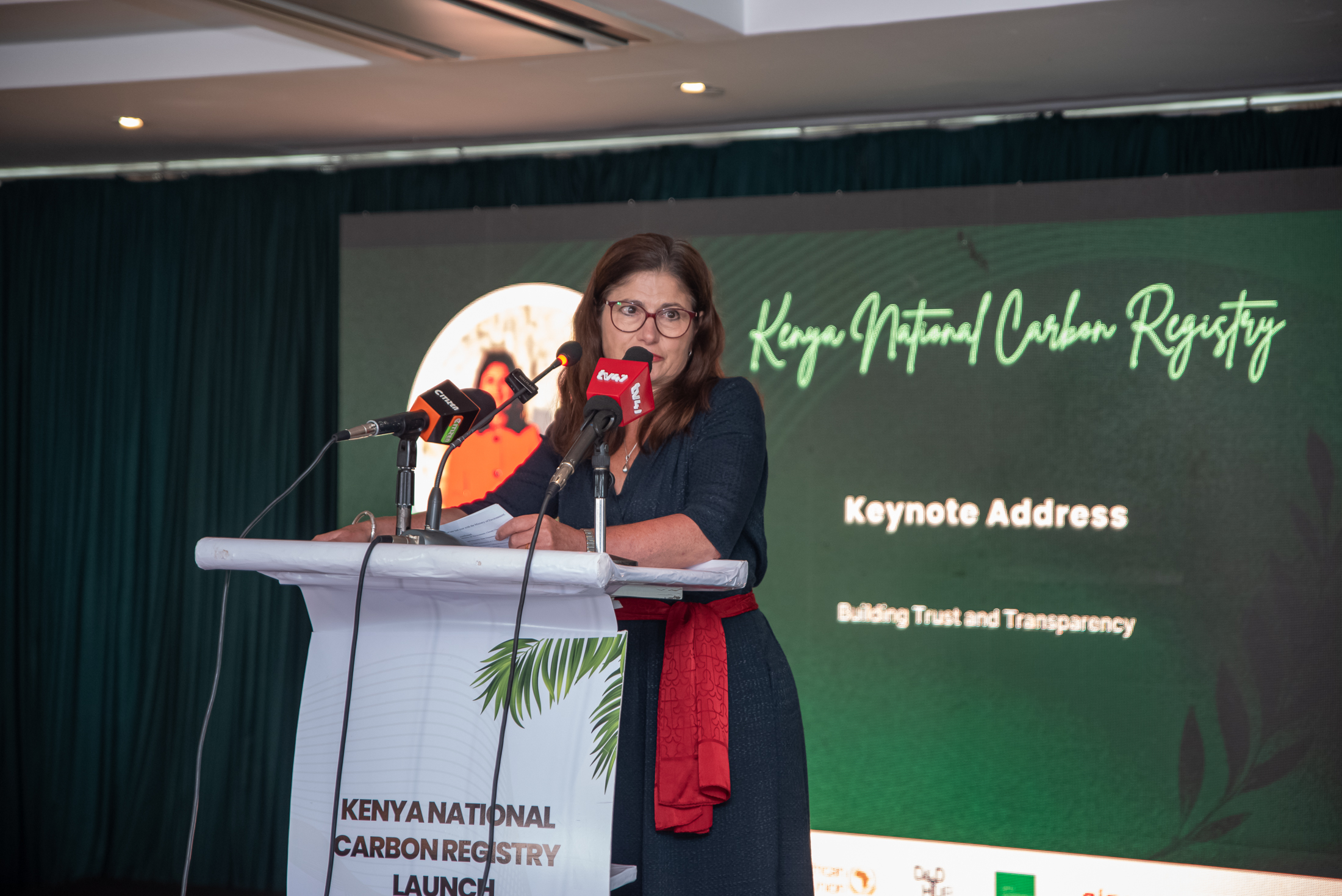
The European Union also underscored the registry’s significance. Henriette Geiger, EU Ambassador to Kenya, called it a strategic asset for restoring trust in carbon markets across Africa. “A functioning national carbon registry is the backbone of integrity. It ensures transparency, prevents double-counting, and strengthens investor confidence,” she said.
Geiger highlighted the massive financing gap facing African countries, noting that Africa requires over 250 billion US dollars per year by 2030 to meet its adaptation and mitigation goals, and the gap can only be closed by high-integrity carbon markets. She warned that credibility would determine whether Kenya succeeds: “Growth without integrity risks undermining trust,” she emphasized.
For the government, the registry is also a statement of national ownership.
Deborah Barasa, Cabinet Secretary, Ministry for Environment, Climate Change and Forestry, described the launch as a corrective to years of fragmented and opaque carbon trading.
“For years, our carbon markets resembled an unmarked frontier. Without a single trusted national ledger, a tonne of carbon could be claimed twice, undermining our credibility, she said.
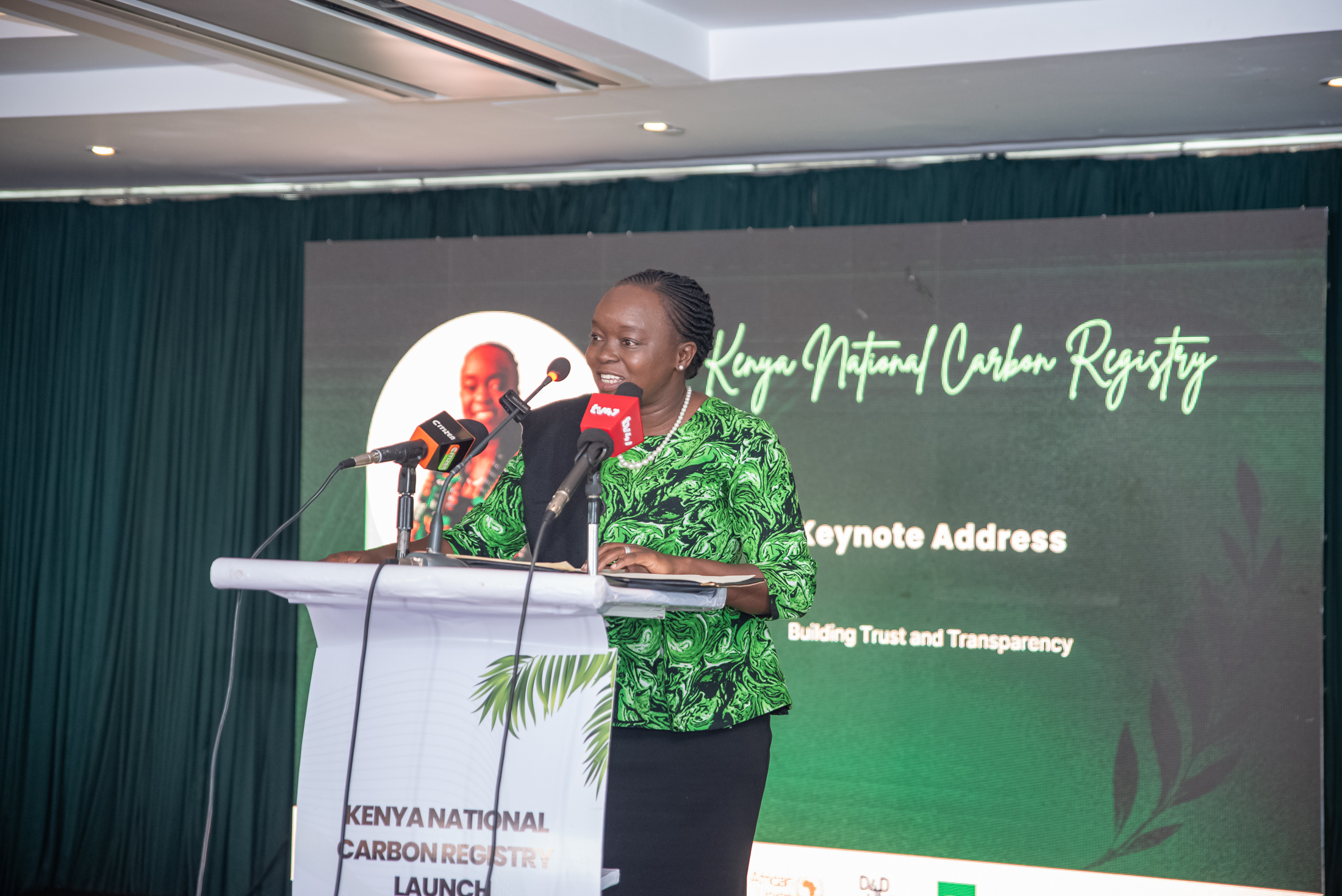
Barasa stressed that Kenya’s natural landscapes are now being recognized as economic assets: “We recognise our forests, savannas, mangroves, and soils for what they truly are, natural capital and strategic economic assets. The National Carbon Registry is the title deed of Kenya’s emissions reductions. It ensures that when carbon is traded, value follows back to where it belongs.”
The registry is part of Kenya’s broader strategy to attract investment, create jobs, and strengthen climate resilience, especially in regions historically affected by droughts and floods.
Mugambi noted the link between carbon markets and local livelihoods, saying the initiative should be “intentional in going for that money” while ensuring benefits reach the communities that have conserved ecosystems for decades.
Experts and officials alike emphasized that the platform’s success depends on robust governance, hence the registry must maintain transparency, prevent double-counting, and inspire confidence among international investors while ensuring national priorities are respected.
Geiger warned that without integrity, the market could falter, while Debora highlighted that value must flow back to the country and its people.
Kenya’s registry represents a test case for Africa: can high-stakes climate finance coexist with national ownership and community benefit? The launch signals the country’s ambition to turn environmental stewardship into economic opportunity while positioning itself as a credible and trustworthy participant in global carbon markets.