|
Getting your Trinity Audio player ready...
|
By Shaban Makokha
Kakamega county, Kenya: In many rural schools across Kakamega County, the signs are often subtle but troubling: children who struggle to stay awake in class, others who frequently complain of stomach pains, and many who miss school altogether.
Health officials say intestinal worm infections remain one of the silent barriers preventing thousands of learners from reaching their full potential.
The Ministry of Health has intensified teacher awareness sessions on deworming to strengthen school-based programmes in the county. The initiative aims to equip teachers with the knowledge and skills needed to support deworming efforts and protect vulnerable learners.
Public Health officials have launched a mass deworming exercise targeting over four million school-aged children and youths. The initiative is part of a broader effort to reduce infection rates and improve learning outcomes by promoting hygiene practices, safe water use, and regular participation in mass deworming days.
Students in tertiary colleges and universities received deworming drugs a week ago in preparation for the countywide exercise. Deworming of children in Early Childhood Development (ECD) centres and primary schools will be conducted next Thursday in a one-day drive.
The initiative is part of ongoing efforts to eradicate Neglected Tropical Diseases and soil-transmitted helminths—commonly known as intestinal worms—and schistosomiasis (bilharzia) to promote better health standards among learners at all levels.
The teachers’ training exercise covers safe drug administration, record-keeping, basic diagnosis, and hygiene promotion, among other topics.
Public health experts warn that worm infections—often caused by poor sanitation, contaminated soil and inadequate hygiene—continue to affect millions of children in Kenya. According to the World Health Organization, global estimates show more than 1.5 billion people are infected with soil-transmitted worms, with school-age children among the most vulnerable.
In Kakamega, where many families rely on small-scale farming and most schools still struggle with sanitation infrastructure, the impact can be devastating.
“When children are infected with worms, they lose nutrients, become anaemic, and their ability to learn drops significantly,” said Dr Antony Ngaira, Lurambi sub-county public health officer. “Some learners come to school weak and unable to concentrate.”
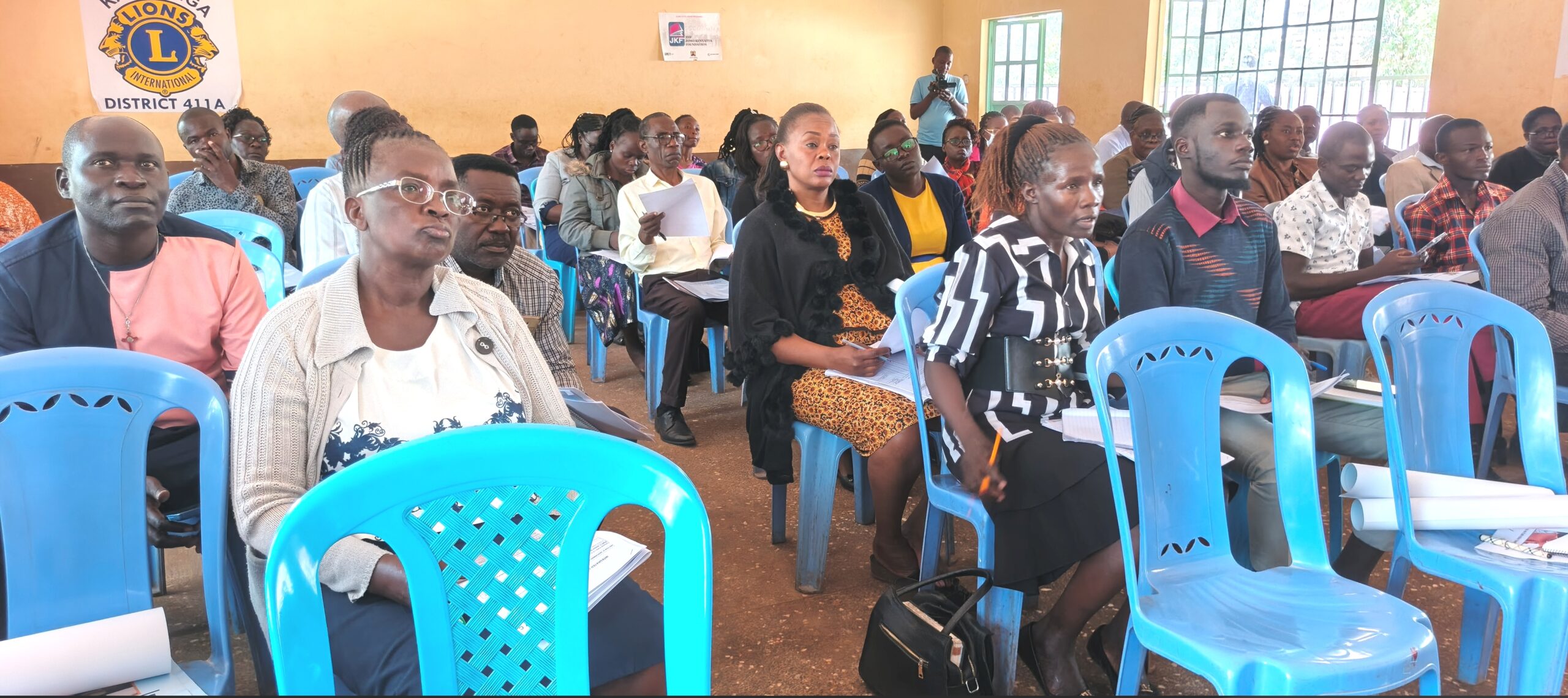
Dr Ngaira spoke during a training session for teachers from Kakamega Central and Kakamega South sub-counties at Kakamega Primary School. The sessions are designed to equip teachers with accurate information on intestinal worm infections, transmission patterns, and proper administration of deworming medication in learning institutions. Teachers also learn to identify symptoms of worm infestations and educate pupils about hygiene practices such as hand washing and proper use of toilets.
“We want teachers to feel confident in administering deworming tablets, identifying symptoms, and communicating effectively with parents,” Dr Ngaira added. “Their involvement is crucial because they interact with learners daily and understand their needs better than anyone else.”
For many educators, the training has been eye-opening.
“We used to think stomach aches were just normal complaints from children,” said Ms. Doreen Sore, a teacher from Matende Primary School. “Now we understand that worms could be the hidden reason behind absenteeism and poor performance.”
Health officials say regular deworming can dramatically improve school attendance and learning outcomes. Studies have shown that treating worm infections can increase school participation and improve children’s energy levels and cognitive development.
Officials hope that by empowering teachers—often the most trusted figures in rural communities—the campaign will break the cycle of infection and ensure children in Kakamega grow healthier, stronger, and better prepared to learn.
Education officers have pledged to collaborate with Public Health officials to ensure the programme’s success.
Mr Gerald Ndombi, Kenya Primary Schools Heads Association chairman in Lurambi, confirmed that teachers are fully authorised to participate in the exercise.
“The deworming of school children has resulted in great improvement. We urge parents to support this initiative by making their children available for deworming,” he said.
In Kakamega Central, the programme is targeting 45,120 learners. Mr. Peter Sikolia, a Teachers Service Commission (TSC) official, noted that absenteeism has reduced by 25 percent since the onset of deworming initiatives in the county.
“Empowering teachers with the right knowledge improves uptake, reduces misconceptions, and enhances the overall effectiveness of school deworming campaigns,” he said.
He added that teachers who complete the sessions are expected to lead school-level health talks and assist in monitoring the programme’s progress.
Beyond the classroom, the programme is also encouraging stronger collaboration between teachers, parents, and community health workers to address sanitation challenges that allow parasites to spread.
Dr Linet Odanga, a health expert, highlighted the impact of worm infestations on learner well-being, including reduced concentration, increased appetite, ringworm infection on the skin (mashilingi), stunted growth, abdominal discomfort, and absenteeism.
“With empowered teachers, we expect reduced infection rates, fewer absentee cases, and improved learner well-being,” she said, noting that the impact will ultimately reflect in academic performance and school participation.
She assured parents and guardians that the drugs to be administered are safe with no complications expected.
The campaign is also targeting children aged 2 to 15 years who are out of school.