

|
Getting your Trinity Audio player ready...
|
By Jeniffer Simaloi
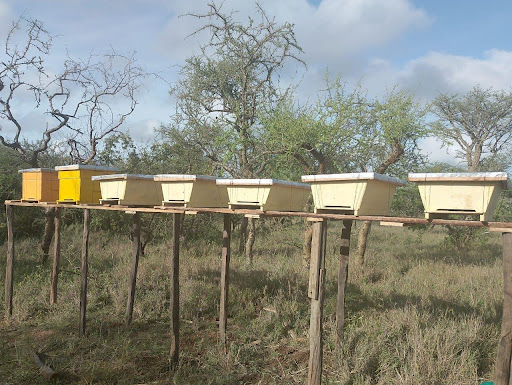
Kajiado County, Kenya: As erratic rainfall and recurring droughts make traditional livestock farming less sustainable, farmers in Kajiado County are now increasingly embracing beekeeping as an alternative source of income.
In Kenya’s arid and semi-arid lands (ASALs) like Kajiado, where vast landscapes stretch bare and idle, beekeeping may offer a fresh start. Following years of devastating droughts, particularly between 2018 and 2022, many pastoralist families lost their livestock, their primary source of livelihood. Even though recent rains have revived vegetation, most households have not yet recovered their herds. This is where beekeeping, or apiculture, offers a timely and sustainable alternative.
ASAL regions are often dismissed as unproductive, yet they are ideal for beekeeping. Certain bee species, like Apis mellifera yemenitica (also known as the Nubica bee), are naturally adapted to dry conditions. These bees can survive drought, migrate in search of water, and thrive on local flora like acacia, which is abundant in these areas.
Unlike crops or livestock, bees do not require intensive water use, fencing, or large inputs. This makes beekeeping a low-cost, low-risk enterprise — perfectly suited for communities already burdened by climate shocks.
According to Kenya’s National Beekeeping Institute, the country is only utilizing 20% of its 80,000–100,000 metric tonnes annual honey potential, and just 2% of its 8,000–10,000 metric tonnes beeswax potential. This has left a significant gap in supply, often filled by imported products, despite Kenya’s natural capacity to meet both local and regional demand.
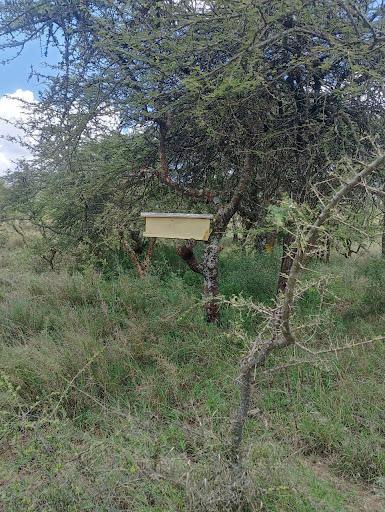
Simon Leperes, from the National Beekeeping Institute, urges Kenyans from these areas to take advantage of the spaces they have. Instead of only relying on cattle, they should embrace beekeeping.
It’s a good income-generating venture if managed well. A single hive can produce 10–15 kilograms of honey per season. At current market prices of KES 700–1200 per kilogram, even a small-scale beekeeper with ten hives can earn between KES 60,000 to 150,000 annually, with minimal input costs.
Products like beeswax, propolis, royal jelly, and pollination services offer additional income opportunities. And for large landowners, scaling up beekeeping could create jobs and establish value chains that benefit entire communities.
The demand for hive products is soaring, making beekeeping a promising enterprise for entrepreneurs and farmers alike. With the growing consumer preference for organic goods, there is significant potential to produce high-quality organic honey. Beyond honey, beekeepers can tap into value-added products such as beeswax candles and natural cosmetics to boost income.
Importantly, beekeeping also plays a vital role in environmental conservation and biodiversity. Supporting pollination helps sustain ecosystems and promotes healthy crop yields. As awareness grows around sustainable agriculture, beekeeping stands out as a profitable and eco-friendly venture.
Kennedy Moisari’s experience is part of a growing trend among farmers in arid and semi-arid areas like Kajiado County, where traditional livestock farming is becoming increasingly difficult due to changing climate conditions.
“Beekeeping doesn’t require pasture or water like sheep do,” Kennedy explains. “The bees forage on their own, and the maintenance costs are much lower. Once the hives are set up, they mostly manage themselves.”
In addition to being low-maintenance, beekeeping has the potential to generate consistent income. Kennedy now plans to train other local farmers and even form a cooperative to help process and market the honey more efficiently.
Local agricultural officers in Kajiado have taken note of the shift. Some have begun offering basic training and subsidies for farmers interested in apiculture.
Solomon Sompon is an officer at the Kajiado County Agricultural Office. Here is what he had to say concerning beekeeping. “We are seeing more people turning to beekeeping as a solution to climate resilience. It’s sustainable, environmentally friendly, and offers farmers a chance to earn without putting pressure on already-scarce water and pasture resources.”
As Kennedy expands his apiary, he hopes to inspire a new wave of farmers to rethink how they use their land. For him, it’s not just about business, it’s about survival, sustainability, and smarter farming.













Good article. Keep it up!
Comments are closed.