|
Getting your Trinity Audio player ready...
|
By Albert Mwangeka
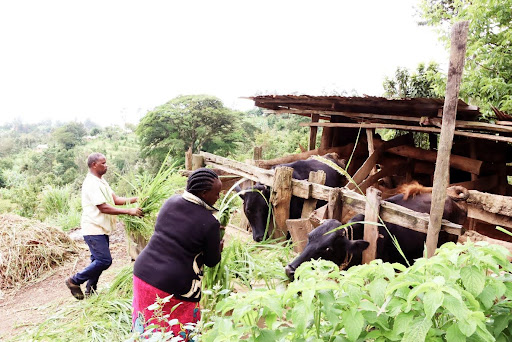
Taita – Taveta County, Kenya: Ruphence Mwanjala, 42, bends with a sickle in her hand and skilfully cuts some grass in readiness to feed her 2 Fresian cows and calf. This was not the norm before, as she believed that zero-grazing her cows was an exclusive confinement only for the males in society.
“Before, I thought that feeding livestock was a task reserved for men. However, I had my perception changed after undergoing the Gender Equity Social Inclusion (GESI) workshops where I learned a lot about the difference between gender and sex, through role playing and open discussions,” she recalled.
Meanwhile, Mrs. Mwanjala stated that after being taught about inclusion in landscape restoration efforts, she applied knowledge learned in her day-to-day activities and in her family life by participating in new tasks.
At her home, she became involved in the role of grazing animals and further became a climate action ambassador by growing 36 trees, a decision she could not previously make independently.
“I still cannot believe my voice matters and my opinions are heard. I feel like a load has been lifted off my chest,” the farmer opined.
Inclusive governance in restoration and climate action activities
GESI is a UK-PACT-funded program being implemented in partnership with CIFOR-ICRAF, the Africa Wildlife Foundation (AWF), the Food and Agriculture Organization of the United Nations (FAO), and the County Government of Taita Taveta, with the goal of ensuring that no one is left behind in landscape restoration efforts.
“The engaging forums remain a transformative experience as I have been voted the Vice Chairlady for the Chawia Community Forest Association (CHACOFA), where I have led tree-growing sessions in Chawia Forest. Under my leadership, we have grown 2,000 trees so far,” Mrs. Mwanjala continued.
This was recorded as a notable achievement as historically, Community Forest Associations (CFAs) were male-dominated and struggled with their minimal youth and female representation.
Through this initiative that builds capacity in community members in CFAs, women have been empowered to have a seat at the table to take up active roles in dialogue and decision-making processes within their households, agricultural practices, and engagement in climate action.
This demography of women, is now being included in managing resources like land, which has led to the equitable division of labour between genders.
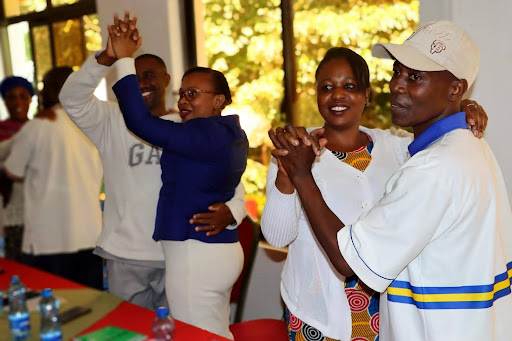
Mr. and Mrs. Mwanjala were among those called to participate in a unique session where 22 couples were taken through household co-operation and sharing responsibilities in farming and restoration matters. Spouses were urged to be ambassadors and co-lead in sharing household duties in a bid to boost crop yields as well as foster a sense of ownership in sustainable practices and restoration.
Mr. Mwanjala was quick to note how some traditions, especially those that did not offer a voice to women, largely contributed to muting voices that had the potential to impact societies.
“Allowing myself to co-share duties with my wife has led to co-operation and transformed my household, as we can share ideas on how to utilise our land together. This has reduced our workload. Through this experience, my children will learn by observation as I lead by example. I also have sit-downs with them, advising them that this is how homes are managed, with the hope that they will apply this knowledge when they leave my nest. By so doing, I will have impacted generations,” he added.
Youth-led climate-action projects: From zero to 10,000 seedlings
Sessions on inclusion and equity taught Eric Mcharo, 28, a lot about underrepresentation and its dangers in society. He ran for the position of Chairmanship of the Green Valley Youth Group, based in Msudunyi Village, a month after training, a position he ultimately won.
He leveraged his position and amplified his voice to reach the youths by spreading the word in their popular hangouts. This influenced the youths to join the group and further spend their recreation time to participate in beekeeping, potting plants, and establishing a nursery from scratch.
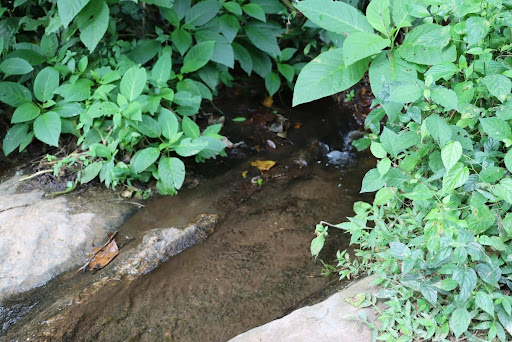
“These activities brought us together, and an urgent call to action helped rehabilitate desolate lands through tree-growing. Every month, we provide around 300 seedlings to be grown in Chawia Forest, along water channels, and sources. We work with area chiefs, the Member of County Assembly (MCA), and the community to make this a success. This union has led to close to 2,000 seedlings grown within a span of 6 months,” an enthusiastic Mcharo stated.
Members of the group pooled their resources together and now boast of 10,000 seedlings, which they sell periodically to bring in revenue and boost their livelihoods.
Not only do youths now have a voice, but they also have their local efforts in tree-growing linked to the global goals that aim at cutting carbon emissions.
He added that his peers now feel like they belong to a society that accepts them and that this contributes to the decrease of social vices like drug abuse, decadent behaviour, and thuggery.
Eliud Mwasingo, 24, who also has a similar story, encourages the inclusion of youth voices in decision-making processes.
During public barazas and social interactions, he urges them to lend their voices in public participation exercises that lead to the creation of environmental policies and sustainable development projects.
Abled differently with a voice
Christopher Mwamburi, 55, from Mburinyi Village, is a Person With Disability (PWD) who is on an active recruitment drive for the Vuria Community Forest Association (VUCOFA).
Mr. Mwamburi was inspired after undergoing a 2-day engagement, and he has registered 75 people so far in this community-driven forest association that boasts around 1,000 members.
The new members are established and are leading climate action endeavours by growing trees in Vuria Forest.
“I found new strength after GESI, and I began to have confidence when speaking, which was not the case. It’s like I found a light, and I gained a deeper understanding of my rights. I serve as one of the newest members of VUCOFA’s management committee,” a confident Mr Mwamburi said.
He said that being at the forefront and leading members of his group to grow around 950 trees in Vuria Forest is just the beginning of his fierce quest to combat the devastating effects of climate change.
Tying up loose ends
However, some beneficiaries are asking the relevant authorities to provide a market for their seedlings. This is because seedlings outgrow the nurseries, and they have to donate them to communities for purposes of restoration activities, which affects their livelihoods.
As Mr. Mcharo and Mrs. Mwanjala would say,” Restoration is a matter dear to our hearts, however, we would be more motivated if there were a ready market for our seedlings. Having a sustainable avenue to generate income would boost our livelihoods.”
Some believe in the need to strengthen value chains from Nature-based projects like basket-weaving and beekeeping to enable value addition and commercialize their products, in a bid to boost the sustainability of their enterprises.
GESI: A screenshot of inclusive climate action and a model for change
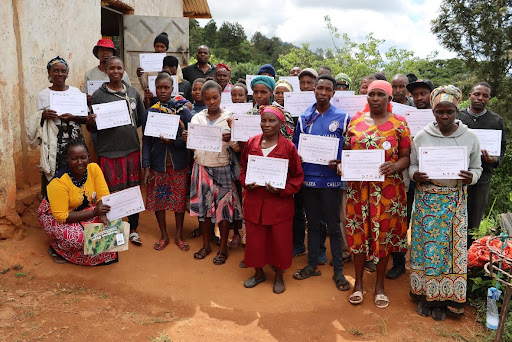
The program includes every gender and is not skewed to a particular one. Focusing also on marginalised groups.
Global Research Lead of Soil and Land Health, Leigh Winowiecki, from CIFOR-ICRAF, stated that inclusive nature-based solutions have huge potential to scale landscape restoration and bend the curve on land degradation.
The interactive workshops include participants drawn from a mix of diverse groups, men, women, youths, and PWDs, as CIFOR-ICRAF’s Community Facilitator, Clemence Mnyika, explained.
“We take them through key activities using local languages and dialects. The program is designed to build understanding around gender issues and inclusion in community work and land restoration efforts and allow them to apply this knowledge to the grassroots-level populations upon their return home,” she added.
Main activities include discussions on gender and sex differences, with members engaging in discourse on perceptions of gender roles in their cultural contexts.
Meanwhile, the gender position bar exercise takes participants through a deep dive into reflecting on types of decisions and labour done by women in land restoration and household activities. At the end of this segment, they are allowed to think about how these activities can be reallocated to ensure workload balance.
For the bargaining and role-play sessions, they act out skits where they switch gender roles. This ensures that each gets a better understanding of what challenges the other gender undergoes, thereby creating empathy and a better appreciation of gender differences.
Developing progress markers activity aims to identify priority gender issues and develop shared goals, with the aim of convincing participants that social change is possible within a limited time frame.
The vision journey guides learners in envisioning their ideal future farm while creating achievable restoration targets.
The Gender Balance Tree activity helps participants better understand the different roles of men and women in a household. They identify priority areas to improve the gender balance tree to achieve restoration goals.
“Emphasis on the importance of involving everyone equally, improving decision-making, and ensuring better outcomes for community climate action projects is a standout for me,” Taita Taveta County’s County Executive Committee Member (CECM) in charge of Water, Sanitation, Environment, Climate Change and Natural Resources, Grantone Mwandawiro, stated after attending several forums.
He added that it was encouraging to see every participant learn about how gender roles and perceptions impact participation in landscape restoration investments.
“This comes at the right time as rural women are heavily involved in farm management and land restoration activities, but lack decision-making capacity and necessary resources. Enabling open gender dialogue in restoration activities will enable equitable restoration outcomes,” the CECM stated.
According to Grantone, inclusion will further be an enabler in the county restoration campaign that requires every resident to grow at least 100 trees annually for the next decade.
This is expected to result in the growth of 360 million trees and the restoration of 360,000 hectares of land by 2032.
Why landscape restoration through tree-growing matters in combating climate change
Trees capture carbon, hence act as carbon sinks. This happens through carbon sequestration when they absorb climate-warming carbon dioxide in the atmosphere and store it in their biomass. This process helps to reduce carbon emissions.
They build climate resilience as they protect communities and biodiversity in general during harsh heat. They create a unique microclimate in the surrounding areas due to the cooling effect they provide. Also, trees nourish the soil and increase the amount of carbon trapped in the soil.
GESI: Another tree-hugging non-violent revolution?
With necessary steps taken to ensure inclusion in climate action, an area combining Sustainable Development Goal (SDG) 5 that focuses on achieving gender equality, and SDG 13 prioritising climate action, it’s clear that these cross-cutting matters are vital channels in which grassroots-level people can contribute to ambitious global goals simultaneously.
These actions remain reminiscent of the Chipko revolution in India. Deforestation became a worrying trend in the Himalayan region as it contributed to environmental degradation.
In response, rural women hugged trees in protest to prevent the felling of trees.
The revolution spread widely, and this played a significant role in the creation of national forest conservation-friendly policies in the country. The spirit of the Chipko revolution has resurrected in Taita Taveta County through GESI.
In the same light, women in India embraced trees to conserve their forests; women and youths in this country are taking bold steps to reclaim their vital responsibilities and positions in landscape restoration and climate action.
As the program, which has trained 650 community members so far, enables open dialogue, governance, and empowers marginalised voices, it reshapes gender roles while also ensuring grassroots populations contribute to combating climate change and reversing carbon emissions.