
|
Getting your Trinity Audio player ready...
|
By Lenah Bosibori
Nairobi, Kenya: When Hassan Abdalla was born 37 years ago in Kibera, he believed that simply being Kenyan would guarantee him the right to documentation. Today, he is still waiting for the passport he applied for in 2019—a delay he says has stolen years of opportunity from his family.
Abdalla, a father of two, was born to a Nubian father and a Kalenjin mother. Despite having all the required documents and paying all the fees, his passport application has stalled for six years.
“Every time I go to Nyayo House, they tell me to go home and wait for a phone call,” he says. “Six years later, nothing. People who applied after me already have their passports.”
Getting his national ID was just as painful, though nothing compared to the passport ordeal. “I went through a vetting panel made up of almost every security agency,” he recalls. “They asked harsh, probing questions.” He only made it through because one member recognized his family name and linked him to a former chief.
“I thought things would get easier after that,” he says. “But I was wrong. Getting a passport has become a distant dream, one I have nearly given up on.”
Abdalla, trained as an electrical engineer, says that securing steady work has been an uphill battle in a system where opportunities are scarce and often hinge on personal connections. It is this struggle that pushed him to seek a passport, hoping to look for better prospects outside Kenya.
“I now rely on casual jobs that barely support my young family,” he says. The financial strain worsened over time and eventually took a toll on his marriage; his wife left in search of stability and financial security elsewhere.
“Sometimes I feel like giving up,” he admits. “But my two children keep me going. I don’t want them to inherit my struggles.”
For Abdalla, the government’s recent move to scrap vetting committees offered a small measure of hope. “Vetting was like an interrogation,” he says. “Before you finished one answer, another question came to confuse you.”
Even speaking to a journalist feels significant to him. “At least someone is listening,” he says. “I don’t want my children to suffer while they carry my name.”
Maisha Namba: A New System, Old Fears
On 1 November 2023, when the government introduced Maisha Namba—Kenya’s third-generation digital ID, many Kenyans celebrated it as a leap toward modernization.
But for Nubian communities across the country, the announcement revived long-standing fears: Would the discrimination they have faced for decades simply follow them into the digital era?
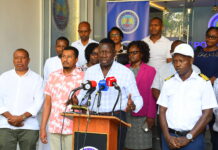
Mustafa Mahmoud, Co-Director for Citizenship and Inclusion at Namati, has spent 13 years working on legal identity issues. As a Nubian himself, he understands the struggle personally; he too faced vetting before getting his ID.
“Nubians are everywhere in Kenya—Kibra, Kisii, Njoro, Eldama Ravine, Mombasa—but their struggle is the same,” he says. “A century-long battle for recognition.”
He explains that things changed after the 1998 US Embassy bombing.
“Before then, getting an ID was straightforward. After the bombing, security checks intensified. And for Nubians who are listed under ‘others’ with no tribe code, the scrutiny became unbearable.”
The community, largely Muslim, faced added suspicion. “Anyone under ‘others’ must prove who they are,” Mahmoud says. “This pushed many into delays, denials, and humiliating vetting sessions.”
The consequences have been generational and devastating.
“If a parent has no ID, their child cannot get a birth certificate,” he says. “Without IDs, families are locked out of school, healthcare, movement, SIM cards—everything.”
The Court Battle for Recognition
In 2001, the Nubian community filed a landmark case in the High Court seeking a judicial review and formal recognition as one of Kenya’s ethnic groups. The petition followed years of systemic discrimination in accessing national IDs, with young Nubians routinely denied documents outright while others faced intense, intrusive vetting.
The community requested a three-judge bench. Instead, the Chief Justice imposed an impossible requirement: they needed to submit 100,000 signatures and 100,000 ID numbers from Nubians before the case could be admitted as a matter of public interest.
For a community already struggling to obtain IDs, this demand effectively blocked access to justice.
With no remedy available locally, the case was escalated to the African human rights system. It was split into two—one taken to the African Committee of Experts on the Rights and Welfare of the Child, and the other to the African Commission on Human and People’s Rights. Admission was only possible because the community could demonstrate that they had exhausted all legal remedies in Kenya.
In 2011, shortly after the promulgation of the 2010 Constitution, the African Committee delivered what became known as the Nubian Minors Decision. The ruling found that Kenya was violating the African Charter on the Rights and Welfare of the Child. It warned that subjecting Nubian children to vetting exposed them to the risk of statelessness.
The logic was straightforward: if a Nubian adult is denied an ID, their child cannot obtain a birth certificate because the parent lacks identification. One generation’s discrimination automatically traps the next, locking entire families out of legal identity, education, healthcare, and basic rights.
Despite the ruling, discrimination persisted quietly.
According to the 2019 census, Kenya has 21,319 Nubians. Activists believe the number is higher because many hide their identity to avoid scrutiny.
“Digitizing a broken system only digitizes discrimination,” Mahmoud warns. He recalls heartbreaking clients:
- A former police officer who waited 30 years for an ID
- A businesswoman who received hers at age 38
- A grandmother in Bondeni who is 35 and still waiting to apply
“Imagine living your whole life unable to prove you exist,” he says.
The Paralegals Holding Communities Together
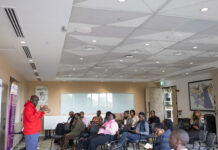
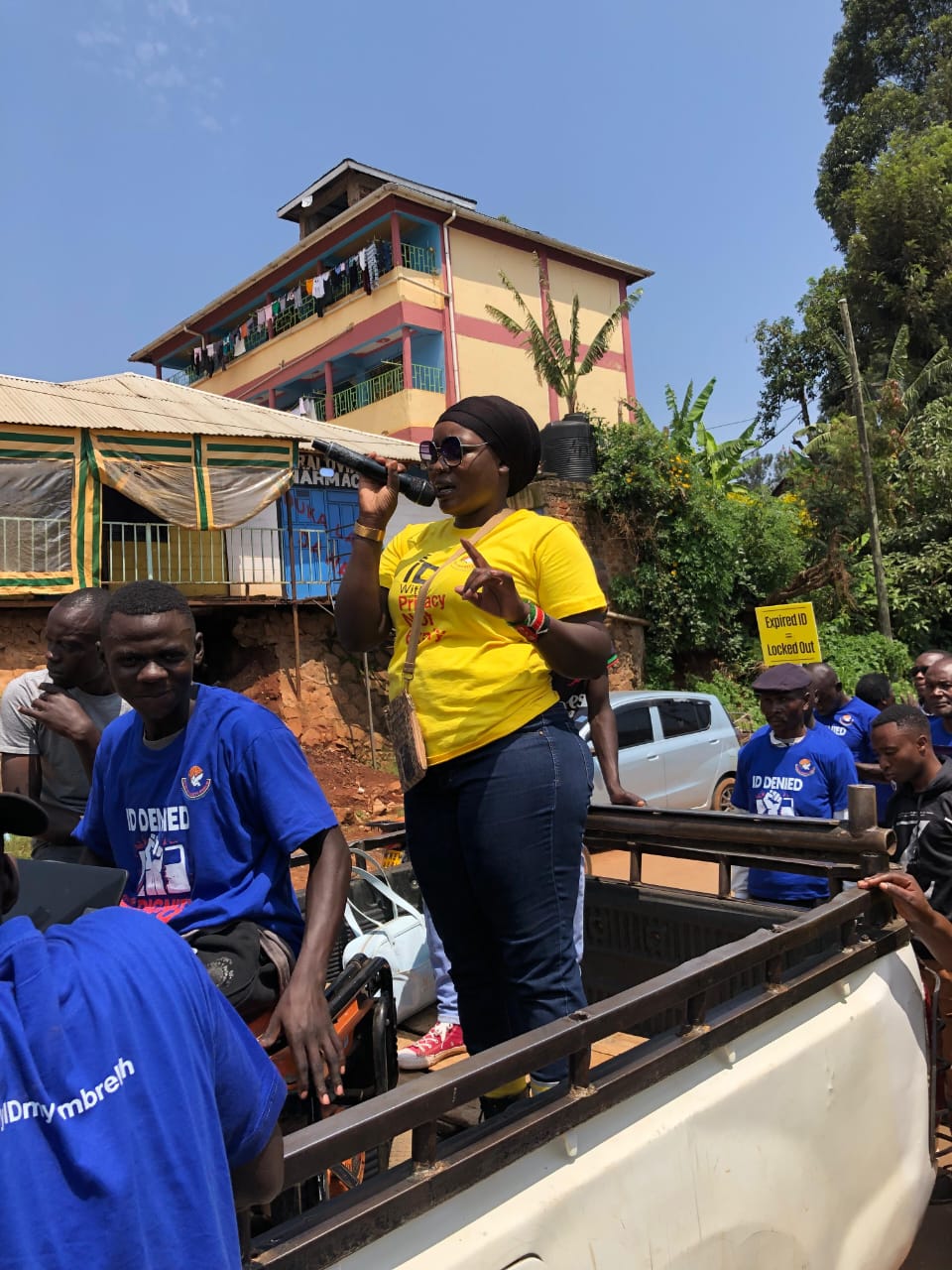
In Kisii County, much of the daily struggle is documented by paralegals from the Nubian Rights Forum (NRF).
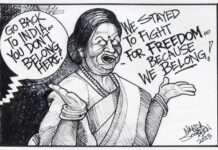
“The government needs to understand that Nubians are Kenyans,” says Hawa Ally Puzzo, a paralegal and human rights activist with NRF. “They don’t live near borders, so why the vetting? Their culture is clear. They are not Somalis.”
Puzzo began her work in 2020 and now helps families navigate Kenya’s complex documentation system.
“Paralegals are like first-aid doctors,” she explains. “We help with birth certificates, school-leaving forms, IDs, and now Maisha Namba. We walk with clients from the first question to the moment they get their documents.”
She says the challenges in Kisii mirror those across the country. “A large number of Nubians lack birth certificates, yet this is the first document required for an ID,” she says. “Schools withholding leaving certificates over unpaid fees further complicates matters.”
According to Puzzo, pressure and discrimination have pushed some applicants to hide their Nubian identity, which affects national data.
“Many identify with other ethnic groups because they fear the vetting process,” she says. “Our population is said to be 20,000, but the number never grows. People are being assimilated out of fear.”
She adds that mistrust from some registrars persists, with Nubians denied IDs despite complete paperwork, and in some cases, because of their religion.
NRF runs community forums, radio shows, school debates, and free mass registration drives. President Ruto’s 2023 promises to end vetting brought hope, but Puzzo remains cautious.
“Policies change with politics,” she says. “We don’t know if this will last.” As Maisha Namba rolls out nationwide, a single concern hangs over the Nubian community:
What happens to people who were never fully included in the old system? Many leaders fear that digital IDs may make exclusion more permanent, expose their data to third partie,s and shift discrimination from human registrars to algorithms and databases that cannot be questioned.
“All we want is simple,” says Puzzo. “We want proof that we belong.”
In a country where access to education, work, healthcare, mobile money, and movement increasingly depends on documentation, the fear of being left behind is real and growing.
For Hassan Abdalla, Hawa, Mahmoud, and thousands of Nubian families, the fight continues. Not for privilege, but for dignity, recognition, and a future where their children will finally walk through doors that have remained closed for generations.